Proof-of-personhood is becoming a stack, not a single check.
Anatomical uniqueness, document identity, web2 ownership each prove something real and durable, once. What none of them prove is the part that actually stops a takeover: that a live human is present at the moment of verification, not a replayed credential or a script driving the session.
That's the layer Entros holds. It proves presence in the moment, from behavioral signals that stay consistent over time, computed on the device with the raw signal never leaving it, re-verifiable on every use and revocable.
For any identity protocol that's a dimension to stack on, not a competitor to beat. No new hardware, and no new biometric-data liability, since nothing reversible ever leaves the device. One verification, many readers.
Single-modality detection is losing to modern AI. The best audio deepfake detector catches OpenAI's TTS 78% of the time. That number gets worse every model release.
Voice-only verification is a race you lose. Touch-only is the same story. Any single sensor stream can be faked in isolation.
Entros captures three streams in parallel: voice, movement, and touch. The verification checks that they correlate the way human physiology demands. Your voice and hand movement are coupled through shared respiratory and motor control systems. That coupling is involuntary. A bot running TTS and a movement simulator produces two independent signals that lack it.
Faking one modality is feasible. Faking three with consistent biomechanical coupling across all of them is a different class of problem.
Progress this week:
- On-chain programs hardened and redeployed on devnet; the mint path now fails closed: no validator-signed attestation, no identity
- @entros/pulse-sdk 3.8.0: the identity commitment is derived server-side, not taken on the client's word
- Continuous red-team pass across the verification pipeline, with hardening applied the same week
The hard part of proof-of-personhood isn't the first verification. It is keeping that proof true under sustained, adversarial pressure.
The cost of pretending to be a unique human on-chain is near zero. Jupiter filtered 750,000+ sybil wallets from a single airdrop. Mango's governance attacker ratified his own $47M theft with token weight. Referral programs get farmed across hundreds of wallets by a single operator. Every system designed around "one wallet, one user" fails because wallets are free.
The identity layers that solve this today confirm a unique body or a verified document. They work, but each asks for something up front: dedicated hardware, or a record of who you are held somewhere.
Entros verifies you're human through how you behave. Voice, hand movement, touch. 12 seconds on any device with a microphone. No special hardware. No biometric database. Your raw data stays on your device and is destroyed after feature extraction.
Your voice and your hand movements run on the same motor system. When you speak, your body moves with you, measurably, down to the millisecond. A 2025 paper in Proceedings of the Royal Society B showed the voice aligns with whole-body kinetics.
That coupling is why Entros captures voice, motion, and touch at the same instant, not one at a time. A model can clone a single channel. Reproducing three that stay in sync, because they come from one nervous system, is a much harder problem. For a real person it takes no effort. You just speak.
Live on devnet now. The sooner you verify, the longer your Trust Score compounds, and the earliest to do it help shape what ships next. Build with it and you read that verified-human signal for free, no API key, no billing.
https://t.co/qqVm9CrZ4b
Calibration update on cross-person Sybil discrimination.
Two fingerprints from two different humans should land far enough apart that the system never confuses them. Two fingerprints from the same human, across two verifications, should land close enough to recognize a returning user.
This week is widening the gap between those distributions by learning a transform from a corpus of real verifications. The transform removes the shared structure across all users and keeps only the part that differs from person to person.
Goal: the verification generalizes cleanly to a larger user population, not just the empirical sample we have today.
Looking for verifiers on devnet. The data lands faster the more humans run through it.
Eleven days post-Frontier-submission. Shipped on https://t.co/CRyQmYFDMa:
→ /roadmap: what gates mainnet, target window, flip checklist
→ /press: brand assets, descriptions, public artifacts
→ /case-studies/realms: three named Sybil incidents, integration recipe, Program ID
→ /governance: new section putting the gap on the public record
→ /token: a labeled flywheel diagram
Calibrating Sybil thresholds with real verifications this week. The earliest anchors form the founding cohort and shape what ships next.
https://t.co/3lBx0wftUY
Drop a verified-human gate into your Next.js app in five lines: import EntrosGate, wrap your protected component, set a Trust Score threshold. The component handles wallet connection, on-chain lookup, and the prompt for users who haven't yet verified.
https://t.co/bH5NvvxTbz
AI agents already trade, vote, and execute on Solana autonomously. Anyone can register thousands. Initial operator-binding solutions are emerging, but none yet offer graduated, on-chain trust that compounds with the operator's behavioral consistency over time. The Solana Foundation has publicly projected that nearly all on-chain transactions will be agent-driven within two years. Accountability needs depth, not just a one-time check.
Shipped: Entros identity baselines now persist on chain, encrypted under a key only your wallet can derive. Verify once, recover from any browser or device with the same wallet—no more being locked to a single device, no more clearing storage and starting over. AES-256-GCM, opaque to everyone.
Working on making your Entros anchor recoverable from any browser or device your wallet connects from. In parallel, tightening cross-wallet Sybil detection in the validation layer.
Solana already shipped the primitives identity composes with: SAS for attestations, the Solana Agent Registry for agents, Realms for governance, Token-2022 NonTransferable for non-transferable identity tokens. Entros plugs into all of them.
Entros Protocol is now submitted for @colosseum Frontier.
12 seconds to verify your humanity on Solana.
Private, with ZK proofs verified on-chain.
Build a Trust Score that compounds. Bind your agents on the 8004 registry to show they are owned by a verified human operator. Any Solana app reads the attestation, free, no API key.
Live:
> https://t.co/hpY2FAKgaf
> Three Anchor programs deployed
> @entros/pulse-sdk and @entros/verify on npm
> SAS attestations on every verification
> Agent Anchor for the 8004 registry
> Realms voter-weight plugin
> Public security program
Grateful to @colosseum for the arena and the standard it sets. Respect to all other builders!
The submission is a checkpoint, not a finish line. Still a long way to go. Continued hardening, mainnet readiness, the Solana Seeker build, and integrator pilots are next.
Shipping continues.
Week in review.
> `@entros/verify` shipped on npm. Popup-pattern integrator drop-in. One component, one callback, verification handled.
> Mobile verify flow is end-to-end real. Encrypted baseline, Groth16 via mopro, on-chain submit via MWA. Dashboard reads Trust Score and verification fees live from chain state.
> Mint-receipt enforcement live. Every anchor mint requires a signed Ed25519 receipt from the validation service.
> Hardening: persistent Sybil registry on Postgres, per-source rate cap on the relayer, calibration-attack noise on borderline checks. pulse-sdk 1.5.3 adds OS-level voice isolation in browser capture.
Next: integrator pilot outreach, mainnet preparation, continuous improvement.
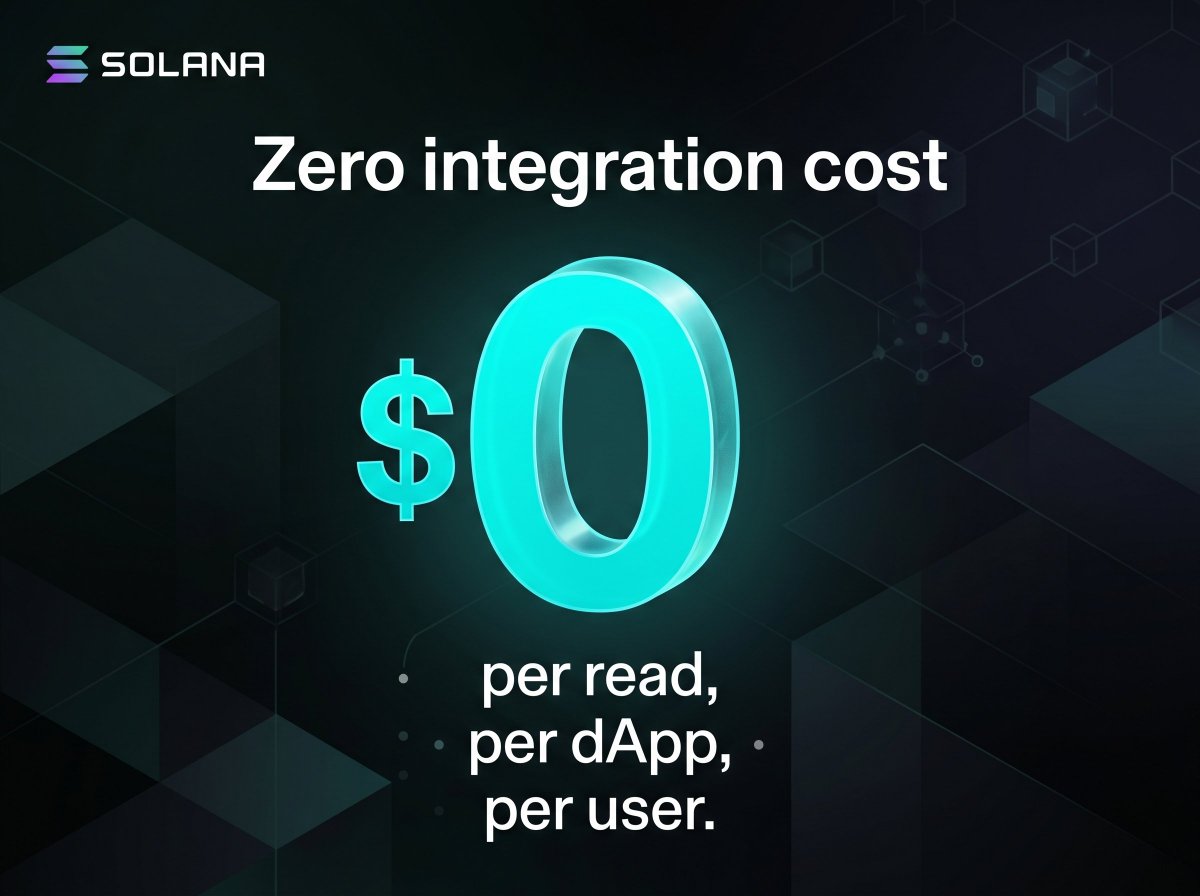
Solana delivers what an on-chain identity layer needs: free reads on PDA state, sub-second finality, and composability across any program that wants to read the result. Entros is built on all three. One verification, readable by every dApp on the network. No API keys, no billing relationship, no permission to read.
Live on npm: @entros/verify.
Drop-in React component for proof of personhood on Solana. One callback, five lines of JSX, popup pattern. The component handles wallet connect, the 12-second behavioral capture, the ZK proof, and the on-chain mint. Your app stays wallet-adapter-free until a verified payload arrives.
3.4 KB ESM gzipped. Wraps @entros/pulse-sdk so the on-chain output matches the canonical https://t.co/qqVm9CrreD flow.
https://t.co/Sd25Qgs3CX