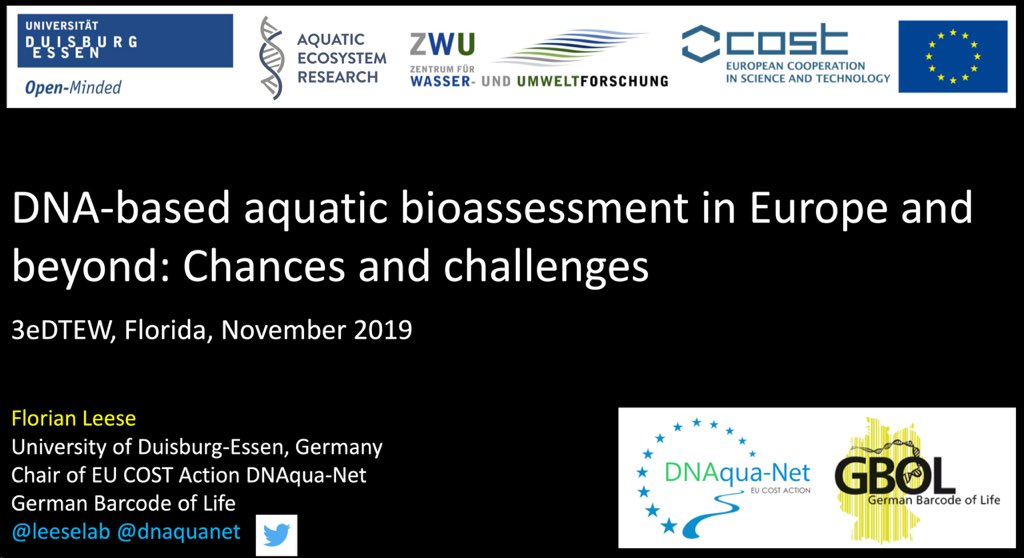
Thanks, colleagues from the US for inviting @leeselab to present #DNAquaNet at #3eDTEW 👍🏽We need such regular exchange across countries & user groups to identify best-practice application of #eDNA! Hope to see many here eg at the big #DNAquaNet conference Sept 15-18th in Evian!
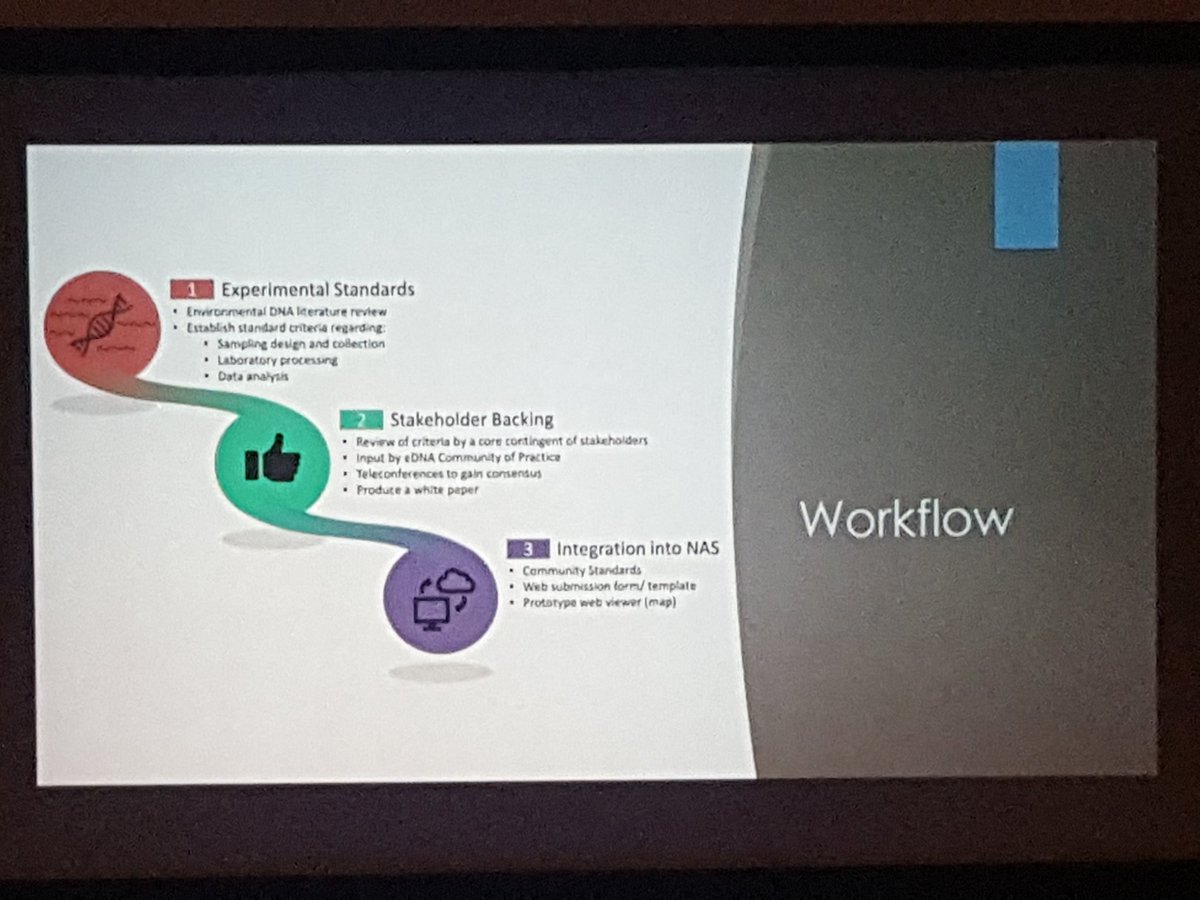
#3eDTEW discussion happening now: Should the #fish#eDNA#CommunityOfPractice publish an eDNA protocol chapter(s) in the next @AmFisheriesSoc "Standard Methods for Sampling" book (https://t.co/KgI2eYyq4D)? Reply w/ your reasons! cc @edna4wildlife
Great talk by @KatyKlymus on the standardisation of LOD/LOQ reporting in #eDNA literature. Definitely a subject that requires more discussion and implementation in future works #3eDTEW
Keynote speaker David Pillod focuses on the strengths, weaknesses, opportunities and challenges of #eDNA. Big questions on how to overcome skepticism & to create communication plans #3eDTEW
@annammckee of @USGS reviews #eDNA#metabarcoding approaches for estimating organism abundance, raising important questions about how to integrate across studies and consider possibilities. #3eDTEW
Matt Laramie of @USGS shares how relationships between #eDNA concentration and salmonid abundance or biomass in streams are complex and can be difficult to interpret. "Not there yet"
#3eDTEW
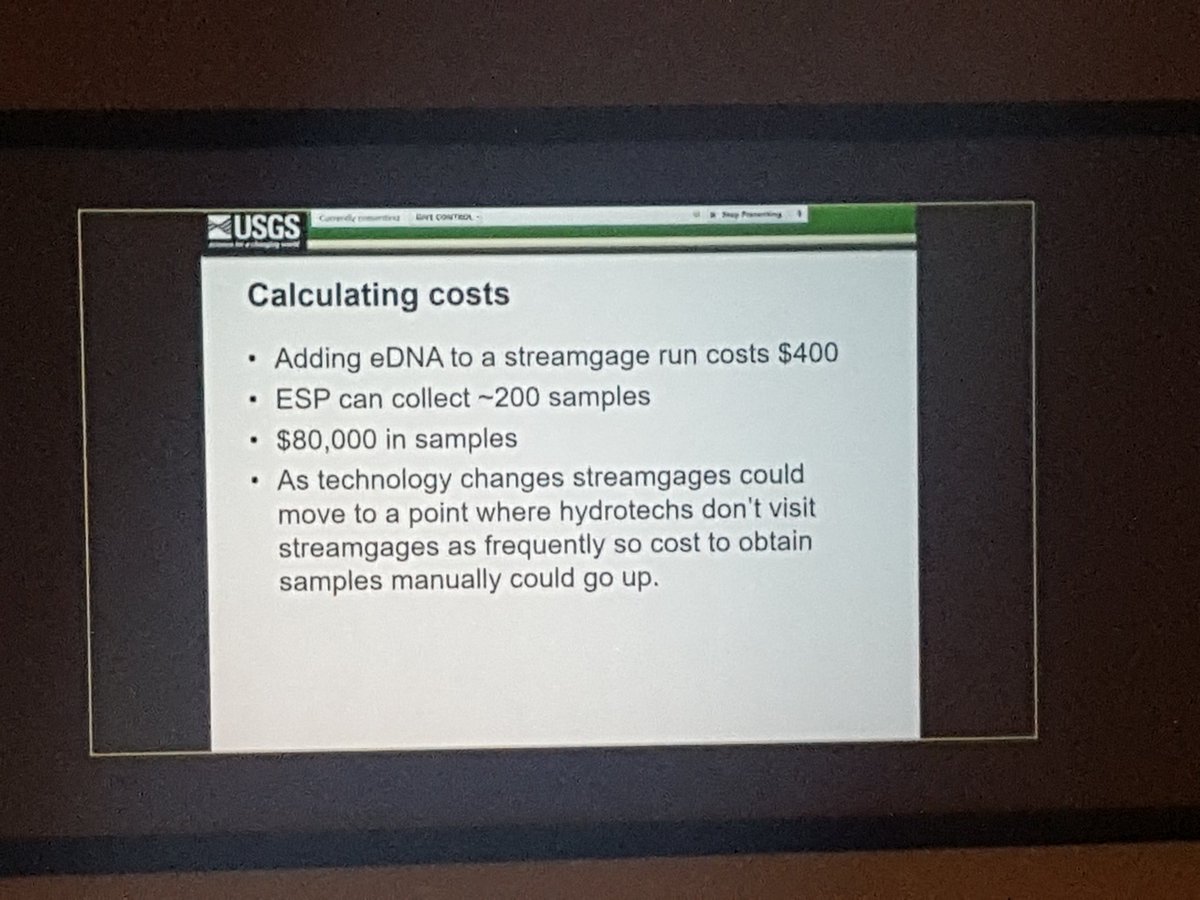
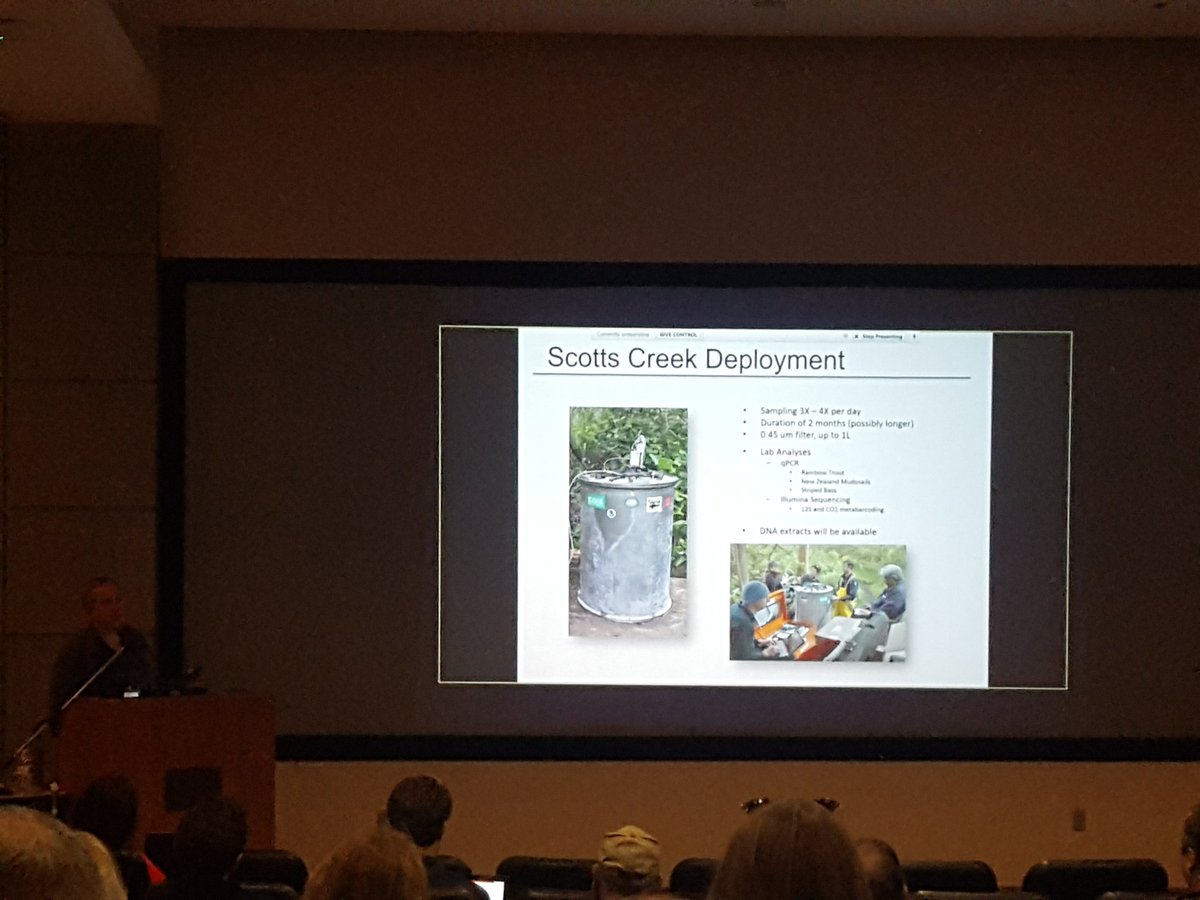
Jim Birch @MBARI_News shares a few examples of their remote, autonomous #eDNA sampling & testing robots, from deep ocean to shallow creeks. #3eDTEW
@david_pilliod of @USGS at #3eDTEW on keeping pace w/ #eDNA science, suggests we've done a less-than-stellar job of #scicomm & #outreach; natural resource managers often feel overwhelmed. Agree/disagree?
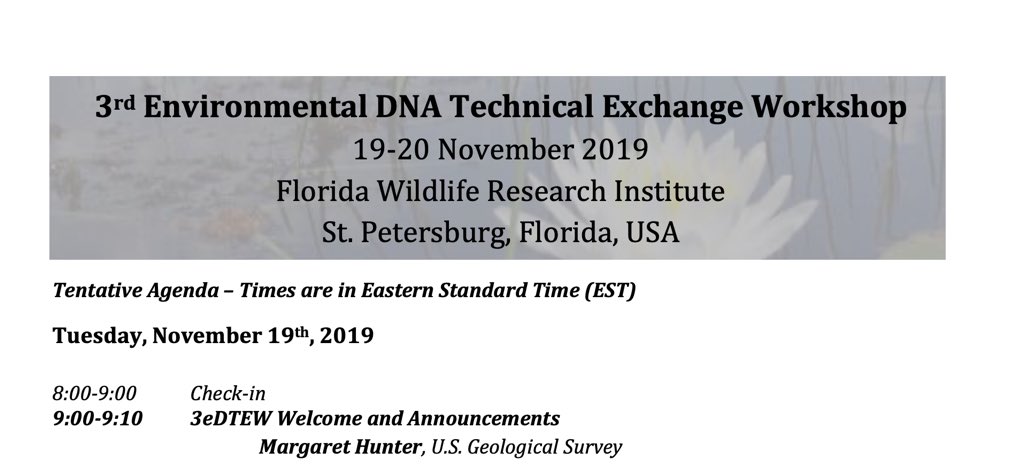
Maggie Hunter @USGS kicks off the 3rd Environmental DNA Technical Exchange Workshop (#3eDTEW) in St. Petersburg, FL, USA @MyFWC. 2 days of #eDNA updates
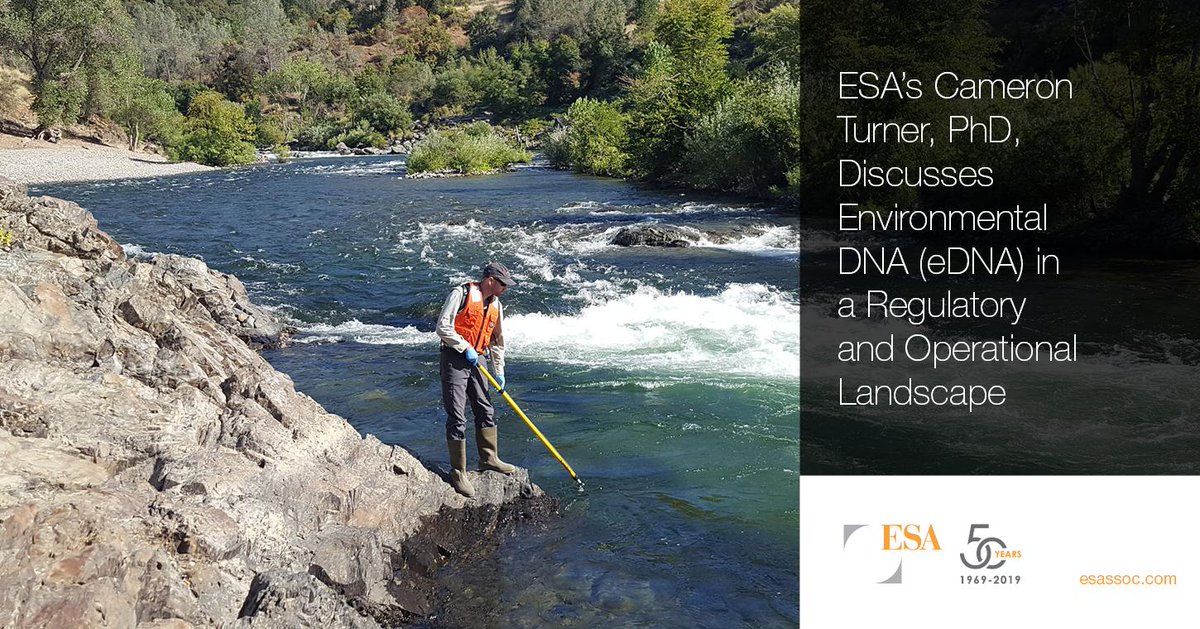
eDNA monitoring can be a cost-effective, accurate, and timely way to detect the presence of animals and plants. Read Dr. Turner’s overview of our eDNA workflow, and how it enhances our ability to make critical determinations here: https://t.co/rOgWVIVaJd