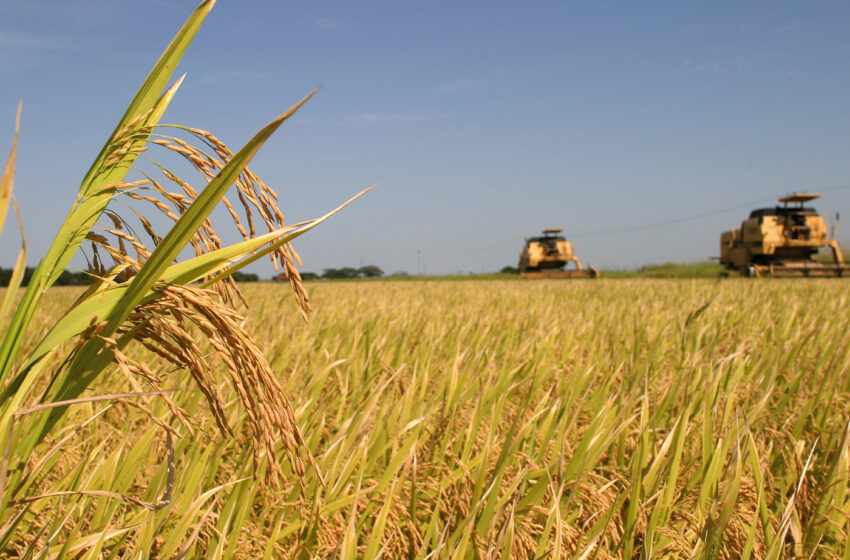
Rice feeds more than half the people on Earth.
Most of the rice Brazil eats comes from one state.
Rio Grande do Sul sits at the far south, on the border with Uruguay and Argentina.
Its flat lowlands are flooded on purpose, held under shallow water so the rice can grow.
That one state grows 70% of Brazil's rice.
Brazil grows more rice than it eats, so a country of more than 200 million people feeds itself on its own grain.
In late April 2024, the rain came and did not stop.
Rivers across Rio Grande do Sul broke their banks.
Close to 90% of the towns in the state were hit.
The flooding caused more than R$6 billion (US$1.2 billion) in farm losses.
Rice prices spiked more than 20% in under two months.
Most of the crop was already harvested, so the worst case did not hit.
The government still cut the rice import tax through the end of the year, in case the country ran short.
One state grows the grain that fills nearly every plate in Brazil.
That grain is the same staple that feeds half the planet.
The 2024 flood showed how much of Brazil's table rides on that one state.
Markets price Brazil on the politics out of Brasília.
The rice grows on the land, the water, and the sun in the south.
In a book by Walter Ong I read, he talked about how writing crystallized knowledge.
Before writing, every region had their 'expert' on a given topic. If you wanted to learn about something, you would be told who to seek out. Each generation had knowledge passed on to them, and in turn would add to or modify it as was needed. Once we had writing, anyone wanting to learn was told which book was 'the book' to read.
Books are one way communication however. You cant argue a nuanced disagreement with someone who died 100 years ago. Before writing, change was never more than a generation away. After writing, someone had to make significant enough improvements, that their book then became the new 'the book'. Change started to come in discrete steps, instead of steady advancements.
As science advances, there are less of these giant steps. Which is partly why things feel like they are slowing down, experts dont want to argue with 'the book' they all worship.
The book was "Fighting for Life" by Walter Ong.
It's an awesome book. Best book on male behavior I have read, while still be very respectful towards women (borders on deferential).
Lycurgus of Sparta forbade the Spartans from writing down their laws and constitution.
Once authoritative words are written down, people motivated by very different principles can come along and usurp the authority for themselves.
"Interpretation" they will call it, turning the old law into something very different—even contradictory to the original spirit—which serves whatever new interest the "interpreter" has identified.
Lycurgus' principle points to the reality: states are not ultimately ruled by laws, but by people wielding those laws as tools, for good or ill.
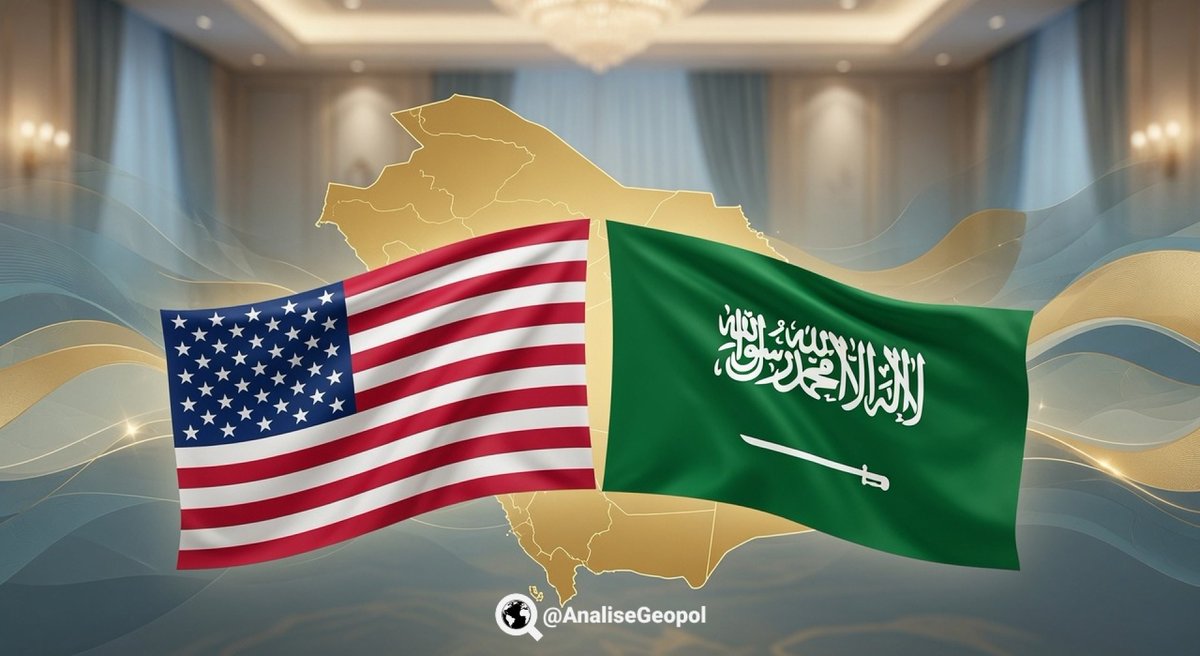
🇸🇦🇺🇸 Arábia Saudita e EUA estão passando por uma grave crise diplomática. Os sauditas proibiram o uso de suas bases para operações militares dos EUA contra o Irã, o que resultou em uma retaliação de Washington ameaçando suspender o fornecimento de armas para a Arábia Saudita, principalmente de mísseis antiaéreos.
Recentemente, o Secretário de Estado dos EUA, Marco Rubio, visitou vários países do Golfo e Oriente Médio, deixando a Arábia Saudita fora de sua agenda de reuniões, gerando rumores de que fez isso de propósito para escantear as autoridades de Riade.
O príncipe herdeiro da Arábia Saudita, Mohammad bin Salman, também recusou o convite para participar da cúpula do G7 que ocorreu mês passado na França, sinalizando seu afastamento do Ocidente coletivo, chegando a criticar publicamente a postura dos EUA em sua guerra contra o Irã.
Neste momento, os EUA já estão retirando parte de seus equipamentos, munição e tropas estacionadas em bases da Arábia Saudita, passando a concentrar sua presença militar em outros países do Golfo, especialmente nos Emirados Árabes Unidos, Kuwait e Bahrein, além de Israel, conforme reportado pela Reuters.
Toda essa situação reflete uma crise diplomática sem precedentes entre os EUA e Arábia Saudita, que sempre foram aliados históricos e alinhados em seus interesses no Oriente Médio, com a Arábia Saudita inclusive servindo como a peça-chave para os EUA instituírem o atual sistema econômico mundial baseado no petrodólar.
O afastamento saudita dos EUA é mais uma das consequências da guerra lançada por Trump contra o Irã, que atualmente está remodelando as relações geopolíticas de todo o Oriente Médio.
URGENTE: Estados Unidos bloqueia bens e recursos de três empresas brasileiras, sediadas em São Paulo, por acusação de ligação com o PCC. Departamento de Tesouro diz que bens de sócios e empresas ligadas com os alvos também terão recursos bloqueados. Os alvos são a Victory Trading (financeira), a Pixwave Soluções de Pagamentos Ltda (Pixwave) e a Wave Construções Inteligentes Ltda (construtora).
@jcaetanoleite Problema do antinacionalismo é aquele que Mané Garrincha identificou quando perguntou a Feola se ele havia combinado suas táticas com os russos: o nacionalismo opera no campo instrumental de conflitos inevitáveis. Abrir mão dele não garante que os outros também o façam.
Bizarro como muitos querem importar as loucuras do wokeísmo americano (A famosa PAUTA AMERICANA) como essa de falar mal de miscigenação ou adotar posturas meio... eugenistas.
Sendo que o Brasil é historicamente miscigenado e não segregado culturalmente como é nos Estados Unidos, pessoal precisa parar com isso, já basta nosso país ser cobaia de laboratório das experiências malucas dessas pautas europeias-americanas.
german people calling argentinians nazis ???? french people and americans calling us genocidals?? it’s absolutely insane everyone has lost their mind and at the end it’s first world country’s finding an excuse to be racist and xenophobic and get a free pass
Black Argentines served prominently in 19th-century wars (independence, civil wars, Triple Alliance) often in units like the Batallón de Pardos y Morenos or as freed slaves enlisting for liberty.
Casualties hit hard across ranks from disease, hardship, and fighting—not unique to them or proof of deliberate “cannon fodder” targeting for genocide.
Scholarship (e.g. Andrews, recent demographic studies) shows participation was significant but not overwhelmingly disproportionate versus other groups in lower ranks. No state policy aimed at racial extermination.
High male losses contributed to gender imbalance and intermarriage. The visible population drop stems far more from centuries of mixing plus massive European immigration than battlefield deaths alone.
Census and genetic data align with today’s demographics.
No. Tragic deaths of black soldiers in 19th-century wars do not equal genocide. Genocide requires deliberate state intent to destroy the group. Historians find no such policy—black troops served but were not disproportionately targeted as cannon fodder more than others. Yellow fever hit recent European immigrants hardest in key outbreaks.
The main drivers of the population decline were extensive intermarriage since colonial times and massive European immigration that transformed demographics. Argentina's 2022 census shows 0.66% self-identify as Afro-Argentine. Scholarship rejects the genocide claim; mixing and assimilation explain the shift far better than extermination narratives. The national team's makeup reflects today's reality.
@kavidecorrido Como la otra brasilera mentirosa de TikTok que vi circular por acá, dijo que fueron procesos muy similares el nuestro y el suyo, claro, tener 10 mil esclavos limpiando casas hasta 1853 y sin segración o tener 3 millones en minas y plantaciones hasta 1890 y más, es idéntico!
Cuando los gringos se agarran que la población africana esclavizada en Buenos Aires era el 30% de la ciudad cuando obvian que vivíamos solo 40 mil personas acá. Cómo les cuesta pensar la historia.
Chicos ustedes realmente tienen que empezar a cuestionar la razón por la cual países europeos TIENEN negros desde un principio, no los tienen por generosos y woke, los tienen porque los han, esclavizado, traficado, torturado y masacrado hace más de 400 años
How is it possible that agricultural commodities will remain on the shallow in Brazil (the world's largest food producer) while most of its farmers are being "forced" to sell their land to pay off debts, since the latest harvests were not enough to raise capital and restore solvency?
Não é só no Brasil que é assim, mas além de ser mais persistente nas mudanças sociais é legitimado como uma positividade cultural de afeto e empatia, quando na verdade é o egoísmo mais frio e autoritário possível.
A sociabilidade no Brasil é de fato profundamente desrespeitosa e abusiva, começando em casa na própria família. Conviver aqui é um inferno, é submergir num brejo de mesquinharia. Disso resultam a paranóia e o ressentimento generalizados e naturalizados.
@DiogoCadarn A ideia da vida como uma guerra/conflito/batalha/duelo com alguém que está constantemente tentando ou te derrubar, te humilhar ou algo similar é profundamente subsolesca. Diário do Subsolo, parte 2, capítulo 1: