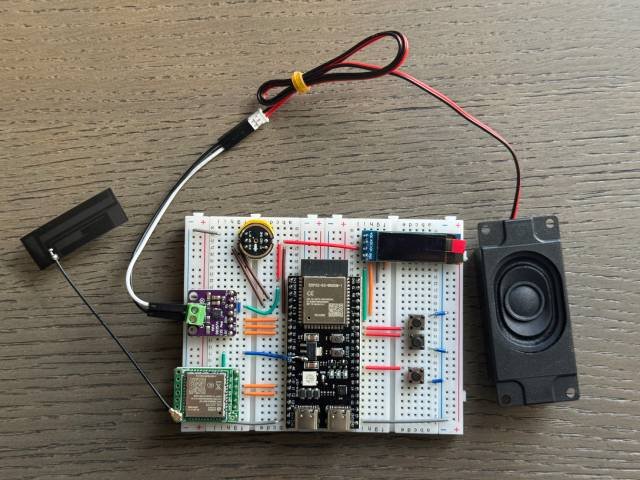
Arduino era una pyme italiana fundada por un profesor de electrónica que fabricaba unas plaquetas para enseñar a programar (prender un led, mover un motorcito).
Arduino fue el responsable directo de la explosión de las impresoras 3d y los drones hace 15 años (esencialmente mover motorcitos). Perdieron mucho mercado cuando los chinos les copiaron todo y lo vendían a un tercio del precio.
Ahora los compraron unos chinos y lanzaron una minicomputadora que corre IA (y mueve motorcitos). Esta carísima, pero cuando la clonen a un tercio del precio, cualquier aparato que cueste ~200 dólares va a tener IA corriéndole localmente.
Entusiasma y asusta el futuro.
¡El hacker de GTA VI #CyberLeek es un genio de la privacidad! 🤯 Creó un sistema de contacto encriptado y anonimo usando Monero y Session, ¡sin servidores ni bases de datos! Los decimales exactos de tu pago son la clave para enviarle un mensaje encriptado. #GTA6
‼️#ATENCIÓN| En Manabí, una banda de tres delincuentes armados estaría lanzando piedras desde un tramo de la carretera en la vía Portoviejo–Montecristi, obligando a los vehículos detenerse para luego asaltarlos.
¿Puedes ejecutar IA local en tu máquina? ¿Cuál es el mejor modelo?
Esta herramienta llamada "llmfit" te ayuda en segundos:
1️⃣ La instalas desde tu terminal
2️⃣ La ejecutas para que analice tu hardware
3️⃣ Y te muestra el ranking de modelos recomendados
→ https://t.co/vAT3BoRL3n
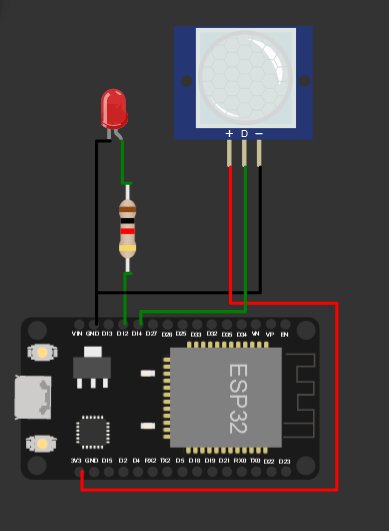
How does a tiny sensor know you just walked into the room?
That's the magic of a PIR sensor.
It detects changes in infrared radiation from warm objects like people. A Fresnel lens focuses IR onto the sensing element, and movement creates a signal your ESP32, Arduino or STM32 can read.
No camera. No complex processing.
Just a tiny sensor, one GPIO and a whole lot of useful automation.
Si tienes Mac y quieres ejecutar IA en local, tienes que probar oMLX. Una alternativa a Ollama y LMStudio.
✓ Optimizado para Apple Sillicon
✓ Cache KV en el SSD
✓ Compatible con Claude Code y Cursor
✓ Afinado para Qwen3.8
→ https://t.co/FBTpjlOq2z
OpenGym is a self-hosted fitness tracker built with React and Docker. It automates weekly training plans with animated demos and charts body weight progress, ensuring all sensitive workout data remains local rather than stored on third-party servers.
https://t.co/UcNtIdyYoO
Want to get serious about embedded + DIY? Start small
1. Pick a mini PC
2. Add Linux + Docker
3. Set up Git + a private repo
4. Add ESP32 / Raspberry Pi / STM32 boards
5. Build a local MQTT + Node-RED stack
6. Add sensors, cameras & actuators
7. Set up Grafana + Prometheus
8. Add a NAS for firmware, logs & projects
9. Automate builds, flashing & testing
10. Break it. Debug it. Repeat.
You don't need a $10K rack.
A few boards, a cheap PC and curiosity can become your own embedded engineering lab.
What If Your AI Assistant Ran on an ESP32?
You can turn an ESP32-S3 into a surprisingly capable voice AI device.
- ESP32-S3 handles audio, networking and device control
- I2S microphone + speaker for voice interaction
- Wake-word detection for hands-free use
- Streams audio for speech recognition
- LLM handles the conversation
- TTS sends the response back as speech
- Supports displays, buttons and other peripherals
The cool part?
The tiny MCU does not need to run the entire AI model. It handles the edge work while the heavy inference happens elsewhere.
Small hardware. Natural voice interaction. Open source.
What If Your Desk Robot Could Learn Your Moves?
Meet Quaddle, a tiny open-source quadruped built for tinkering.
It has just 4 servos, but can run, glide sideways and spin in place. You can program it with Block coding, Python or C++.
You can physically guide it through a movement, tap to record, and it can learn and replay the trick.
There is also AI conversation, touch interaction, sensors and 3D-printable parts.
A fun way to get hands-on with robotics, coding, AI and mechanical design.
Muse Glimmer is now available to run with Ollama.
Available today via Ollama’s MLX engine with state-of-the-art-performance on Apple Silicon, Muse Glimmer can power Claude Code, Codex, and more always-on local agent workflows natively using Ollama.
Additional support and optimizations for Apple Silicon, NVIDIA, AMD, and other platforms will be available shortly.
Go @finkd@alexandr_wang and @Meta !
OpenAI acaba de soltar la bestia: GPT-5.6-Cyber.
Es un modelo entrenado específicamente para ciberseguridad avanzada y autorizada.
Es un modelo purpose-built que entiende vulnerabilidades, exploit chains, privilege escalation y sandbox escapes a un nivel brutal.
¿Cómo lo entregan?
🔵 Daybreak Blue
- Acceso a modelos frontier (GPT-5.6 Sol) con safeguards.
- Ideal para el día a día de la mayoría de defensores:
descubrimiento de vulnerabilidades, code review seguro, análisis de malware, incident response y validación de parches.
🔴Daybreak Red
Aquí es donde entra GPT-5.6-Cyber. Diseñado para investigadores experimentados que hacen trabajo autorizado de alto nivel:
- investigación profunda de vulnerabilidades, validación de exploits y security testing complejo.
Los números son una barbaridad, miren las diferencias:
- GPT-5.6 Sol → ~1-2% de éxito en tareas avanzadas de ciber.
- GPT-5.6-Cyber → 95%.
Y ya tiene sangre real en las manos: descubrió el CVE-2026-15903 en el motor V8 de Chrome (memory corruption + sandbox escape).