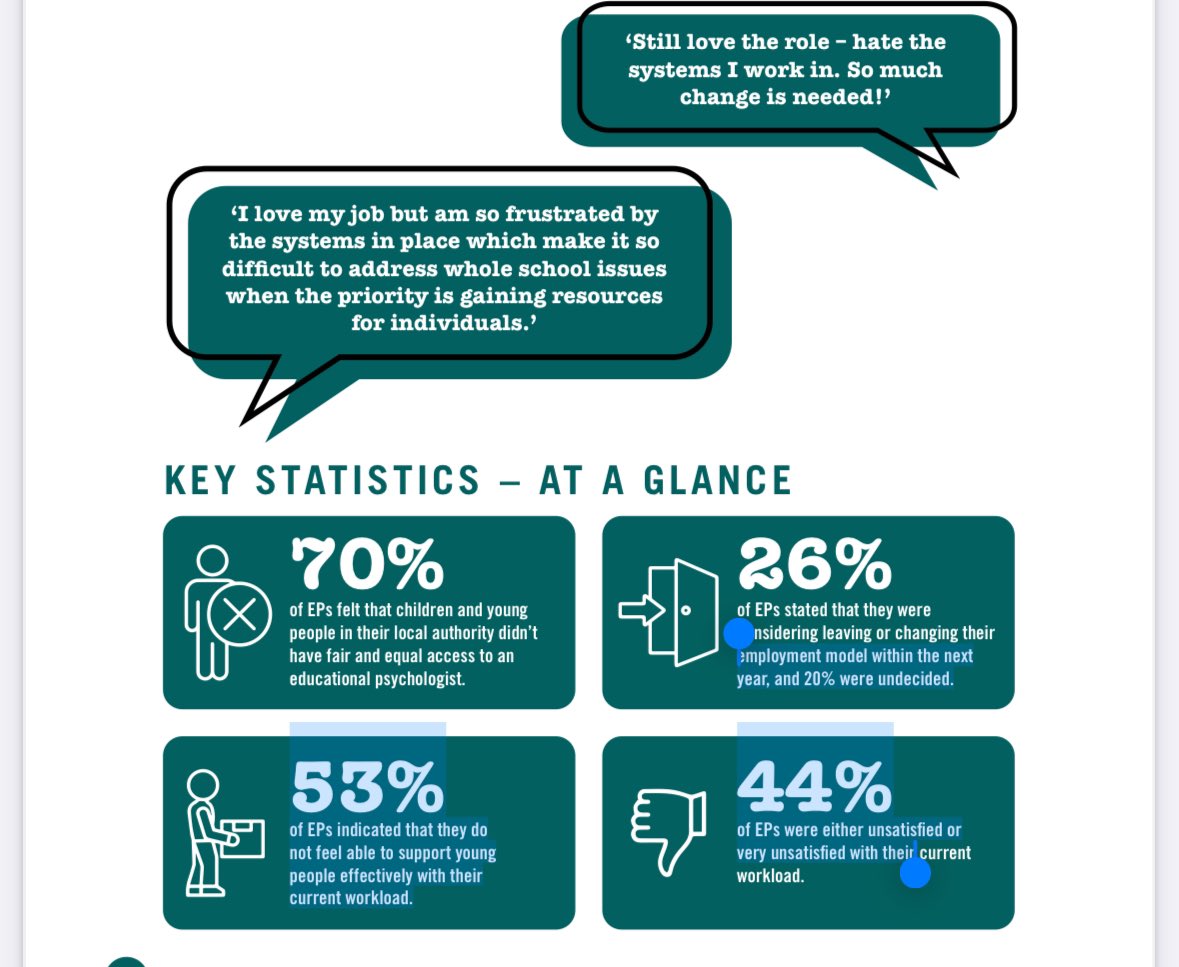
“Still love the role - hate the systems I work in. So much change is needed”
👀Take a look at the results of the @BPSOfficial DECP survey about Educational Psychology work here: https://t.co/Ot22CZrEXQ
#twittereps
@RunSirRun @naomicfisher@jenhawk6248 Attended an academy. Injured foot on school trip so couldn't wear shoes. Had new non-black trainers, parents couldn't afford 2nd pair, school notified in advance. Isolation for 1 day & mum kicked off, back to class following day. A while ago yes, but many recent similar stories!
📢 https://t.co/WFCMeK4Fm3
Although undoubtedly “welcome relief for many families awaiting a school place…the DECP is concerned that reasons why MS schools are finding it so difficult to provide inclusive edu for an increasing proportion of CYP remain unexamined & unaddressed”
Government: “Investing over £2m to train 400 more educational psychologists from this year”
🤦🏾♀️This represents a continuation of what each new tender has delivered in recent years and will not provide any additional educational psychologists above what has always been planned for
📢@BPSOfficial responds to NEU poll:
“… that they feel unable to access [EP] and other support for pupils who need it is a tragedy for those individuals, but sadly not surprising and… indicative of the huge challenges facing the [EP] workforce.”
https://t.co/jov4IXPSN9
The message remains the same, good luck to all prospective TEPs waiting to hear back today. The profession needs EPs, if it isn't this year for you, it doesn't mean never. Whatever the outcome, take care of yourself. #TwitterEPs
#twitterEPs good luck to everyone waiting to hear back today. Whatever the result, be kind to yourself, remember you made it this far for a reason! If it isn't your year that does not mean it won't happen in the future. One day you will be an amazing EP! 🥰🤗
What should we do about attendance? Here’s a pathway I hear way too often. Child manages primary school fine, is happy there and excited to go to secondary school. They start, bright eyed and bushy tailed, and like many eleven-year-olds they find the transition hard. It’s a big step up.
Expectations are suddenly much higher than at primary school, not necessarily academically but in what is demanded of them outside the academics. They have to remember much more and the level of organisation required is significant. They have to get themselves from class to class with the right books and equipment and remember to walk on the right side of the corridor and not to talk. They don’t have one teacher throughout the day who they can get to know. They don’t know who to ask for help.
Eleven-year-olds are immature. They find all of this stuff much harder than adults, not because they are lazy, but because they are eleven and their brains have a lot of development still to do. They’ll still be developing until they are about 25, in fact. The things which are not well developed yet are exactly the things which they need to keep up secondary school – self-management, self-organisation and self-monitoring. It’s a struggle for them to keep up.
If their school has a high control approach, quickly they start to either get behaviour points or to worry about getting behaviour points. They start checking things all the time, and they become hysterical at home when they have lost a green pen, torn a homework page or they can’t find their socks. Emotion regulation is something else which is still in development at age eleven, and teenagers feel emotions (particularly when connected to shaming in front of their peers) intensely.
Their parents get alerts of demerits and they get detentions, having never been in trouble at primary school. They forget a detention (because they are eleven, and keeping track of things is harder when you are immature) and then they are in isolation. They start to lose their sparkle. They think that the teachers don’t like them. Everything piles up on them and they are increasingly unhappy. They start saying they don’t want to go to school.
School react by saying that if they don’t come every day, they’ll be excluded from the school trip and offer an certificate for 100% attendance. This doesn’t help. Their unhappiness increases. Every morning is a struggle. They become a ‘persistent absentee’ and their parents get official letters and fixed penalty fines. Their parents say ‘It was like falling off a cliff’ and they don’t know what to do.
Where’s the problem here? Is it ‘behaviour’ and they should simply be made to keep going to school? Or is there a problem with what is going on in some of our schools, creating an environment in which some children simply can’t thrive?
If we aren’t allowed to ask the question, we’ll never find out.
Statement from UK national charity SMiRA on the use of "situational mutism" Vs "selective mutism". Please RT and share. #selectivemutism#situationalmutism
The crisis in school attendance is rightly being talked about in public discourse.
However, laying the blame at the door of parents really is letting this government off the hook.
The reasons children are absent can be complex - poverty, SEND, mental health distress, etc.
Since the pandemic, anxiety has doubled amongst our young people.
Sir Kevan Collins put together a £15bn covid recovery programme for education, which the government completely failed to implement.
They've cut CAMHs services to the bone, and school funding has been decimated, meaning schools can't fund much needed pastoral support.
But also on this government's watch we have seen a narrowing of the curriculum - the things that make school enjoyable (sport, drama, the arts, music, creativity) increasingly becoming pursuits only for those who attend fee paying schools.
Due to school accountability measures (ofsted), the high stakes nature of exams - the school environment has become increasingly like a pressure cooker.
As a teacher, I've never met a parent without aspiration for their child, just without the tools to meet them.
The crisis in school attendance is a government made crisis down to their failure to invest in our children.
To this day, some children in care settings are arrested and charged with theft when they take food from their fridge after hours. Yes, you heard that right. Imagine being prosecuted for taking food from the kitchen in a children's home because you're starving, and then you get a criminal record. This doesn't happen in any other setting. Making care experience a protected characteristic needs to become legislation. #changeiscoming
Group for Black Male Aspiring psychologists!
Pls share widely
“We are a group of Black aspiring psychologists who identify as men. Our space is focused on reflecting on our specific experiences within psychology, decompress and nurturing a safe and non judgmental environment.
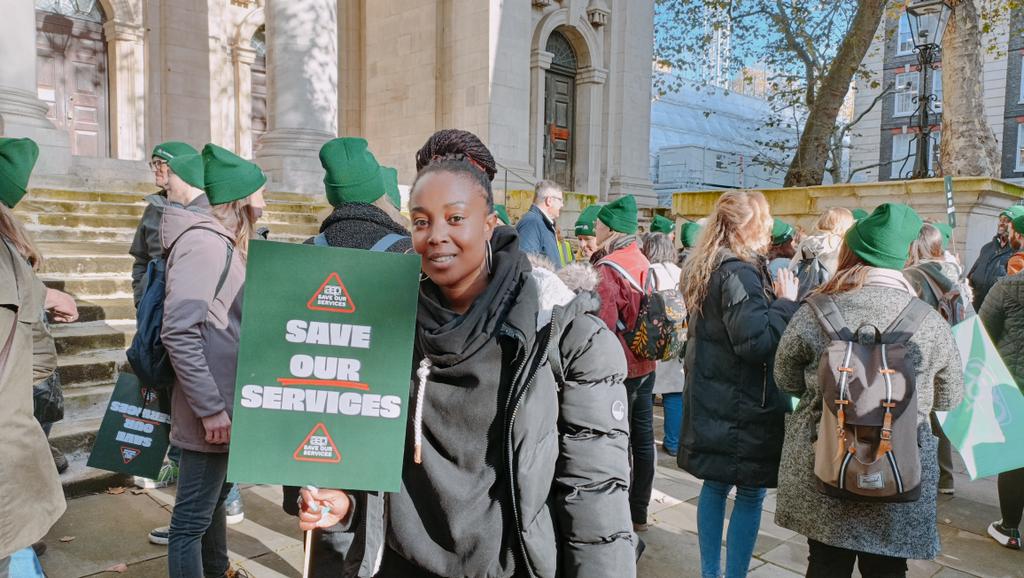
The rally organised by the @AEPsychologists brought together education psychologists with representatives from the TUC, General Federation of Trade Unions & NEU all calling for decent pay for these dedicated professionals.
#SaveOurServices no one wants to strike, but EPs are burning out. Recruitment and retention is a massive issue and it impacts our ability to support children and young people in need. We need change, urgently!





![DECPOfficial's tweet photo. 📢@BPSOfficial responds to NEU poll:
“… that they feel unable to access [EP] and other support for pupils who need it is a tragedy for those individuals, but sadly not surprising and… indicative of the huge challenges facing the [EP] workforce.”
https://t.co/jov4IXPSN9 https://t.co/4LUlqTGje5](https://pbs.twimg.com/media/GKylrvEWUAE2s5Y.jpg)