Neuralink devices are investigational and have not been approved by the FDA or other regulatory authorities. This content features voluntary clinical trial participants sharing their personal experiences, which may not reflect all participants or future outcomes.
To celebrate GTA VI release day, Billy used his Neuralink implant to play the game during an internal livestream.
As a Neuralink study participant living with tetraplegia due to spinal cord injury, he has been working with our engineers to explore new ways of controlling devices like a computer, phone, and robotic arm telepathically.
For playing video games, he’s demonstrated the ability to use 2 joysticks and 12 buttons, all with his mind, without a physical controller.
With his permission, we’re sharing a recording of the livestream here.
Our clinical trial participants have now used their Neuralink implants for over 50,000 hours, building one of the largest datasets of intracortical neural activity ever.
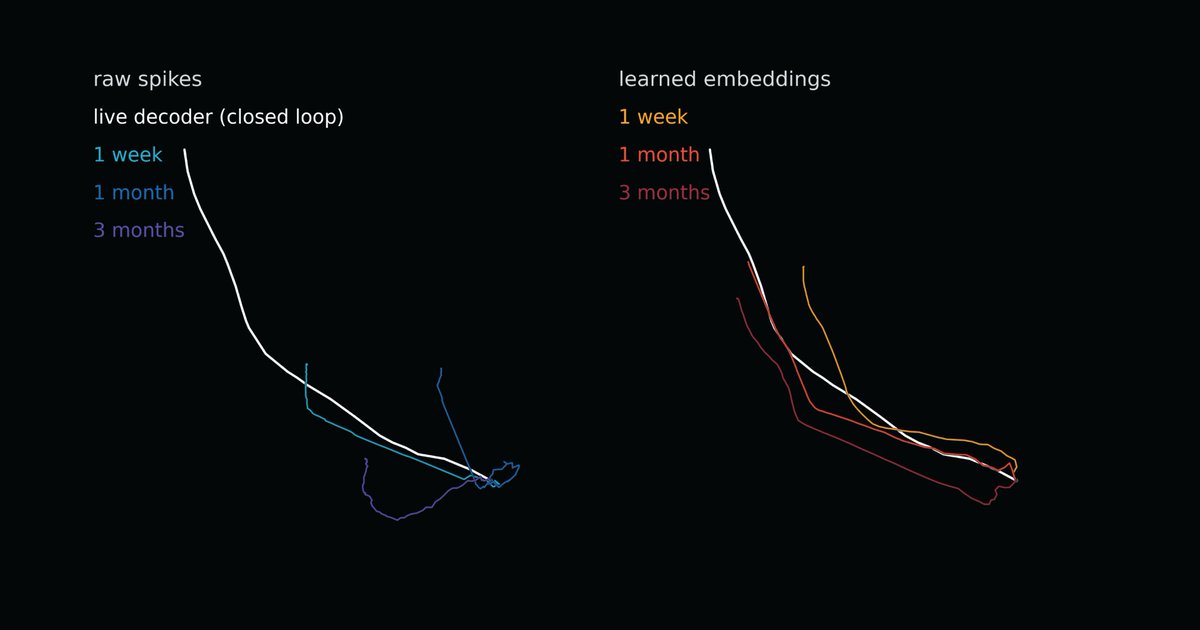
We used it to pretrain a foundation model for BCI: self-supervised neural encoders that turn noisy, drifting spikes into stable representations.
Some initial results:
• Decoders that keep working for weeks instead of days. For some users, calibration dropped from 10 min/day to 10 min/week
• Teleporting cursors that jump straight to the intended target
• A new cursor-control record of 11.32 bits per second (exceeding the performance of most able-bodied people)
We’re just getting started. Future directions include pooling data across participants, one-shot (or zero-shot) calibration, and an API for the motor cortex.
Read more:
https://t.co/sIQXFUI7pc
We’ve received FDA approval to launch LINK, the first pivotal trial for an implantable brain-computer interface in the US. This builds off of our work with 30+ participants with Neuralink to date.
Those with ALS may be eligible. To learn more:
https://t.co/dWhb5N4GdR