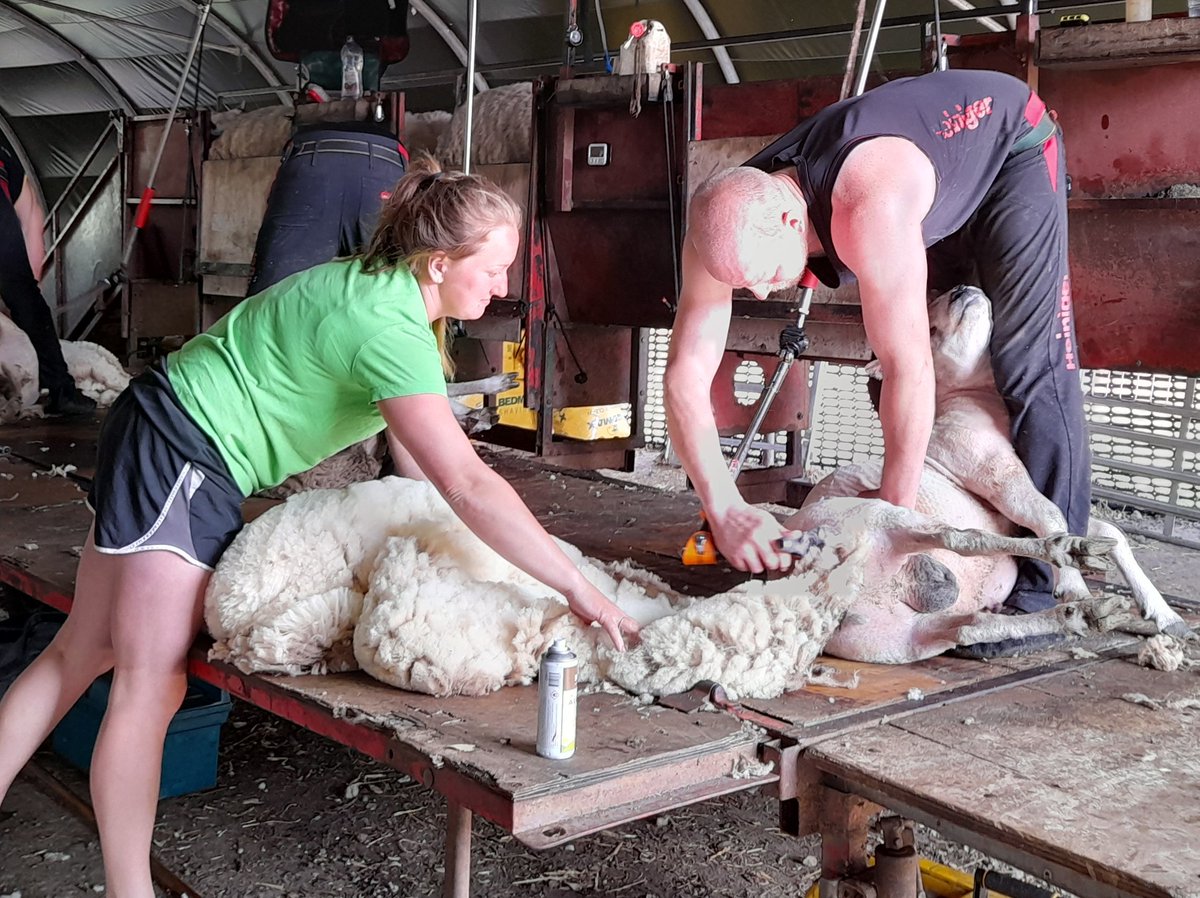
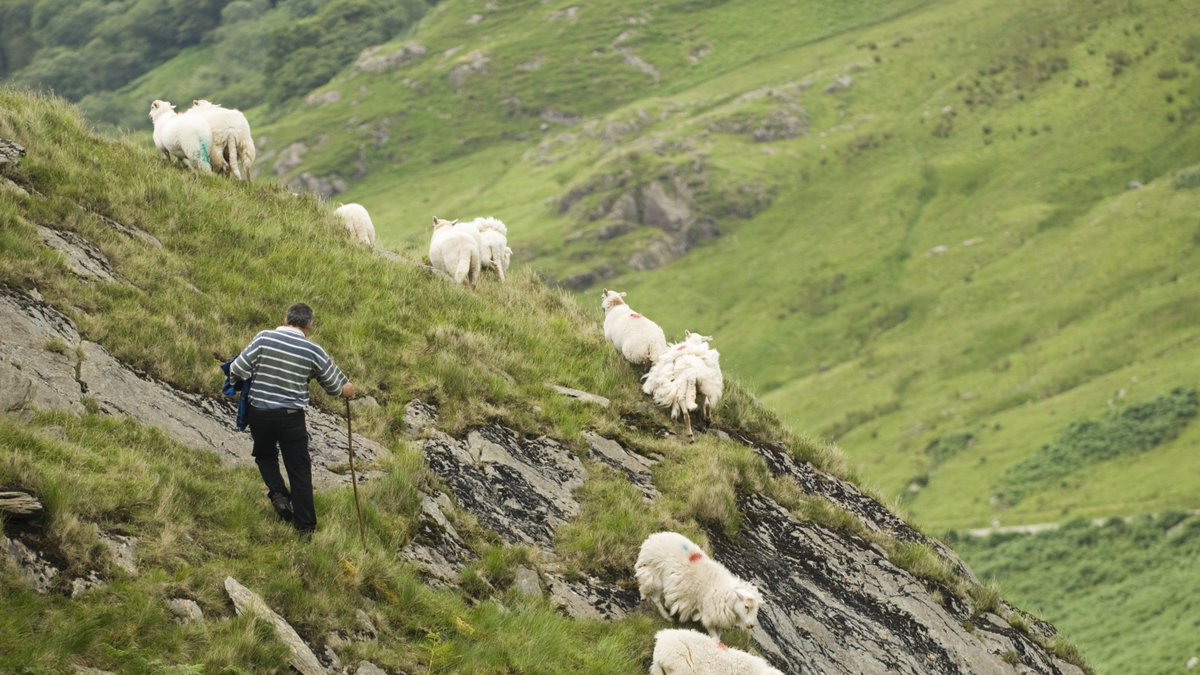
The last overseas shearers Britain intends to let in are on the fells right now, working out the final weeks of their leave.
The door shut on 30 June. No vote, no debate, no announcement, just a date passing quietly in a summer when everyone was looking elsewhere. Those still working the Borders this week are here on leave that expires on 1 October, and when they fly out that is the end of it.
Understand what is walking out.
Six New Zealanders spent three months in one Northumberland valley last year and sheared nearly 90,000 sheep. Fifteen thousand head each, across farms from the Scottish Borders down to County Durham. They have been coming into Coquetdale for over thirty years. Since 2011 a concession has let up to 75 of them in each spring, and between them they take the wool off one and a half to two million British sheep in a window a few weeks long.
The Home Office rejected the application on 2 February. Twenty-six days of farmers writing to their MPs got it reinstated on 10 March for one final year, with a line about the sector having had fourteen years to train British workers and now being expected to transition to domestic labour.
Here is what that sentence is standing on. British Wool trains over 800 people a year, most of those courses are basic level, and most of the people on them are sheep farmers learning to do their own flock. Training was never the bottleneck. A top shearer clears a ewe in two or three minutes, calm hands, no panic in the animal, hundreds a day for weeks on end, and reaching that standard takes years of conditioning and a place in a global trade that follows the season around the planet.
Fourteen million breeding ewes. A few weeks to do them all. A sheep left in fleece gets eaten alive by maggots, so the job is not optional and the date is not negotiable.
Next spring those farms make phone calls that nobody answers.
Seventy-five shearers, once a year, and a government that could not find room for them.
A reminder that once greyhound (or horse) racing is gone, it’s gone
People won’t continue to breed greyhounds or thoroughbreds on the off chance there’s a change of heart 2-3 years down the line
No time to procrastinate here
From today, family farms and family businesses are subject to the Labour government’s inheritance tax. This is having a devastating impact on family businesses. Generational family businesses are being punished and in many cases, unable to afford the financial impact. Shameful.
Keir Starmer and Zack Polanski are helping themselves to Easter eggs in Waitrose when shop worker Kemi Badenoch bundles in to stop them, only for manager Ed Davey to sack her and side with the shoplifters.
Modern Britain is a baffling place.
{satire}
Keir Starmer said this in 2023:
“Every day seems to bring a new existential risk to British farming.
“Losing a farm is not like losing any other business, you can’t come back…you deserve better than that.”
Instead, he betrayed farmers.
Ed Miliband is a crank who spaffed away £30bn of public money on carbon capture machines, bans new North Sea oil & gas licences and destroys prime farmland with massive solar panel projects. He’s putting our food, energy and economic security at risk.
Britain is 110% self-sufficient in lamb.
Let that sink in for a moment.
Not "pretty good." Not "mostly fine." One hundred and ten percent. We grow more than we eat and export the rest. We have done this on permanent upland pasture that cannot be used for anything else, managed by farmers whose families have worked the same ground for generations, using animals that have been optimised for these conditions over centuries.
85% self-sufficient in beef. 100% in milk. 90% in eggs.
The animal products on your plate, if you're eating in Britain, are almost certainly British. The supply chain is: farm, abattoir, butcher or supermarket. Measured in miles. Sometimes in tens of miles.
Now.
Your January strawberries are from Egypt. Your year-round peppers are from Spain or Morocco. Your salad leaves are from Israel in winter. Your green beans come from Kenya. Your blueberries are from Peru or Chile. They travel by refrigerated air freight, which is roughly fifty times more carbon-intensive per kilogram than road transport, to sit in a plastic clam shell next to a small flag and the word "fresh."
The environmental argument against British animal products is not an environmental argument.
It is a geography argument made by people who have not checked where their food comes from.
Check where your food comes from.
⏰ Today, @SteveReedMP says we must prepare for food shortages.
But in the High Court last week, Treasury lawyers argued there was “no good reason” to delay or consult further on IHT affecting farms, citing the need for flexibility to protect public finances and avoid delaying revenue.
You can’t weaken food production and call it resilience.
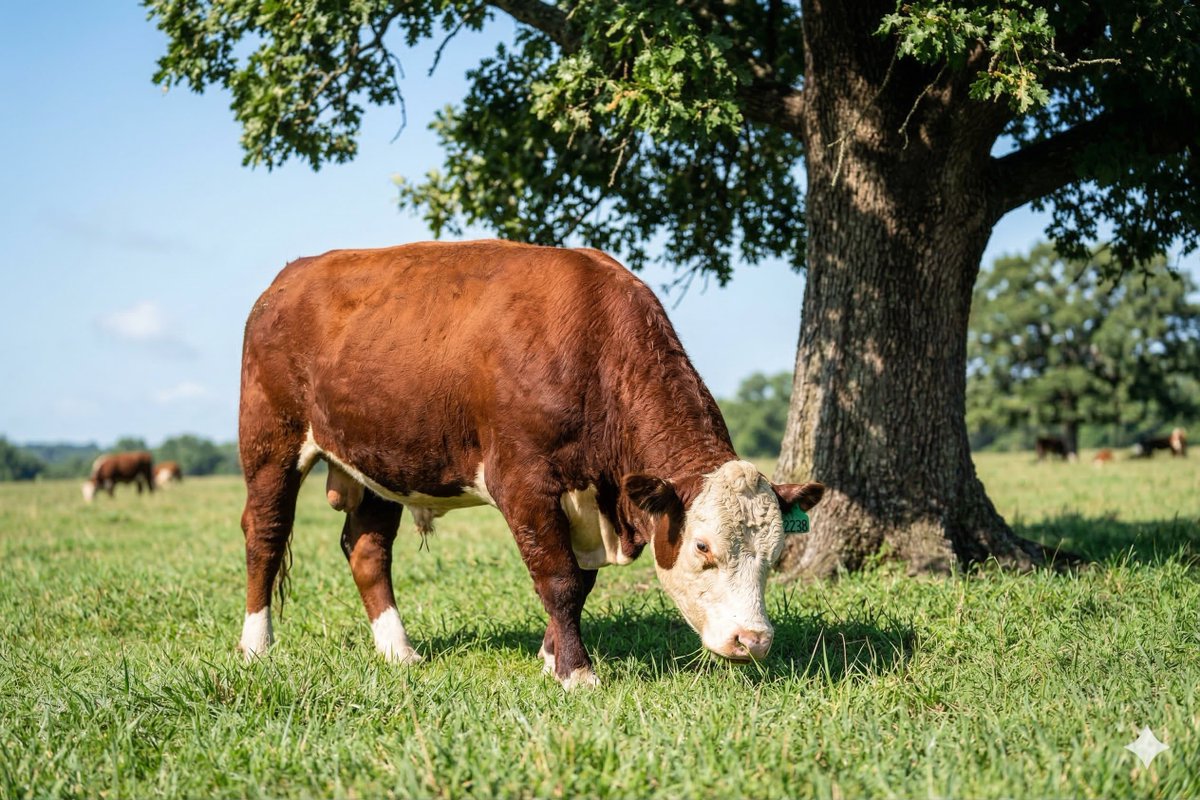
A criticism arrived this week suggesting that Gerald represents a "fantastical, cherry-picked version of British beef farming that bears no relation to industrial reality."
Let's address this directly.
There are no beef cattle in factory farms in the United Kingdom.
Not some. Not most. None. Factory farming of beef cattle: the indoor, grain-fed, densely stocked system that generates the statistics most people cite when they cite beef statistics, is an American model. It does not exist here. It is not legal here in the form it takes there. The land, the climate, and the regulatory framework do not permit it.
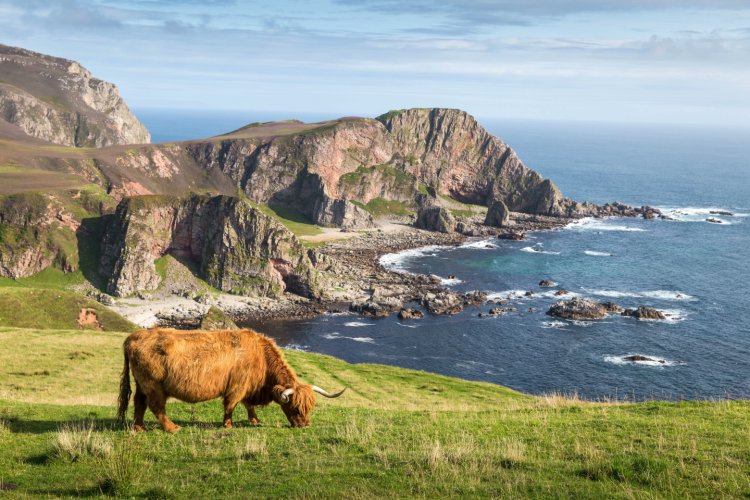
Every beef cow in Britain is raised outdoors on pasture. Approximately 85% are grass-fed for their entire lives. The majority are grass-finished: they reach slaughter weight on forage, with some grain added in the finishing period. The beef in British supermarkets comes from fields, not feedlots.
Gerald is not a carefully selected exception. Gerald is the norm. Gerald is what British beef production looks like. The farmer near Ledbury is not running an artisan heritage operation. He is running a standard British beef farm.
The statistics people reach for: the emissions figures, the land use figures, the water figures, are global averages heavily weighted by the American feedlot system, the Brazilian deforestation story, the industrial grain-fed model that does not apply to a field in Herefordshire and has never applied to a field in Herefordshire.
Gerald grazed permanent pasture today.
Gerald has grazed permanent pasture every day of his life.
Gerald is the rule.
The feedlot is in Kansas.
Kansas is four and a half thousand miles from the south corner.
With Iran's IRGC closing the Strait of Hormuz, it's a good thing that here in the UK we can rely on our North Sea oil. Thank God we didn't elect a bunch of idiots who mothballed the offshore platforms for no good reason.... Oh wait. #LabourUK
No. No. No.
We should not show “cultural sensitivities” when it comes to our election law
People in this county must obey the UK’s laws
“Cultural sensitivity” is not an excuse to break the law
People ask me why I'm so passionate about cattle.
Here's why.
A cow wakes up every morning, walks to a patch of land covered in inedible fibrous grass, and spends its day converting something completely useless to humans into something extraordinarily useful.
It requires no pesticides. No monoculture. No factory. No lab. No patent.
It takes the sun, the soil, the rain, and a stomach full of microbes, and produces the most bioavailable, nutrient-dense food ever consumed by a human being.
Every gram of beef contains a complete amino acid profile. Zinc. B12. Creatine. Carnosine. Heme iron. Things your brain and muscles quite literally cannot work without.
And we've spent the last 50 years being told this animal is killing us.
The audacity.
I'll take my chances with the creature that built civilisations over the oat milk that was invented in 1994.
We highlighted some very important points on @BBCLondonNews last week.
Lambeth council typically has about 600 empty homes across the borough, the average night rate for 1,000s of families in Temporary Accommodation is £150. Have a guess at how much we are wasting annually?
Well that was emotional! What an enormous pleasure to see Constitution Hill put on a magnificent display to make a winning debut on the flat by almost 10 lengths. So happy for his owner Michael Buckley.
🗣️ "This represents further destruction of countryside and best farmland while warehouse roofs, car parks and houses sit empty of solar panels."
READ MORE: https://t.co/eksaQDvNIo
This is by no means an insignificant change to the Government logo, not least because it touches on the Constitution and British tradition. I trust it will be reversed by the next government, which will be His Majesty's.
A cow takes grass, which humans cannot eat, and converts it into beef, which humans thrive on.
This is called upcycling in every other context and would normally be celebrated as brilliant efficiency. But when cattle do it, we call it wasteful.
The conversion rate everyone cites is "it takes 10kg of feed to produce 1kg of beef" which makes it sound inefficient. Except that 10kg is mostly grass. Grass you cannot eat. Grass growing on land that cannot produce crops.
The cow isn't wasting 9kg of human food. It's creating 1kg of human food from 10kg of non-human food.
This is the opposite of wasteful. It's productive. You started with zero human-edible calories on a hillside. You ended with nutrient-dense beef.
Compare this to industrial monoculture where you start with topsoil, add synthetic fertilizers made from fossil fuels, spray pesticides that kill everything, harvest once, and deplete the soil so it produces less next year.
That system is actually inefficient. It consumes resources and degrades capacity.
Livestock builds soil while producing food. Monoculture depletes soil while producing food. One is sustainable. One is mining topsoil until it's gone.
But we're told cattle are the problem.
The propaganda is impressive. You've convinced people that converting inedible grass into nutritious food is wasteful while converting topsoil into corn syrup is efficient.
That takes talent.
A sheep farmer in Wales maintains hillsides that would otherwise be unused. The sheep produce: lamb for meat, wool for clothing, milk for cheese, grazing services keeping vegetation managed, rural employment in areas with few alternatives, and maintained countryside for tourism.
Remove the sheep and you get: abandoned hillsides, degrading ecosystems, rural economic collapse, no food production, no employment, and decreased tourism because nobody visits abandoned land.
But economics only appear in the calculation when they support the narrative.
The economic value of sheep farming includes all those factors. But anti-livestock activists only count direct food output and declare it inefficient.
If you only count direct output while ignoring employment, ecosystem services, rural community maintenance, and alternative land use options, you can make anything look inefficient.
Using the same logic: Museums are inefficient. They take up valuable real estate that could be office buildings. Museums don't produce anything. Close them all.
National parks are inefficient. That land could be turned into housing. Parks don't produce anything economical. Develop them all.
Libraries are inefficient. Those buildings could be restaurants. Books are available online anyway. Shut them down.
The "inefficiency" argument only works if you ignore everything except the narrowest possible measure of output.
Sheep on Welsh hillsides aren't just producing lamb. They're maintaining an entire ecosystem and economy. That's worth considering.
But it doesn't support the "livestock is bad" narrative. So we pretend sheep are just inefficient meat production and ignore everything else they provide.
"Livestock is inefficient use of land" is the most successful propaganda of the 21st century.
Here's what they're not telling you: 70% of global agricultural land is unsuitable for crop production. Too steep, too rocky, too dry, too cold, wrong soil composition.
You cannot grow wheat on a Scottish hillside. You cannot grow soy on Argentine pampas grassland. You cannot farm vegetables in Mongolian steppes.
But you know what thrives on Scottish hillsides? Sheep. On Argentine grasslands? Cattle. On Mongolian steppes? Yaks and sheep.
Ruminants convert grass that humans cannot digest into meat, milk, and cheese that humans can digest. They're not competing with crops. They're utilizing land that would otherwise produce zero human food.
The "inefficient" argument only works if you pretend all land is equally suitable for all purposes. It's not. Most agricultural land is marginal for crops but perfect for grazing.
When you remove livestock from this land, you get: nothing. Not crops. Not forests. Just unused grassland producing zero human nutrition.
But admitting this would require acknowledging that cattle aren't stealing food from humans. They're creating food where crops cannot exist.
Can't have that conversation. Better to show graphics comparing "land used for livestock" vs "land used for crops" while pretending it's the same land.
It's not the same land. It never was. And they know it.