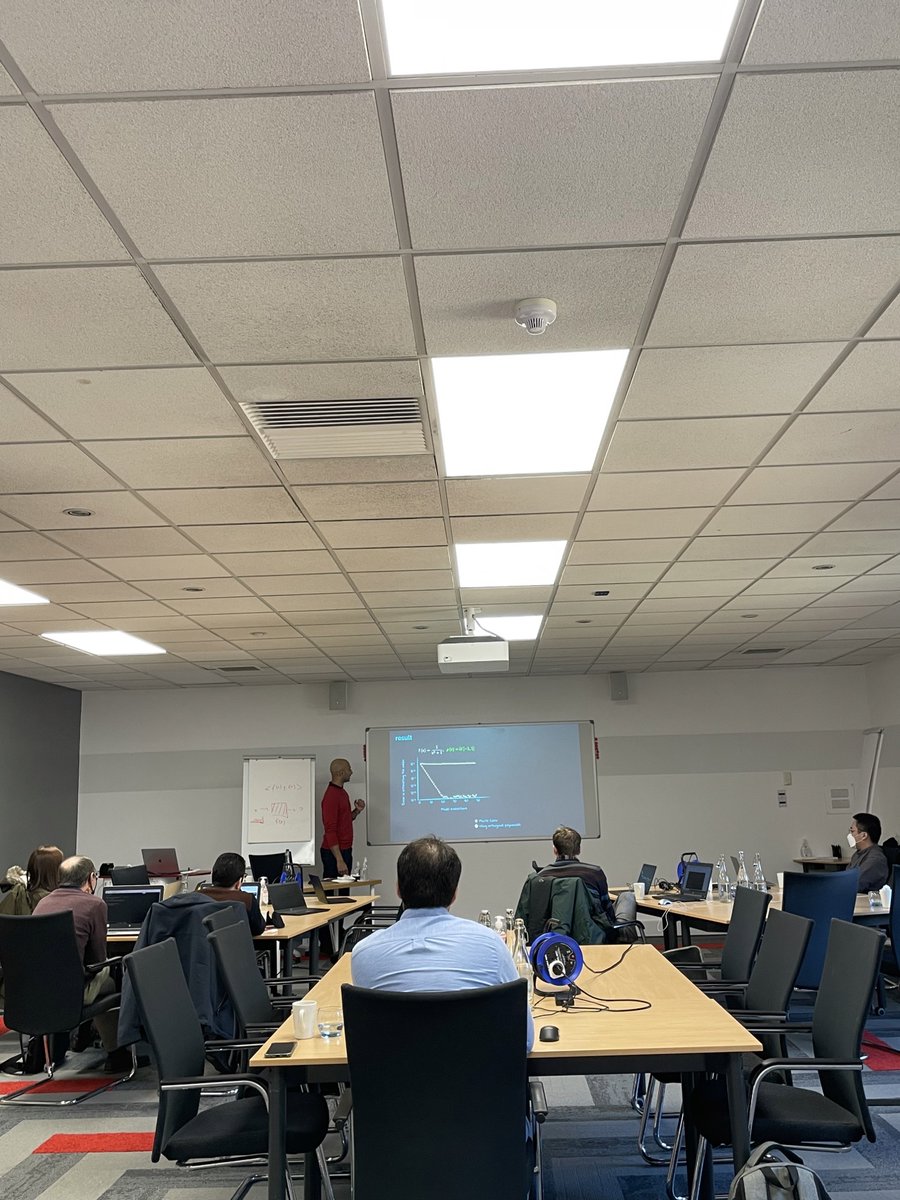
A big thank you to all those that joined us for the equadratures midlands workshop! A big thank you also to the ASG programme at @turinginst for supporting this and the underpinning research.
#dataanalytics#machinelearning#engineering
In Warwick on Thursday the 31st? Join us! We will be talking about polynomials, probabilities, graphs, deep learning, and so much more! https://t.co/MULgOzNqfv
#MachineLearning#DataScience#Engineering
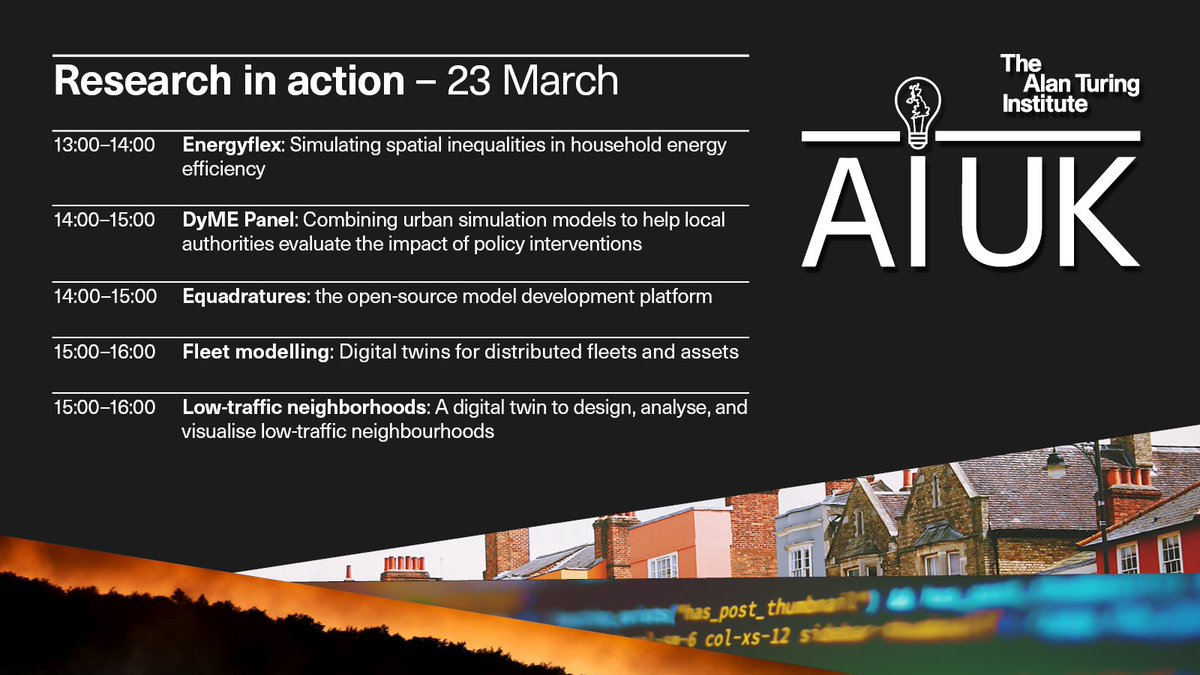
#ResearchinAction is a diverse collection of workshops
From #lowtrafficneighbourhoods, to scientific imagery, or a deep dive into aerospace engineering and solving how to forecast the effect of #climatechange on sea ice
Secure your place at #AIUK https://t.co/6FO9DTAiGG
By contributing to open source, you can find your way to countless opportunities.
Here's a beginner's guide to how to make your first open source contribution ↓
Proud to announce that we will be providing a bespoke coding workshop to @BAS_News on 28th March. This is part of a broader effort to ensure code developed by the team has impact on climate sciences and environmental modelling. #BASAILab@turinginst
In honor of #BHM, we'd like to highlight some influential Black contributors to the CS field! https://t.co/Q60DLt0itU
We excitedly look to the future generation, like @BlackGirlsCode! Check out their workshops this month, like Black Joy in Tech: https://t.co/RnNfomqxbB
New arxiv preprint on surrogate modelling using Deep Learning and Polynomial Chaos Expansion. With Paz Fink Shustin, Shashanka Ubaru, Vasileios Kalantzis, andLior Horesh.
https://t.co/hY4bE4PXPr
Learn more about how USGS is using equadratures for sensitivity analysis in coastal dynamics. #environment#dataanlytics#datascience
https://t.co/ysycbOuRJ1
https://t.co/MZopBnYUEy
Breaking: New #GSoC 2022 Program updates:
- Eligibility: Anyone 18+, no longer just students
- Program Length: Flexible, no longer fixed timeline
- Project Size: Support for medium and large projects (based on # of hours worked)
Read more: https://t.co/q4helsdcHe #OpenSource
Instant CFD using polynomials.
Instant CFD for new geometries by exploiting numerous spatially related polynomial ridge approximations constructed with a test data set.
#MachineLearning#Engineering#DataScience
https://t.co/5pBkI8EZne
A preview of coming attractions in version 10. We are taking what you can do with polynomials up a notch. #datascience#machinelearning
https://t.co/MlLpe9I9We
We thank all the attendees of the “Visualising large design spaces via equadratures” event held online on Friday the 19th of November. The feedback was extremely encouraging and positive. We will be organising another such session — on uncertainty quantification — very soon.