What a week! A 5 day Design Sprint at Oxford University's Future of Humanity Institute, with AI Safety researchers from @FHIOxford and @CSERCambridge, designing a strategic role-playing game for decision makers about the effects of AI. With @anderssandberg@rossgritz
The agent that wrote your spec is the worst possible reviewer for it.
It remembers too much.
Google just open-sourced a fix: the Elephant-Goldfish Model (EGM).
→ Elephant: holds your project context, drafts the spec
→ Goldfish: reviews it with zero memory of the conversation, just the doc + the code
→ You: resolve trade-offs, approve, decide what gets built
Every assumption you agreed on in chat but never wrote down is invisible to the Goldfish. So it trips on the gaps your coding agent would hit later. Before a single line of code.
→ 7 skills, incl. brainstorm, draft, review & drift report
→ 5-stage design review
→ Reviewer rules that ban flattery
→ Works in Claude Code, Codex, Antigravity, ChatGPT & Cowork
→ Apache 2.0, 20K+ stars
Fastest test: run /egm:egm-review on a design doc you already have. ~60 seconds.
Beginner's mind, packaged as a plugin.
Search "google elephant-goldfish-model" on GitHub.
במשמרת שלי כרמטכ״ל נפלו 3 חיילים ערבים-מוסלמים, שהתנדבו לשרת בצה״ל. השלושה נפלו במלחמתנו בחמאס ברצועת עזה (2003).
בביקור התנחומים שערכתי אצל אחת המשפחות, האבא ביקש שאמתין בחדר האורחים, כי הוא רוצה להביא את נשות המשפחה מהדיואן (חדר האורחים) שלהן, והוא רוצה לדבר לפני.
לאחר שכל הנשים והגברים התכנסו הוא נשא את דבריו, ואמר: ״אחרי ארועי אוקטובר 2000 (בהם התנגשו ערבים עם המשטרה ו-13 מהם נהרגו), כינסתי את בניי ואמרתי להם, שאני רוצה לחיות במדינת ישראל, שאני רואה את עתידנו במדינת ישראל, ואם הם מסכימים איתי, אז הם צריכים להשתתף בהגנת המדינה. שניים מבניי היו בגיל גיוס, אחד התנדב לשרת בצה״ל ונפל על הגנת המדינה, השני (שעמד בצד במדים) התנדב לשרת במשמר הגבול״.
כאשר נפצעתי (מספר פעמים) טופלתי גם על-ידי רופאים ערבים ואחיות ערביות. כך קורה עד היום.
התרגשתי כאשר שמעתי את מנסור עבאס צועד צעד אמיץ באמירתו, שהוא מכיר במדינת ישראל כמדינה יהודית ודמוקרטית ברוח מגילת העצמאות. זו היתה הגשמת חזונו של זאב ז׳בוטינסקי, כפי שניסח ב-1923 במאמרו ״קיר הברזל״ ובמשנתו להשתלבות המדינה היהודית במזרח תיכון עוין, וביחסו לערביי ישראל. כך נהגו כל ראשי ממשלות ישראל, מבן גוריון ועד להקמת הממשלה הנוכחית.
במהלך טבח ה-7.10, פנתה אלי אמא מודאגת, שבנה השתתף באחת המסיבות בעוטף. לאחר בירור, בנה נמצא בקיבוץ צאלים, לאחר שחולץ יחד עם עוד עשרות צעירים וצעירות, על-ידי בדואי, עם הטנדר שלו.
מיד לאחר הטבח, התארגנו לעזור לישובי העוטף, בארגון ותאום של ׳האחים לנשק׳. התארגנו לעבודה בחקלאות בדרגות קושי שונות. איתנו בקבוצה (שבחרה בדרגת קושי גבוהה) השתתפה בקביעות משפחה מרהט (הורים וילדיהם הבוגרים).
כאשר אני שומע את ראשי קואליציית המשיחיים, המשתמטים, המושחתים והבוגדים, מנצלים את רגשות הפחד, הזעם והנקמה נגד הערבים, באשר הם - אני מתחלחל ומתבייש בבני עמי.
ראשי מפלגות גוש השינוי, אחד האתגרים החשובים שלכם, הוא להביא לשילוב ערביי ישראל בחברה הישראלית. קעקעו את ההסתה נגד הערבים כתומכי טרור, מצד מי שהקים ממשלה עם מי שהורשע בתמיכה בארגון טרור ועם מי שתכנן פיגוע, כדי למנוע את ההתנתקות, ועם מי שמפעילים, מממנים ומעודדים טרור יהודי ביהודה, שומרון ובקעת הירדן עד היום.
מנהיגות צריכה להוביל, ולא להגרר! לנווט לפי מצפן, ולא שבשבת רוחות (רעות)!
לכו בכוחכם זה, והושיעו את ישראל!
חלק ממנהיגי גוש השינוי לא קיבלו את המברק. היו עסוקים מידי בלריב, להתאושש, לחשוב, לנשום, לעשות מדיטציה (הלוואי).
בבוקר הבחירות לשכת רה"מ הפעילה את המשטרה מלא-מלא נגד האופוזיציה ללא צו ביהמ"ש במעצרים ממש וייצרה סיפור מזויף שאותו הפיצה בערוציה, ובעיקר - בכל שאר הערוצים. זה השפיע על הבחירות. סביר מאוד להניח ש נתניהו ובן גביר היו מעודכנים ונתנו הוראות. בבחירות הבאות הם לא יעצרו בהכרח רק ערבים, ולא רק בבוקר הבחירות - אלא לפני. מי שעובר את הקו הזה - יעבור עוד הרבה קווים. ליברמן חושב שיש לו זמן, אחרים חושבים על הבחירות הבאות. לא הבנתם- מה שקורה כעת הוא אמיתי. לא תקימו משהו עכשיו, אולי לא תהיה אפשרות בעתיד.
עלילת "רעמגייט".
הגענו למצב שמשטרה מבצעת מעצרים וחיפושים ללא חשד סביר ביממת הבחירות בעקבות טלפון מ*לשכת ראש הממשלה*.
לשכת ראש הממשלה אומרת לשוטרים לכו תעצרו- והם עוצרים.
ואז הממשלה וראש הממשלה מנצלים את המעצרים הללו כדי לפזר שקרים לציבור ולהשפיע על הבחירות. מוציאים ידיעות וצילומים (!). וזה לפני שביהמ"ש רואה ראיות. כמו אחרונת הדיקטטורות. ואז כשהשופטת רואה- האנשים האלה משוחררים. כי אין אינדיקציה לעבירה. מי יודע, אולי חקירה הייתה מניבה תוצאות; מי שהדליף את כל העניין צריך להיות במעצר על שיבוש, עבירת שעונש מאסר בצידה.
נשאלת שאלה חשובה: מאיפה הגיע בכלל מידע כלשהו ללשכת רה"מ? איך בכלל מ"מ רל"ש רה"מ יודע על כסף במעטפות בבית בדרום הארץ. זו שאלה מאוד חשובה. למח"ש. לפרקליטות.
**
שאלת השאלות-איפה כל נאמני נתניהו ומי שמעיזים לקרוא לעצמם ימין, או פטריוטים, או ציונים בכלל.
אתם לא מבינים שהתנהלות כזו היא הסוף של חירות? של עצמאות- יהודית ודמוקרטית?
הרי זו הדרך הקצרצרה למדינת משטרה על מלא. השלב הבא הוא רק מעצר מתנגדי משטר בתואנות שווא. תיק מס הכנסה שייתפר למנהיג באופוזיציה, תאונות של נפילה מקומה 3. עכשיו אתם מאמינים שזה לא יקרה לעולם בישראל; חכו.
ולמשת"פים. עד מתי תבגדו בעצמכם, במדינת ישראל, בערכיה ובחוקיה - בגלל שנאה ליריב פוליטי? לא הבנתם לאן הוא, כן, הוא - לוקח את כולם פה? מה הייתם אומרים אם המצב היה הפוך- ורה"מ היה לפיד?
זה התחיל עם אנשי רע"מ. זה ייגמר כשידפקו לכם בדלת ב-6 בבוקר.
Your coding agent isn't running out of intelligence. It's running out of room.
One Playwright snapshot = 56 KB of context. 30 minutes in, 40% of the window is gone. Then /compact wipes what the agent was doing.
Context Mode fixes that:
→ 315 KB of tool output becomes 5.4 KB (98% less)→ Sessions go from ~30 min to ~3 hours→ Agent writes a script & reads only the answer: 47 file reads (700 KB) become 3.6 KB→ Edits, tasks & decisions survive /compact via local SQLite + BM25→ 17 platforms: Claude Code, Cursor, Codex, Copilot, Gemini CLI
31K+ stars. Free & source-available.
Think in code NOT in context.
On GitHub: mksglu/context-mode
First answer in a customer interview is pablum (Bob Moesta's word). Shallow, not wrong.
Keep asking why. Once the real friction surfaces, people enjoy talking about it.
Most interviews stop one question too early.
Your coding agent ships a feature in 20 minutes. Then you spend an hour clicking through it.
e2e is an open source testing framework built for that gap:
→ Write the goal in plain English: agent.act('upgrade the workspace to Pro')→ Assert in plain English, or with normal locators, in the same test→ Verified agent steps get recorded and replayed with zero model calls until the UI changes→ Web (Chromium, Firefox, WebKit) + iOS & Android→ Bring your own subscription, API key, or local model→ Docs ship in node_modules so your coding agent can read them
Apache 2.0. 9K+ stars.
Goals NOT selectors.
npx e2e initOn GitHub: tester-army/e2e
We stayed up till 3am wiring real data into a prototype.
Real data = every edge case. We spent the night making it work instead of thinking about what we were testing.
If you're testing an idea, don't make it real.
Find the human moment in every workflow and make it thin.
Agent fills the queue. Human approves, revises, or rejects. Agent executes. Humans own judgment and taste, the agent owns everything around it.
Recording + playbook on the Evermuse blog.
Ian Pilon used to hand field research to engineers and wait.
Now he leaves the customer's site, prototypes that night, and goes back the next morning.
The rate of learning is daily. That's the real shift.
Something I took from studying Buddhism: thought and feeling depend on each other.
AI mimics the steps of thinking remarkably well. Ask it for the post about what you believe that others don't, and it can't write it. It doesn't believe it.
That gap is where judgment lives.
Every AI product I look at has a memory story. Most are too generic to matter for product.
Remembering yesterday's chat is table stakes.
What product teams need: patterns in customer behavior, usage tied to revenue, and whether the loudest voice is one person or a real trend.
You can spot AI-built UI from across the room.
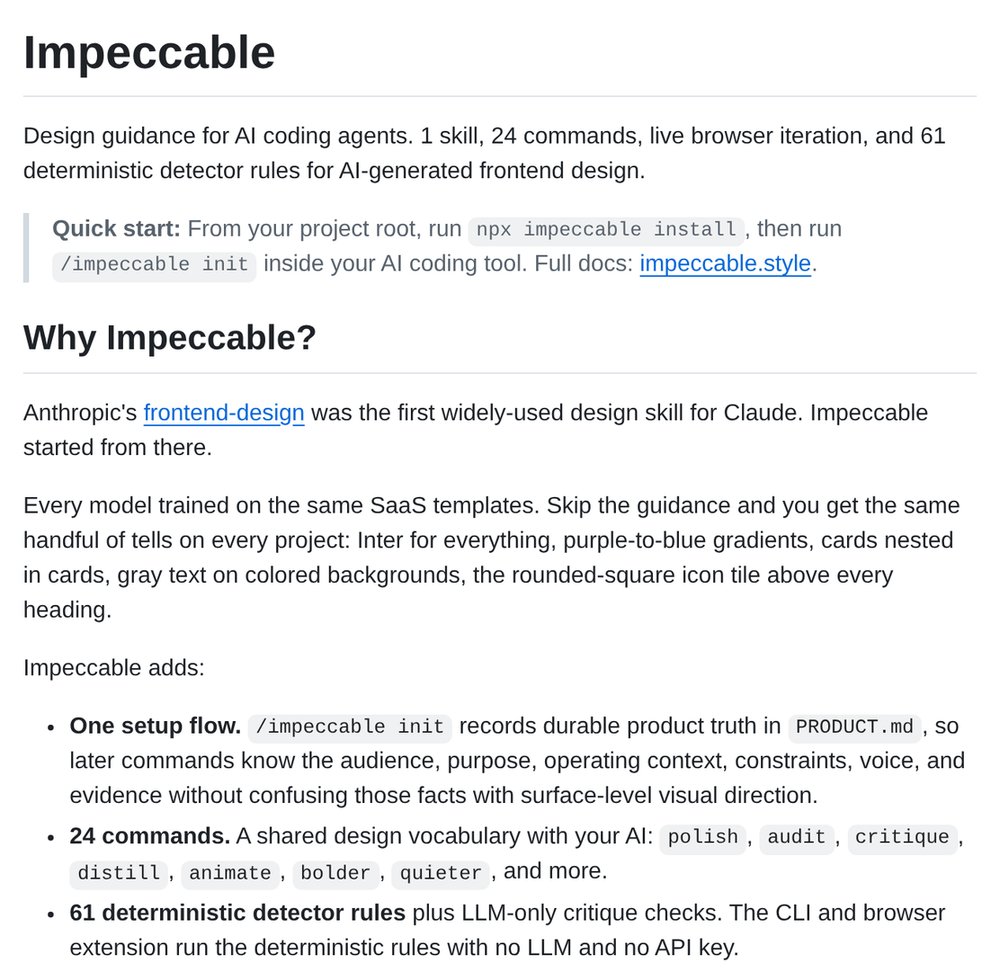
Inter everywhere. Purple-to-blue gradients. Cards nested in cards. A rounded icon tile above every heading.
Every model trained on the same SaaS templates.
Impeccable gives your coding agent taste:
→ 24 design commands (polish, audit, critique, distill, harden...)
→ 61 slop detectors that run with no LLM, no API key
→ A hook that checks every UI edit while the agent works
→ PRODUCT.md first, so design starts from audience & purpose
Claude Code, Cursor, Codex, Copilot + 13 more. Free & open source. 76.8K stars.
Taste NOT templates.
On GitHub: pbakaus/impeccable
Ian Pilon told my favorite Crowdcast story:
Every stakeholder wanted their product above the fold.
Then the team saw the brokers' brochure drawers. Top ten: worn. Bottom ones: dusty.
The users had already done the information architecture.
Nobody argues with dust.
The pull toward autocratic leaders is really a pull toward 'let's start over.'
But there's no undemocratic country better to live in than a democracy.
Keep the democracy. Restart everything AI touches instead. That's where big change belongs.