@BenSwann_ Its not the drones. Its forward defence. The new war cannot be offensive. It has to be defensive. Fighting with drones in the gulf would yield the same result as carrier ships and outposts/bases will be taken out in the first battle that breaks out.
Independent review of capital motions like we do at https://t.co/Xe6dxiGvQa align disciplined progress with typical RAG status updates for the board and quadruples the quality of outcomes.
Capital Allocation: The Discipline of Letting Go Capital is scarce. Every dollar committed to a mediocre or underperforming investment is a dollar unavailable for superior opportunities. This fundamental truth—often overlooked—separates disciplined investors from the rest.
The Governing Principle: Opportunity CostBefore holding any position, ask yourself a single, rigorous question:
“If I had this capital in cash today, would this be the highest expected return per unit of risk available to me, given my knowledge and time horizon?”
If the answer is no, the rational decision is to exit—regardless of emotional attachment, entry price, or time already invested.
Markets are indifferent to ego.Common Traps That Destroy Capital
Sunk Cost Fallacy: Continuing to hold because “I’ve already lost 40%.” The loss is realized; the only relevant question is where the remaining capital should be deployed now.
Hope as Strategy: Waiting for a declining asset to “come back.” Time is irreplaceable—dead money compounds opportunity cost.
Identity Investing: Defining oneself by a single stock, sector, or thesis (“I’m a growth investor” or “crypto believer” or "value investor"). This turns a portfolio into a personality, blinding one to better alternatives.
Emotional Loyalty: Retaining large positions out of familiarity or past success, allowing significant capital to languish.
Practical Framework for Better Allocation👉
Periodic Portfolio Reviews: Treat your capital like a business. Quarterly—or after major events—re-evaluate every holding as if redeploying fresh cash.
Pre-Commit to Rules: Establish exit criteria, position limits, and review triggers before investing. This protects against future emotional bias.
Prioritize Asymmetry: Focus on opportunities where upside materially exceeds downside. Concentrate in high-conviction ideas rather than spreading capital across average ones.
Cash as a Position: Holding liquidity is not inaction—it is patience with purpose. Waiting for high-quality setups often outperforms forced deployment.
Historical Illustration: In 2021–2022, many investors remained fully committed to high-growth technology and speculative assets priced for perfection. Meanwhile, energy, commodities, and select value opportunities offered far superior risk-reward profiles. Those who reallocated decisively recovered faster and preserved more capital.
Ultimately, superior capital allocation is a continuous ranking exercise: deciding which opportunities most deserve your limited resources. The most successful investors are those willing to admit mistakes quickly, exit without drama, and redeploy ruthlessly toward better prospects.
Leave ego at the door. Respect the finite nature of capital. Deploy it only where the edge and potential reward clearly justify it. Everything else is simply expensive entertainment.
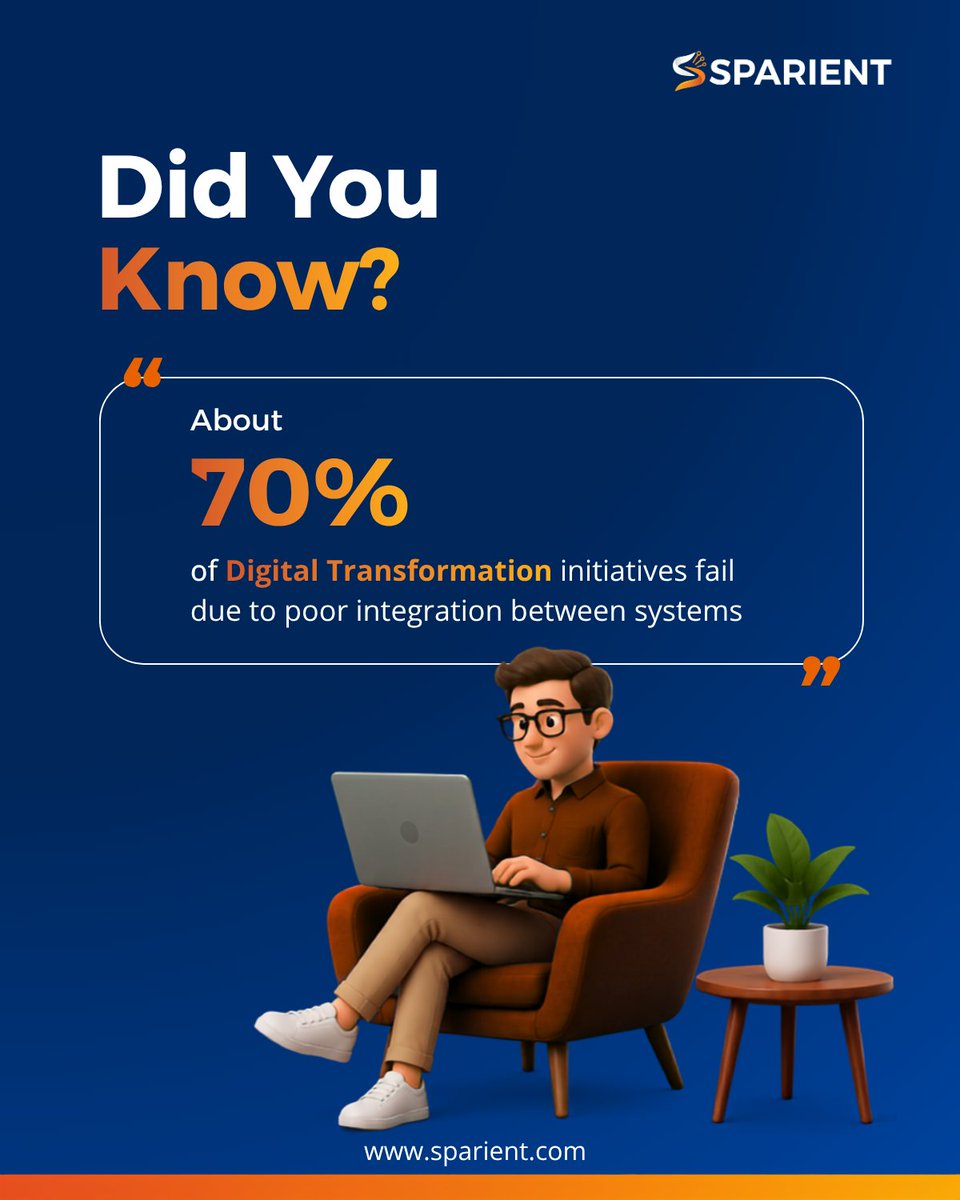
🚀 Many digital transformation initiatives fail not because of technology, but because systems don't work together.
🔗 Integration drives innovation, efficiency, and growth.
#DigitalTransformation#SystemIntegration#Sparient
Capital acceleration can also be lateral whereby investment in a particular capability is accelerated despite no governance capacity and value validation.
Businesses tend to overinvest in what already works, which can weaken adaptation over time. Success and stability can set up some organizations for failure
https://t.co/G33j3huU3t
Businesses tend to overinvest in what already works, which can weaken adaptation over time. Success and stability can set up some organizations for failure
https://t.co/G33j3huU3t
Growth looks exciting from the outside. Inside, it often exposes the weaknesses already hiding in the business.
More customers can mean slower decisions.
More markets can create fragile operations.
More revenue can overwhelm systems that were never built to scale.
@AMercouris your commentary is always analysis first. I love that. For followers starting from a historical context of events is lethargic and boring. You get to it fast and nail down with opinion. Kudos.
@jaberalharmi Recognition aside, Qatar has a phenomenal track record on independent journalism and global peace brokering. Its just evident in fact and stands without comparison.
@elerianm The chinese made plastic lighters are a global example of what they call micro cost management in a supply chain. No matter where you are in the world, the complex components absorb each component's costs and arrive for pennies on the dollar.
@javedhassan You're passionate about disproving something no one asked you too. Not even Dr Mahboob ul Haq in his world bank days when he advised the Koreans could make you change your mind.
@SaleemFarrukh A more viable option is to have a new metro area with catchy name near abbotabad or soon skesar linked to m2 and airports. Link to health tourism and market access for investors to 25 million exommerce buyers on priority by taxing importers vs those who reside here.
@SaleemFarrukh Offering Investors to live in islamabad without the infrastructure of a world class city will attract the wrong target investors and not contribute to the GDP. Islamabad is expanding less like Lahore and more like Karachi. Very tough attracting residents from abroad to move here.
@malakhovdm@DorokhinMichael@Ric_RTP A cost reduction is usually not as significant a goal as its predicated on board calls. They usually are risk averse than they are cutting costs. The discussion here is how big is developing software a contributor to IT costs. I say not much
@malakhovdm@DorokhinMichael@Ric_RTP 100%. I do this for a living: get in front of board and evidence if capital is producing value or not and I see focus is less strategic and more sponstaneous shareholder value. Its useful only 25% of the time.
@sabizak That would be true if ego is the subject of discussion or whether he is revered or not. To his weird logic bowing to power has to be a counter argument to retaliation against gulf states by Iran. That's like saying standing against world powers is for others not Muslim rulers.