Where does your food come from? Scientist (@ELI_UCLouvain @TraseEarth) making the food system more sustainable and transparent. Cofundador: @dopastoaoprato.
A handful of commodities (🐮🌴🍫☕️) cause a third of all #deforestation, harming millions of forest-dependent people, the climate & biodiversity
A few commodity traders (Cargill, Wilmar, Olam, etc) handle this trade
Here’s what you need to know about their sourcing practices 🧵
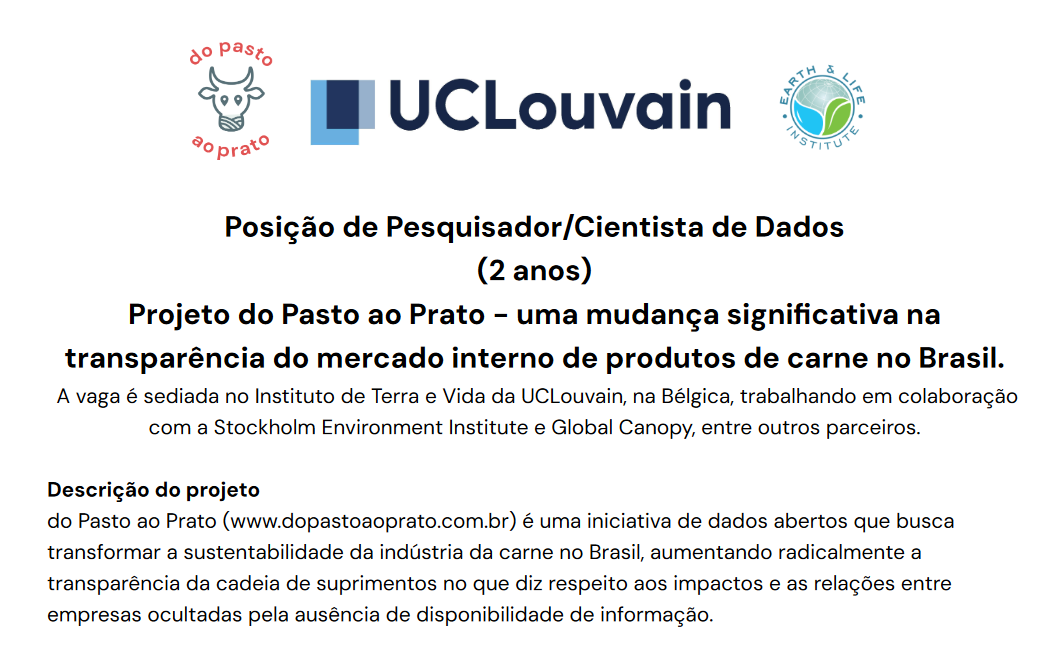
📣 Você é apaixonad@ por dados e sustentabilidade? Quer fazer a diferença na transparência do mercado de carne no Brasil? Venha trabalhar com a gente na iniciativa Do Pasto ao Prato!
🖥 Papel: Cientisa de dados
🍫 Localização: UCLouvain, Bélgica. Acessível a Bruxelas e Louvain-la-Neuve.
💸 Salário e Benefícios: 50-70 mil EUR/ano, dependendo da experiência.
2️⃣ Duração: 2 anos
📅 Prazo: 5 de setembro de 2024.
SUPER excited to announce the launch of the @NYUEnvrStudies PhD program! We are searching for a first cohort of *fully funded* students to start in Fall 2025 who will tackle pressing environmental problems using interdisciplinary approaches. Details here! https://t.co/vWL7Fvcfhb
Real banger of a new paper on global temp/gdp relationships by Adrian Bilal and Diego Kanzig. SCC of >$1000 under pretty conservative interpretation of their results! Link here: https://t.co/eEeXshwnH7
In the fight against deforestation, everyone is talking about TRACEABILITY. In a new article in Conservation Letters, we warn traceability should not be seen as a silver bullet - outline what governments and companies need to do next.
https://t.co/aGXLeY4wDU
Only by encouraging companies to measure success at multiple scales can initiatives for sustainable commodity sourcing create the right mix of incentives for addressing deforestation.
China just licensed beef imports from 24 new Brazilian slaughterhouses. In a recent @wef article we highlight the opportunities for sustainable trade that stem from growing Brazil-China trade links.
Article: https://t.co/nJN4UOvekX
New slaughterhouses: https://t.co/M2hqmg0nYg
China is a huge and growing market for Brazilian beef exports.
Here are four opportunities this brings for sustainable trade.
New article in @wef: https://t.co/nJN4UOvekX
🧵
4. And there are lessons from Chinese companies’ experience with other sectors. The Chinese trader COFCO International has, for example, recently incorporated a deforestation- and conversion-free sourcing conditions for soy imports from Brazil.