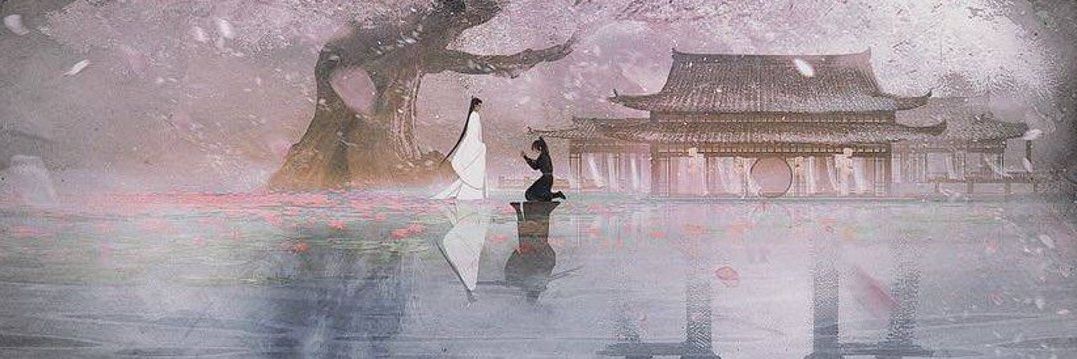
“Three thousand seven hundred and ninety-nine.” He had counted as he walked. It was the number of steps up to the main gate, the number of steps that Chu Wanning had climbed that day, carrying him on his back.
UPGRADE: Mention the bot or reply to tweets for more quotes!
it's unfortunate that the art of translation is disappearing just because some people think that only one correct translation can exist.
this is a fantastic thread, and i don't understand the pushback it's getting, considering how important fresh translation is to this community
The Lost Meaning Behind #2HA Vol 7 Chapter Titles: a thread
The official translation of #Erha Chs 239-240 is very different from what I expected.
While these official titles are valid interpretations of somewhat ambiguous phrases, here’s why I would translate them differently.
@nightningmoon your work as a translator is so valuable, and i'm very sorry that you're receiving so much pushback for the phrase "lost meaning," which i personally thought very apt. i admire your noble response to the traction your tweet has gained & hope to see more from you
He paused for a moment, and seemed to be examining the expression on Mo Ran’s face with great interest. Then, with a satisfied smile, he said, “Mo-zongshi, it’s time to lower your head. You have to admit your mistake.” Keep your head down. Plead guilty.
“He knelt on the ground and looked at me. I suddenly felt that when the Buddha was forgiving those mortals who hurt him, wasn’t that kind of gaze?”
“He is pitying his executioner, the creature under the knife, the bloody butcher.”
He ran away for so long. Now he couldn’t speak. He feels he is a sinner standing on the platform to die. He kneels on the ground and sees the shadow of the executioner’s knife. When does he drop dead? When does his head fall to the ground?
He said, “If you don’t know to save others, how will you save yourself?”
His body was like a statue of clay in a Buddhist shrine, immobilized by the worship.
He said, “If you don’t know to save others, how will you save yourself?”
His body was like a statue of clay in a Buddhist shrine, immobilized by the worship.
It wasn’t that he didn’t care for those around him, only that he did it quietly. But such quietude, without anyone to see or notice, day after day, was also a kind of torment.
Mo Ran wasn't angry. What was the derision of others to him? He was only grateful this unfitting cloak could protect him from wind and rain, give him gentleness. He wore it, and when it snowed, the snow didn't fall on him. Late at night, the darkness wouldn't enter his heart.