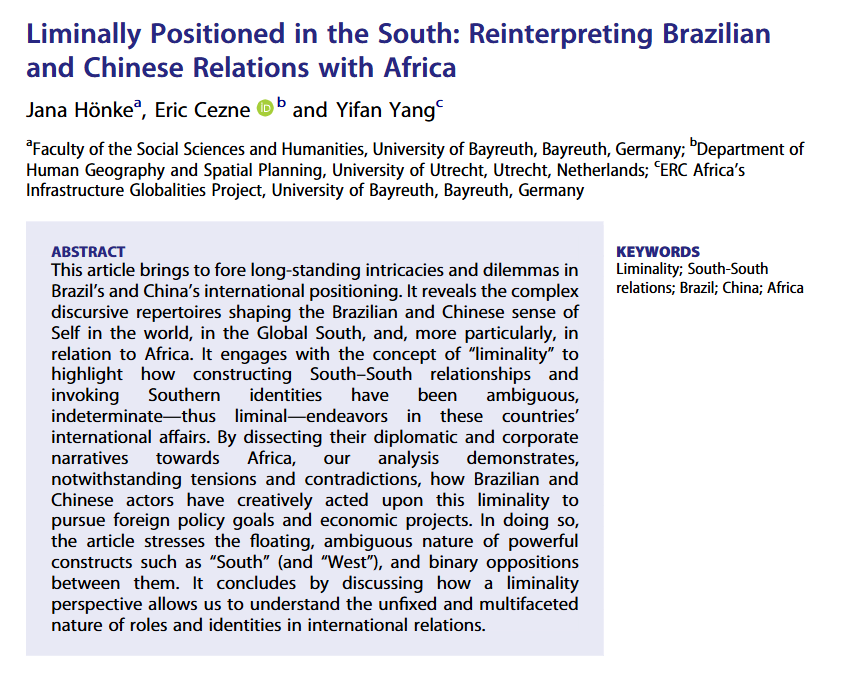
Our second monthly pick for February is "Liminally Positioned in the South: Reinterpreting Brazilian and Chinese Relations with Africa" by @PoCoSecurity, @eric_cezne, and @YifanMiaYang. Do give it a read!
https://t.co/G6Cni54nkH
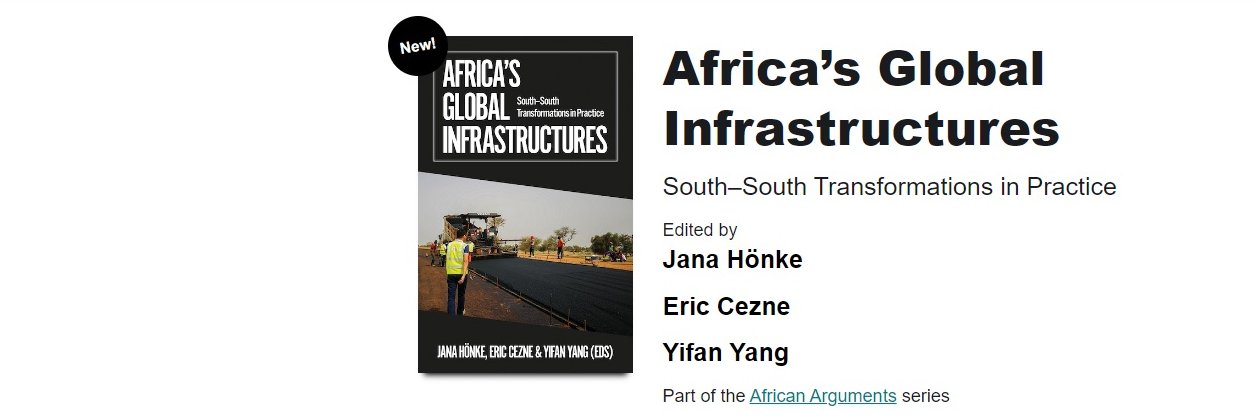
📕Funda Baydar Yazan appraise @PoCoSecurity@eric_cezne & @YifanMiaYang's Africa’s Global Infrastructures: South–South Transformations in Practice, recommending it to scholars interested in the politics of infrastructure beyond its technical dimension.
🔗https://t.co/N4kpnwGORo
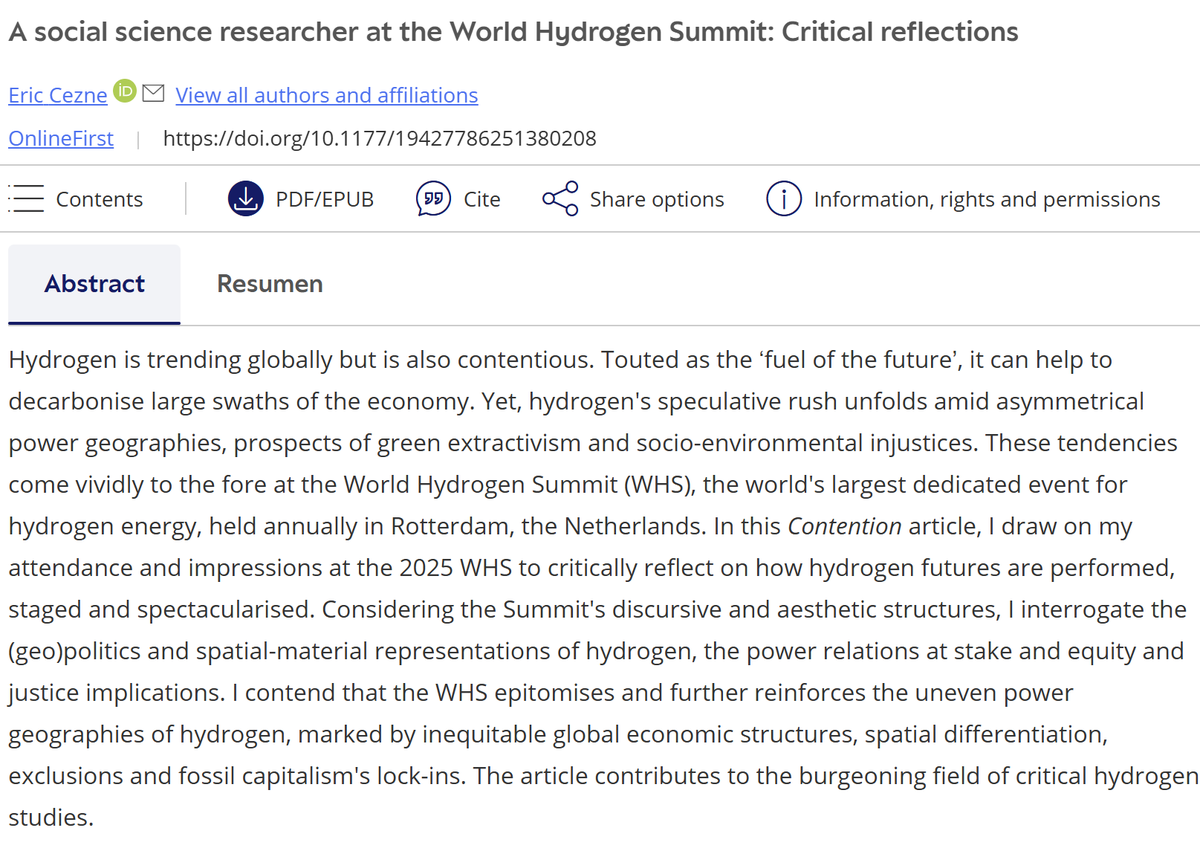
Online first and open access: A social science researcher at the World Hydrogen Summit: Critical reflections - Eric Cezne, 2025 https://t.co/z7mvfCn2sp
"Hydrogen's speculative rush unfolds amid asymmetrical power geographies, prospects of green extractivism and socio-environmental injustices. These tendencies come vividly to the fore at the World Hydrogen Summit (WHS), the world's largest dedicated event for hydrogen energy, held annually in Rotterdam, the Netherlands."
#Hydrogen #World_Hydrogen_Summit #energy_transition #decarbonisation
📚🔋What do major events and fairs tell us about energy transitions? In this recently published #OpenAccess article with Human Geography, I offer some insights by critically reflecting upon the #WorldHydrogenSummit, the world's largest event for H2 energy https://t.co/k1QsXybm8S.
Applications for the Lisa Maskell PhD programme in History are now open for applicants from African countries.
It is a prestigious 3-year, fully funded scholarship at Stellenbosch University, one of the continent's top universities.
Deadline: 31 July
https://t.co/GMsqHOxKcd
In our latest blog post, Dr. Camila Andrade, a Research Fellow @ujipatc@go2uj, and also a presenter at the previous @MYBISA 2025 virtual conference, takes us through her journey, as an Afro-Latin Brazilian woman navigating academia from the margins.
Dr. Camila reflects on race, exclusion & decolonising knowledge in this powerful piece about resilience, exclusion, and epistemic resistance.
Read here 👇 https://t.co/uxfn91AdM2
@dbelemlopes Para quem tem família e amigos atteririzados quase diaramente por esse autocrata russo, é muito triste. Um "pragmatismo" que trai preceitos fundamentais da const. e PE brasileira como soberania, direito à autodeterminação dos povos e carta da ONU.
Flooding the Zone with Shit: it was time for SA
After two weeks of intense discussions in the U.S. on South Africa’s relations with Washington, I thought I’d have one last quiet evening to reflect. Instead, as I prepared to head back to Joburg/Pretoria from NY, the news broke—Marco Rubio had declared South African Ambassador Ebrahim Rasool persona non grata, calling him a "race-baiting politician who hates America."
After days of conversations filled with concern, confusion, and even quiet apologies—“Sorry we/they’re putting you through this”—seeing it unfold in real time was surreal. Not because it was unexpected, but because it confirmed what I had heard repeatedly: this isn’t just about race or South Africa’s ICJ case against Israel. It’s about punishing any dissent and rejecting international mechanisms that challenge U.S. interests. The U.S. no longer seeks global legitimacy—it believes it can battle the world on all fronts. Expelling Rasool isn’t just erratic—it’s part of an order-transforming process.
For decades, the U.S. was both architect and enforcer of the international system, balancing its role as guarantor, enforcer, and disruptor. But when it abandons the very institutions it once led, this isn’t just a shift. The mask hasn’t slipped—it’s been ripped off by the US itself.
It would be easy to dismiss Rasool’s expulsion as another tense moment in U.S.-South Africa relations. But the real issue is precedent. No Global South country can be allowed to successfully use international law against a U.S. ally, especially being one of the few left. This isn’t about Pretoria. It’s about who might be next.
The irony is glaring. Washington’s accusations of “race-baiting” against South Africa feel like projection. This isn’t about racial division—it’s about burying the ICJ case in controversy. The strategy is clear: distract, discredit, and divert. But the bluntness exposes its weakness.
Over the past two weeks, I’ve spoken to diplomats, policymakers, and academics. Many are disillusioned. Some joke about quitting international affairs altogether, retreating to the private sector. Others are anxious, wondering if they’ll be next. The frustration is real, but exhaustion runs deeper—watching institutions they believed in be hollowed out by power politics.
The real question isn’t about multipolarity or U.S. decline. It’s about power. The U.S. still dominates financially, militarily, culturally. But now, it is throwing away the ressemblance of legitimacy that once made its dominance tolerable. Abandoning the structures that gave you influence doesn’t just erode control—it creates a void.
And voids don’t stay empty for long.
This isn’t just a policy shift. It’s a strategy—one built on disruption, making global governance impossible. Steve Bannon called it “flooding the zone with shit”—overwhelming the system with chaos so no one can process what’s happening. That’s no longer just a domestic tactic. It’s defining international relations.
So where does that leave us? At a crossroads. The U.S. is walking away from the system it built. The message is clear: “Deal with your own mess.” Maybe it’s time we do just that. Not through bureaucratic tweaks, but by redefining global governance itself. The longer we wait, the harder the hit will be.
Rasool’s expulsion might seem minor in global politics. But small moments add up. And sometimes, they trigger something bigger. This feels like one of those moments. The rules we thought governed international relations? They were never absolute, we knew it. Now, we have to decide what comes next.
@dbelemlopes A visão objetiva é que a Rússia invadiu a Ucrânia em uma incursão imperialista, desrespeitando um dos principais pilares do sistema internacional.
📝Excited to share this recently published #OpenAccess article. Kei Otsuki and I propose the concept of H2-scape to theorize and explore the rollout of #CleanHydrogen in the Global South as space-making processes entangled w/ power relations and orders. https://t.co/tCsRZtIpCb
@Sanvanlan Thanks, @Sanvanlan. It is across the border in Ghent. But I have just started a postdoc position in Leiden, so not sure if I will be able to take it. Either way, a luxury problem.
🎉After a painful rejection last year, happy that my project "Sustainable transformations? The political geographies of green hydrogen in the Global South" (H2SOUTH)" was among the lucky ones this time.
🚨Excited to start a new professional chapter at the @ASCLeiden. I will be contributing to the Centre's expertise on energy transitions, Africa’s South-South relations, and Portuguese-speaking Africa. Most welcome to stop by for a coffee or a visit if in beautiful Leiden.