As a Clinical Psychology doctorate candidate (Psy.D), I integrate clinical practice with symbolic thought to help understand how to lead more meaningful lives.
You master what you practice.
Every single choice you make builds up who you are becoming.
If we yield in front of discomfort then we will become masters at yielding to it.
This is why how you do the small things determines how you deal with big things in your life.
True then, true now.
"There is perhaps no phenomenon which contains so much destructive feeling as 'moral indignation,' which permits envy or hate to be acted out under the guise of virtue."
—Psychoanalyst Erich Fromm, 1947
If the narcissistic possession of the ideal can be relinquished and recognized to have been an illusion, the ideal object can be relinquished and mourned and in the process installed in the internal world as a symbol.
-John Steiner
#Psychoanalysis
All psychological defenses are efforts to live in fantasy rather than the world. Defenses distort reality. The greater the distortion, the higher the cost.
AI companions are may be new. But the wish to live in fantasy is as old as humankind.
As a therapist, your job is not to push an agenda on patients, create converts to your worldview, persuade, dissuade, approve, disapprove, affirm or disaffirm.
Your job is to help your patients know themselves more fully so they can become more whole and live life more freely—on their terms, not yours.
In other words: Psychotherapy is meant to expand the patient’s sense of personal agency. Not the therapist’s.
In your therapist role, it is also not your job to recruit supporters, disciples, fans, followers, groupies, or devotees. Those things are incompatible with doing psychotherapy.
The goal is for your patients to get well—then finish with you and go on to live their lives.
It’s not about us. It’s never about us. It’s about the patient.
The therapist’s needs are met through the fee and protected via the therapy frame. The rest must be 💯 about the patient
When that’s understood, everything changes.
“We refuse most emphatically to turn a patient who puts himself into our hands in search of help into private property, to decide his fate for him, to force our own ideals upon him, and with the pride of a Creator to form him in our own image and see that it is good.”
—S. Freud
Robert Sapolsky on how to strengthen your frontal cortex the same way you strengthen a muscle: practice resisting temptation repeatedly until willpower becomes effortless.
“Reading after a certain age diverts the mind too much from its creative pursuits. Any man who reads too much and uses his own brain too little falls into lazy habits of thinking, just as the man who spends too much time in the theater is tempted to be content with living vicariously instead of living his own life.” — Albert Einstein
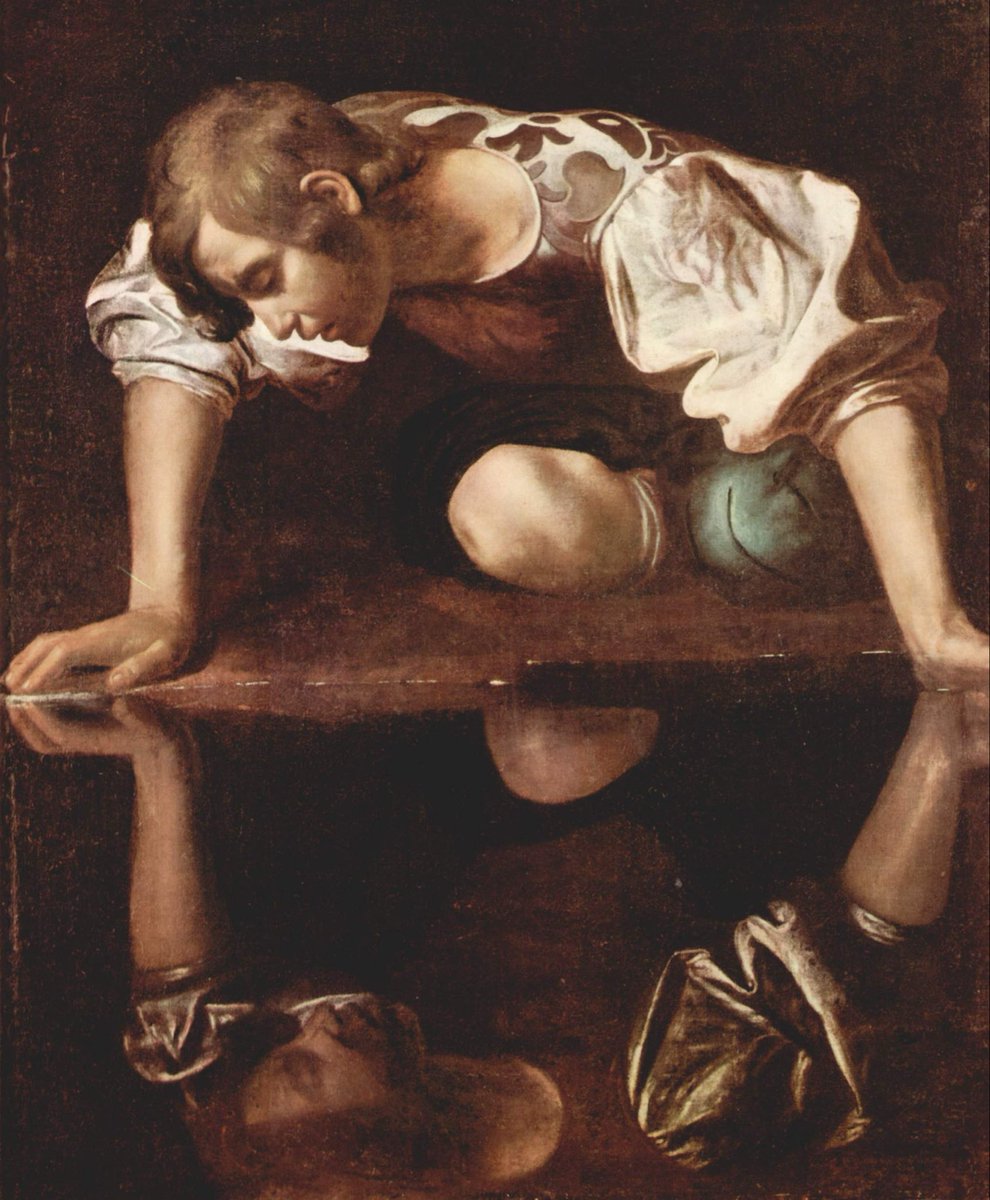
Because in psychoanalysis we have associated the antisocial with the id and the prosocial with the superego, it has been difficult for us to see evil as superego-driven [however] the greater part of human evil is done not by ‘do-badders’ but by ‘do-gooders’
-D. Carveth
NEW blog post is up!
The Self-Help Trap: What 20+ Years of “Optimizing” Has Taught Me
The older I get, the more I think that self-help can be a trap. Sometimes the cure is worse than the disease. I say this after ~20 years of writing self-help and a lifetime of consuming it.
Spend enough time in the world of “improvement,” and you’ll notice something strange: The people most obsessed with self-help are often the least helped by it. Behind the smiles and motivational quotes, behind closed doors and after a drink or two, the truth is that they’re not able to outsmart their worries.
On one hand, perhaps this unhappiness is precisely what lands one in self-development in the first place, right? I long assumed this about myself, and it’s partially true.
On the other hand, what if self-help itself is actually creating or amplifying unhappiness?
Modern self-help contains an in-built flaw:
To continually improve yourself, you must continually locate the ways you are broken.
Fortunately, there are a few perspective shifts that make all the difference. It took me embarrassingly long to figure them out.
To get started, let’s take a fresh look at an old concept.
See the link below to the full blog post 👇
Hamlet is always reflecting and he’s always reflecting on his reflection.
He’s always stepping back and looking at…so much that he becomes incapable of acting. He becomes disconnected from the motivational machinery of interacting with the world.
He loses his agency.
That means as you open up your reflectiveness gap, you gain agency…but as you push it too far, you lose it.
Now you may be tempted to say “Oh, I’ll just stay in the middle.” but that never works because how much you need to be towards this end and how much you need to be towards that end is going to be very contextually sensitive.
So this is non-dual (between the two):
You are both in the world and witnessing, but you are not lost in the view from nowhere or acting completely impulsively.
They are dialogical…both ends are talking to each other.
10 uncomfortable truths you need to know:
1. No one cares
Get over your own BS. Stop getting in your own way.
The best way to grow is to take action daily. You are your own biggest bottleneck.
2. You don’t have much time
Life goes by fast. Be ruthless in saying “no” to distractions and double down on the most important thing - every single day.
3. You’re weird (and that’s okay)
You spend way too much time caring what other people think. Stop it. You are weird. You’re likely kinda crazy. Embrace it. It’s actually what makes you endearing and different.
Your weirdness is your strength.
4. If you’re not where you want to be, wake up 1 hour earlier
Mornings are sacred time without any distractions. Use them to work on things that can drastically change the trajectory of your life.
If you’re not happy with your current situation, get out of bed earlier.
5. Scared = Ready
Are you terrified? Good.
Are you nervous? Good.
Anxiety is excitement without breathing. Take a deep breath. Don’t back down. Do the thing that scares you. On the other side of fear is your destiny.
6. Send it anyway
I’ve made millions by just sending the damn email. Making the damn call. Action is a muscle.
Build strength by taking action when faced with resistance.
7. Mute the mob
The average person is fat.
The average person is lazy.
The average person eats like shit.
Why listen to the mob? Mediocrity loves company. Excellence is a lonely place. Focus on what’s in front of you.
8. Nothing changes if you don’t raise the bar
The bar you set determines the life you build.
If you’re okay with being broke that’s what you’re going to get.
If you accept nothing but the best - you’re gunna get it.
You get what you tolerate in life. Say no to bad hires, energy vampires, and negativity.
9. You are enough
People way dumber than you have accomplished shit 10x more impressive than what you have. Accept that you are enough. Flaws and all. And get after it.
You are capable of doing that thing that feels out of reach.
10. Obsession beats talent every time
I fired a designer a year ago. I’m not a designer, but I stay up at night thinking about how I can improve my product.
I ended up designing a product that was 10x better than that designer. Not because I’m more talented. But because I care 1000x more.
Rant over.
I never found these to be mutually exclusive
Go the gym, sleep better, and eat healthier food if you want to feel better
Go to therapy if you want to be a freer, more integrated person
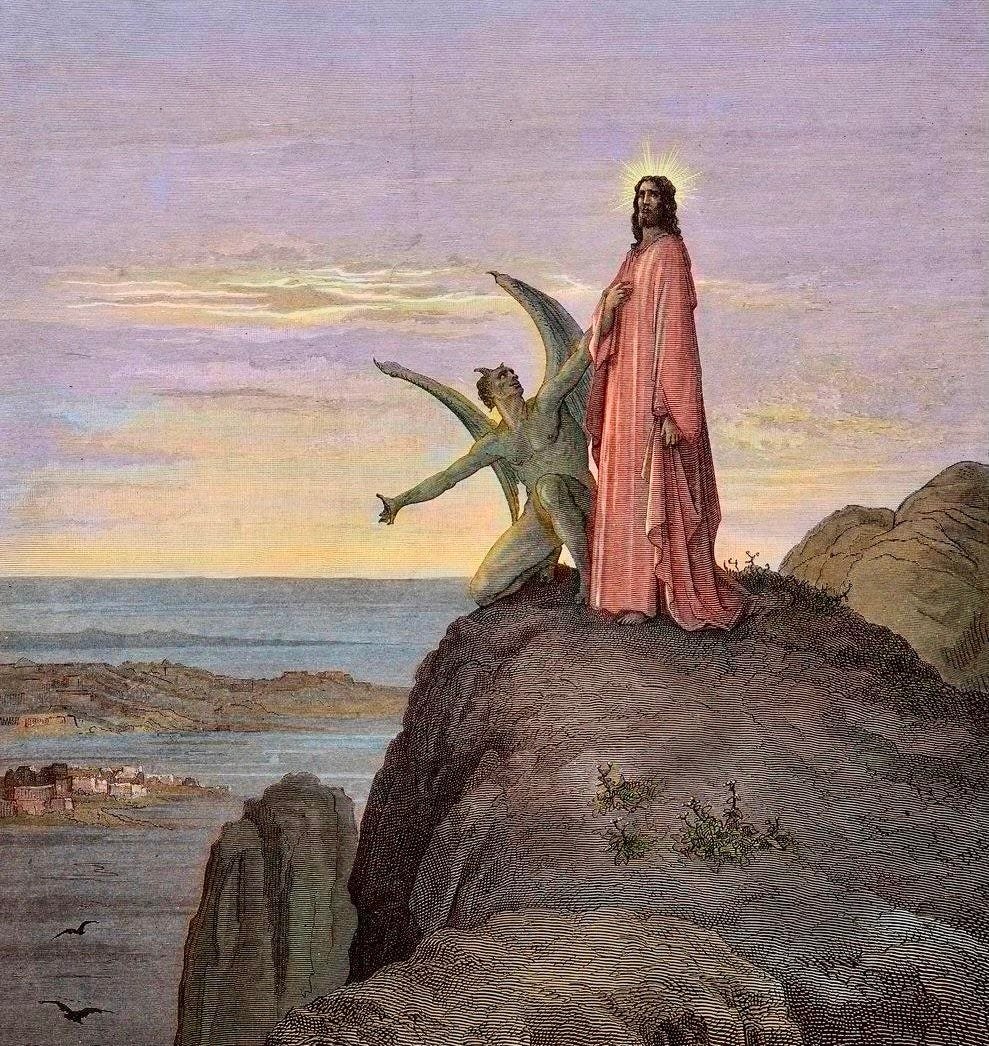
Lent marks Christ's 40 days in the Judaean Desert, where he's confronted by Satan.
Their clash is an epic philosophical showdown, and a masterclass in beating temptation.
After 40 days in the wilderness without food, Satan confronts Jesus and tempts him to transform stones into bread. The story is brief in the Gospels, but Milton's "Paradise Regained" expands it...
A conversation takes place in which Christ dismantles each of Satan's temptations through moral reasoning, and Milton's insight lies therein: temptation itself is not sin, but the opportunity for virtue.
In Milton's prequel, Paradise Lost, Satan corrupts Adam and Eve by appealing to Man's original sin: pride. Repeating this, thinks Satan, will be straightforward, for Jesus is merely human...
Christ responds first with the virtue of temperance, resisting bodily desires for the sake of higher principles:
"Man lives not by bread only, but each word
Proceeding from the mouth of God"
When it's clear that Jesus won't respond to bodily needs, Satan changes tactic, offering him worldly fame. How can the prophesied King go without fame and acclaim to rule his people by?
Christ's response is simple: become king of your own spirit and no external validation will tempt you:
"Yet he who reigns within himself, and rules
Passions, desires, and fears, is more a king."
Satan then offers Christ dominion over all the kingdoms of Earth, urging him to take action as did the great rulers of history. If Christ is meant to rule, then surely it is through action, not prophecy. Christ responds with pride's ultimate counter, humility:
"For what is glory but a blaze of fame"
His kingdom will not come about by assertion of will, but by waiting patiently on a higher plan.
Boiling with frustration, Satan brings Christ to the pinnacle of the temple in Jerusalem. Demanding to know what's special about him, he insists that he "Cast thyself down," and force angelic intervention to save him (as is written in Psalms). Christ's response:
"Also it is written, 'Tempt not the Lord thy God.'"
Notice, in all this, that Satan never calls Jesus to any obvious evils. He's called to use his intellect for worldly fame, or take dominion of Earth so he might rule it justly. Fundamental "goods," but twisted into prideful actions.
That's the main lesson on the subtlety of temptation. The most dangerous vices aren't invitations to outright evil, but little corruptions here and there that chip away at our higher calling.
Milton's showdown was intended to reveal that Christ was both fully God and fully man. He really did feel genuine human temptation, hunger, ambition, and the desire for recognition. He overcame them all without miracles, using only reason, faith, and virtue.
In other words, the victory in the desert was the perfection of human virtues that we can all put into practice.
Eve lost in paradise; Christ won in the wilderness. It's not the place or struggle that matters, but each and every choice we make.
🆕New Post just dropped
“It is only recently in human history that we have begun to think of mental and emotional suffering in psychological, not moral, terms.”
👉free access
https://t.co/IComLUBYSc
For me, the goal of “investing” has always been simple: to allocate resources (e.g. money, time, energy) to improve quality of life. This is a personal definition, as yours likely will be.
Some words are so overused as to have become meaningless. If you find yourself using nebulous terms like “success,” “happiness,” or “investing,” it pays to explicitly define them or stop using them. “What would it look like if I had (or won at) ___ ?” helps.
Life favors the specific ask and punishes the vague wish.
Interview with @robkhenderson where we discuss his book "Troubled" detailing his early childhood trauma, foster care, neglect and abuse and his journey through the Air Force, Yale & Cambridge.
Only posting this one on X...
⚠️ WARNING: Detailed childhood trauma










![jesusrglez's tweet photo. Because in psychoanalysis we have associated the antisocial with the id and the prosocial with the superego, it has been difficult for us to see evil as superego-driven [however] the greater part of human evil is done not by ‘do-badders’ but by ‘do-gooders’
-D. Carveth https://t.co/eB0pjlMUd1](https://pbs.twimg.com/media/HDYSZDQW0AASI_U.jpg)