Interesting to see that Anthropic has explicitly prohibited continuous, needless abuse of Claude in their latest usage policy update.
I guess AI alignment cuts both ways lol.
Professional athletics is quite an interesting phenomenon.
Physical play serves a biological purpose, that being developing adolescent bodies and serving as a safe context in which one can simulate the physical demands of adulthood.
Sport is a formalization of play (we create rules that participants must adhere to), and professional athletics is takes this one step further by creating professional superstructures to organize and distribute the entertainment of sport.
To the professional athlete, sport has become the physical demand of their adulthood. It’s all interestingly cyclical.
I've been thinking recently about why it's so difficult to communicate experience.
When I was younger, I had a tennis coach, and I remember my top-spin serve being the weakest part of my game. In an effort to improve the stroke, my coach broke the movement down. He told me to think about the coiling of my trunk, the straightening of my legs, the rotation of my shoulders, the supination of my wrist, etc.
My serve rarely improved during these sessions.
Inverse kinematics is an interesting concept. If you want to ball your hand into a fist and move it from your waist to eye level, you most likely wouldn't think specifically about the tendons and muscle segments that require activation: the individual finger flexion, the isometric bicep hold, the forearm-supported wrist positioning, etc. Your brain somehow abstracts this entire process into "move fist up," and the muscular specifics sort themselves.
Experience-mediated knowledge work is the same. You can't "bottom-up" as well as a seasoned worker "tops-down."
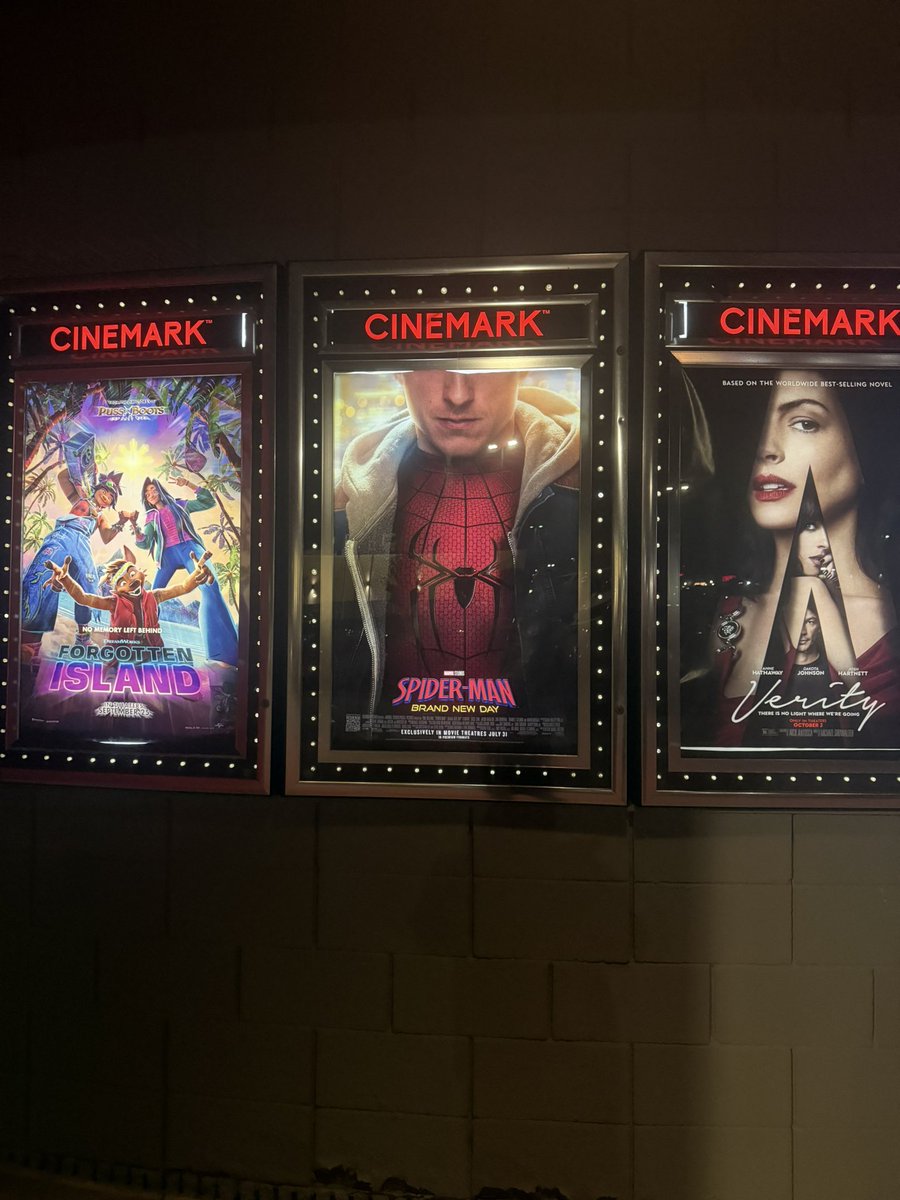
Little late to the party, but Spider-Man: Brand New Day is unironically the greatest movie I have ever seen.
The videography, cinematography, character development, plot device layering, emotional landscape, and style cohesion was unparalleled.
Destin Daniel Cretton you absolute mad-lad I wanna shake your hand.
I think it's fascinating how monetary systems and entire fintech industries are comprised of wrappers and orchestration layers for central bank ledgers.
Would be interested in formalizing some kind of taxonomy...
In Latin American economies, an interesting proxy for trust in local currency is what real estate and other high-value asset prices are denominated in.
In Argentina and Peru for example, housing prices are most commonly listed in dollars, while in Brazil they’re denominated in BRL.
It’s interesting to think about these informal signals for public sentiment.
I'm currelty studying stablecoin usage in the global south, and in speaking with professionals running stablecoin-based cross-border payment companies in LatAm, a couple themes are starting to emerge:
1. Customers + business clients have 0 interest in learning about the technical details behind the technology. The only thing they care about is moving money faster, cheaper, and with 24/7 availability.
2. LatAm is commonly thought of as a homogenous addressable market, but the reality is each country is its own beast. Stark differences in their regulatory landscapes and business contexts necessitate bespoke country-specific compliancing and integration.
3. Legacy infrastructure is sticky and has immense staying power in large companies. The easiest companies to onboard/convert are smaller companies that don't have a lot of internal processes hooked up to traditional banking and institutional familiarity with a working (albeit slow) set of legacy systems. Seems like switching could be its own service.
Side note, but I learned that before the advent of stablecoin-based money transfer rails, Colombians who wanted to move money internationally would physically walk into banks and negotiate exchange rates which I thought was quite interesting.