STEM Educator | Instructional D | Digital Learning & Media Creator | Helping schools and businesses turn complex ideas into clear, engaging learning experiences
Ker Skills is a professional services company offering a wide range of services in the fields of graphic design, video editing, web development, SEO, software engineering, and data analysis.
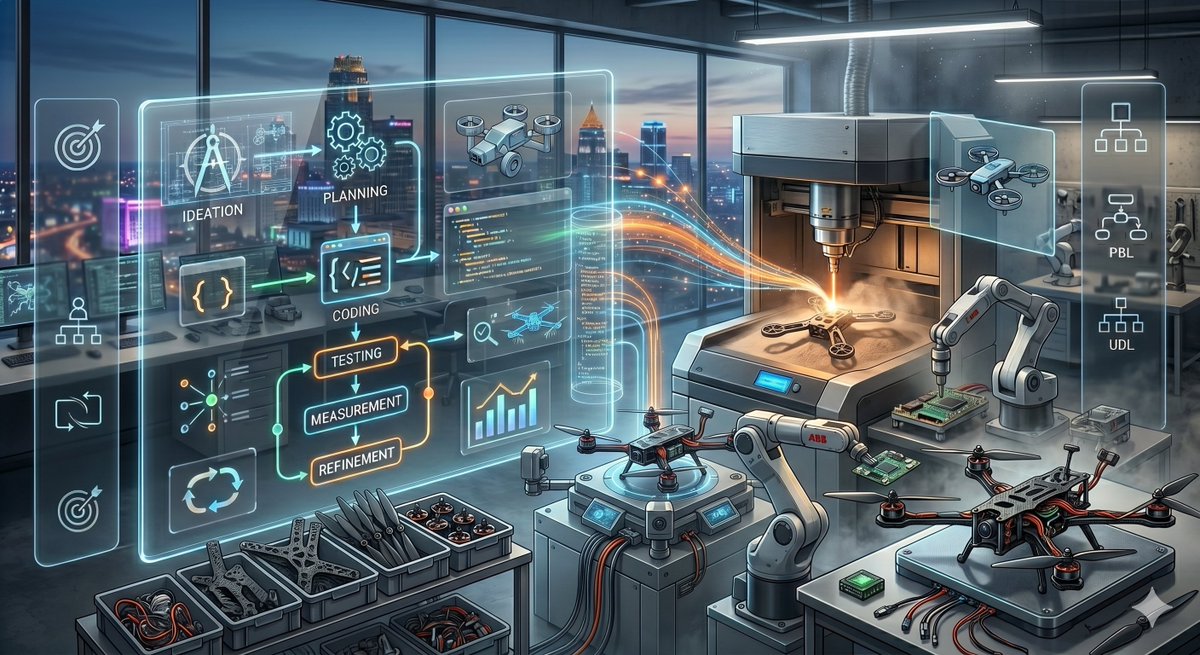
Instructional Design isn't just for corporate compliance.
Today on the blog, I’m exploring how to bridge the gap between digital scaffolding and physical innovation.
Read the full breakdown here: https://t.co/fBx5CFTDoY
The 60-minute e-learning marathon is dead.
Today on the blog, I’m diving into the science of Cognitive Load and explaining how to use frameworks like SAM to design microlearning in the flow of work.
Read the full breakdown here: https://t.co/cX1H19Tabc
Generative AI can build a course outline in 10 seconds, but is it a good course?
Learning Analysts are becoming essential architects and managers of learning ecosystems.
Learn how here.: https://t.co/dzlte1BMet
Design. Measure. Improve.
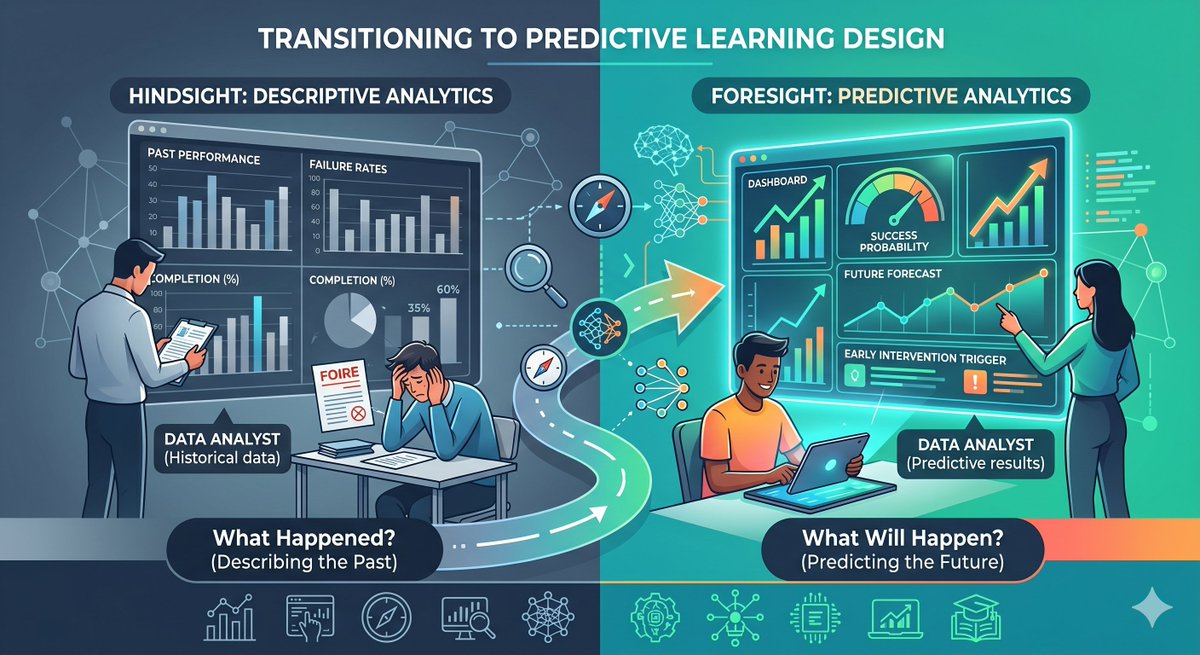
Stop reacting to training failures after they happen.
Today on the blog, I’m breaking down why the industry must shift from "hindsight" descriptive data to predictive analytics.
Read the full breakdown here: https://t.co/Dvy4KhgreQ
Teacher Appreciation Week might be officially over, but the impact of an educator lasts a lifetime! 🚀 Massive shoutout to all my fellow teachers running on coffee and pure passion.
I know firsthand that educators are the real MVPs. Keep inspiring and building the future! 📚💻🤖
Designing great learning experiences isn't just about the content; it's about engineering the metrics that prove human growth.
I wrote a deeper dive on making this shift over on https://t.co/JADTuwQnr6
What metrics are you currently prioritizing? Drop them below! 👇
If your only metric for a successful learning program is a "100% completion rate," you're flying blind. 🛑
Completion rates are vanity metrics. Here is why the Learning & Development space needs a massive shift to value metrics 🧵👇
It’s the difference between a "Check-box" approach and an "Impact-driven" approach.
Are learners just passing a multiple-choice quiz, or are they demonstrating true skill proficiency and solving real performance gaps?
Most assume longer videos boost learning, but the data says otherwise.
Attention drops sharply around the 4-minute mark—and the math behind that drop is surprising. The models, the patterns, and the analytics line up in ways many designers overlook.
https://t.co/oZYiXzZ3DU
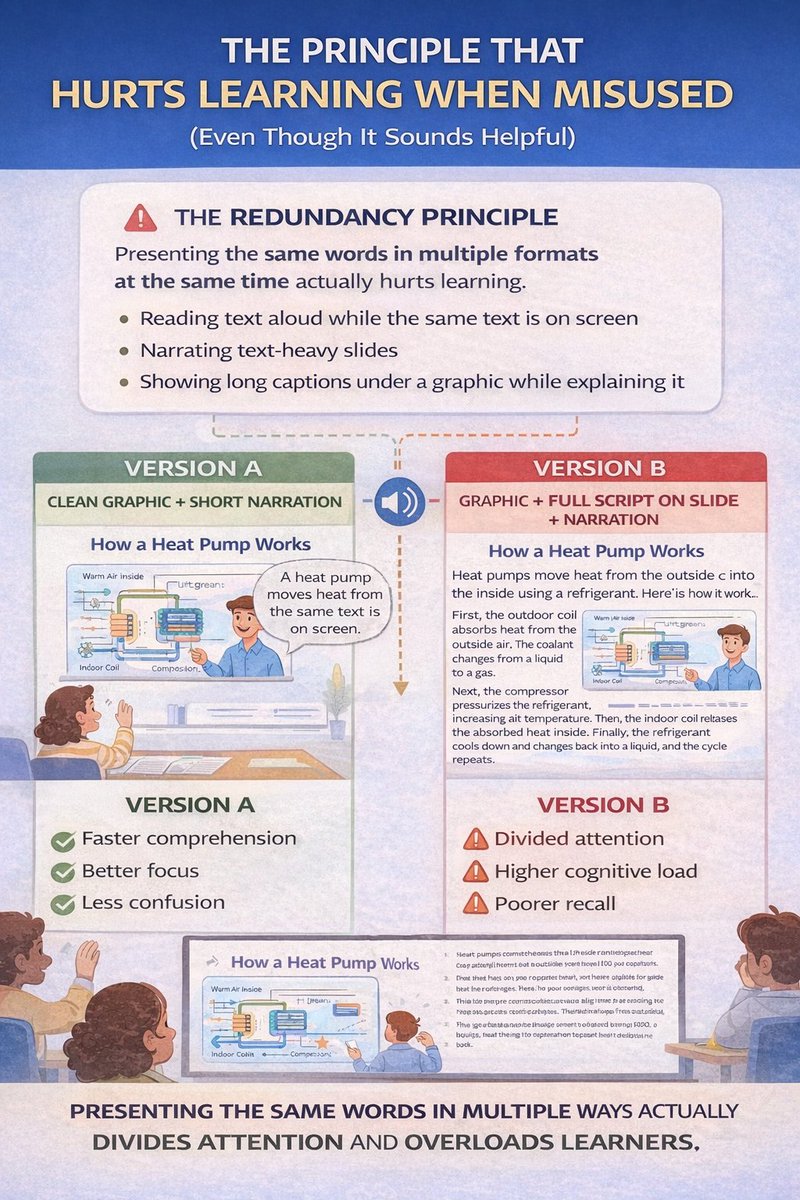
The Redundancy Principle: Stop reading your slides! 🚫📖
Narrating on-screen text overloads working memory and slows down comprehension. My tests prove it: Clean visuals + narration win every time.
Stop "supporting" learners with extra text—you’re just distracting them. 🧠✨
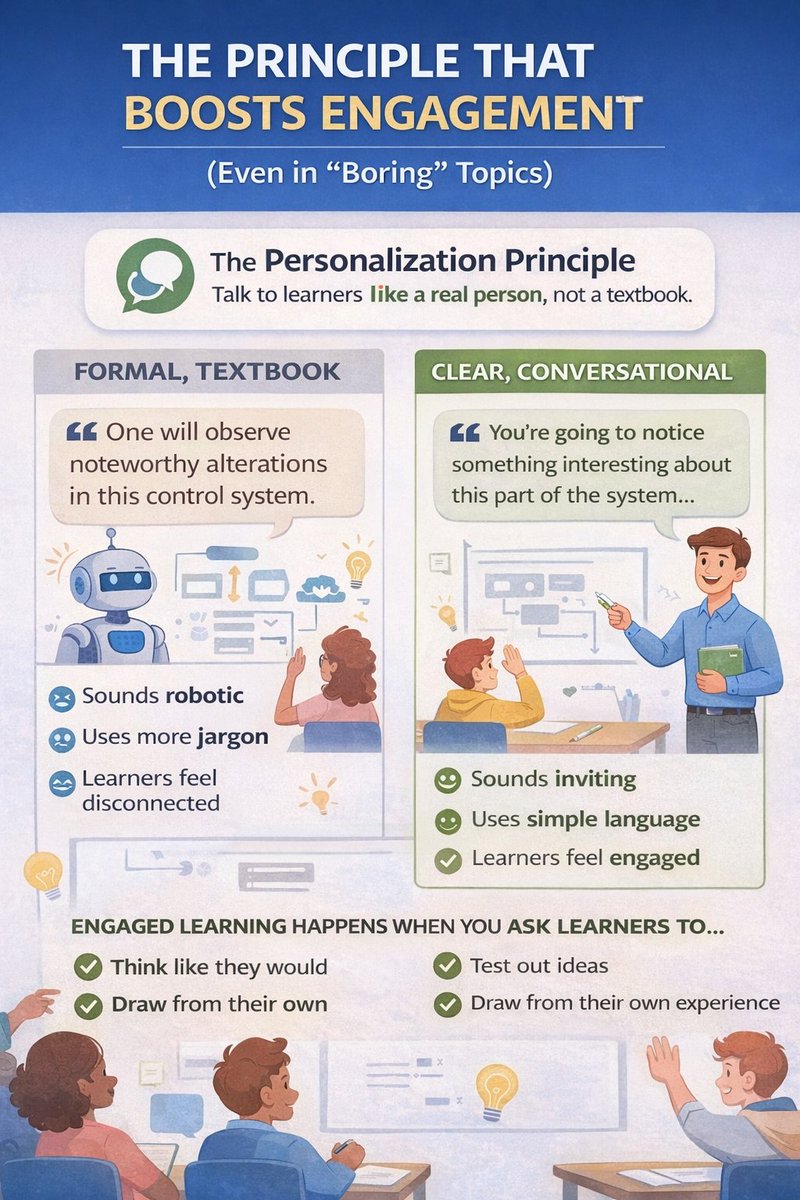
Mayer’s Personalization Principle = instant engagement.
Talk to learners like real people, not a textbook. I tried this in a “boring” lesson, and the shift was huge: students leaned in, asked more questions, and made real connections. No effects. No music. Just a human tone.
Mayer’s Coherence Principle = less confusion.
Most lessons fail because we add too much. I tested a cleaner version, and students learned faster, asked fewer questions, and remembered more.
Cut the noise.
What’s one thing you’d remove from your content?
Exploring Mayer’s 12 learning principles today. It’s surprising how often we misuse them.
I’m breaking down the most misunderstood ones this week.
Which principle do you think people get wrong most?
Accessibility is not an "accommodation." It is a fundamental requirement of Cognitive Load management. 🧠
I wrote a detailed analysis on how Mayer’s Principles + UDL + WCAG create a blueprint for better multimedia learning.
👉 Read more: https://t.co/Ilcs5GMOWY
The "Curb Cut" Concept: Good design is accessible design.
When we design for the margins, we improve the experience for everyone.
My full breakdown on the "Curb Cut Effect" in L&D: https://t.co/JDfLojo2B5