5/5 Legacy of Mesoamerica
From the foundational Olmecs (the “Mother Culture”), the enigmatic metropolis of Teotihuacan, the sophisticated Maya city-states, to the powerful Aztec (Mexica) empire — these civilizations created one of the most remarkable cultural traditions in human history.
Images (left to right):
Breathtaking Aztec turquoise mosaic mask — a masterpiece of elite craftsmanship, likely linked to Tezcatlipoca.
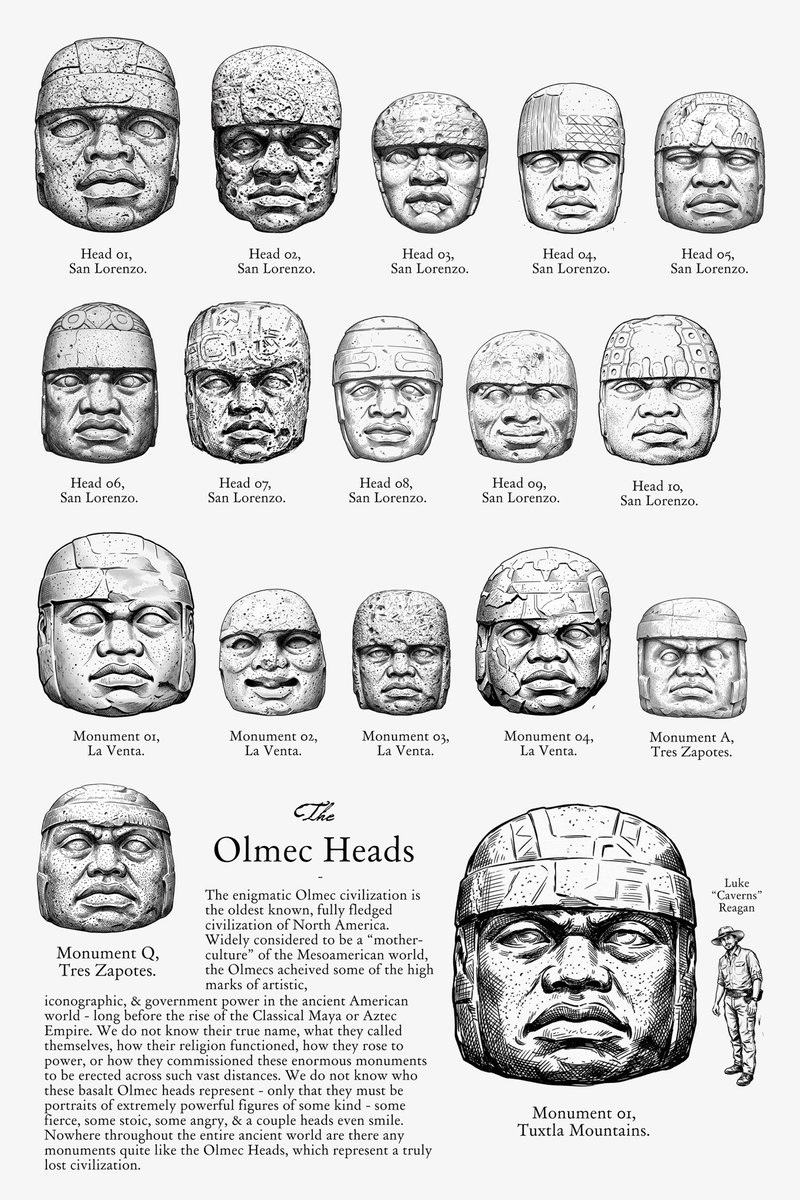
Iconic Olmec colossal stone head — symbol of the earliest major Mesoamerican civilization.
Expressive small stone head from the Preclassic period, showcasing early sculptural skill.
These societies developed advanced knowledge in mathematics, astronomy, writing, architecture, and art — all without iron tools or the wheel. Their ingenuity, resilience, and artistic achievements continue to inspire awe and remind us of the incredible depth of ancient American civilizations.
#Mesoamerica #AncientMexico #Olmec #Maya #Aztec #Teotihuacan #TemploMayor #PreColumbian #Archaeology #History
Tambor.
Presenta como decoración en el centro la realización de una figura principal sosteniendo en cada mano a modo de báculos dos figuras serpentiformes.
Probablemente corresponda a la deidad recurrente realizada en diferentes soportes por distintas culturas en varios períodos de América del Sur (actuales Bolivia, Perú, Chile, Argentina).
En el caso de Argentina Cultura Aguada.
Cultura Wari o Tiwanaku en Perú.
Museo de Arte de la Universidad de Princeton.
Alejandro A Mendoza.
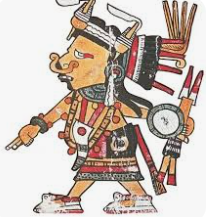
i have a person telling me mixtec-puebla style codice are not canon to Nahua, and all my evidence of saying Tlahuizcalpantecuhtli and Ehecatl are different gods are false, lol, is a universal writing system existed in choula, valley of Puebla-Tlaxcala, how's that not Nahua???
The so called Mixtec-Puebla style pottery also seen in regions of the valley of Puebla-Tlaxcala, the Ñuu Savi area, the valley of Oaxaca, Pacific Coastal Oaxaca, Central Veracruz, and the Basin of Mexico.
#arqueológica#mesoamerica
Deity figure
Maya artist 200–600 CE
Although the figure’s body is human, the face is that of a great supernatural avian known as the Principal Bird Deity. The figurine either represents an anthropomorphic (i.e. humanized) version of the Principal Bird Deity or depicts a human individual wearing a Principal Bird Deity mask.
https://t.co/OPpIp388z4
Engraved around 17,000 years ago, this limestone plaque from the Grotte de La Marche in France shows a human head in profile—one of the unusually detailed human images from the Magdalenian period.
The parallel lines across the cheek have been interpreted as possible scarification or tattoo marks, though the meaning is still UNCERTAIN. Found in 1937, the plaque is a striking reminder that Ice Age art was not only about animals; sometimes, it also tried to capture human faces.
Please be aware that Miguel Covarrubias, 22 Nov 1904 – 4 Feb 1957, Mexican painter, ethnologist & art historian, was, with Matthew W. Stirling, the co-discoverer of the Olmec. He also was an Ivan T. Sanderson coauthor. @red_pill_junkie@CryptoLoren@DrGregLittle2@lukecaverns
4/5 The Aztec (Mexica) (c. 1300 – 1521 CE)
After the long Maya era, the Aztecs rose in the Valley of Mexico, building one of the most powerful empires in ancient Mesoamerica from their magnificent island capital of Tenochtitlan.
Images (left to right):
Striking painted ceramic mask with bold facial markings and large earspools.
Powerful Eagle Warrior ceramic figure from the Templo Mayor — representing elite warriors and the rising sun.
Exquisite Turquoise Mosaic Mask with fangs and intricate detailing — likely linked to Tezcatlipoca.
The Aztecs developed advanced agriculture (chinampas), a vast trading network, and awe-inspiring art and architecture. Their empire was a pinnacle of organization and cultural achievement in Mesoamerica before the Spanish conquest in 1521.
#Aztec #Mexica #Tenochtitlan #TemploMayor #EagleWarrior #Tezcatlipoca #AncientMexico #Mesoamerica #PreColumbian #Archaeology
#PiezaDelDía ⚫️ Urna funeraria
En esta pieza de arcilla se aprecia un personaje con atributos del dios mexica Tezcatlipoca.
Su estilo es una imitación del tipo cerámico anaranjado delgado, propio de la Costa del Golfo de México.