🥳Extremely happy that my paper on fiscal-monetary interactions with
@BarthelemyEcon
and
@gplantin71
made it to the #journalofeconomictheory! Thanks to the editors and the referees!
Link to the paper: https://t.co/l7Iw0ijT7n
Some people are criticising our chart for averaging out the EU. This was done owing to space limitations in print. I wanted to show the G7, a standard comparison group for Britain. France, Germany and Italy are all lower than Britain. Here's how the OECD presents the data:
We address the recent (unfortunate but interesting) debate on whether the observed slowdown of European productivity wrt to the US is real or not. For a technical discussion, see also this paper : https://t.co/FSfssLMk16
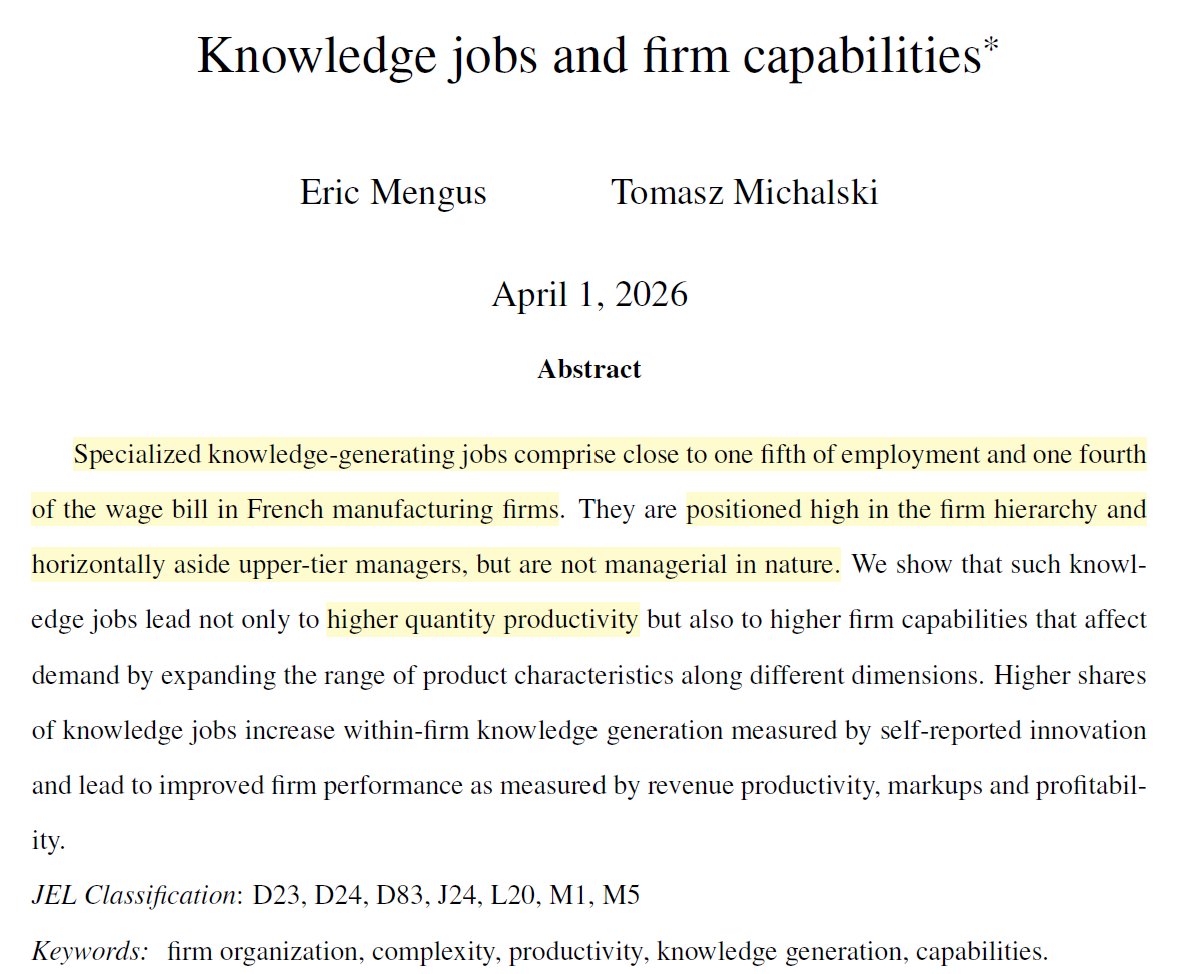
👇Very interesting paper on the Organization of Firms, by @EricMengus & Michalski @HECParis
It highlights the important role of specialized knowledge-generating jobs: think jobs in B2B or legal services, marketing, economic modeling, etc.
These jobs are arguably a bit neglected in economic theories of the firm.
The paper shows that they form a substantial share of 🇫🇷 mnfg. firms' employment, are non-managerial but high up in the firm hierarchy, and lead to improved firm performance in part by expanding demand.
📣Firms don’t just compete on costs - they shape demand.
In new @voxeu column with @TomKMichalski , I show how “knowledge jobs” (not only R&D but also legal, marketing...) play this role within firms - outside mgmt.
Column: https://t.co/8oFag0clkC
Paper: https://t.co/fnyhBdRgh2
Bilkent University
Department of Economics — Macroeconomics Seminar
📌 “Household Beliefs about Fiscal Dominance”
🎙️ Eric Mengus (HEC Paris & CEPR)
🗓️ Friday, February 20
⏰ 15:30
📍 İİSBF A 228 — Semih Koray Seminar Room
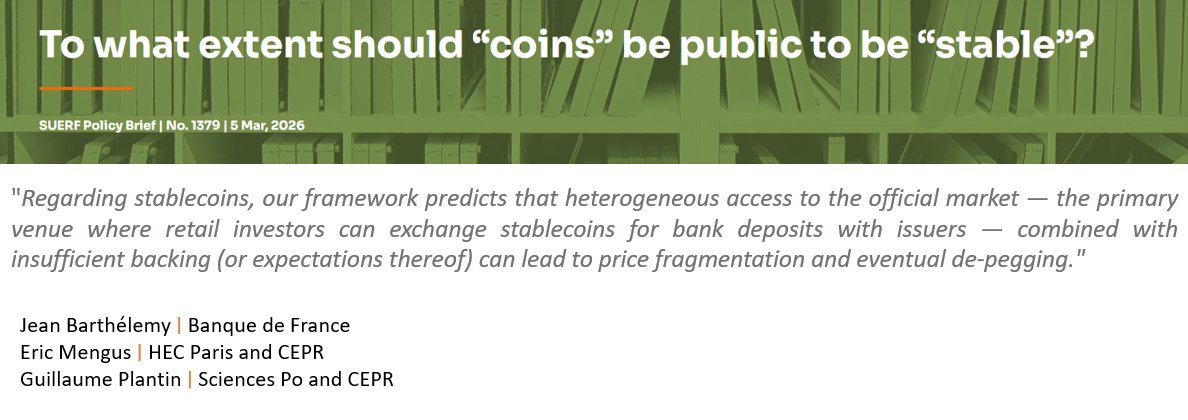
#SUERFpolicybrief “To what extent should “coins” be public to be “stable”?" by Jean Barthelemy (@banquedefrance), @EricMengus (HEC Paris), and Guillaume Plantin (Sciences Po)
📄 https://t.co/TLyAcfG5iM
#SUERFpolicybrief “To what extent should “coins” be public to be “stable”?" by Jean Barthelemy (@banquedefrance), @EricMengus (HEC Paris), and Guillaume Plantin (Sciences Po)
📄 https://t.co/TLyAcfG5iM
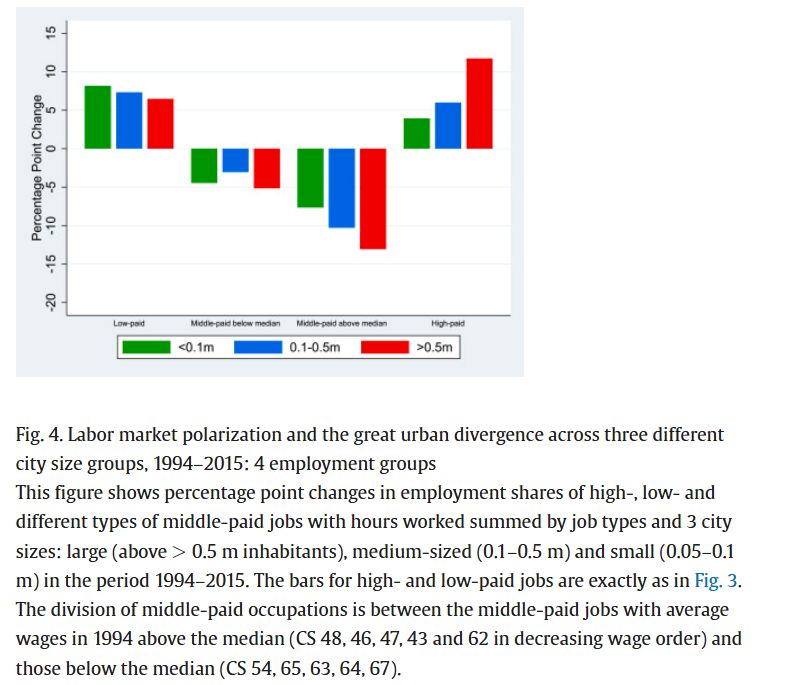
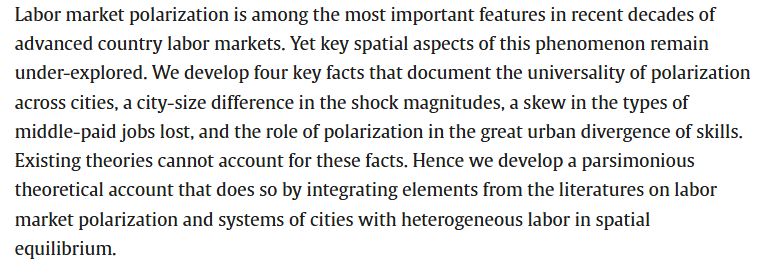
@Columbia@EricMengus@TomKMichalski We document and model four key facts: the universality of labor market polarization in cities; a city-size difference in the shock magnitudes; a skew in the types of middle-paid jobs lost; and the role of polarization in the great urban divergence of high vs. low-paid jobs.
New at JIE: "Labor market polarization and the great urban divergence" Donald R. Davis (@Columbia), Eric Mengus (@EricMengus), Tomasz Michalski (@TomKMichalski)
https://t.co/ZySKDExpGl
@a_bergeaud@MathieuL1 A quelle année correspond le point d'inflexion dans les années 2000 juste avant la hausse de 20% du ratio ? Il serait intéressant de comprendre ce qui est lié aux lois Hartz et au nombre d'heures travaillées par tête.
(1/7) „Labor market polarization and the great divergence” with Donald R. Davis and @EricMengus just in @JIntlEcon: https://t.co/qJ6eos2Sk7
I want to thank Don and Eric for an unforgettable experience that started with all Appendices to resemble rather a book than a paper.
🎉 Very happy that my paper with Don Davis and
@TomKMichalski is now out in the
@JIntlEcon!
Link to the paper: https://t.co/fCo1zlclza
With this project, I learned a lot about France and its evolution over the past 30 years. 1/4
📣 Very happy to have completed a new version of our paper on Labor Market Polarization and the Great Urban Divergence with @newyorkonomics and @TomKMichalski
Link to the paper : https://t.co/oJ4Iml0QUB
A short thread on our main results 👇 1/N
🎉 Honored to be promoted to research fellow at @cepr_org in the IMF and MEF Programmes. Many thanks to CEPR and in particular to @RefetGurkaynak and Alberto Martin for their trust!