I worked on FDP for years. The noisy campaign to scrap Palantir thinks it's protecting patients. It's quietly harming the research the NHS depends on. I told the Daily Mail what's actually true.
https://t.co/zsLXNHgmTL
Ontology all the way down.
11 years. Heavy civil construction.
People, equipment, materials, contracts.
This is what real-world AI looks like: operational, measurable, and in the field.
Palantir x Cavanagh through 2035.
$PLTR
어제(5/27) 캐나다 건설사 Thomas Cavanagh가 팔란티어와 2035년까지 11년 파트너십 연장을 발표했다.
대부분 투자자는 “또 작은 건설사 하나 계약했네” 하고 지나쳤을 것이다.
건설업 현직 수주 검토 담당자인 나는 이 뉴스를 보는 순간 등골이 서늘했다.
Cavanagh COO의 말이 결정적이었다.
“복잡한 API 통합에 시간과 자본을 쓰는 대신, 핵심 워크플로우를 Foundry 안에서 직접 다시 지었다. 더 빠르고, 더 안전하고, 임팩트는 비교가 안 됐다.”
기존 건설업 디지털화는 Procore, ERP, 입찰 시스템, 자재 발주, 안전관리 등 섬들을 API 다리로 겨우 연결하는 수준이었다.
Cavanagh는 그 다리들을 모두 부수고 사람·장비·자재·계약이라는 네 객체를 하나의 온톨로지 위에 올려 회사 전체를 다시 구축했다.
직원 97%가 매일 Foundry를 사용한다. 도입률 30% 넘기기조차 5년 걸리는 업계에서 말이다.
진짜 핵심은 그다음이다.
Cavanagh는 자회사 CAVTERA를 분사해 자기들이 겪은 디지털 전환을 다른 건설사에 판매하기 시작했다. 5월 27일부터 본격 가동이다.
이제 팔란티어는 영업을 하지 않아도 된다. 고객이 자발적으로 영업 조직을 만들어 동종 업계로 침투한다.
이는 AWS 초기, Salesforce 초기와 같은 신호다. OS급 플랫폼이 산업 표준으로 자리 잡기 직전, SI 생태계가 자생적으로 형성되는 단계다.
11년 계약은 SaaS의 일반적인 1~3년과 달리 “이제는 뺄 수 없다”는 자기 인정이다.
내가 이전에 “OS는 한번 깔리면 못 바꾼다”고 쓴 명제의 실증 사례가 캐나다에서 나온 것이다.
건설업은 글로벌 GDP의 약 13%를 차지하지만 디지털화율은 최하위다. 침투 여지가 가장 큰 시장에 SI 파트너 모델이 처음 깔린 신호다. NHS, Airbus, Rio Tinto 다음으로 ‘Vertical OS’ 차례가 건설업이라는 뜻이다.
나는 내년에 ‘도심지 탑다운 공법 통합 시공 기준’ 매뉴얼을 처음 제정하는 업무를 맡았다.
그 작업을 하며 깨달은 것은, 진짜 자산은 코드가 아니라 ‘어떻게 일하는가에 대한 합의된 구조’이며, 그 구조를 디지털로 옮긴 회사가 지구상에 단 하나뿐이라는 점이다.
전쟁이 시장을 흔드는 동안, 나는 어제 발표된 11년 계약을 다시 읽고 있다.
시장은 캐나다 작은 건설사 뉴스로 봤지만, 나는 ‘OS가 산업으로 번지는 첫 페이지’로 본다.
돈만 많다면 $PLTR 를 더 사고 싶다.
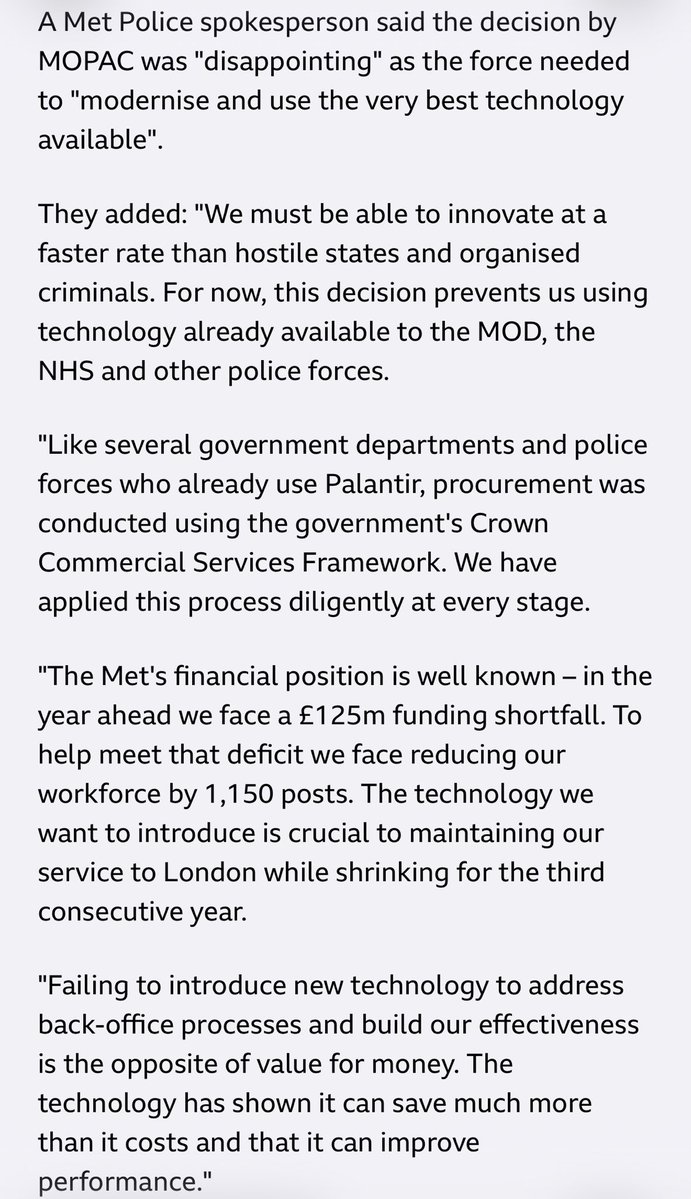
This week Sadiq Khan blocked the Met Police from buying software it says it needs to modernise and fight crime.
The software is made by Palantir. The Met’s response is unusually direct.
Read in full:
The FT says Palantir has "unlimited access" to patient data. The engineering team I led built the system they're writing about. It's a staging environment. Nobody logs in to look up a patient. The analytical tools sit elsewhere.
Full blog: https://t.co/rLUbIPfAZL
Implementing AI in warfare alongside @PalantirTech@louismosley is a strategic leap for Ukraine. It was a privilege to host Alex Karp in Kyiv—a leader who personally stood with us since 2022. Today, our partnership is defined by tangible results: from advanced air attack analysis and AI-driven intelligence processing to precision deep strike planning.
By integrating Palantir’s world-class solutions—trusted by NATO and valued at over $330 billion—we are securing a technological edge that protects our skies and dismantles the enemy's potential. Thank you to Alex and the entire Palantir team for their unwavering support and commitment to our victory.
$PLTR Palantir CEO Alex Karp was the first Western CEO to both support and visit Ukraine after the conflict began.
It amazes me how few in the comments who support Ukraine don't realize the tech has been instrumental in helping Ukraine defend itself from just after the beginning.
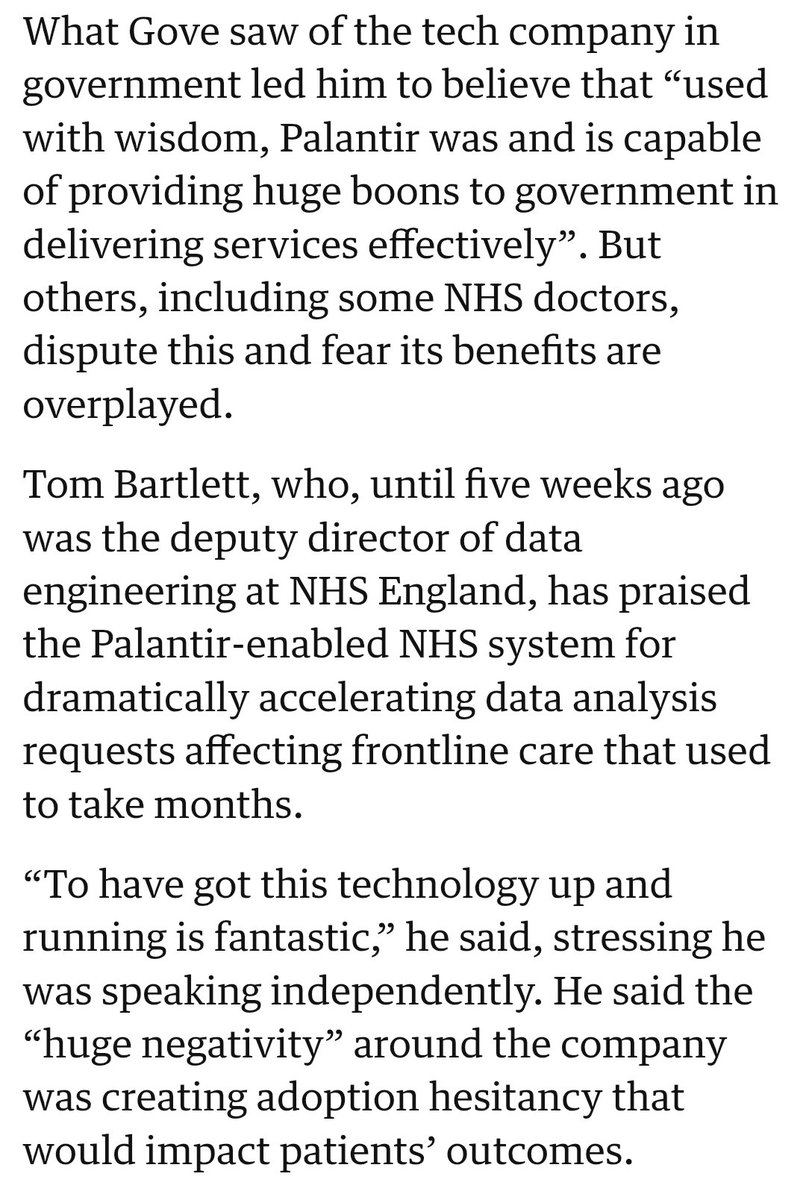
The NHS staff building FDP are heroes. The scare stories are dampening their progress and that has material impact on patient outcomes. My views in @Robert_Booth's article in the @guardian today.
https://t.co/u9VTRSZ3P3
We're partnering with @anduriltech to deliver commercial speed and innovation to hypersonics tech development for the @deptofwar.
With Anduril tech on multiple HASTE launches, we're working together to deliver Mach 5 capabilities and beyond for future defense missions.
First mission launching within 12 months.
@energybants The hardware is only as good as the software managing it. Hope you blow them away with NuclearOS and make the industry realize the power of a real Ontology. This is how we move from ‘data on a screen’ to actually building at Warp Speed. 🚀☢️
🚨Narrative violation alert 🚨
Turns out the software the activists want kicked out of Britain is treating 110,078 more patients, cutting waiting lists by ~800,000, and costing £200k per trust per year.
@matthewlesh in the @Telegraph 👇
$PLTR Interesting quote from Shyam in Palantir's earnings call:
"We have gotten rid of legacy software like $CRM, built it very quickly on top of our platform to a user experience that our users love."
Most commentators do not understand what FDP is for, or why Foundry is uniquely placed to solve problems the NHS has carried for decades. Today I begin a five-part series in @ComputerWeekly on what I call Frontline-First. https://t.co/3RJ7tdv7k5
Anduril is partnering with @KrakenTechGroup to deliver a fleet of small unmanned surface vehicles for the @USNavy.
You can't command the sea without scale.
https://t.co/lcdSpHPCF9
I led the team that built the NHS Federated Data Platform. I've left NHS England and written down what I think the debate is getting wrong.
https://t.co/OEtSI4AoOD
This is very telling: Former team leader at NHS England slams critics of the Federated Data Platform built on Palantir’s software.
Every single line in this excerpt, and the entire article, is worth reading: It all sounds too familiar of the BS we witness here in the U.S. as well.
Very Inconvenient when for the bears when customers speak about $PLTR like this “Michael Burry Does Not Understand What Palantir Is"https://t.co/5A2FvJRJVn on @LinkedIn
EXCLUSIVE: How the Military Uses Palantir, and AI, for War.
The military has wanted war AI since Vietnam. Since then, between 60-70 programs attempting to make it have failed.
Palantir was, arguably, the first to enter this environment with a new approach: actually identifying the problems by going out into the field. Here, the first substantial report on how Palantir built AI for the military, and exactly how they’re using it, including:
• How the outdated targeting tech that Palantir is replacing — including PowerPoint — may have contributed to the accidental bombing of an Iranian school in February.
• New details on the conflict between the Pentagon and Anthropic, Palantir’s former AI partner, concerning an update that crippled the CDC’s AI systems and heightened the administration’s fears over who controls this powerful tech.
This piece includes sourcing from military case studies, private and public demos of Palantir’s tech, and interviews with Palantir’s Akshay Krishnaswamy, chief architect; Ted Mabrey, head of commercial business; various vertical leaders and engineers at Palantir; Emil Michael, the under secretary of war for research and engineering; as well as sources who spoke on the condition of anonymity.
Essentially, despite fears that the Pentagon is using AI to drop missiles “quicker than the speed of thought,” sidelining human judgment entirely, mainly what it’s doing is replacing spreadsheets, calls, chats, and PowerPoint — to plan targets faster and more carefully.
Read the full piece from @dodgeblake 👇