Oil and gas is a technology industry. It just does not always get described that way.
SynMax CEO Eric Anderson joined Big Swing Podcast to talk about AI, energy, and the problem he first saw as a commodities quant: there is no shortage of data. The hard part is separating signal from noise and turning it into the answer to a specific question.
A few things worth listening for if you work in O&G:
🟩 Why we start with subject matter experts like geologists, geophysicists, and ex-hedge-fund analysts before building the AI
🟩 Why foundation models alone don’t solve energy-specific workflows
🟩 How AI moves intelligence from one-off consulting work into a platform customers keep using
Thanks to the Big Swing Podcast team for having Eric on.
Watch or listen to the full episode, available now. Link is in the comments below.
#OilAndGas #EnergyAI #EnergyIntelligence #EnergyTech #ArtificialIntelligence #SynMaxEnergy
Tracking North American data center construction wasn't enough. Your infrastructure intelligence just went global.
Vulcan now monitors 20 data center campuses across 12 countries.14.4 GW of nameplate capacity spanning Europe, Asia, and Oceania. Hyperscalers like AWS, Microsoft, Google, and Reliance are all on the board. The single largest: Reliance's Jamnagar AI Data Center in India at 3,000 MW planned.
Here's what this means for you: sites that were invisible to your analysis last week now have satellite-derived construction signals, analyst review queues, and modeled land-clearing timelines built in. No manual scraping.
No waiting for press releases. Vulcan's weekly review cycle is already running on priority international sites.
The global build-out is happening fast. Now you can see it.
#EFT #EnergyMarkets #DataCenter
LARRY ELLISON: AI IS RAPIDLY COMMODITIZING BECAUSE MOST MODELS ARE TRAINED ON THE SAME PUBLIC INTERNET DATA.
THE REAL COMPETITIVE EDGE ISN’T THE MODEL ANYMORE — IT’S ACCESS TO EXCLUSIVE, PROPRIETARY DATASETS.
THAT MAY BE THE ONLY MOAT LEFT.
"Run a 3D two-phase black-oil simulation on a 100×100×20 corner-point grid of the formation with anisotropic permeability (kh/kv=10), Brooks-Corey relative perms, and the attached well configuration (locations, completions, BHP constraints) over a 20 year forecast horizon, and report cumulative oil/gas/water production, pressure depletion maps per layer, and sweep efficiency."
Most AI tools in oil and gas rephrase what's already been filed. SynMax Agents work from what's actually happening in the field: satellite-derived signals, normalized public data, and forecasting models built on observed activity. You don't get text back. You get a mapped, structured, interactive dashboard you can act on.
Here's what we asked the SynMax Agent: "Give me a watchlist of the top 25 pads in south Texas most likely to add new production in the next 30 to 60 days. Rank them and explain the ranking using frac crews, completions, and TIL patterns."
Here's the live dashboard it returned: https://t.co/GSm5XZKDDh
Try it yourself. No demo, no sales call.
#EnergyIntelligence #OilandGas #EFT #OOTT
Enjoyed a wide ranging conversation on Natural Gas, the North American Energy Outlook, Energy Politics, Strait of Hormuz impacts, and more with SynMax's Eric Anderson.
https://t.co/dsqyJpkCj2
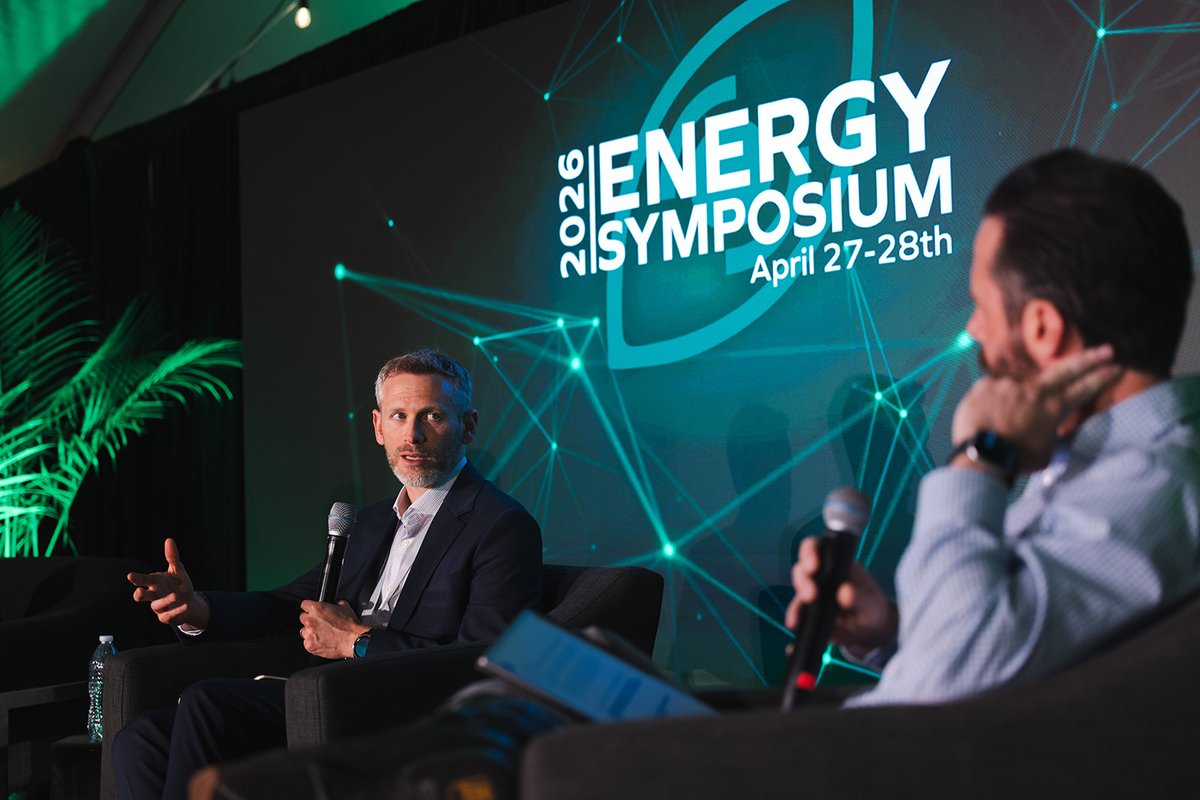
We brought together Michael Cohen (BP Americas) and Dr. Ning Lin (UT Austin) at the SynMax Energy Symposium in Austin for an analytical debate on where gas markets go from here.
The question: 𝗜𝘀 𝗟𝗡𝗚 𝗮 𝗴𝗲𝗻𝗲𝗿𝗮𝘁𝗶𝗼𝗻𝗮𝗹 𝗼𝗽𝗽𝗼𝗿𝘁𝘂𝗻𝗶𝘁𝘆, 𝗼𝗿 𝗮𝗿𝗲 𝘄𝗲 𝘀𝗲𝘁𝘁𝗶𝗻𝗴 𝘂𝗽 𝘁𝗵𝗲 𝗻𝗲𝘅𝘁 𝘀𝘂𝗽𝗽𝗹𝘆 𝗶𝗺𝗯𝗮𝗹𝗮𝗻𝗰𝗲?
This is what they had to say:
🟢 𝗧𝗵𝗲 𝗴𝗹𝗼𝗯𝗮𝗹 𝗟𝗡𝗚 𝘀𝘆𝘀𝘁𝗲𝗺 𝗶𝘀 𝘂𝗻𝗱𝗲𝗿 𝘀𝘁𝗿𝗲𝘀𝘀, 𝗯𝘂𝘁 𝘂𝗻𝗲𝘃𝗲𝗻𝗹𝘆
Recent disruptions have not hit all markets equally. Europe has managed through demand discipline and storage strategy, while Asia has seen aggressive competition for cargoes, with some countries priced out entirely. The result is a more volatile and fragmented global system, where the impact of supply shocks depends heavily on regional positioning.
🟢 𝗗𝗲𝗺𝗮𝗻𝗱 𝗴𝗿𝗼𝘄𝘁𝗵 𝗶𝘀 𝗻𝗼 𝗹𝗼𝗻𝗴𝗲𝗿 𝗮 𝗴𝗶𝘃𝗲𝗻
Much of the long-term LNG demand story depends on emerging markets, which are the most exposed to higher prices and disruption. Slower growth, demand destruction, and a potential contraction in import demand point to a more uncertain trajectory than most forecasts assume. The range of outcomes for LNG is widening, not narrowing.
🟢 𝗧𝗵𝗲 𝗨.𝗦. 𝗶𝘀 𝘁𝗵𝗲 𝘀𝗵𝗼𝗰𝗸 𝗮𝗯𝘀𝗼𝗿𝗯𝗲𝗿, 𝗯𝘂𝘁 𝗻𝗼𝘁 𝗶𝗻𝗱𝗲𝗳𝗶𝗻𝗶𝘁𝗲𝗹𝘆
U.S. LNG is currently balancing global markets, but capacity is constrained and much of the supply is already locked into long-term contracts. Near-term disruptions may support prices, but they do not necessarily solve the longer-term risk of imbalance between supply and demand.
🟢 𝗜𝗻𝗳𝗿𝗮𝘀𝘁𝗿𝘂𝗰𝘁𝘂𝗿𝗲, 𝗻𝗼𝘁 𝗿𝗲𝘀𝗼𝘂𝗿𝗰𝗲𝘀, 𝗶𝘀 𝘁𝗵𝗲 𝗿𝗲𝗮𝗹 𝗰𝗼𝗻𝘀𝘁𝗿𝗮𝗶𝗻𝘁
The limiting factor is not the availability of gas, but the ability to move it. Connected, liquid systems like the U.S. are more resilient, while more segmented markets remain vulnerable to disruption. Across regions, infrastructure buildout and coordination will determine who can respond and who gets left behind.
Essentially, the future of natural gas is not a single path. It is an ever-changing, widening range of scenarios shaped by geopolitics, infrastructure, and demand uncertainty.
#NaturalGas #LNG #EnergyMarkets #EnergySecurity #Geopolitics #SynMax
~40% of US data center projects may be delayed due to labor, permitting, and power constraints.
Leveraging data from SynMax, the @FT recently released an article highlighting the growing gap between AI investment and infrastructure delivery.
Read the full article: https://t.co/ig1hVDnlnd
Software engineering spent the last 50 years optimizing around one core assumption: change is expensive. Every design pattern, every architecture principle, every sprint planning ceremony we've ever sat through exists because rewriting code used to be painful and costly. So we learned to plan obsessively. We future-proofed everything. We built elaborate abstractions so that teams could work on the same codebase without breaking each other's work. When scope drifted far enough that the foundation no longer fit, and it always did, we'd stop everything for a big, expensive refactor. The entire discipline of software engineering is essentially a set of strategies for avoiding that moment.
AI development flips this on its head. When you can regenerate, restructure, or rewrite a module in minutes, the cost of being wrong drops close to zero. The old equation was: plan carefully, build once, avoid rework. The new equation is: build fast, learn, rebuild. Refactoring isn't the enemy anymore, it's the strategy.
💯Hierarchies are useful but dangerous if left unmaintained. In any hierarchy you have to be aware that:
-Good news tends to travel up while bad news travels down.
-Problems should escalate by difficulty but without direct paths around the chain of command their existence can be suppressed.
-Disputes will always rise to the very top unless you build in resolution mechanisms at every level.
-Kingdoms will always end up forming when there is a lack of horizontal communication.
Every hierarchy needs maintenance in the form of periodic alignment from top to bottom.
IBM built a cloud of suits to make sure the CEO never talked to anyone actually doing the work. @elonmusk does the opposite.
"Elon's method is extreme focus on substance. Extreme focus on getting to the truth.
In any organization with multiple layers, there's compounding lies. Each layer wants to look good. Each layer puts a little spin on things.
If one layer lies to the next layer above it, maybe that's okay. When that happens two or three times, the lies compound. If that happens six times, the lies really compound. If that happens 12 times, the CEO has no idea what's happening.
That was IBM.
By the time I got there as an intern, I calculated there were 12 layers of management between me and the CEO.
They even had a term for it: the great cloud. A cloud of men in gray business suits who followed the CEO around and prevented him from ever talking to anybody who was actually doing the work.
When he would come to visit, it was like a visit from the king. A completely impervious bubble.
That's the polar opposite of the Elon approach."
— @pmarca
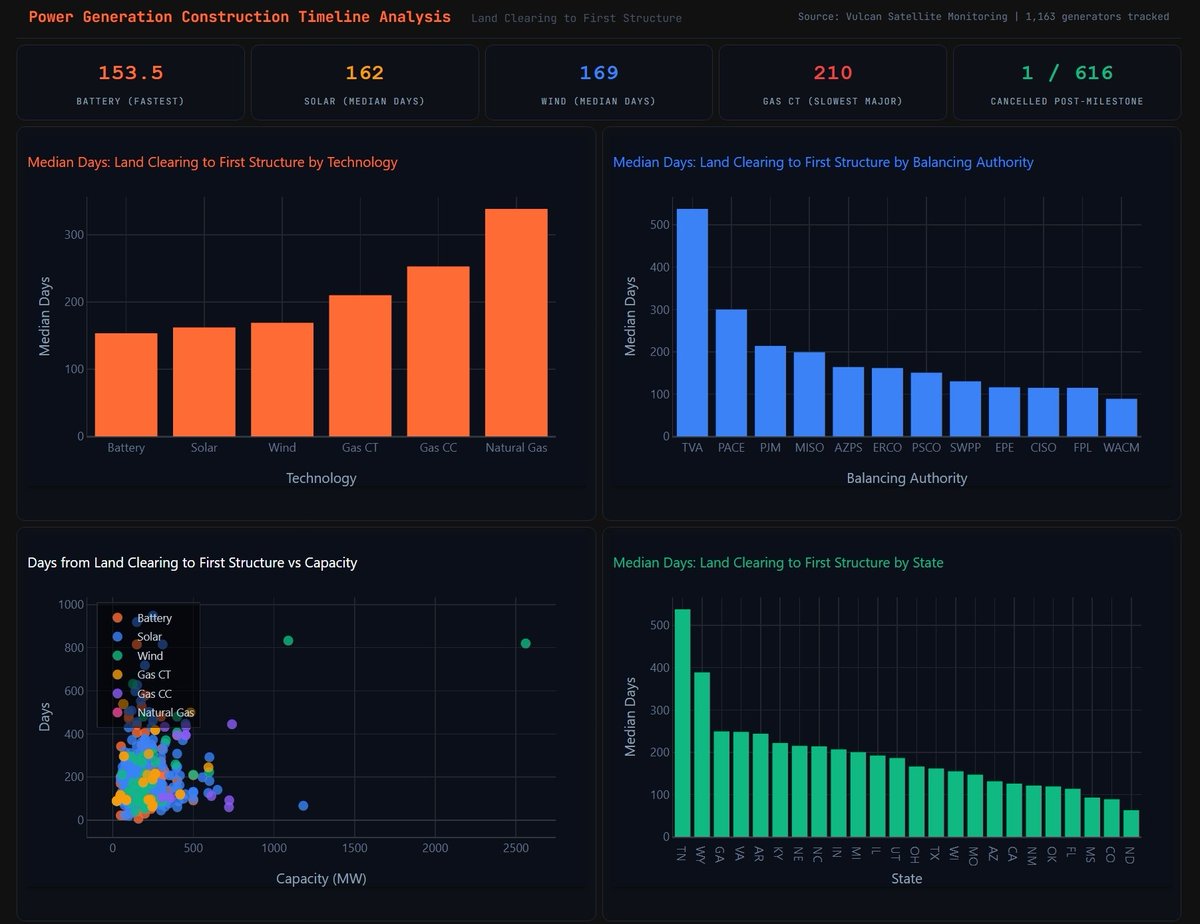
Land clearing might be one of the strongest signals in power development.
Across 136 GW of projects, only one has been cancelled after land clearing. Uvalde Solar at 150 MW.
That suggests once a site is cleared, completion risk drops significantly.
What varies is speed. Time from clearing to first structure differs widely by technology and region.
No surprise. Battery storage moves fastest due to a smaller footprint.
Full dashboard in the comments!
Observations on Waymo after 3 days of using them with my 13 yo son:
-We talk more on rides without a stranger in the car.
-I have never asked the driver to change the temperature or music in an uber, I don’t want to impose but I feel comfortable doing it in a Waymo on every ride, even turning the music up loud.
-The first few rides we were constantly watching every move the Waymo made, now we mostly ignore it and continue on whatever we were talking about before we got in. There is no “break” in our flow like there is with an uber where a new person enters our circle.
-Other drivers and pedestrians treat them differently. Four-way stops are the worst. Other cars just go out of turn knowing the Waymo will yield to them every time. One guy ran in front and started flipping us off, one biker decided to ride circles around us for a few minutes just for fun while the Waymo stayed patiently still.
-They are starting to “feel like our car” as my son says. When you arrive the temperature is what you last selected and the music is your Spotify, if you got out of a Waymo in the middle of a song then the next one you get into continues from where you left off. Since every Waymo is exactly the same there is a continuity.
Sequoia’s @JulienBek says many of their founders are now wondering if they’re “just an iteration away” from AI labs destroying their business.
He says the most defensible companies - and potentially the next trillion-dollar company - will be “a software business that masquerades as a services firm.”
“If you sell tools today, you’re really in the line of sight for the models and you’re effectively competing with the next generation that they’re going to launch.”
“Whereas if you sell the work, you’re actually benefiting from what the models are doing and all the billions of dollars that are going towards AI.”