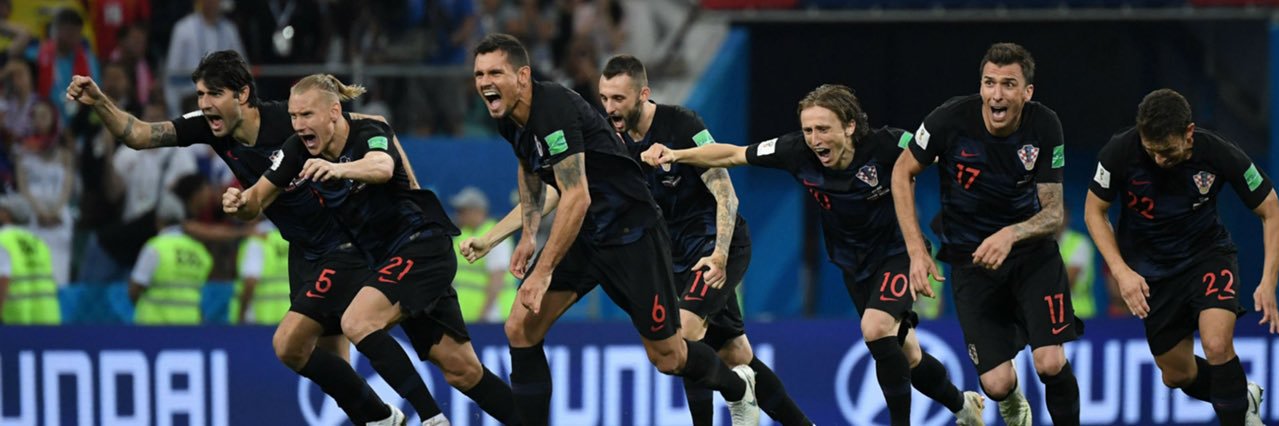
🚨🇭🇷 NEW: Sportske Novosti have published the HNS letter sent to FIFA after the match against Portugal.
“Once again, this edition of the World Cup has demonstrated the global strength and popularity of football, making it all the more important that we remain committed to the fundamental values of our game—fairness, fair play, and the consistent application of the Laws of the Game to all national teams.
It is precisely because several controversial incidents during the tournament have prompted strong reactions around the world—from referees, media representatives, football experts, and the wider public—that we consider it necessary to address you in order to clarify the application of the Laws of the Game and FIFA's protocols in the refereeing decisions made during the World Cup Round of 32 match between Croatia and Portugal, played on 2 July 2026 in Toronto.
During the second half of that match, Croatia had three goals disallowed, all following delayed offside decisions. Furthermore, after a VAR intervention, Portugal was awarded a penalty kick that resulted in the equalising goal, even though the referee was in close proximity to the players, had a clear view of the incident, and did not consider the challenge sufficient to award a penalty. Consequently, the incident did not constitute a "serious missed incident." Given that it involved the kind of physical challenge routinely seen inside the penalty area in virtually every match, we are equally convinced that it could not reasonably have been regarded as a "clear and obvious error" by the referee. In other words, neither of the two fundamental criteria for a VAR review was met and, under the VAR Protocol, the VAR had neither the authority nor the obligation to invite the referee to conduct an on-field review.
Particularly controversial was referee Espen Eskås' decision in the 103rd minute to disallow Joško Gvardiol's goal for the alleged offside position of Mario Pašalić. In FIFA's official statement, it was explained that "Connected Ball Technology, embedded in the official match ball, detected a touch by Igor Matanović, allowing the referee to correctly award an offside offence and disallow Joško Gvardiol's goal."
At the same time, FIFA's official explanation of the offside law on its website states:
"Hair is considered a body part only if it affects the movement or trajectory of the ball. This is likely possible only in cases involving significant contact with a substantial amount of hair, for example a bun on top of the head."
It therefore remains unclear whether the referee disallowed Croatia's goal solely because Matanović may have touched the ball with a single strand of hair, or because he concluded that such contact affected the movement or trajectory of the ball—something that cannot in any way be inferred from the publicly available footage.
Moreover, all available video footage clearly shows that after passing Matanović's head, the ball did not change its direction, trajectory, speed, or rotation. In other words, he did not play the ball and therefore there could have been no offside offence. We consider it fundamentally wrong that an almost imperceptible vibration detected by a sensor can determine the outcome of a match of such importance.
We do not believe it serves football, its supporters, its players, its referees, the spirit of our game, or FIFA itself for technology to be trusted more than what is plainly visible to the human eye. As the reactions of people around the world—not only Croatian supporters—have demonstrated, virtually no one believes that Matanović touched the ball. When technology attempts to convince the public otherwise, it is entirely understandable that many describe such a decision as an "obvious robbery" or claim that "technology is destroying football." Such widespread negative reactions do nothing to enhance FIFA's reputation or strengthen public confidence in technological innovation. This is particularly unfortunate because we firmly believe that technology has an important and welcome role to play in football—but not in this manner.
The entire situation is further complicated by the following question: if the sensor data conclusively confirmed a touch and the VAR team definitively established the existence of an offside offence, why was the referee invited to review the incident on the pitch-side monitor at all? In such circumstances, this would have been a purely factual decision that the VAR is authorised to make independently. Conversely, if the referee was nevertheless called to conduct an on-field review, what exactly was he reviewing? Which specific video angles enabled him to conclude that Matanović touched the ball or affected its movement?
Furthermore, the available television footage clearly shows—through the data displayed at the bottom of the screen—that the "peak" indicating the alleged touch appears significantly before the ball reaches the Croatian attacker who is alleged to have touched it. Such footage simply cannot be regarded as sufficiently reliable evidence on which to base a decision of such significance. We therefore respectfully request that FIFA provide the Croatian Football Federation with the relevant footage from the VAR operations room so that we may determine why this "peak" appears before the ball had even come into the vicinity of Igor Matanović.
We are fully aware that no subsequent interpretation of these events can alter the outcome of the match against Portugal, a national team that we respect and congratulate on qualifying for the Round of 16.
However, given that football matches—and especially the FIFA World Cup—are followed with immense passion and emotion by billions of people around the world, we believe it is essential to further strengthen confidence in refereeing, particularly with regard to the criteria and methods governing the application of modern technology, so that it cannot be misapplied or used contrary to its intended purpose. Everything that occurred during this match, and especially the final offside decision, generated enormous dissatisfaction among football supporters around the world, thereby harming the game during this historic FIFA World Cup.
We therefore consider it appropriate for FIFA to conduct a thorough review of all the controversial incidents from this match and to provide comprehensive explanations of the refereeing decisions that had a decisive impact on the outcome of this Round of 32 fixture. Although such explanations cannot restore Croatia's opportunity to pursue another great achievement on football's biggest stage during Luka Modrić's extraordinary international career, we sincerely hope that similar unjust and fundamentally unfootballing decisions—in which a sensor becomes more important than what is visible to the human eye—will be prevented in the future through clearer protocols and improved procedures.
Unfortunately, decisions of this nature cause immense disappointment among football supporters—from Croatian fans in the stadium to football lovers, media representatives, commentators, and the wider public across the globe. We firmly believe that such situations can be avoided in the future, and it is precisely for that reason that we have chosen to address you in this manner, fully aware that no explanation can lessen the tears, sadness, and disappointment of our players and supporters.
In light of all the above circumstances, we respectfully ask that you give careful consideration to the questions and proposals we have presented.”
🥹Luka Modrić receives a guard of honor as he exits the Bernabéu pitch for the final time as a player…
Luka was embraced by his teammates, Sociedad players, Toni Kroos, and his family. A beautiful moment for an absolute legend.
Luka Modrić, the most decorated player in Real Madrid history.