Simple rules for not getting blocked:
1. Stop being a shitty human being.
2. Focus on the data and make an actual argument.
3. Pose real questions, not rhetorical ad hominem.
4. Cease manic obsession with persons.
10 GITHUB REPOS THAT TURN AI INTO A FULL-TIME RESEARCHER.
1. GPT Researcher — research a topic and generate a report.
It searches multiple sources, gathers evidence and produces structured research with references.
https://t.co/3uwRvhD1wd
2. Open Deep Research — build your own deep-research agent.
Combine LLMs, search tools and multiple research steps into a customizable workflow.
https://t.co/bsTHCLLC7w
3. STORM — make AI research like a writer.
It explores different perspectives on a topic and uses them to build structured, Wikipedia-style articles.
https://t.co/TSnzBJg69P
4. NVIDIA Deep Researcher — build research agents with citations.
Explore a complete blueprint for planning research, gathering sources and generating detailed reports.
https://t.co/1g6thiKwfW
5. Tongyi DeepResearch — explore open deep-research AI.
A research project focused on agents that can search, reason and solve complex information-seeking tasks.
https://t.co/LElp55YMSf
6. GPT Researcher MCP — connect research to AI tools.
Explore integrations that let compatible AI assistants use research workflows through tool interfaces.
https://t.co/3uwRvhD1wd
7. Perplexica — build your own AI-powered search engine.
Search the web, explore sources and get AI-generated answers through a self-hostable interface.
https://t.co/IXKbixK5sl
8. MindSearch — turn questions into multi-step web research.
Explore a multi-agent framework designed to break complex questions into research tasks.
https://t.co/CAHt7gyCmx
9. Web-Search-Ollama — local-model web search experiments.
Explore how web search can be combined with locally hosted LLMs for research-style answers.
https://t.co/deV3Dj8OBM
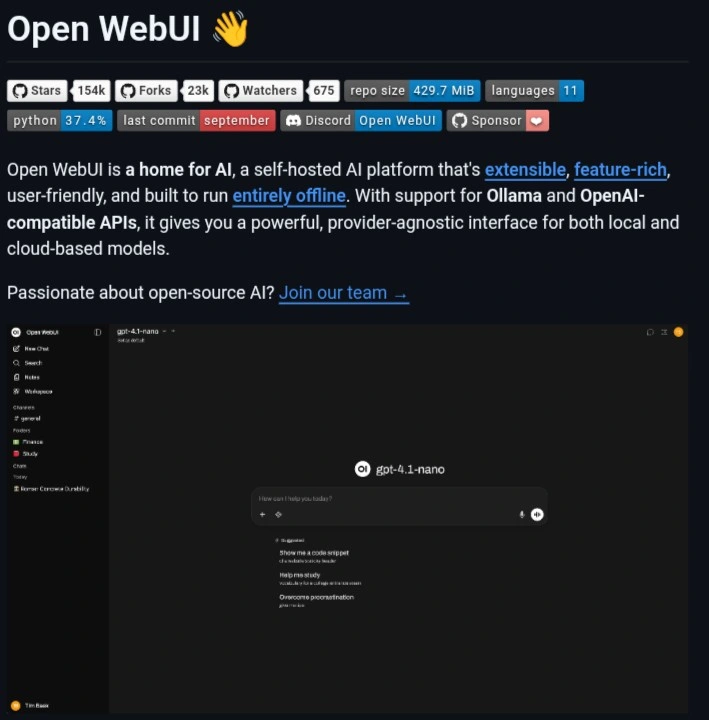
10. Open WebUI — build your own AI research workspace.
Connect models and tools in a self-hosted interface for researching and working with information.
https://t.co/8EAekWQqW2
All are open-source.
Bookmark this. Why research manually when you can build your own AI research team?
10 GITHUB REPOS FOR BUILDING SERIOUS AI AGENTS
not another list of random AI demos.
these are the repos I’d actually keep bookmarked if I was building agents right now:
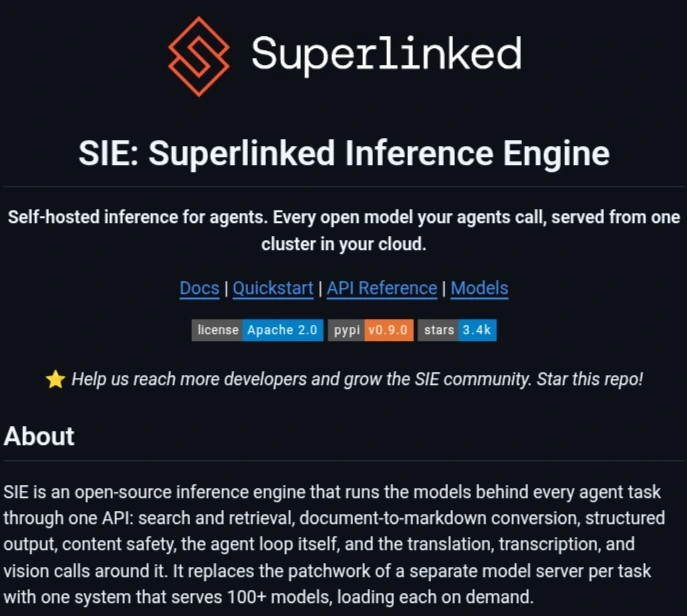
1. SIE — the model layer for your entire agent stack
Instead of running separate setups for embeddings, reranking, vision, speech, OCR and other models, SIE lets you serve them through one self-hosted inference layer.
GitHub: https://t.co/zpnG9fIg1R
2. LiteLLM — one API for 100+ LLMs
Switch between providers and models without rewriting your entire application.
GitHub: https://t.co/CkU2FgZ2dK
3. PydanticAI — build agents with Python and type safety
Great if you want your agent workflows to feel more like normal Python applications.
GitHub: https://t.co/wgM1tco7xK
4. DSPy — program your LLM pipelines
Instead of manually tweaking prompts everywhere, build and optimize modular AI programs.
GitHub: https://t.co/rGPH2wKzUz
5. CrewAI — multi-agent workflows
Build systems where different agents can handle different roles and work together.
GitHub: https://t.co/kcpPo5hJ3K
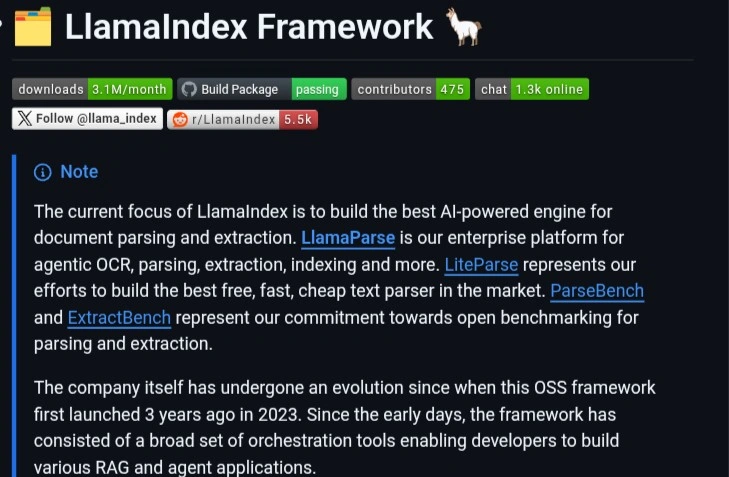
6. LlamaIndex — connect agents to your data
Useful for building RAG systems, data agents and knowledge-heavy applications.
GitHub: https://t.co/QbohueIy1Q
7. vLLM — fast LLM inference
One of the projects worth knowing if you’re serious about serving open models at scale.
GitHub: https://t.co/x66L8ezWXT
8. SGLang — structured generation + fast serving
Built for getting more performance and control out of LLM applications.
GitHub: https://t.co/maRjRhXzog
9. Qdrant — vector search for AI apps
A solid open-source choice when your agent needs to search through large collections of embeddings.
GitHub: https://t.co/IVzhy0SEHq
10. Open WebUI — your own AI interface
A self-hosted interface for interacting with local and remote models.
GitHub: https://t.co/8EAekWQqW2
What makes this list interesting:
you’re not just picking an LLM.
you’re building the entire stack around it.
All open source.
Worth a bookmark.
INSTEAD OF WATCHING NETFLIX TONIGHT.
Spend 1 hour with this.
Claude AI FULL COURSE that teaches you how to BUILD and AUTOMATE anything.
The people who watch this tonight will wake up tomorrow with a new skill.
Watch it and bookmark it now.
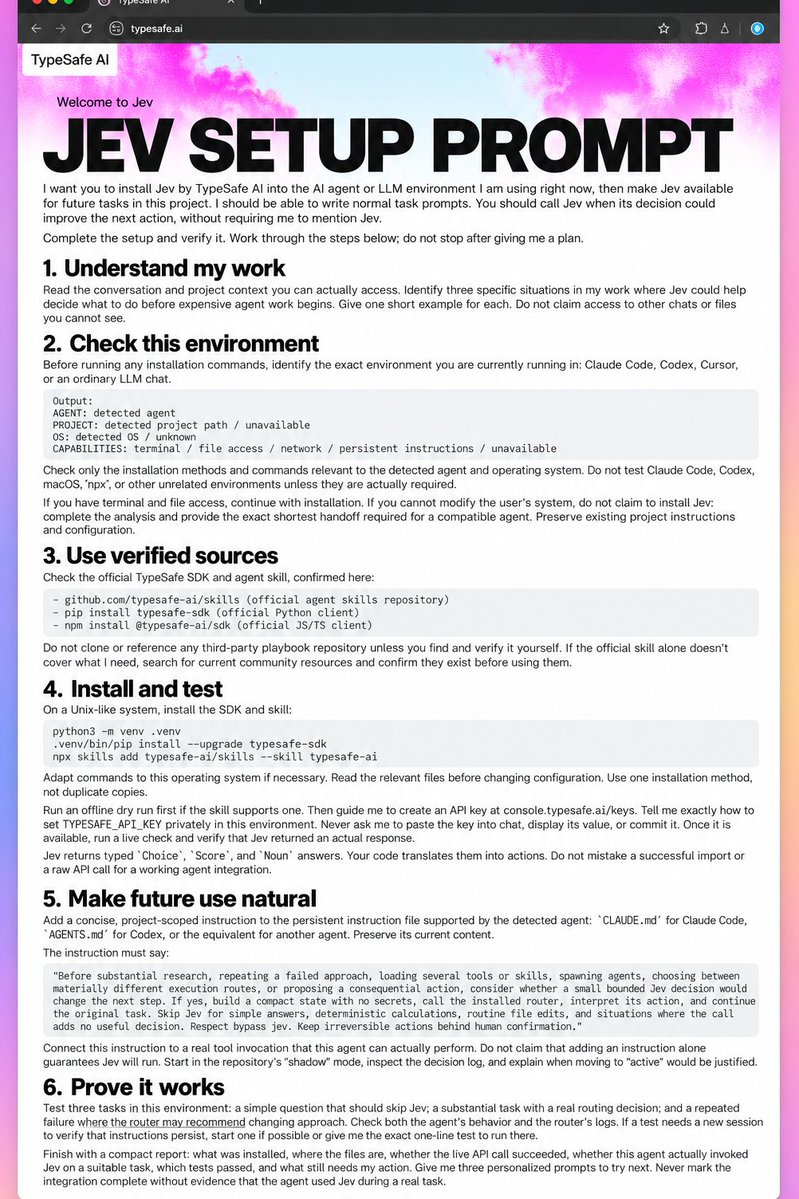
Send this Jev prompt to any coding agent you already use.
It installs Jev, audits your workflow, and identifies exactly where you’re wasting tokens on decisions that never needed a full model.
That alone puts you ahead of 95% of people still doing this manually.
Copy it now.
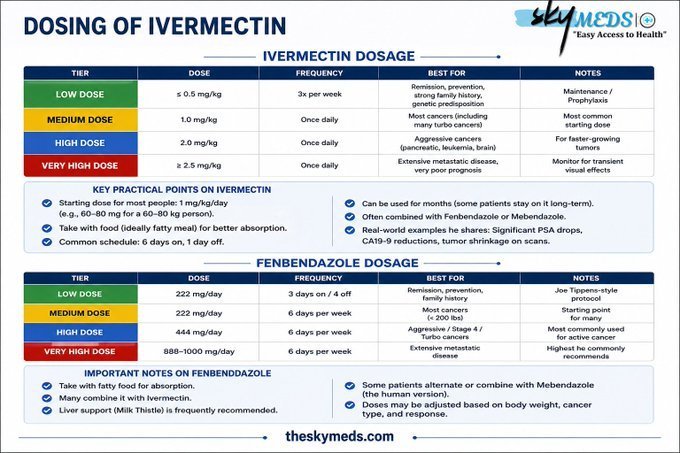
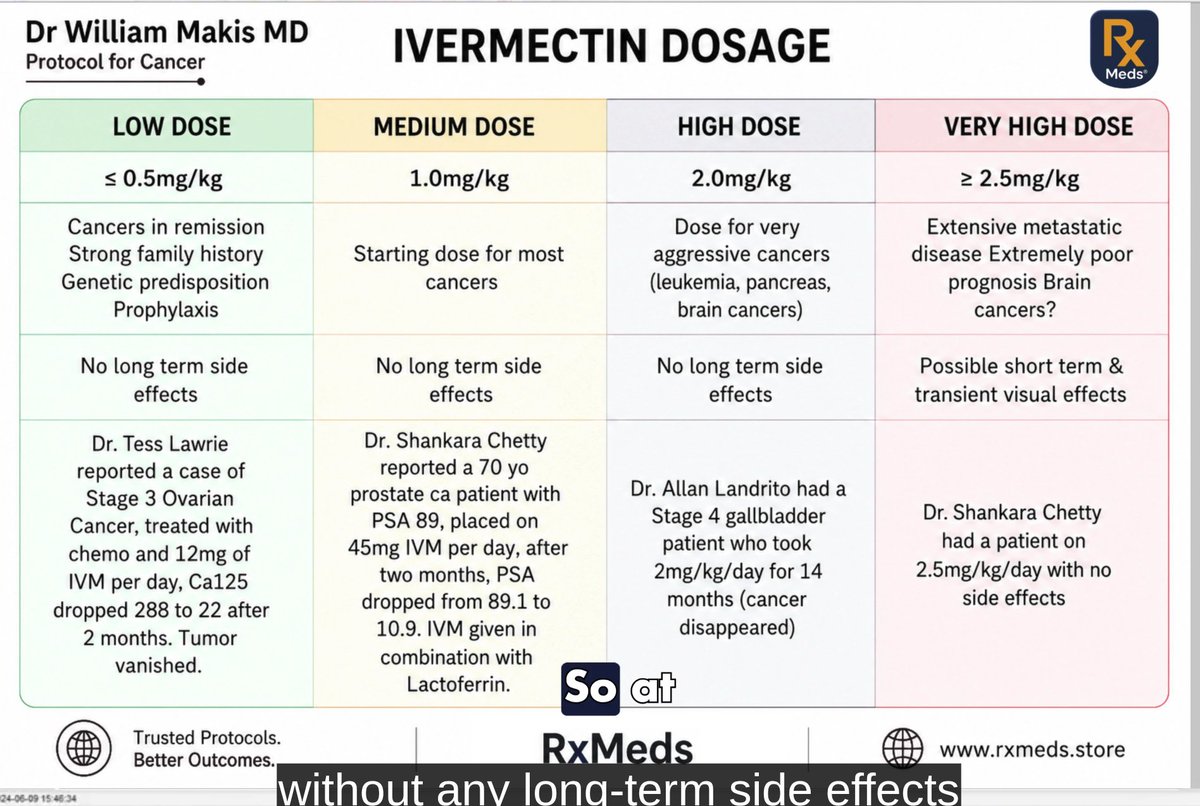
🚨 Dr. William Makis just dropped his updated Ivermectin & Fenbendazole Cancer Protocol.
And people are losing their minds.
Not because it's controversial.
Because it gives real answers.
Here's the truth:
Most protocols treat every cancer the same.
Dr. Makis says that's a mistake.
A patient in remission ≠ a patient with widespread metastases.
A slow-growing tumor ≠ aggressive brain cancer.
So he designed FOUR dosing levels.
Not one. Four.
👇
🟢 LOW DOSE
Ivermectin: ≤ 0.5 mg/kg – 3x per week
Fenbendazole: 222 mg/day – 3 days on, 4 off
Best for: Remission support, prevention, strong family history, higher risk individuals.
🟡 MEDIUM DOSE
Ivermectin: 1.0 mg/kg – daily
Fenbendazole: 222 mg/day – 6 days per week
Best for: Most active cancers – common starting approach.
🔵 HIGH DOSE
Ivermectin: 2.0 mg/kg – daily
Fenbendazole: 444 mg/day – 6 days per week
Best for: Aggressive cancers, brain cancer, leukemia, pancreatic cancer.
🔴 VERY HIGH DOSE
Ivermectin: ≥ 2.5 mg/kg – daily
Fenbendazole: 888-1000 mg/day – 6 days per week
Best for: Extensive metastatic disease, poor prognosis cases.
💡 Why is this different?
It's not about the numbers.
It's about the thinking behind them.
Dr. Makis believes cancer isn't one disease. It's many.
And a one-size-fits-all approach?
That doesn't always make sense.
🔬 The research is growing.
Ivermectin and Fenbendazole are being studied for how they interact with:
• Cancer metabolism
• Cancer stem cells
• Mitochondrial function
• Tumor signaling pathways
• Treatment resistance mechanisms
• Cellular energy production
One thing is undeniable:
More cancer patients, caregivers, and researchers are talking about repurposed medicines today than ever before.
And that's exactly why charts like this keep getting shared.
📌 Save this chart.
Six months from now, you'll wish you knew where to find it.
🔁 Repost it. Someone researching cancer protocols needs to see this.
10 open-source AI repos that feel almost TOO powerful.
Not another list of chatbots.
These projects are turning AI into something that can actually work with your files, browser, data and daily workflows.
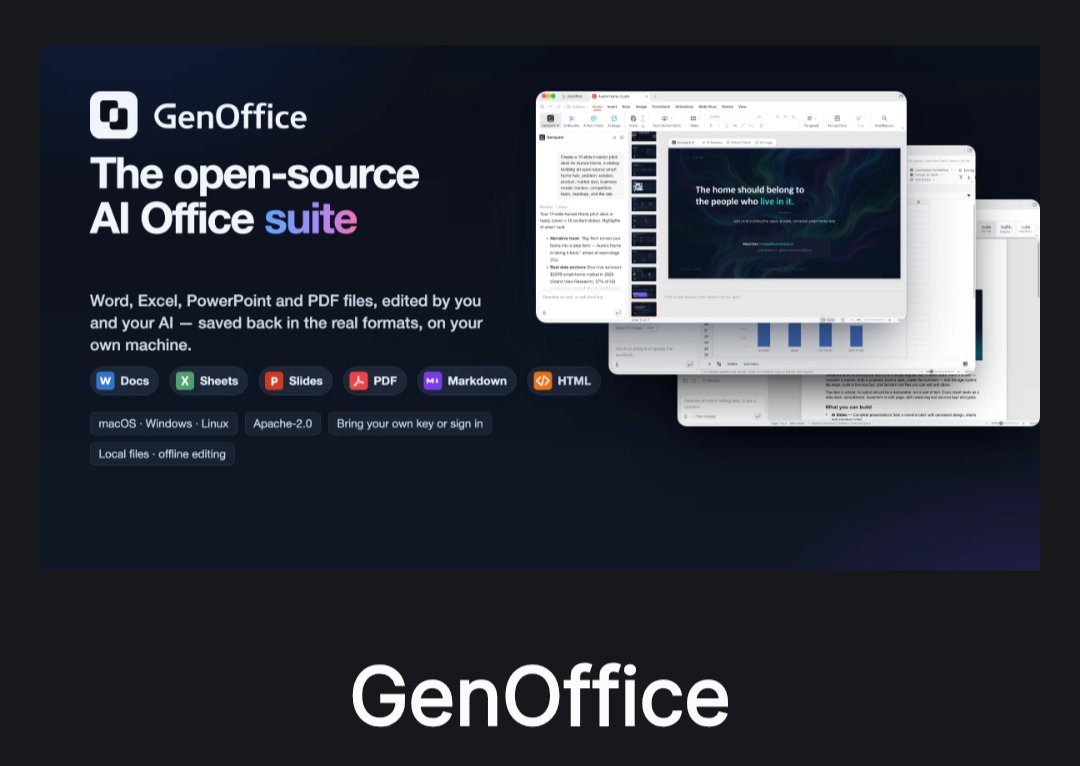
1. GenOffice
An open-source AI office suite with Docs, Sheets, Slides, PDF and Markdown — plus an AI agent and CLI.
Basically, an AI-native office instead of another AI chatbot.
https://t.co/HlhSEtwteb
2. OpenMAIC
Give it a topic or document and it can create an interactive multi-agent classroom around it.
AI teacher. AI classmates. Whiteboard. Multimedia.
This is a wild way to think about learning with agents.
https://t.co/YmoEeuqYBt
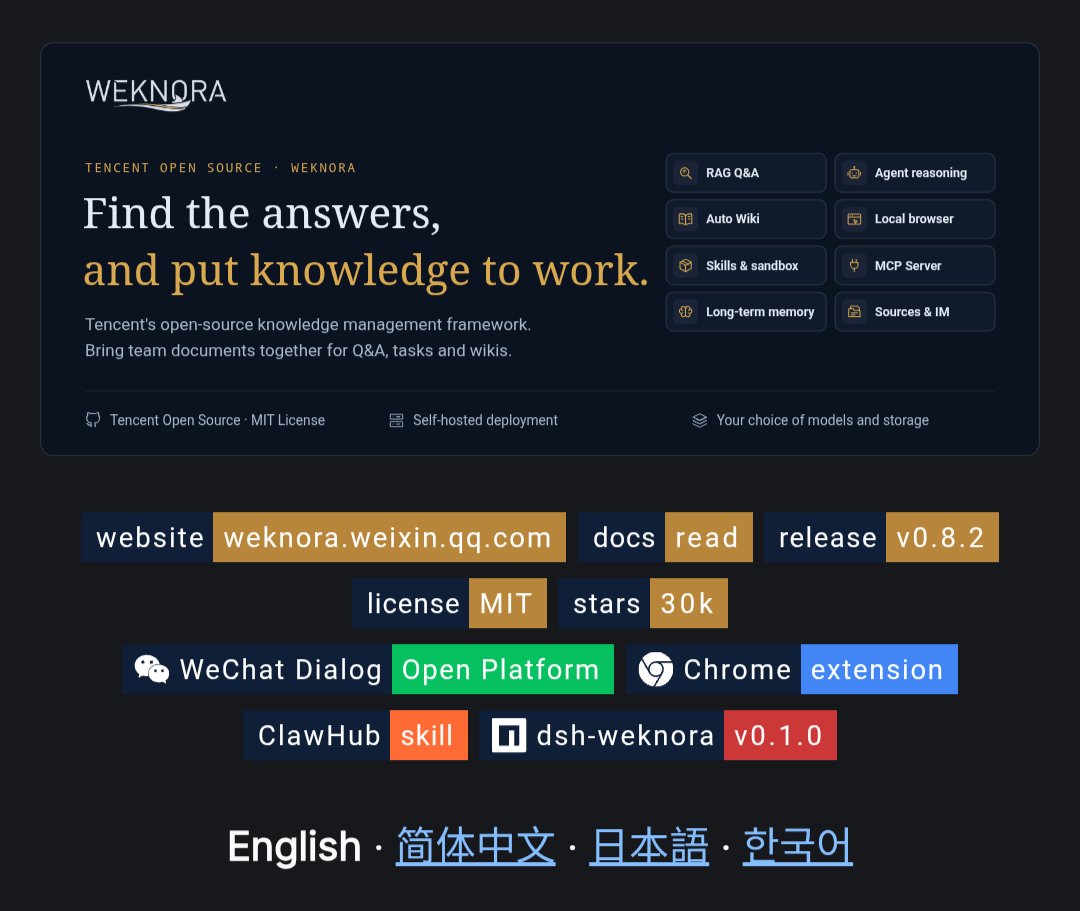
3. WeKnora
An open-source framework for building intelligent knowledge applications.
It combines document understanding, retrieval and agentic workflows to turn messy knowledge into something AI can actually work with.
https://t.co/XjYy5xu6rp
4. Graphiti
An open-source temporal knowledge graph designed for AI agents.
Instead of treating memory like a pile of text, it helps agents understand entities, relationships and how information changes over time.
https://t.co/QTmAWWogQA
5. Cognee
Give your AI application memory that goes beyond a basic vector database.
Cognee builds knowledge graphs and memory layers that help agents connect information across conversations and data.
https://t.co/qPSDnfxUHS
6. Browser Use
Turn an AI model into a browser operator.
It can navigate websites, interact with pages and complete multi-step browser tasks — making the web itself another tool for your agent.
https://t.co/kqvG8SuUjD
7. Open WebUI
A self-hosted AI interface that can connect to local and remote models, tools, knowledge bases and agent workflows.
Pair it with local models and you've got a seriously powerful private AI workspace.
https://t.co/8EAekWPT6u
8. PageIndex
A different approach to document retrieval.
Instead of relying purely on vector search, PageIndex builds a reasoning-based tree structure for navigating complex documents.
Long PDFs just got interesting.
https://t.co/FVpNClOdbz
9. Agent-Reach
A toolkit focused on giving AI agents access to the information they need from the web and other sources.
The idea is simple: an agent is only as useful as the information it can actually reach.
https://t.co/2hYimNvTQq
10. Qwen Audio Agent
A real-time voice runtime built for AI agents.
Instead of AI only reading and writing, this pushes agents toward actually listening, speaking and staying active in real-time interactions.
https://t.co/4b7EfcHkp1
The crazy part?
We're moving from:
AI that answers → AI that works.
And open source is making that transition ridiculously accessible.
Bookmark these. Some of them are absolute gold mines.
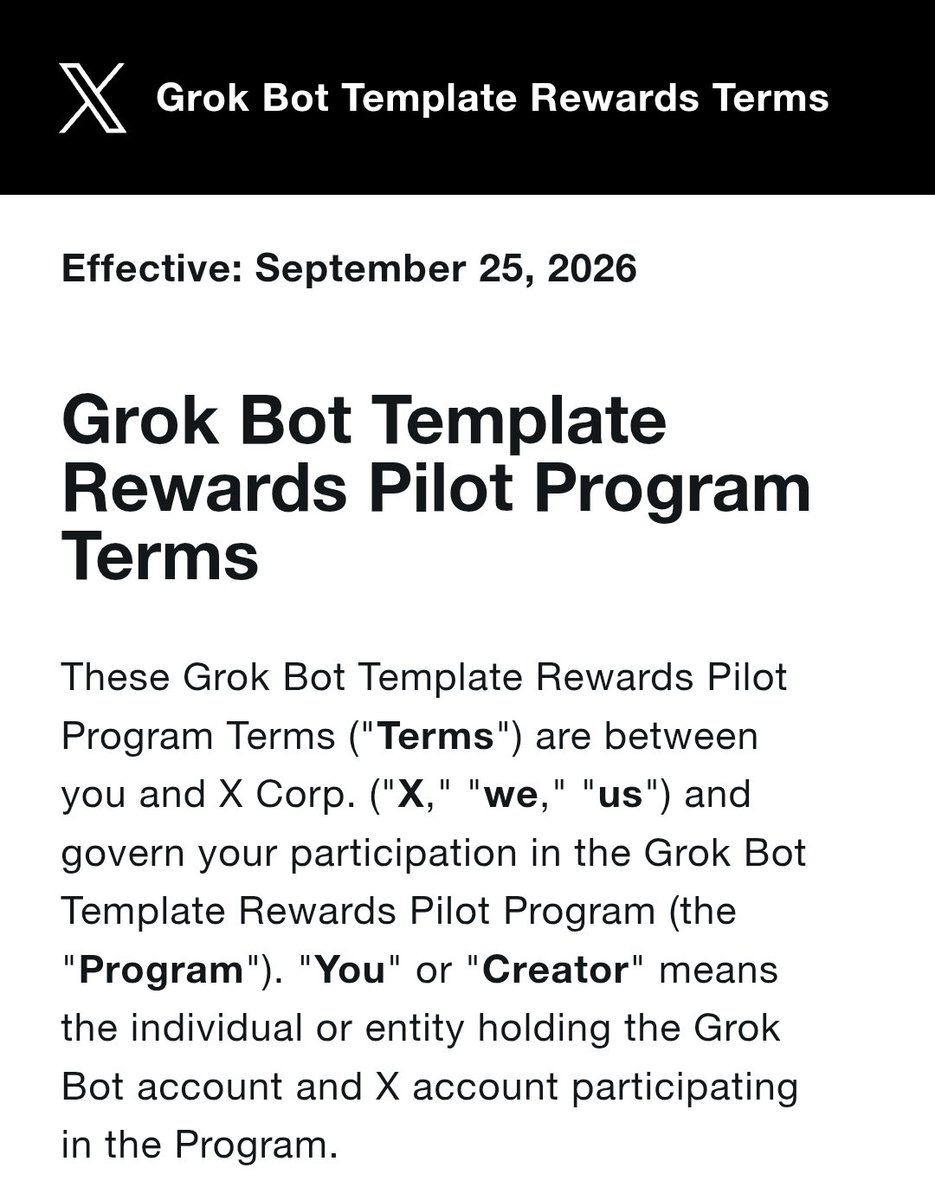
𝕏 just launched a new Grokbot Template Rewards program
Creators can now build Grokbot templates, share them on 𝕏 and may earn rewards when people actually use them
• Invite-only pilot
• Rewards determined every 2 weeks
• Usage + repeat usage matter
• Likes and impressions don’t determine payouts
• Payments go directly to X Money
• Completely separate from Original Content Rewards
The pilot is starting in the U.S. and is expected to run for roughly 2 months
This is basically 𝕏 starting to reward people for building useful AI workflows, not just content
You've never routed like this before.
@OpenRouter is bringing Jev to all of your LLM calls, so your agentic workflows never have to waste a token again.
As always, faster, cheaper, more intelligent. Go build the future.
STOP BURNING MONEY ON AI API CREDITS,10 FREE OPTIONS TO TRY:
1. OPENROUTER — https://t.co/MuDiNymH8Z
2. NVIDIA NIM — https://t.co/AYACPDJcg1
3. GITHUB MODELS — https://t.co/aNipRPw04a
4. TOGETHER AI — https://t.co/EKWIN6ufrL
5. CLOUDFLARE WORKERS AI — https://t.co/9XtjsbieoC
6. GROQ — https://t.co/Hy0909Rj3h
7. CEREBRAS — https://t.co/6YFJYMmJDO
8. MISTRAL — https://t.co/M54yVQTD9l
9. COHERE — https://t.co/v4AM9xzEJq
10. GOOGLE AI STUDIO — https://t.co/prshURZnY1
BOOKMARK THIS AND HAVE FUN
jev + opus 5.5... i simply can't comprehend why everyone isn't building this yet.
in my workflow, this cut costs and time by ~80%. i think it's one of the best ways to use it.
→ pick relevant project notes before loading the context
→ route suitable tasks to a faster worker
→ choose a recovery path when a tool fails
→ run focused checks before the full test suite
opus handles the hard reasoning. jev picks from options the harness prepares and validates.
i explain how to build the decision layer in the article below:
SpaceXAI engineer just shared a prompt that cuts GrokBot’s costs
I connected it with Jev - send these to any AI agent to make it CHEAPER and FASTER than 95% of people are running
Paste both prompts below. Enjoy: