@DIH9P3DQD @mementodotmoney Well you just found my Crunchbase profile, didn't know I had a twin btw that's funny
Will answer all your questions in a bit with a video
Questions are normal, don't hesitate if you have some more!
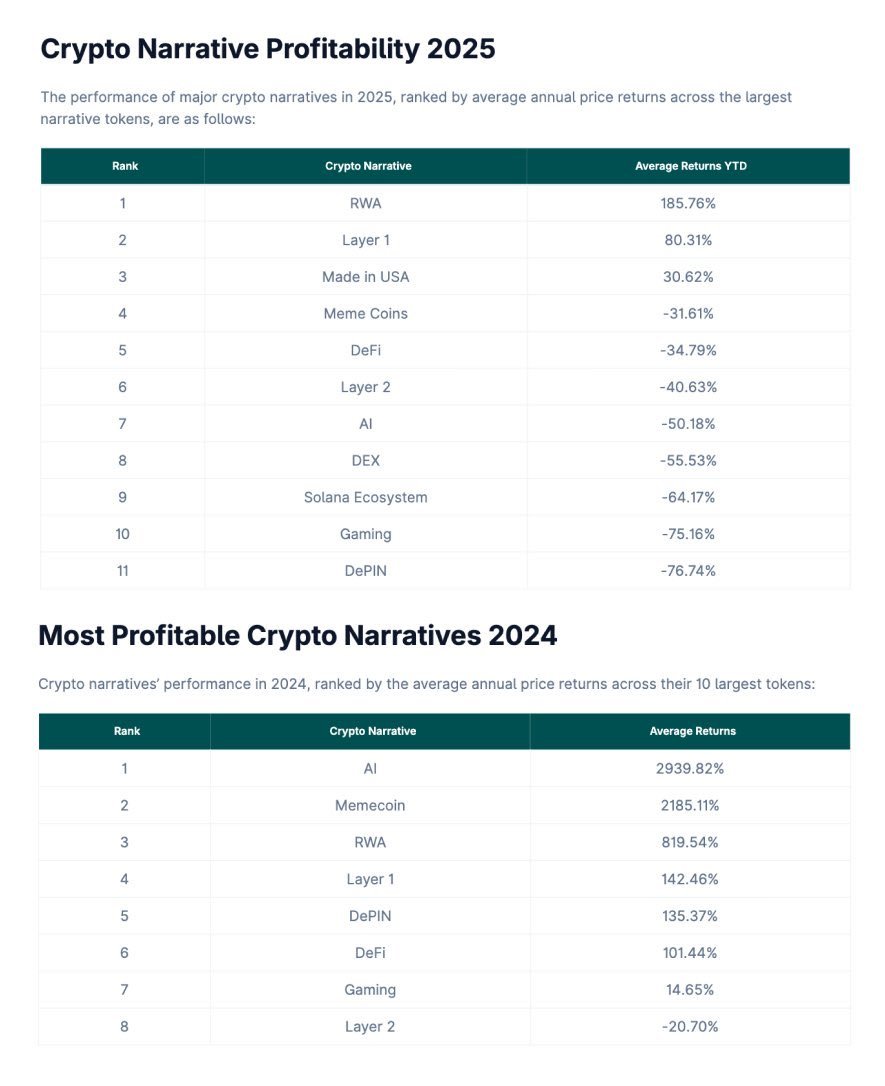
🚨THE MOST PROFITABLE NARRATIVE IN 2025
CoinGecko data shows RWAs led crypto markets in 2025 with 186% average gains, outperforming others.
Layer 1s (+80%) and Made in USA (+31%) followed, while Gaming (−75%) and DePIN (−77%) lagged YTD.
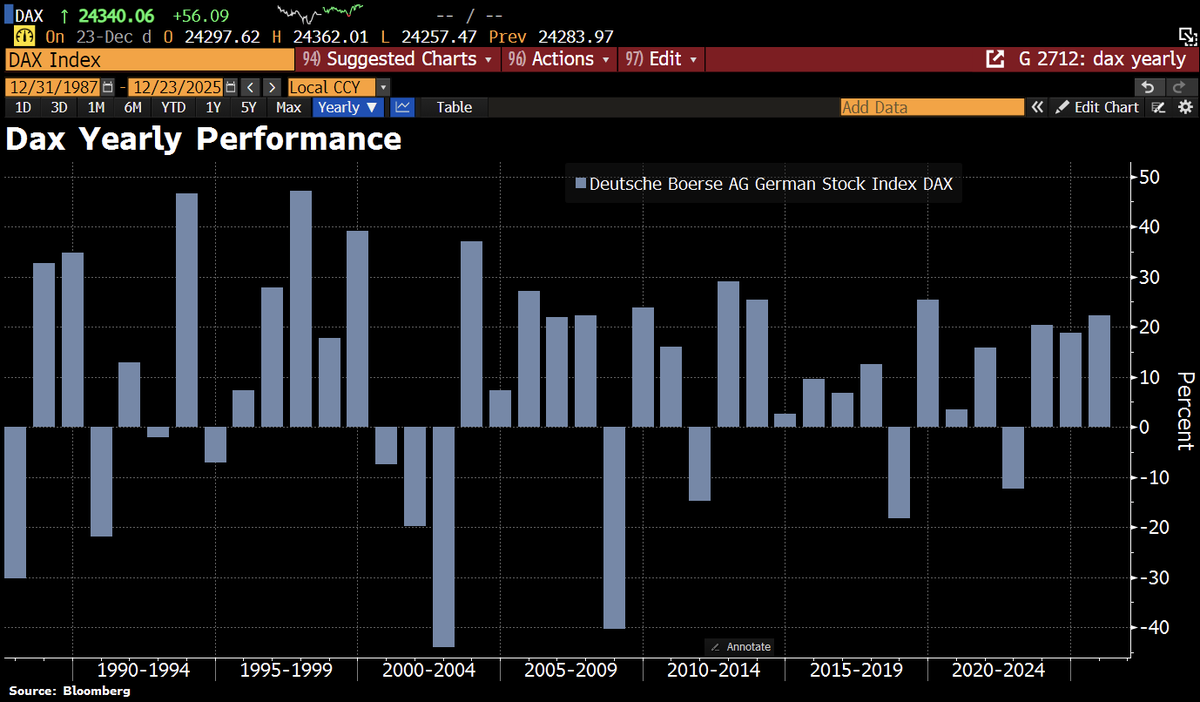
Good Morning from Germany, where the benchmark index Dax is on track for its biggest annual gain since 2019 despite the economic stagnation. The reason: Dax comps earn only ~20% of their revenues at home. Roughly a quarter comes from the rest of Europe, another quarter from North America, 16% from Asia-Pacific, 11% from CEEMEA and 4% from Latin America.
Not surprising.. it’s not about patriotism, it’s about incentives
Talented people go where building is easier, risk is rewarded and failure isn’t punished forever
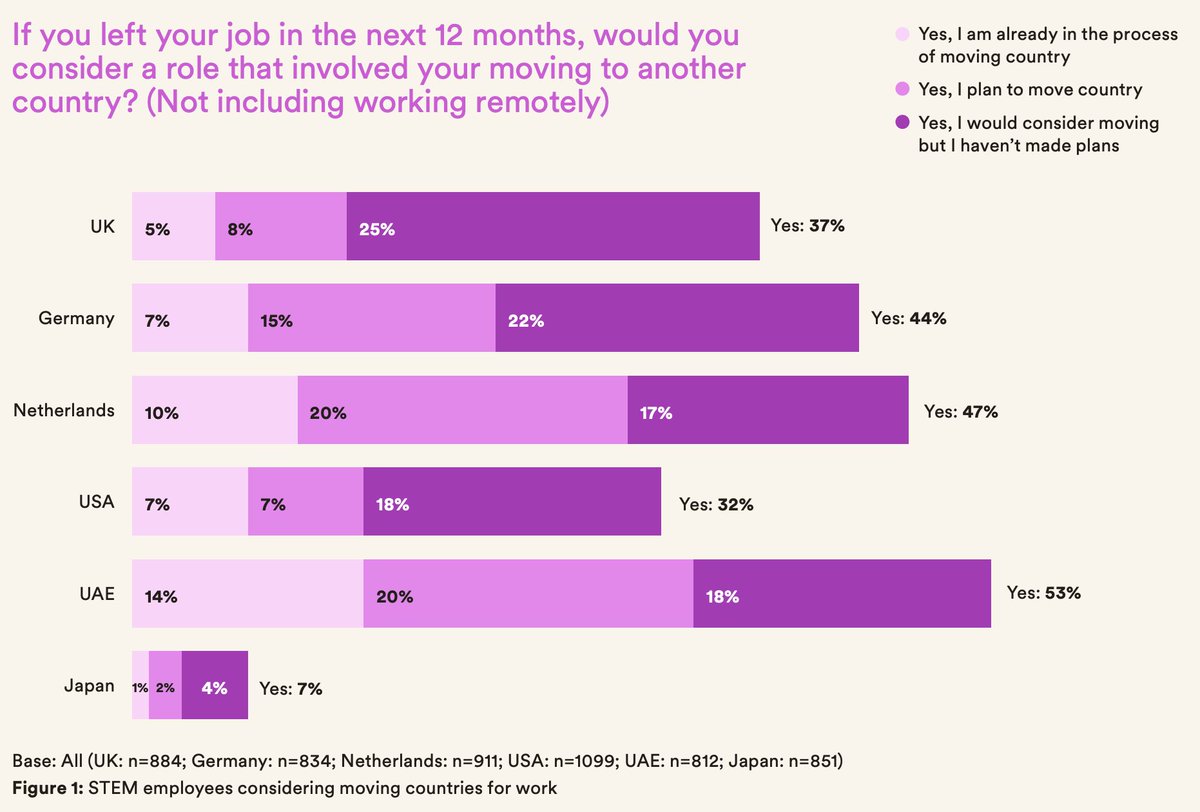
Hello from Germany, where the brain drain is accelerating. More and more skilled workers are thinking about leaving the country. Acc to a new survey, 44% of STEM professionals in Germany can imagine moving abroad – a much higher share than in other countries.
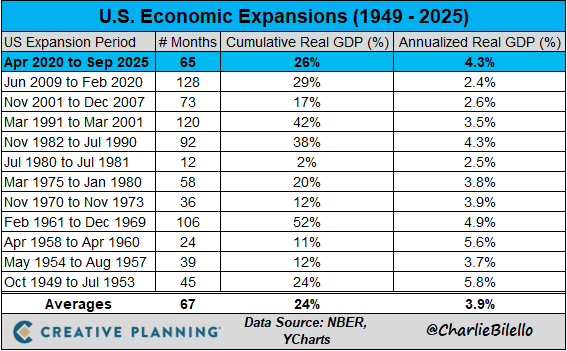
Duration by itself doesn’t mean much, this expansion has been unusually policy driven with growth holding up even as financial conditions tightened.
That tension is more interesting than the month count.
The US economy has now been in an expansion for 65 months with annualized real GDP growth of 4.3% over that time.
The average expansion length since 1949: 67 months.
Longest: 128 months.
Shortest: 12 months.
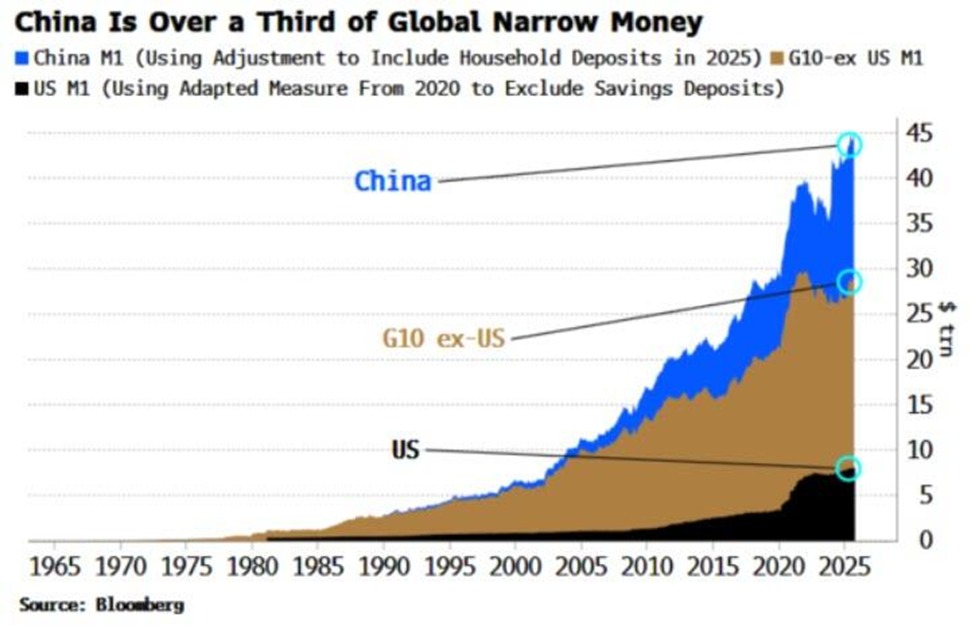
Global money supply is out of control:
Global money supply is now up to a record $45 trillion.
This comes as China's M1 money supply has risen to $16.5 trillion, an all-time high.
China has driven the majority of global money supply growth this year.
China is currently the largest producer of narrow money in the world, accounting for ~37% of the total.
Meanwhile, the US M1 money supply, excluding savings deposits, is up to a record $8 trillion, representing ~18% of the world's total.
Global liquidity is expanding.
Wrapping up 2025. AI drove the bull run, Magnificent 7 concentration hit .com levels but instead of a pop it’s been more of a slow hiss (earnings miss and valuation reset)
Still optimistic about tech reshaping money flows tho
Introducing Coinbase Custom Stablecoins.
Create a branded stablecoin for your business, backed 1:1 by collateral custodied by Coinbase.
→ Earn rewards on activity
→ Seamless interoperability across chains
→ Tap into Coinbase’s global distribution
Milton Friedman: “Keep your eye on one thing and one thing only: how much government is spending, because that’s the true tax.”
“If you’re not paying for it in the form of explicit taxes, you’re paying for it indirectly in the form of inflation or borrowing.”
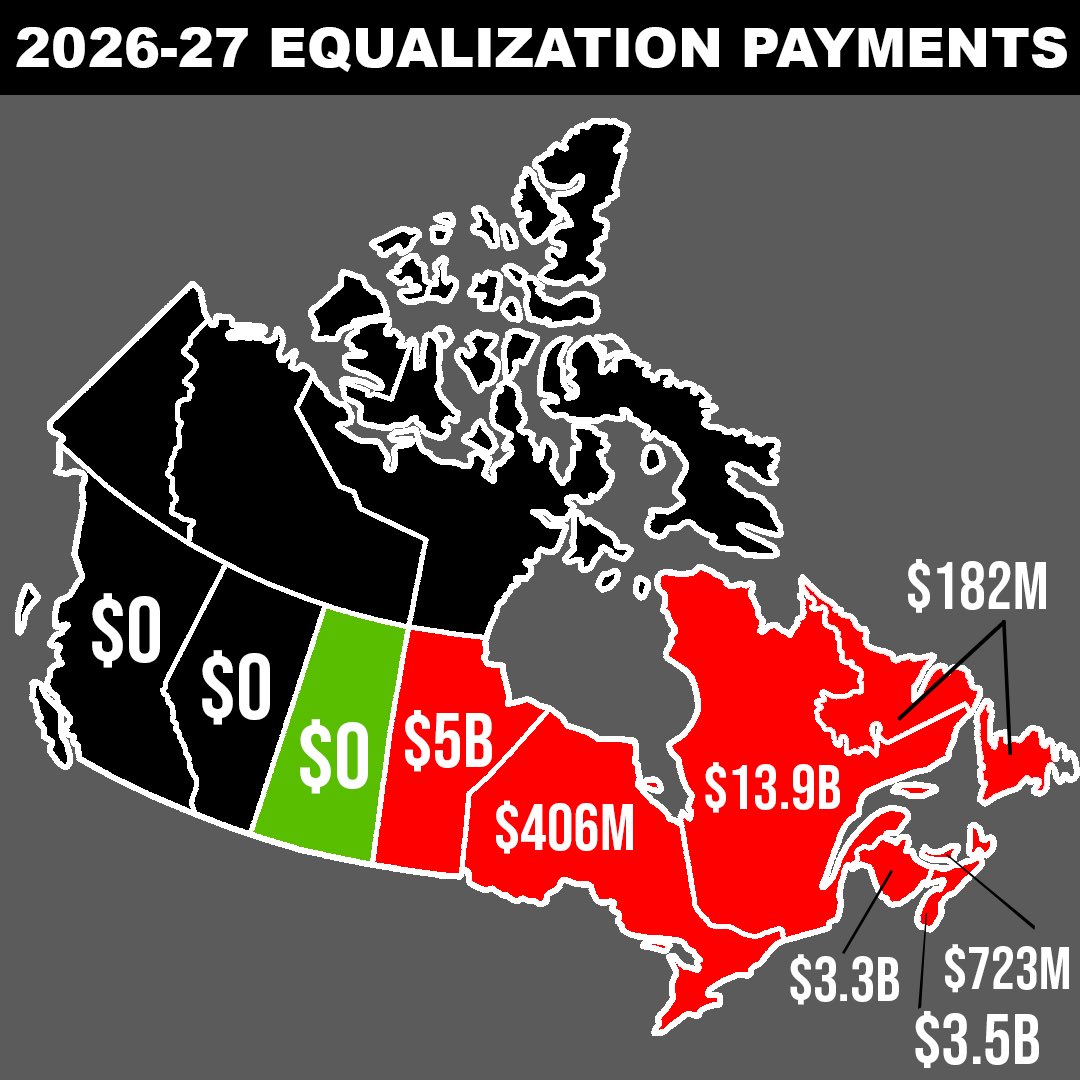
The Federal government gave next year’s equalization amounts to provincial finance ministers.
This map is a clear indication of which provinces are driving Canada’s economy and how the equalization formula disincentivizes economic growth.
EVERYONE THOUGHT THE GENIUS ACT WAS ABOUT CRYPTO REGULATION. THE DATA JUST PROVED IT WAS SOMETHING ELSE ENTIRELY.
Four months ago, Trump signed a law that made headlines for 48 hours. Tech regulation. Stablecoin rules. The market moved on.
But the numbers that just came out tell a completely different story.
The GENIUS Act buried one sentence in 47 pages: every stablecoin dollar must be backed 100% by U.S. Treasury bills. Nothing else qualifies. Not cash in banks. Not corporate bonds. Only government debt.
Stablecoin market cap when the law passed in July: $200 billion.
Stablecoin market cap today: $309 billion.
That’s $109 billion in new legally mandated purchases of U.S. government debt in 4 months.
Treasury Secretary Bessent’s official projection: $3 trillion by 2030.
Here’s what that actually means. The government doesn’t need to find buyers for its debt anymore. The law creates the buyers automatically. Every time someone anywhere in the world buys a digital dollar, a stablecoin company is legally required to buy a Treasury bill with that money.
The Bank for International Settlements measured the effect. Every $3.5 billion in stablecoin growth lowers what the government pays to borrow money by 0.025%. At $3 trillion, that saves $114 billion per year. That’s $900 per U.S. household in lower debt costs.
Bessent confirmed it last week. He said because of stablecoin growth, Treasury doesn’t need to increase the size of bond auctions. The government found a way to fund spending without traditional buyers.
The institution that proves it’s real: JPMorgan. After 10 years of calling crypto fraud, they announced last month they now accept Bitcoin as collateral. The largest bank in America doesn’t reverse a decade of policy because of trends. They reverse because the power structure changed.
What changed: the law moved regulatory control from the Federal Reserve to the Office of the Comptroller of the Currency. That office reports directly to the Treasury Secretary.
The Treasury now controls who can create digital dollars. And the law requires those digital dollars to fund government debt.
This is not monetary policy. This is legislative engineering of debt demand.
And it’s been operational since July.
Read the full deep dive analysis - https://t.co/c9CE2utZua
Subscribe for the daily premium newsletter!
The shutdown was never about healthcare for Democrats—it was about stopping President Trump’s agenda at any cost. And they were willing to waste tens of billions of taxpayer dollars to do it.
Meanwhile, the economy is thriving with 3.8% growth, and we’re on track to accelerate even further into 2026.
🚨JAPANESE YEN STABLECOIN IS HERE!
🇯🇵Startup JPYC will launch the world’s first yen-pegged stablecoin, fully backed by Japanese savings and government bonds.