Electric Literature has launched its first Emerging Writers Contest in fiction and poetry, open to international writers, judged by Alexander Chee and Danez Smith. Winners receive $1,000, publication, and a Las Vegas residency. Opens July 1! 🌍✍🏾 https://t.co/jj0N1zryyf
@viajoshhunt Yes, good point - only online. I've been dipping into the Helle Helle stories in the Scandi issue. Love 'Sometime in Spring' plus the Eeva Kilpi diary.
A Japanese immunologist spent 20 years proving that the chemicals trees release into the air walk into your bloodstream, hunt down your stress hormones, and arm your immune system in ways no therapist or pharmaceutical has ever matched, and most of the data has been sitting in Japanese medical journals for two decades waiting to be translated.
His name is Qing Li.
He is a clinical professor at Nippon Medical School in Tokyo and the president of the Japanese Society of Forest Medicine. The Japanese government has been funding his research since 2004, and the body of work he has produced is the reason forest bathing is now an officially prescribed clinical therapy in Japan and Korea.
The story actually starts in 1982, when the Japanese Ministry of Agriculture, Forestry and Fisheries coined the term shinrin-yoku to describe the practice of slow, mindful walking in a forest. They did it for a practical reason.
Japan was urbanizing fast, stress-related illness was climbing, and the country had thousands of square kilometers of forest sitting unused. The idea was to give people a reason to walk into the trees... They had no idea what was actually happening to the human body during those walks until Qing Li ran the first proper experiment in 2005.
He took twelve healthy adult men on a three-day, two-night trip to a forest park. They walked for a few hours each day. Nothing strenuous. No prescribed routes or breathing exercises. They simply walked slowly through the trees, breathing the air, looking at the forest.
Li drew blood and urine samples before the trip, on the second day, on the third day, on day seven after returning home, and again on day thirty.
The numbers that came back from the lab were not what anyone expected.
The activity of a specific type of immune cell called the natural killer cell, which is the cell your body uses to hunt down cancer cells and virus-infected cells before they can spread, had jumped by roughly 50 percent during the forest trip. The actual number of natural killer cells circulating in the bloodstream had increased significantly.
Three different anti-cancer proteins that those cells produce, called perforin, granzymes, and granulysin, had all risen sharply. And the effect did not disappear when the men went home. The immune boost was still measurable on day seven and was still partially present on day thirty.
Two hours a day in a forest had upgraded the immune system for a full month.
Li ran the same experiment with women a year later and found nearly identical results. Then he ran it with a control group who took a three-day trip through an urban area with the same amount of walking, the same hotel quality, and the same diet.
The urban group showed no measurable change in natural killer cell activity at all. The forest was doing the work, not the vacation.
The mechanism turned out to be a class of airborne molecules called phytoncides. Trees produce these compounds to defend themselves against insects, bacteria, and fungi. Pine, cedar, oak, and cypress trees release them in particularly large amounts, especially in warmer weather and after rainfall.
When you walk through a forest, you are inhaling those molecules into your lungs and absorbing them through your skin, and once inside your body they appear to directly stimulate the production and activity of the very immune cells Li was measuring in his lab.
Roughly 50 percent of the health benefit of a forest walk, according to Li's data, comes from the chemistry of the air itself. The other half comes from what the forest is doing to your nervous system.
This is where it stops being only about the immune system and starts being about stress.
A separate Japanese research team measured cortisol, the body's main stress hormone, in 84 participants across 35 different forest sites. They drew samples before and after a 30-minute walk in each forest and compared them to control walks in matched urban environments. The cortisol levels of the people who walked in the forest were lower than the cortisol levels of the people who walked in the city by a significant margin. Their heart rates were lower. Their blood pressure was lower.
The activity of their parasympathetic nervous system, which is the part responsible for rest and recovery, had gone up. The activity of their sympathetic nervous system, which is the part that drives fight or flight, had gone down.
Then a researcher at the University of Michigan named MaryCarol Hunter ran the cleanest version of this experiment ever done. She recruited participants from a city and told them to take a nature pill three times a week for eight weeks.
They were free to choose the time, the place, and the duration of the nature experience, as long as it was outside, in daylight, and free of phones, conversations, and aerobic exercise. They sent her saliva samples before and after each session so she could measure cortisol changes accurately and rule out the normal daily drop in stress hormones that happens to everyone.
The result was that participants experienced a 21.3 percent drop in cortisol per hour spent in nature, with the biggest payoff happening between minutes 20 and 30 of the walk.
After that, the cortisol kept dropping, but more slowly. The threshold dose for measurable stress relief was just 20 minutes outside in something that looked and felt like nature.
What none of this means is that nature is a substitute for therapy or for medication when someone genuinely needs them. Therapy treats different things than a walk does, and Li himself has been careful in interviews to call forest bathing a complementary intervention rather than a replacement for clinical care.
But what the research has settled is that the human body has a physiological response to being among trees that operates on the same biological systems modern medicine is trying to reach with drugs and clinical protocols, and that response is fast, measurable, and free.
The strangest part of Li's work is the implication he keeps repeating in interviews. The average person now spends more than 90 percent of their life indoors. Their cortisol stays elevated. Their natural killer cells stay sluggish.
Their parasympathetic nervous system rarely gets a chance to take over. The system that was tuned by millions of years of life under a canopy of trees is being asked to run permanently inside a box made of drywall and screens.
Your body has not forgotten what it is supposed to do in a forest. It is waiting for you to walk into one.
Multiple Claude-written articles with 10k+ likes here recently. People seem to really like slop on Substack too. Reluctant conclusion: maybe the taste for organic hand rolled human only tokens will become a niche IQ taste similar to enjoying Japanese wood carvings or something.
We're thrilled to announce we've created a new competition...the BPA Short Story Award! 🥳
Enter for the chance to catch the eye of a literary agent.
Open to any writer who hasn't yet published a novel / short story collection.
The webpage goes live tomorrow!
Telling people to use AI-powered pangram to detect AI is a complete dud.
But I will tell you what? If I were a judge and read this, there is no way it's making even the longlist.
I will never understand how anyone who understands literature would find this award-worthy.
If you’re using AI to write, why are you even a writer? Like why bother? The pleasure, the pain, the mystery, the magic, the torture and the exhilaration and euphoria on the other side of the torture—it’s all in the process and cannot exist independent of it.
Had an interesting conversation with Ruth Martin, translator of Booker-shortlisted 'The Nights are Quiet in Tehran'.
#Iran#Germany#Books
https://t.co/p5wOtFvK20
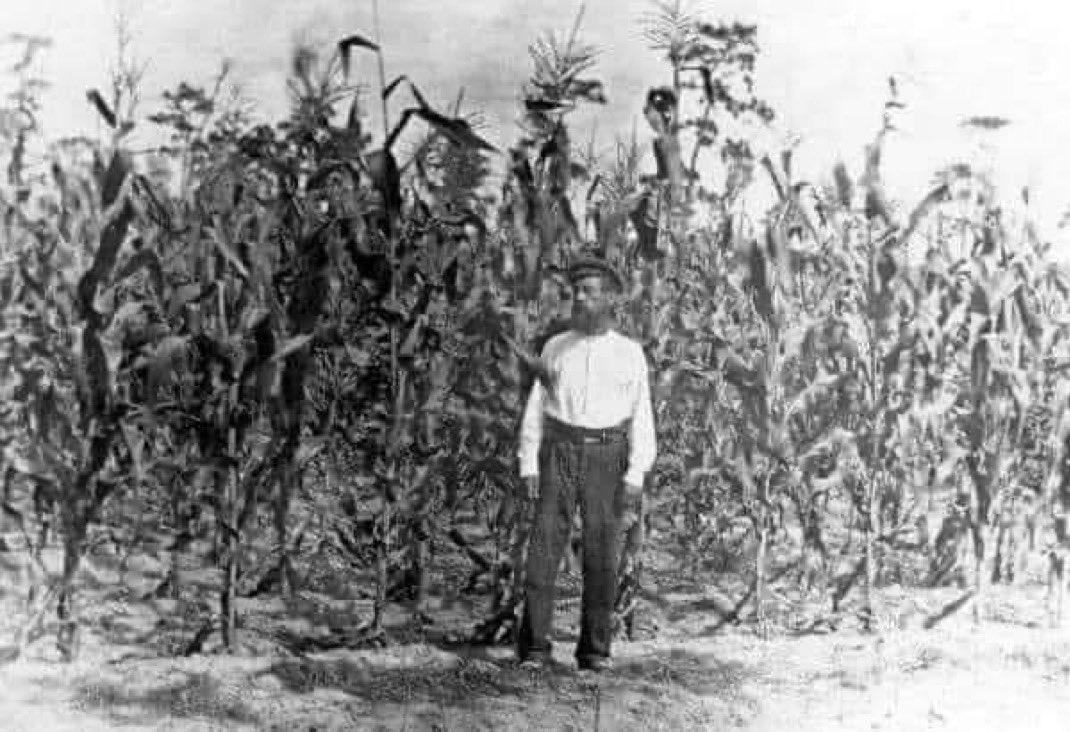
There was a farmer who grew excellent quality corn. Every year he won the prize for the best corn grown. One year, a reporter interviewed him and discovered something interesting about the way he grew corn. The reporter discovered that the farmer shares his seeds with his neighbors. "Why does he share his best seeds with his neighbors if every year they compete with his own?" the reporter asked him.
"Why, sir?" the farmer replied, "didn't you know? The wind picks up the pollen from the ripe corn and swirls it from one field to another. If my neighbors grow inferior corn, cross-pollination will constantly degrade the quality of my corn. If I want to grow good corn, I must help my neighbors grow good corn."
The same is true of our lives. Those who want to live good and meaningful lives must help enrich the lives of others, because the value of a life is measured by the lives it touches, and those who choose to be happy must help others find happiness, because the well-being of each is linked to the well-being of all.
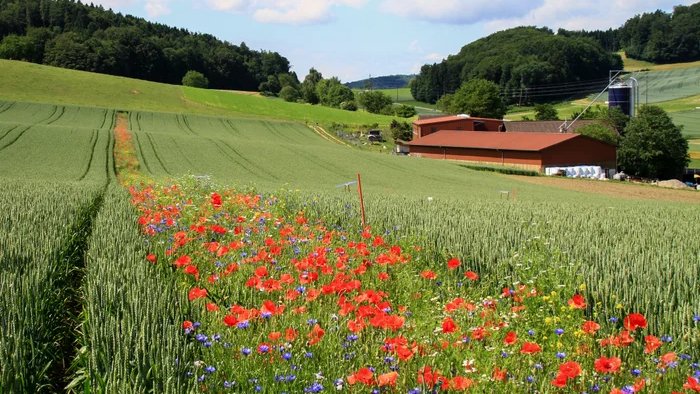
Farmers have figured out that the cheapest pesticide is a strip of flowers.
When you plant wildflowers through a crop field, not just around the edge but in strips running through the middle, you get ladybugs, lacewings, hoverflies, and parasitic wasps living in the field instead of visiting it.
They eat the aphids, the caterpillars, and the mites for free, all summer long.
In controlled trials, fields with tailored flower strips had leaf-beetle numbers 40 to 50% lower and crop damage cut by around 60%, enough to drop below the threshold where spraying was even considered worth it.
The flowers attract a standing army to our fields.
We spent decades engineering chemicals to kill the insects eating the crop, when the insects that eat those insects would have worked for the price of seed.
if I were the author in question regarding AI use, I would make/would have made an immediate categorical statement. #AIwriting#creativewriting#shortstory