1/ Let’s talk about Irish (Gaelic) phonology. Firstly, what is phonology? Phonology is the most fundamental component when speaking meaningful language. Every language, dialect, etc. has its own phonology. Non-linguists generally use the term “accent”.
@RTEOne@ktrappe@rtenews I missed the programme. Did they mention that there are only about 18,000 native speakers left?
Or have native speakers and the Gaeltacht been forgotten about again. An inconvenient truth.
#GaeltachtSOS#Gaeilge#taboo
Your point is well made @DerekHolly7 Unfortunately, a version of the same twisted official logic also exists in Ireland of ignoring the social demise of native-speaking Irish communities so as to prepare for the post-Gaeltacht era. The promoting Irish to death syndrome! #Gaeilge
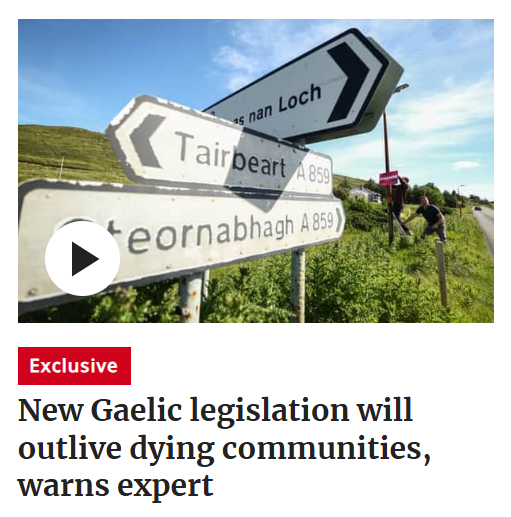
Scottish Languages Bill "will outlive the remaining #Gaelic-speaking communities. ... It represents an institutionalised vision, both unsympathetic towards community reality and nonchalant about the risks of terminal demise" #GaelicCrisis@TheScotsman https://t.co/JzBuPgYgmn
For anyone interested, Áine Uí Fhoghlú's 2004 UCC MPhil thesis "An briathar mí-rialta i nGaeluinn na nDéise" is now publicly accessible and well worth a read!
https://t.co/j1xIKjlGcp
A book recommendation for the youngest generation of Old Irish learners:
𝓐𝓶 𝓘 𝓼𝓶𝓪𝓵𝓵? 𝓘𝓷𝓭𝓪 𝓫𝓮𝓬-𝓼𝓪?
by Philipp Winterberg (Author) & Nadia Wichmann (Illustrator); translated by Francesco Felici and myself.
https://t.co/R69v7a9lcq
I was thrilled to discover among the exhibition of Thurneysen's books a manuscript by Christian Ludwig Stern in which he had made a calligraphic facsimile plus transcription of the small Irish manuscript kept in Stockholm.
This MS contains one of the four copies of the poem...
It’ll never be perfect, but it’s more or less the book that I wish I had had 32 years ago.
I hope that it illuminates more than it occludes and does service to this beautiful, fascinating language and the community who speak it 🙏
#gaelic#grammar#grateful
Scholars of Early Gaelic and Proto-Celtic, the publications of Kim McCone are being digitised and uploaded to his new website for free download. Quite a bit there already and looks like there's more to come!
https://t.co/Ivo8y9StH6
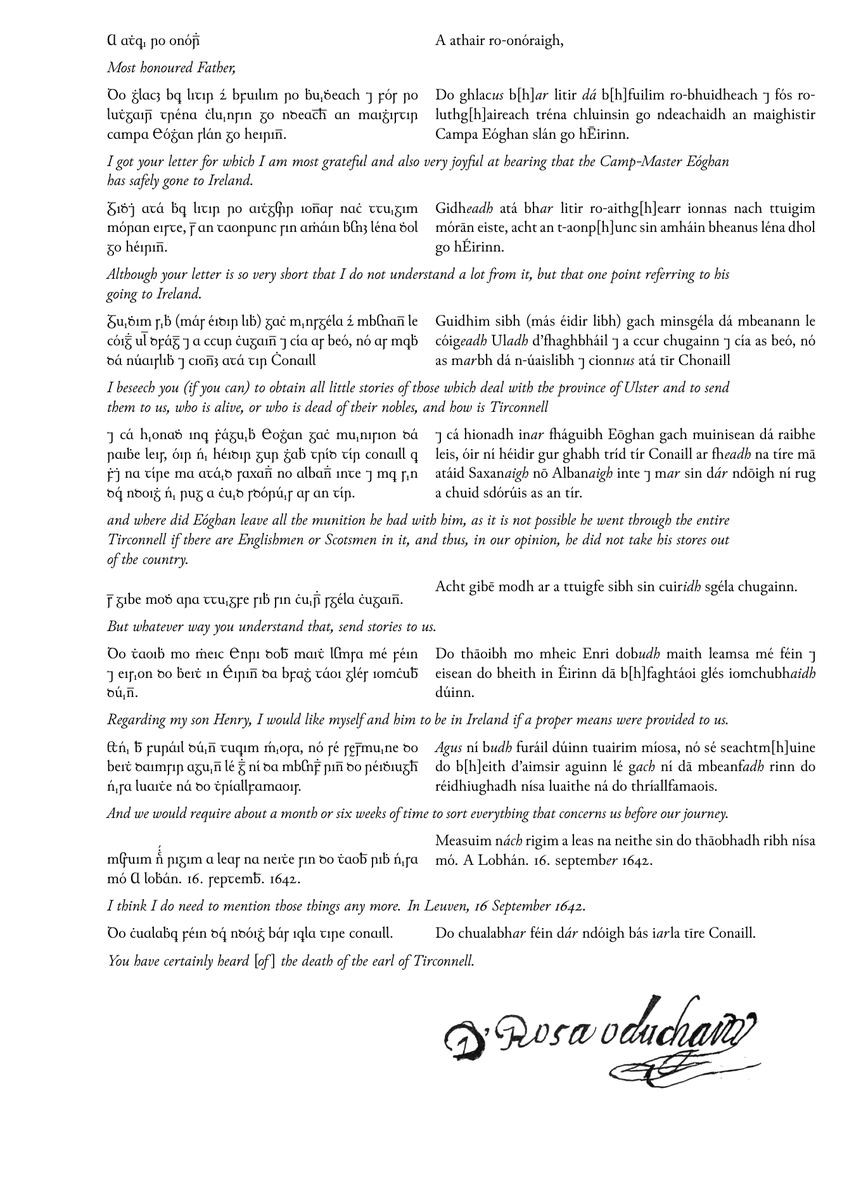
A letter from Rosa (Ní Dhochartaigh) Uí Néill, wife of Eoghan Ruadh Ó Néill, 1642, Louvain, Belgium. Published in Gilbert's ‘Affairs of Ireland’ vol 1, part 2 (1879). Transcription and translation work done by @silmeth.
one comment re:the census: I think the biggest disservice we’ve done for Gaelic is pretending duolingo etc are markers of progress while the gàidhealtachd becomes more and more unlivable. it doesn’t matter if people learn a few phrases while the language loses its home and soul.
New on the #OG_H_AM website.
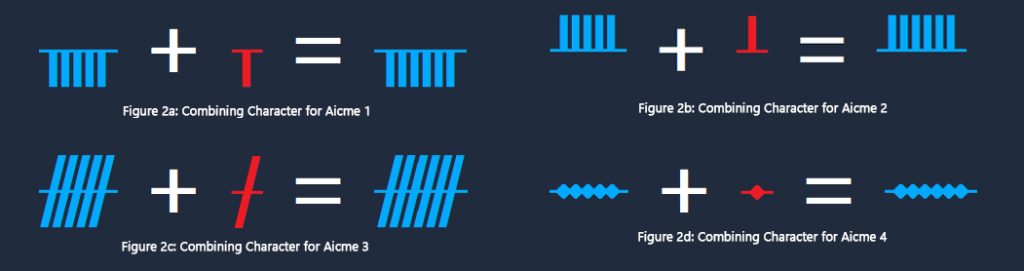
Fascinating monthly blog by @AdeODubhghaill about the "Future of Digital Ogam": how can @unicode update its ogham block to facilitate its usage for research about the script? What can we learn from hieroglyphs for ogham?
https://t.co/S1juMRn4OD
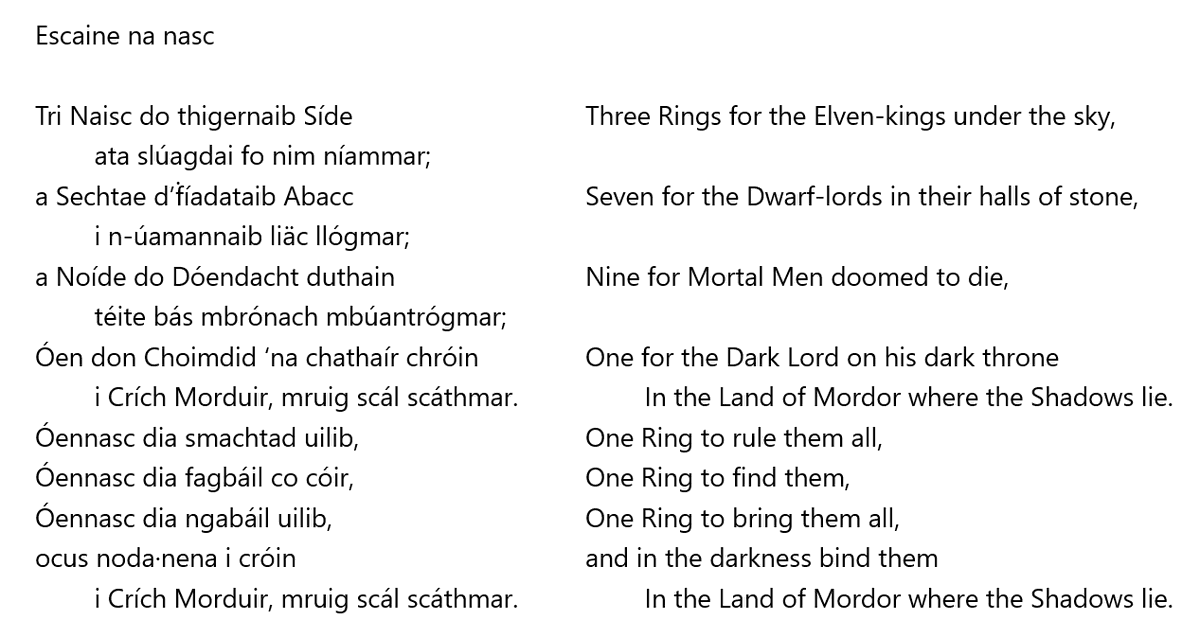
...nasc "fastening, tie, spancel, ring; legal bond", the word that allegedly inspired Tolkien to the terms nazg "ring" & nazgûl "ring wraith" in the Black Language. In order to fulfil metrical requirements, I took the liberty of making the poem longer in lines than the original.
@azforeman ModIr. DEF NOM PL "na hObaithe" (the ⟨h⟩ here being a consequence of Irish initial mutation rather than being inherited from "Hobbytta" or the likes)
@azforeman On reflection, I think maybe the result would be closer to something like: OE "Hobbytta" > OIr. "Opaidea" > ClasIr. "Obaidhe" > ModIr. "Obaí".
I am 𝓿𝓮𝓻𝔂 happy to announce that the revised version 2 of my little exercise about the "Rise of Gemination in Celtic" (now just over 40,000 words) has been published open access at: https://t.co/ZTXQyPygWE.
I sincerely thank my formal peer-reviewers @MJKue @AndersRJorg...
/1