Helix making complex blockchain operations accessible through natural language is a practical use of AI in crypto. Using $HLX to power these interactions adds an interesting utility layer to the ecosystem. Looking forward to seeing how it develops.
@Helix#Helix $HLX #HLX
that last block needs a steady paw 🐕💜
made a clay-style Doge GIF inspired by @Helix. he takes his tiny tower very seriously
HELIX KEEP BUILDING 🛠️
#Helix $HLX #HLX
one paw holding ETH, the other holding $HLX. that raised eyebrow says he’s already picked a favorite.
my “BAG HELIX NOW” doge GIF for @Helix 💜
#Helix#HLX
Helix using $HLX to power AI interactions is an interesting approach. With 10 free daily credits and a simple credit model, it gives users a practical way to explore AI driven blockchain tasks. Curious to see how adoption grows.
@Helix#Helix $HLX #HLX
Use $HLX tokens to purchase credits that fuel every interaction with Helix AI. 1 HLX = 10 credits, and each message costs just 1 credit. Plus, every user gets 10 free credits daily.
7/7 Before interacting, ask: Which pool type is this? What risks apply to this position? Are the details current? Read first, choose for yourself. What should the next newcomer guide explain?
4/7 FUSION is @thenafi_ automated concentrated-liquidity AMM. Strategies such as Gamma Narrow, Wide, and Stable use different approaches to price ranges and asset behavior, no strategy guarantees a particular outcome.
6/7 A useful learning order: understand pool types, read about position risks, then check the current details for the specific pool.
THENA docs:
https://t.co/Nfy21OSyys
https://t.co/GGtYiWzUJ3
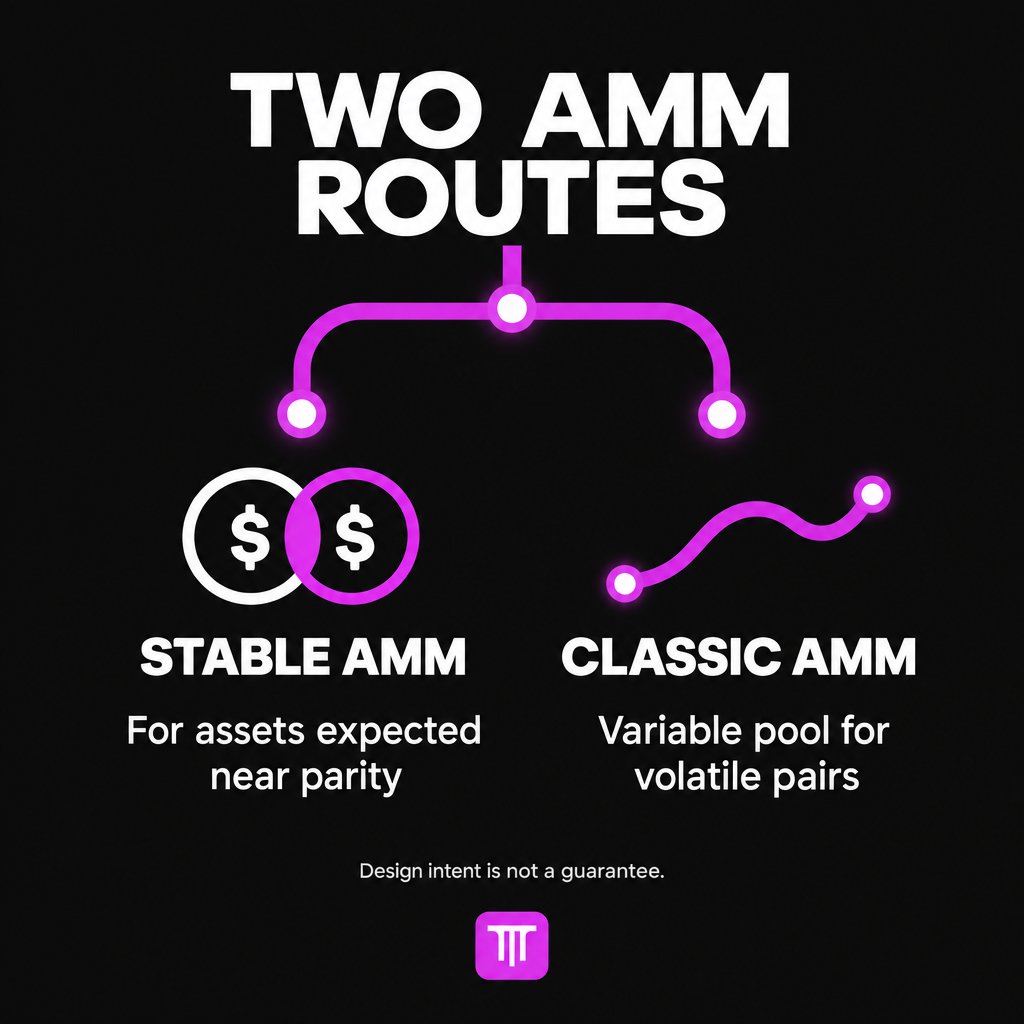
3/7 A Stable AMM is designed for assets expected to stay near parity. A Classic AMM is a variable pool type used for more volatile pairs. Those are design intents, not guarantees about how assets will behave.
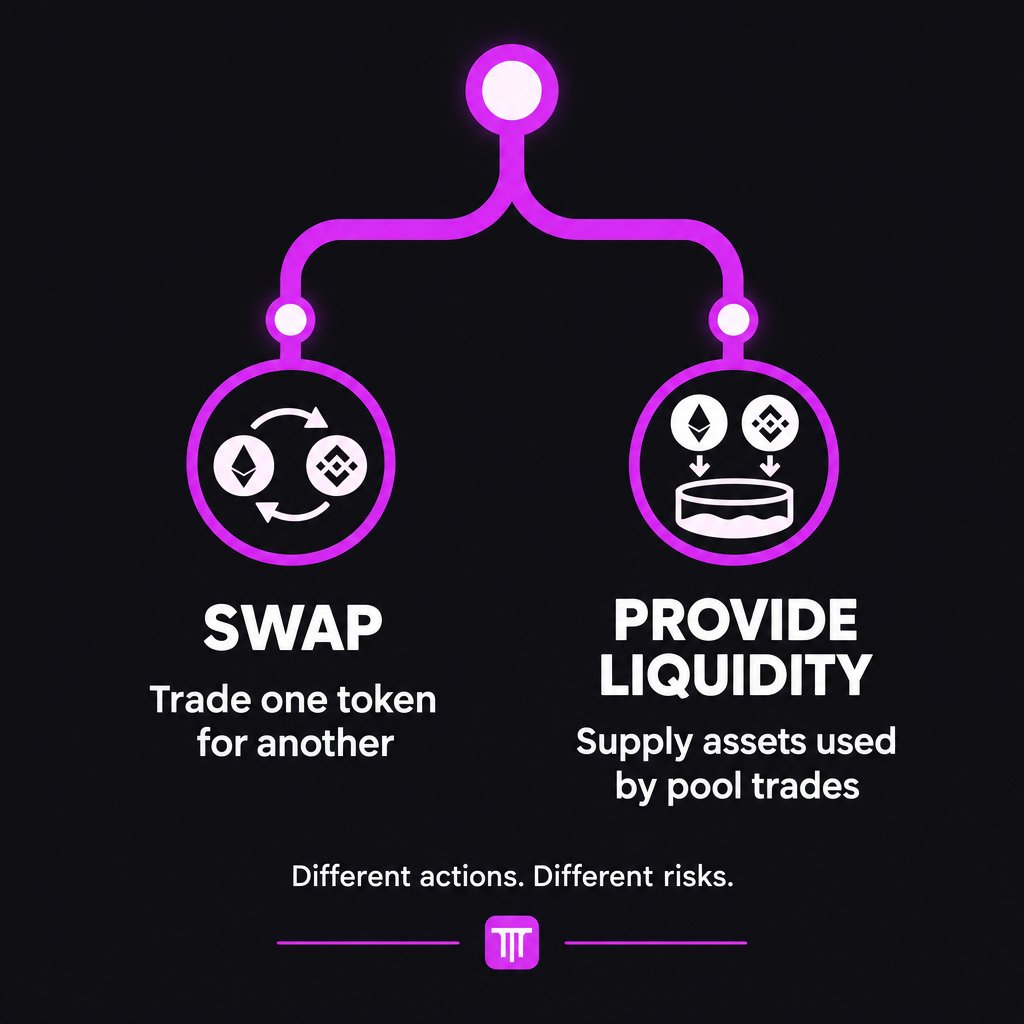
2/7 A swap trades one token for another through a pool. Providing liquidity means supplying assets used by pool trades. Different actions, different risks.
1/7 @thenafi_ pools can sound like transit jargon. Here’s a newcomer map: start with swap or provide liquidity, then learn what each pool type is designed to do.
It’s an orientation, not a recommendation. $THE #BNB
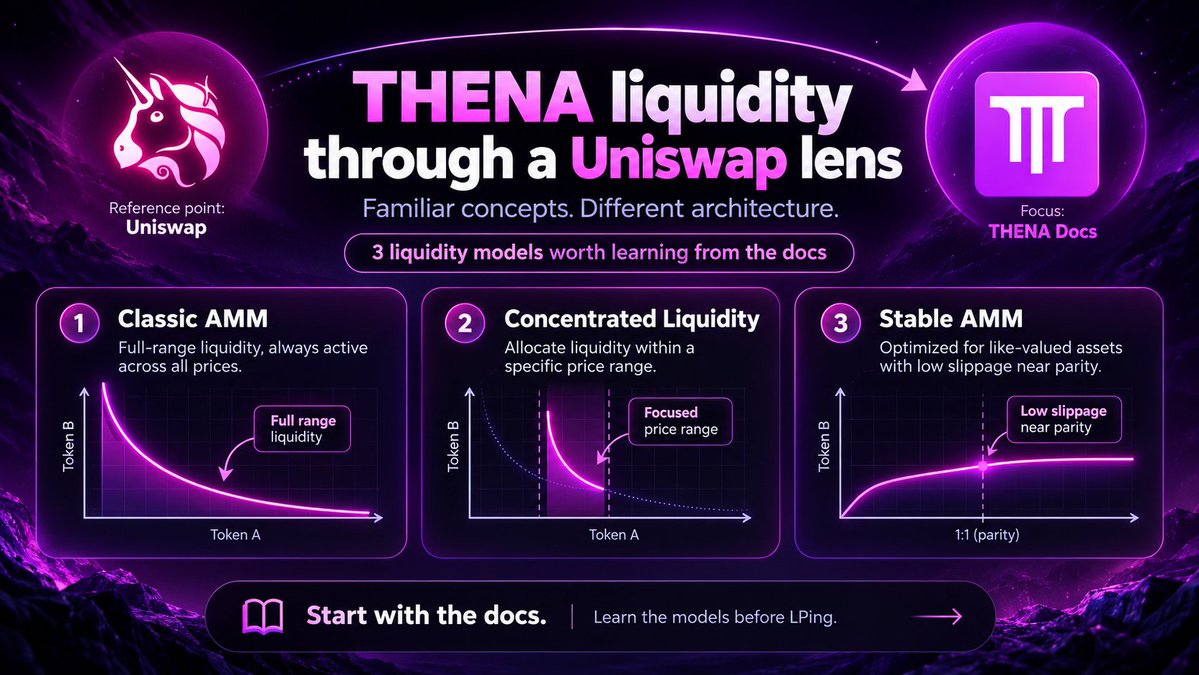
7/ Knowing Uniswap helps, but THENA doesn’t use one liquidity model for everything.
Classic AMM, concentrated liquidity, and Stable AMM each solve a different problem.
If you’re exploring LPs, read the docs first and know what kind of pool you’re stepping into.
6/ Not every pair needs the same AMM.
THENA also has a Curve-style Stable AMM for correlated or loosely pegged assets like stablecoins. The docs list a static 0.01% fee and focus on lower slippage near parity.
Docs 👇
https://t.co/SSwro2Wuqx
5/ Important distinction: THENA concentrated liquidity is not powered by Uniswap.
THENA uses @CryptoAlgebra. Uniswap v4 has its own hook system.
The concepts overlap, but the implementations are different. That's why the comparison is useful, not literal.
4/ THENA concentrated liquidity uses Algebra Integral.
Like the concept Uniswap v3 made familiar, LPs can choose price ranges. In @thenafi_, Algebra also brings dynamic fees and a hook-based architecture.
Read more 👇
https://t.co/GGtYiWzUJ3
3/ The trade-off is easy to picture.
Full-range liquidity is always available, but some capital sits at prices the market may rarely reach.
That's what concentrated liquidity tries to improve: putting more capital near the prices where trading actually happens.
2/ Start with @thenafi_ Classic AMM.
It's UniV2-style: two assets, a constant-product pool, and liquidity spread across the full price curve. THENA positions it for volatile and long-tail pairs.
Docs 👇
https://t.co/KjRdA9cf5Z
1/ If Uniswap is your AMM reference point, @thenafi_ liquidity stack is interesting to unpack.
Some ideas will feel familiar, but the implementation is different.
Here are 3 THENA liquidity models worth learning from the docs 🧵