आज राज्यसभा में Paper Leak Bill पर चर्चा के दौरान एक बहुत दुर्भाग्यपूर्ण स्थिति उत्पन्न हुई। नेता प्रतिपक्ष खड़गे जी ने गृह मंत्री माननीय श्री @AmitShah जी के लिये बहुत आपत्तिजनक भाषा का प्रयोग किया। यह वैसी ही मिलती-जुलती अभद्र भाषा है , जैसी नेता प्रतिपक्ष राहुल गांधी जी लोकसभा में करते हैं।
यह कांग्रेस की क्षुद्र मानसिकता, पराजित मानसिकता और फ्रस्ट्रेटेड होने के बाद उसकी कुंठा का परिचय है, जो प्रधानमंत्री श्री नरेंद्र मोदी जी और गृह मंत्री अमित शाह जी की प्रति पराजय की कुंठा दिखाई गई।
हम उनसे कहना चाहेंगे कि चुनावी मैदान में होने वाली अपनी शिकस्त का इंतकाम प्रधानमंत्री जी और गृहमंत्री जी के विरुद्ध इस ढंग के निंदनीय शब्दों से लेने की कोशिश सफल नहीं होने वाली है।
आप निरंतर जनता के द्वारा नकारे जा रहे हैं। उसके बाद यदि आप सोचते हैं कि इस ढंग की आपत्तिजनक भाषा का प्रयोग करके आपको कोई सफलता मिलेगी, तो मैं कह सकता हूं कि अभी तो आप सरकार से उतरे हैं, इस तरह की भाषा के द्वारा आप जनता की नजरों से भी उतर जाएँगे।
Dr Muzaffar Ahmad. Paediatrician. Popular among parents, kind to children. Yesterday, NIA chargesheeted him as one of the prime architects of the Red Fort terror attack that killed 11. He was secretly manufacturing, testing and safekeeping TATP-based IEDs.
You can't do anything.
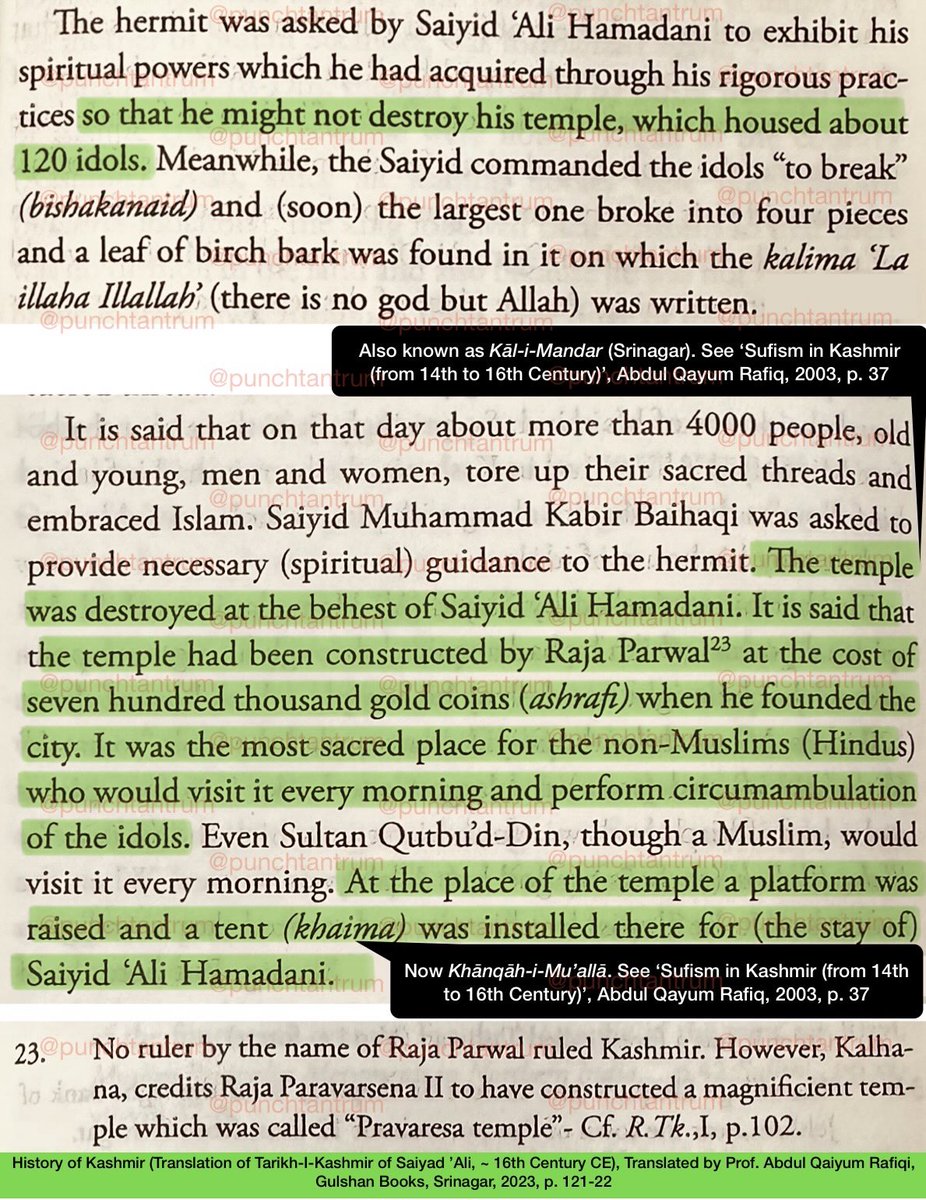
सन् १३९५ में सूफ़ी सैयद अली हमदानी ने श्रीनगर में १२० विग्रहों वाला प्रवरेश्वर मंदिर तुड़वा कर चबूतरा बनवाया। अब इसे खानख्वाह-ए-मौला कहते हैं
In 1395, Sufi Sayyid Ali Hamdani demolished magnificent Pravareśvara Mandir in Srinagar & built a platform, now called Khānqāh-e-Moulla.
आगा खां पैलेस - यही वो जेल है जहाँ महात्मा' मोहनदास करमचंद गांधी को 2 साल तक यातनाएं दी गई थीं।
सजा इतनी कठोर थी कि 'बापू' को स्नान करने के लिए 10×10 फिट के संगमरमर लगे बाथरूम में नहाना पड़ता था।
सजा इतनी कठोर थी कि बापू को 8×8 फिट के नर्म, मुलायम मखमली बिस्तर में सोने के लिए मजबूर किया जाता था।
सजा इतनी कठोर थी कि 20 एकड़ में फैले आगा खां पैलेस की हरी हरी मुलायम घास(लॅान) में घूमने के लिए मजबूर किया जाता था।
सजा इतनी कठोर थी कि 12×12 फिट के स्टडी रूम में आलीशान टेबल कुर्सी में बेहतरीन इंग्लैंड के कागज में लेखन के लिए मजबूर किया गया।
और हां, सजा इतनी कठोर थी कि बापू की पत्नी भी साथ में रहती थी।
सजा इतनी कठोर थी कि आने जाने के लिए मर्सडीज कार में बैठने को मजबूर किया जाता था।
और उधर वीर सावरकर को इतनी आसान सजा मिली थी, हाथ पांव लोहे की जंजीरों से बंधे थे और दो जन्म की कालापानी की और उसमे भी रोज कोल्हू से तेल निकालना पड़ता था।
गांधी देश के बापू बन गए और सावरकर जी अंग्रेजो से माफी मानने वाला !
नोट:-जिसे विश्वास नही है वे पुणे में स्थित आगा खां पैलेस घूम आए, जो आज भी गांधी संग्रहालय के रूप में है।
जब भेदनीति और दलबंदी के जाल बिछ रहे हों, तब अपने सासंदों की पूरी रक्षा करे। न तो उन्हें फूटने दे और न ही नया दल बनाने दे।
When webs of divisiveness & factionalism are being spun, safeguard own legislators. Ensure they neither defect nor form a party of their own.
#KaṇikaNīti
*संस्कृत भाषा का अद्भुत चमत्कार* ,
क्या आप जानते है विश्व की सबसे ज्यादा सम्रद्ध भाषा कौनसी है.....
अंग्रेजी में ' *THE QUICK* *BROWN FOX JUMPS* *OVER A LAZY DOG* ' एक प्रसिद्ध वाक्य है। जिसमें अंग्रेजी वर्णमाला के सभी अक्षर समाहित कर लिए गए, मज़ेदार बात यह है की अंग्रेज़ी वर्णमाला में कुल 26 अक्षर ही उप्लब्ध हैं जबकि इस वाक्य में 33 अक्षरों का प्रयोग किया गया जिसमे चार बार O और A, E, U तथा R अक्षर का प्रयोग क्रमशः 2 बार किया गया है। इसके अलावा इस वाक्य में अक्षरों का क्रम भी सही नहीं है। जहां वाक्य T से शुरु होता है वहीं G से खत्म हो रहा है।
अब ज़रा संस्कृत के इस श्लोक को पढिये।-
*क:खगीघाङ्चिच्छौजाझाञ्ज्ञोSटौठीडढण:।*
*तथोदधीन पफर्बाभीर्मयोSरिल्वाशिषां सह।।*
*अर्थात* : पक्षियों का प्रेम, शुद्ध बुद्धि का, दूसरे का बल अपहरण करने में पारंगत, शत्रु-संहारकों में अग्रणी, मन से निश्चल तथा निडर और महासागर का सर्जन करनार कौन? राजा मय! जिसको शत्रुओं के भी आशीर्वाद मिले हैं।
श्लोक को ध्यान से पढ़ने पर आप पाते हैं की संस्कृत वर्णमाला के *सभी 33 व्यंजन इस श्लोक में दिखाये दे रहे हैं वो भी क्रमानुसार*। यह खूबसूरती केवल और केवल संस्कृत जैसी समृद्ध भाषा में ही देखने को मिल सकती है!
पूरे विश्व में केवल एक संस्कृत ही ऐसी भाषा है जिसमें केवल एक अक्षर से ही पूरा वाक्य लिखा जा सकता है, किरातार्जुनीयम् काव्य संग्रह में *केवल “न” व्यंजन से अद्भुत श्लोक बनाया है* और गजब का कौशल्य प्रयोग करके भारवि नामक महाकवि ने थोडे में बहुत कहा है-
*न नोननुन्नो नुन्नोनो नाना नानानना ननु।*
*नुन्नोऽनुन्नो ननुन्नेनो नानेना नुन्ननुन्ननुत्॥*
*अर्थात* : जो मनुष्य युद्ध में अपने से दुर्बल मनुष्य के हाथों घायल हुआ है वह सच्चा मनुष्य नहीं है। ऐसे ही अपने से दुर्बल को घायल करता है वो भी मनुष्य नहीं है। घायल मनुष्य का स्वामी यदि घायल न हुआ हो तो ऐसे मनुष्य को घायल नहीं कहते और घायल मनुष्य को घायल करें वो भी मनुष्य नहीं है। वंदेसंस्कृतम्!
एक और उदहारण है।-
*दाददो दुद्द्दुद्दादि दादादो दुददीददोः*
*दुद्दादं दददे दुद्दे ददादददोऽददः*
*अर्थात* : दान देने वाले, खलों को उपताप देने वाले, शुद्धि देने वाले, दुष्ट्मर्दक भुजाओं वाले, दानी तथा अदानी दोनों को दान देने वाले, राक्षसों का खण्डन करने वाले ने, शत्रु के विरुद्ध शस्त्र को उठाया।
है ना खूबसूरत? इतना ही नहीं, क्या किसी भाषा में *केवल 2 अक्षर* से पूरा वाक्य लिखा जा सकता है? संस्कृत भाषा के अलावा किसी और भाषा में ये करना असम्भव है। माघ कवि ने शिशुपालवधम् महाकाव्य में केवल “भ” और “र ” दो ही अक्षरों से एक श्लोक बनाया है। देखिये –
*भूरिभिर्भारिभिर्भीराभूभारैरभिरेभिरे*
*भेरीरे भिभिरभ्राभैरभीरुभिरिभैरिभा:।*
*अर्थात-* निर्भय हाथी जो की भूमि पर भार स्वरूप लगता है, अपने वजन के चलते, जिसकी आवाज नगाड़े की तरह है और जो काले बादलों सा है, वह दूसरे दुश्मन हाथी पर आक्रमण कर रहा है।
एक और उदाहरण-
*क्रोरारिकारी कोरेककारक कारिकाकर।*
*कोरकाकारकरक: करीर कर्करोऽकर्रुक॥*
*अर्थात* - क्रूर शत्रुओं को नष्ट करने वाला, भूमि का एक कर्ता, दुष्टों को यातना देने वाला, कमलमुकुलवत, रमणीय हाथ वाला, हाथियों को फेंकने वाला, रण में कर्कश, सूर्य के समान तेजस्वी [था]।
पुनः क्या किसी भाषा मे केवल *तीन अक्षर* से ही पूरा वाक्य लिखा जा सकता है? यह भी संस्कृत भाषा के अलावा किसी और भाषा में असंभव है!
उदहारण-
*देवानां नन्दनो देवो नोदनो वेदनिंदिनां*
*दिवं दुदाव नादेन दाने दानवनंदिनः।।*
*धन्य है संस्कृत ,, गर्व करें अपनी देवभाषा पर* ,,,
।
#औ_का
Kailasa was just scanned with lasers, and if you haven’t been following this place, hold on.
What’s being uncovered here won’t just rewrite Indian history. It could rewrite human history and prove Ancient India had tools far more advanced than we’ve been told.
But first, you have to understand what you’re looking at. Kailasa wasn’t built. It was removed from the side of a mountain. That means there was no room for mistakes while carving one of the hardest rocks on Earth. Between 200,000 and 400,000 tons of basalt were removed to create it. The first mystery is simple: we don’t know where it all went. We also don’t truly know when it was built. The main dating sources are two land grants, but that doesn’t tell us when the actual carving began. Dating matters because it would tell us what tools they had. Ancient India had steel by 600 BC, which later became the famous Damascus steel. But basalt is hardened lava. It’s around a 6 on the Mohs scale, meaning steel barely scratches it. In 1682, a Mughal emperor ordered 1,000 workers to destroy Kailasa. They failed. That alone shows how hard this stone is. Even with modern alloys, humans barely make a dent. Russian researchers tested this by having people strike basalt with modern tools, then measuring the removed volume with photogrammetry. The result? One person working every day for 3 years could remove only about 1 cubic meter. And since Kailasa is unfinished, we still have tool marks. Those marks show cuts deeper than what modern hydraulic breakers can achieve. To penetrate basalt that deeply, we’d normally need huge machinery. But machines that size wouldn’t fit in many of these spaces. So clearly, they had different tools. Not just powerful tools. Precision tools. The detail in Kailasa’s carvings looks like work done in soft soapstone, except it’s carved into basalt. What we know for sure is that our assumptions about ancient India are wrong. At minimum, they were far more advanced than we give them credit for. At most, something was happening back then that we still don’t fully comprehend.
श्रीरामायण में नास्तिकवाद Atheism in the ŚrīRāmāyaṇa
—
चित्रकूट में जाबालि ने भगवान श्रीराम से कहा कि जीव अकेला ही जन्म लेकर, अकेला नष्ट हो जाता है।
In Chitrakūta, Jābāli said to Bhagwāna Rāma that Jīva is born alone and perishes alone.
१/५
A Muslim woman nammed Nowhera Shaikh scams other Muslim women using Sharia law. The pic on the right is of Nowhera Shaikh, but guess what @timesofindia thinks Nowhera Shaikh looks like? Yes, it is an AI picture, but AI does NOT out bindi on pictures unless you expressly give a prompt ASKING for it. So WHY would Times Of India ask for a Bindi on someone called Nowhera Shaikh?
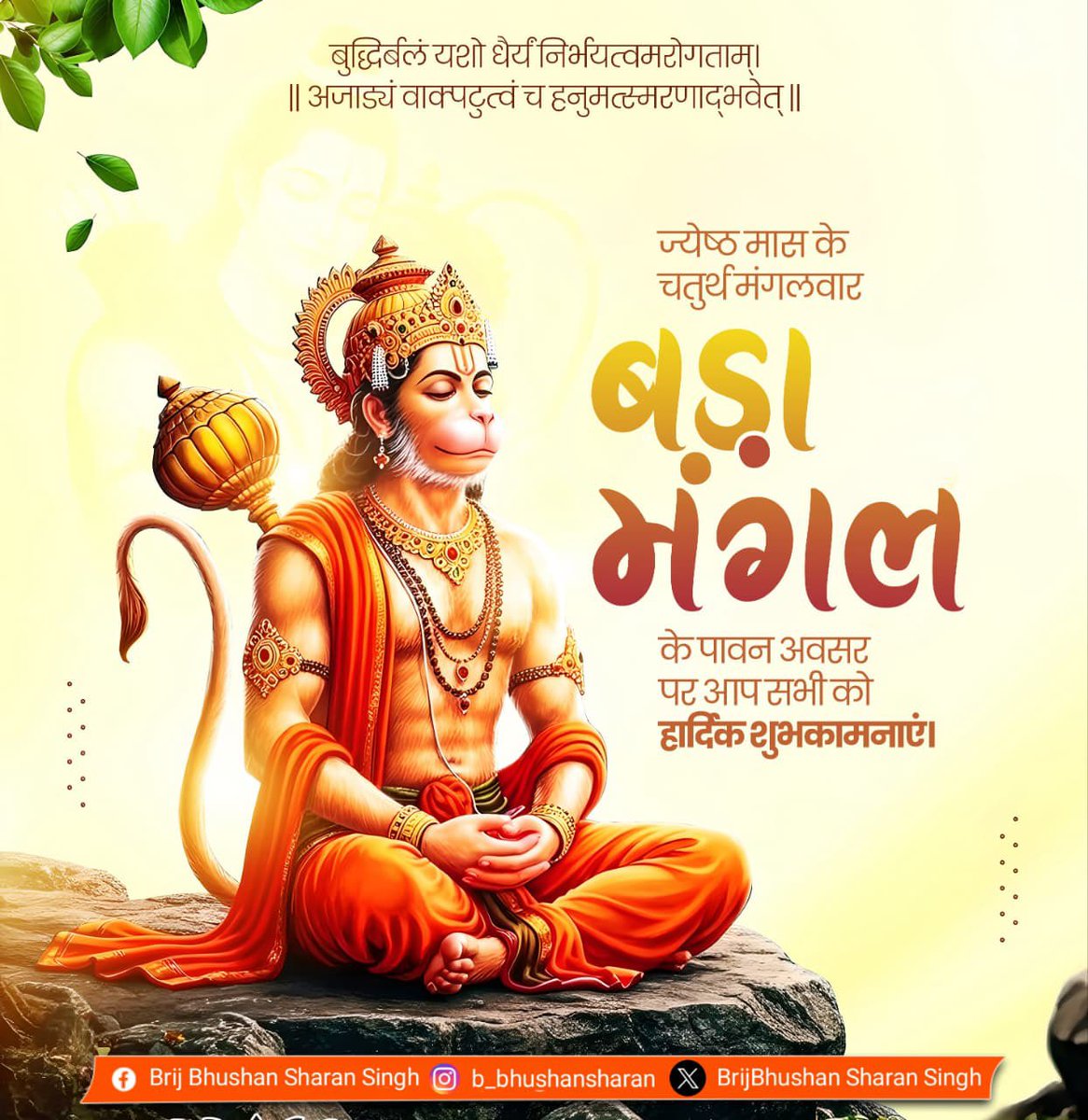
मनोजवं मारुततुल्यवेगं जितेन्द्रियं बुद्धिमतां वरिष्ठं।
वातात्मजं वानरयूथमुख्यं श्रीरामदूतं शरणं प्रपद्ये॥ !!
ज्येष्ठ मास के चतुर्थ मंगलवार ‘बड़ा मंगल’ के पावन पर्व पर समस्त देशवासियों को हार्दिक बधाई एवं शुभकामनाएं!
संकटमोचन प्रभु श्री हनुमान जी की कृपा से आप सभी के जीवन में साहस, नई ऊर्जा और सकारात्मकता का संचार हो तथा सुख-समृद्धि एवं आरोग्य का वास हो, यही प्रार्थना है।
Not Fibonacci, but Piṅgala
Sorry, no #melody moment or portmanteau here.
The numbers currently known as Fibonacci numbers, after the Italian mathematician Leonardo Bonacci or Fibonacci, should rightly be called the Piṅgala numbers, after the Indian prosodist Piṅgala.
जिसे हम सदियों से आस्था की आँखों से देखते आए थे, अब विज्ञान ने उसकी पुष्टि कर दी है।
प्रयागराज के संगम को हमेशा से गंगा, यमुना और अदृश्य सरस्वती के मिलन का स्थान माना गया है। एक त्रिवेणी, जिसमें दो नदियाँ दिखती थीं, और तीसरी सिर्फ़ श्रद्धा में बहती थी।
अब हैदराबाद के CSIR-नेशनल जियोफ़िज़िकल रिसर्च इंस्टिट्यूट (NGRI) के वैज्ञानिकों ने इस पौराणिक मान्यता को एक ठोस वैज्ञानिक आधार दे दिया है। हेलीकॉप्टर से किए गए एयरबोर्न सर्वे और ज़मीन पर की गई कन्फ़र्मेटरी ड्रिलिंग के बाद, डॉ. सुभाष चंद्र की टीम ने पुष्टि की है कि गंगा और यमुना के बीच, ज़मीन से 10 से 15 मीटर नीचे, एक विशाल प्राचीन नदी दबी हुई है। इसकी चौड़ाई, गहराई और आधार स्तर, तीनों गंगा और यमुना के बराबर हैं।
यानी यह कोई छोटी सहायक धारा नहीं थी। यह स्वयं एक मुख्य नदी थी।
विज्ञान इसे "पेलियो रिवर" कहता है। आस्था इसे सरस्वती कहती है। दोनों एक ही सच की ओर इशारा कर रहे हैं।
प्रयागराज अब सिर्फ़ आस्था का संगम नहीं रहा, यह विज्ञान और परंपरा का भी संगम बन गया है। जहाँ हज़ारों वर्षों की स्मृति, और आज की तकनीक, एक ही कहानी कहती हैं।
माँ सरस्वती कभी सूखी नहीं थीं। बस छिप गई थीं। और आज, फिर से सामने आ रही हैं।
@cleanganganmcg
Revered Ramchandra Dongre Maharaj…
A saintly narrator of the Bhagavata, who once said that even for his wife’s last rites, he had no money and might have to sell her mangalsutra.
It is deeply moving to know that saints like Dongre Maharaj truly lived in our times. He never accepted even a single rupee for reciting the Bhagavata. He would only accept a tulsi leaf. Whatever donations came during his discourses were distributed in that very town or village for the welfare of the poor. He never created a trust and never made disciples for personal legacy.
He cooked his own meals, first offered them to Thakurji, and only then partook of the prasada. Dongre Maharaj was truly a Karna of Kaliyuga.
At one of his final discourses at Chowpatty, nearly one crore rupees was collected, and the entire amount was donated for a cancer hospital in Gorakhpur. He kept nothing for himself.
Dongre Maharaj was married. On the very first night after marriage, he told his wife:
“Devi, I wish that you and I complete 108 recitations of the Bhagavata together. After that, if you still wish, we shall enter household life.”
Wherever he went to recite the Bhagavata, his wife accompanied him. It took nearly seven years to complete 108 discourses. Afterward, he gently asked her:
“If you permit, we may now enter grihastha life and have children.”
His wife replied:
“After hearing 108 Bhagavata Kathas from your sacred lips, I have accepted Gopal Himself as my son. We no longer need children of our own.”
Blessed was such a husband. Blessed was such a wife. Blessed was their devotion and their love for Krishna.
His wife lived in Mount Abu while Dongre Maharaj continued spreading the nectar of Bhagavata across the country.
He learned of her passing five days later. When he went for the immersion of her ashes, a wealthy businessman named Ratibhai Patel accompanied him. Later, Ratibhai tearfully recounted that Dongre Maharaj had said:
“Rati Bhai, I have nothing with me. The rites will require some expense. Let us sell her mangalsutra and earrings, and whatever comes from that can be used for the immersion.”
The same saint for whom thousands would have given everything was quietly saying he had no money even for his wife’s final rites.
Ratibhai said he could do nothing but weep.
Such detached souls are the rare jewels of Sanatana Dharma.
To bow before the feet of such a saint even a million times still feels too little.