The alternative is what most teams live with: siloed analysts forever catching up to designs that already moved. How does your best analyst's judgment reach the people who need it?
What if your best analyst could run every simulation, on every design, without being in the room? Not by cloning them. By capturing what they know.
https://t.co/mm2T2rz57p
This isn't "more people doing simulation." It's fewer people defining it, and everyone else executing it right. Your rare, expensive analysts stop being a bottleneck and become a force multiplier.
So when a "quick tweak" turns into a half-day rebuild, don't blame the change. Ask why your model was built like a script. What does your workflow do with a small change?
You change one parameter. The geometry breaks. The simulation breaks. Now you're rebuilding instead of iterating. Sound familiar? That's not iteration. That's rework.
Same small change. In a script it means rework. In a relationship graph the model just updates and the simulation stays connected. The difference isn't the change. It's the architecture that receives it.
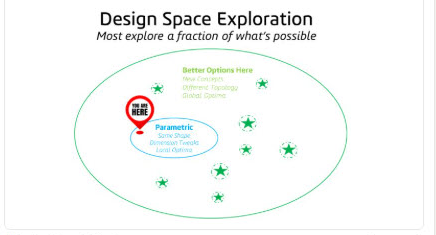
The real space is bigger than parameters. Different concepts. Different topology. Solutions that look nothing like where you started. You only reach it if the model survives big moves without breaking.
So the real question: how much of your team's week goes to maintaining duplicates a configured structure would collapse into one? What's cloning actually costing you?
Variation by duplication has a hidden bill. You clone a structure to make a variant. Feels fast. But you didn't make one variant, you signed up to maintain two forever. And engineering is only where it starts.
Change it once and it propagates. Engineering, manufacturing, and service read the same living definition, filtered to their view. Same product truth, different lenses. Effort, cost, and cycle time all drop.