Science can be self-correcting — but only if we invest in making it so. Our view on the staggering costs of undetected errors in science, and why funding error detection and correction is less expensive, published today in @Nature
Borrowing the idea of ‘bug bounties’ from the technology industry could provide a systematic way to detect and correct the errors that litter the scientific literature, says Malte Elson https://t.co/VefUqcDn7s
My paper is out in @PNASNews! I replicate a paper on the impact of COVID vaccine mandates on vaccine uptake. Removing a single bad control variable sign-flips several of the paper’s headline results. The reply’s findings are also not robust. 1/x
https://t.co/niRqt39ydN
Can you imagine if scientists or funders appreciated sleuths like this?
Or if we saw potential examples of misconduct as vulnerabilities in our processes that needed to be addressed?
🚨Replication alert🚨
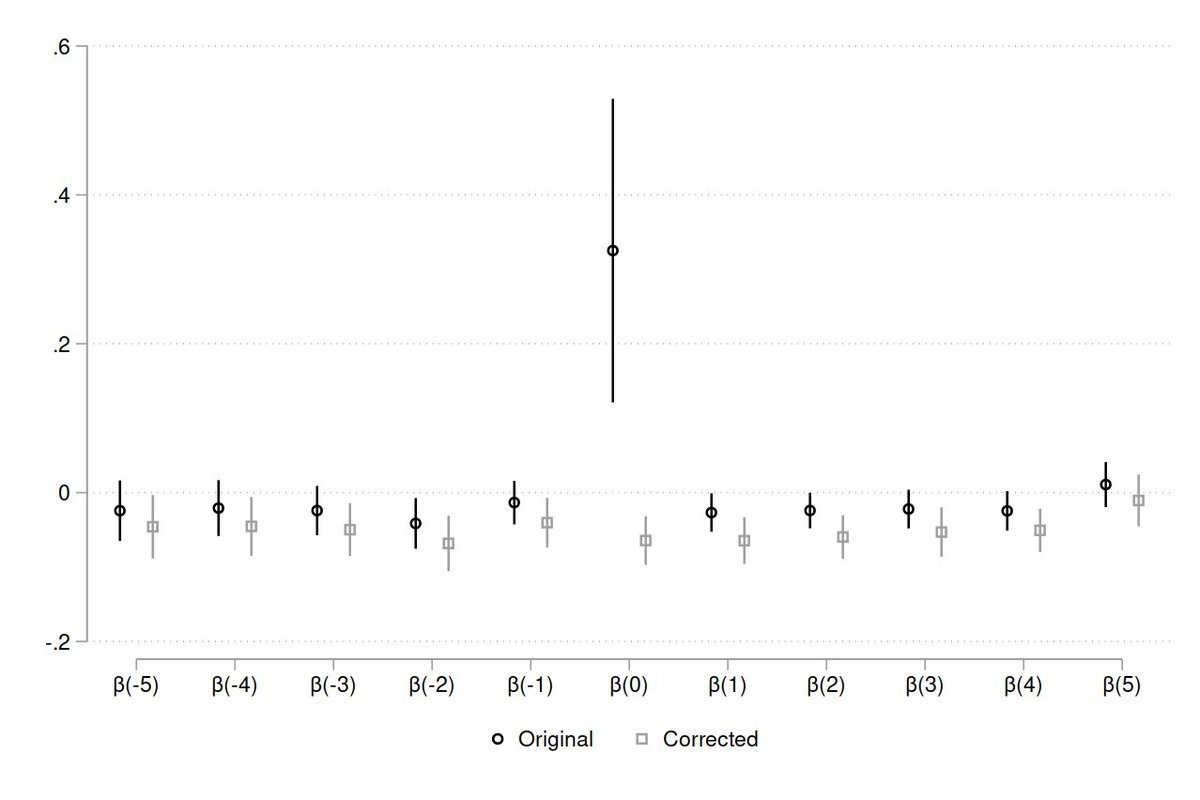
I reanalyze Moretti (2021), which tests for the effect of tech cluster size on innovation. I find that the event study and instrumental variable estimates—necessary for a causal interpretation—are caused by coding errors.
#EconTwitter
1/
Cash for catching scientific errors 💰
The ERROR project offers researchers a bounty for spotting mistakes in published papers — a strategy borrowed from the software industry. https://t.co/7DMQtNfh2O
Avec les @error_reviews d’@unibern, celles et ceux qui découvrent des erreurs dans un article reçoivent 250 francs, tout comme les auteurs qui soumettent leurs écrits à cet examen. 💵 💵 💵
@maltoesermalte@rubenarslan@ianhussey 👇
https://t.co/dDhO9gInOH
@error_reviews at @unibern can help you earn money by finding mistakes in scientific articles. And if you submit your article for scrutiny, you get CHF 250 for your trouble. 💵 💵 💵
@maltoesermalte@rubenarslan@ianhussey 👇
https://t.co/4exjbZ6w8y
🚨 New Video Alert! 🚨
Watch @ianhussey take us through the exciting developments in error detection, featuring @error_reviews, the innovative pre-registration assessment tool by @psycholojamie, and much more.
Video: https://t.co/kZPT8Uuhzc
Slides: https://t.co/4ByT0NHILY
Challenge accepted. Here are a few comments on the paper after starting to wade through its massive content. The paper in question is https://t.co/6zAC13cDbB 1/🧵
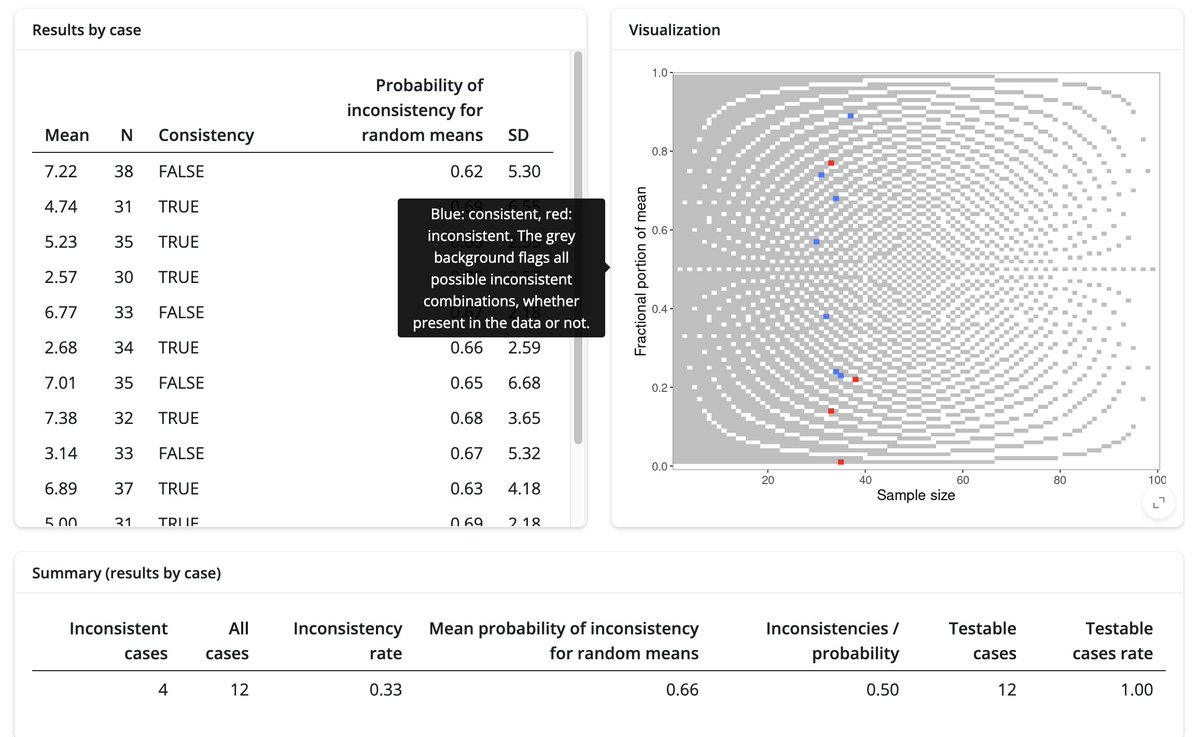
New: use GRIM or GRIMMER to test reported statistics for consistency.
Are these values even possible? Find out with the error detection webapp!
Test many values at once, get summary statistics, and download your results. 🧵 1/5
https://t.co/ShLM91h1tT
What are the best papers or blog posts you know on difficulties of correcting the scientific record in psychology? Want to write on it and make sure cite the best sources. I recall the term zombie theories in this context.
New Data Colada post. Harvard's Gino Report allows us to re-construct what Harvard says is one of Gino's "original" data sets. We can compare that to the posted data to see how the data were altered https://t.co/1mEWpCCilt
⭐️Open Research Summer School ⭐️
Rounding off a whole day on error detection, @ianhussey will be talking about @error_reviews!
Grab your in-person ticket for Monday. Otherwise, there's plenty of spots for remote viewing!
Register here: https://t.co/8DGwi9YFOa
New paper under review!
Danièle Gubler is checking "Environmental sensitivity in children: Development of the Highly Sensitive Child Scale and identification of sensitivity groups" by @michaelpluess et al. for errors.
https://t.co/fJHKNluSvu