Introducing Pika AI Selves: AI you birth, raise, and set loose to be a living extension of you. They’re rich, multi-faceted beings with persistent memory, and maybe even a peanut allergy. It’s up to you!
Have them send pictures to your group chat. Make a video game about your fish. Call your mom while you do anything but call your mom. The possibilities are as myriad as the stars ✨
Get on the list to give birth to yours at pika dot me
June 2: a bunch of 🇨🇳 CCP tankies — Chinese Americans / 🇨🇳 nationals — ferociously yelling “long live the communist party!” and “bog off and go back to Taiwan!” offensively harassed people commemorating the Tiananmen Square massacre in Flushing, NYC.
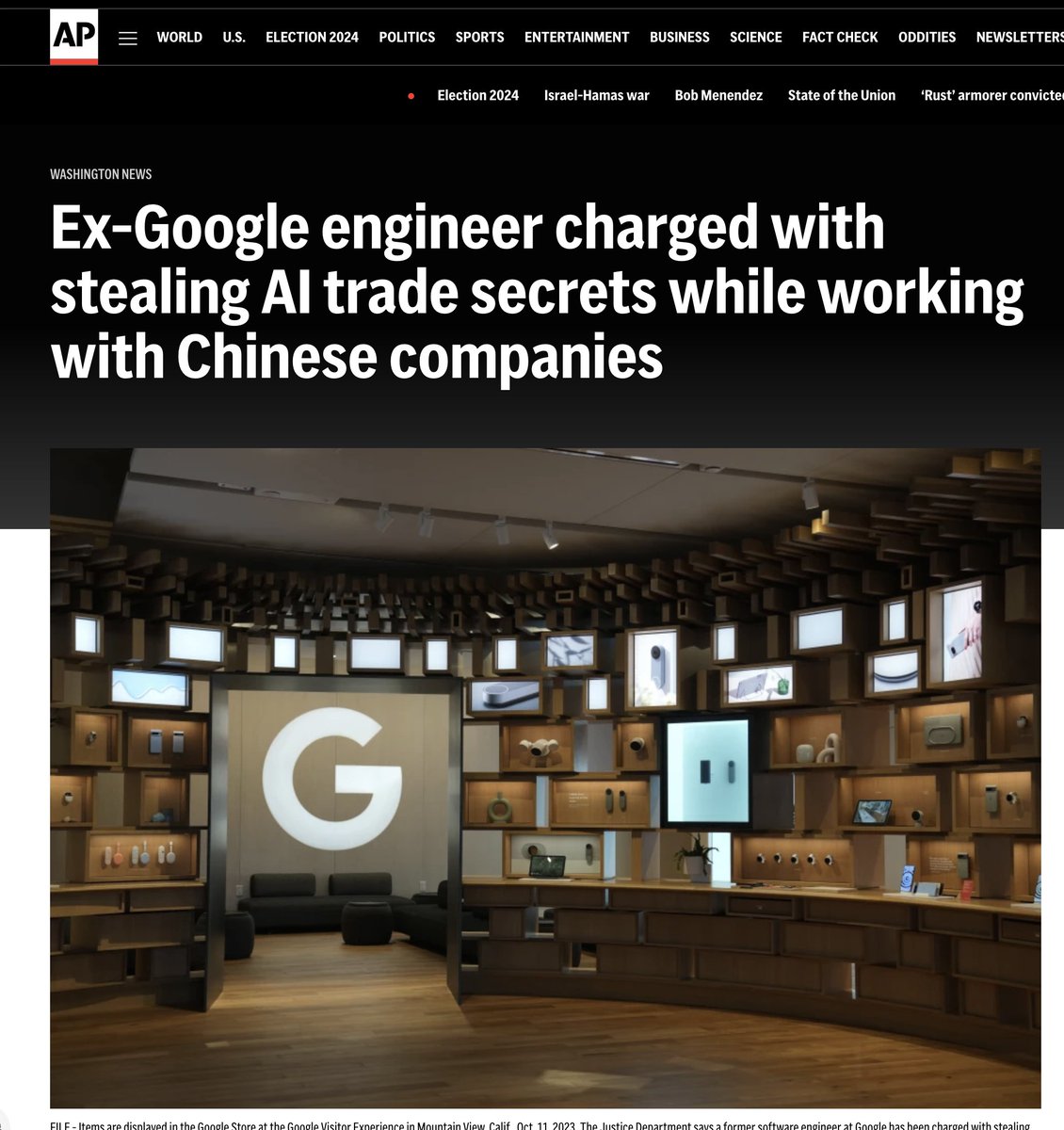
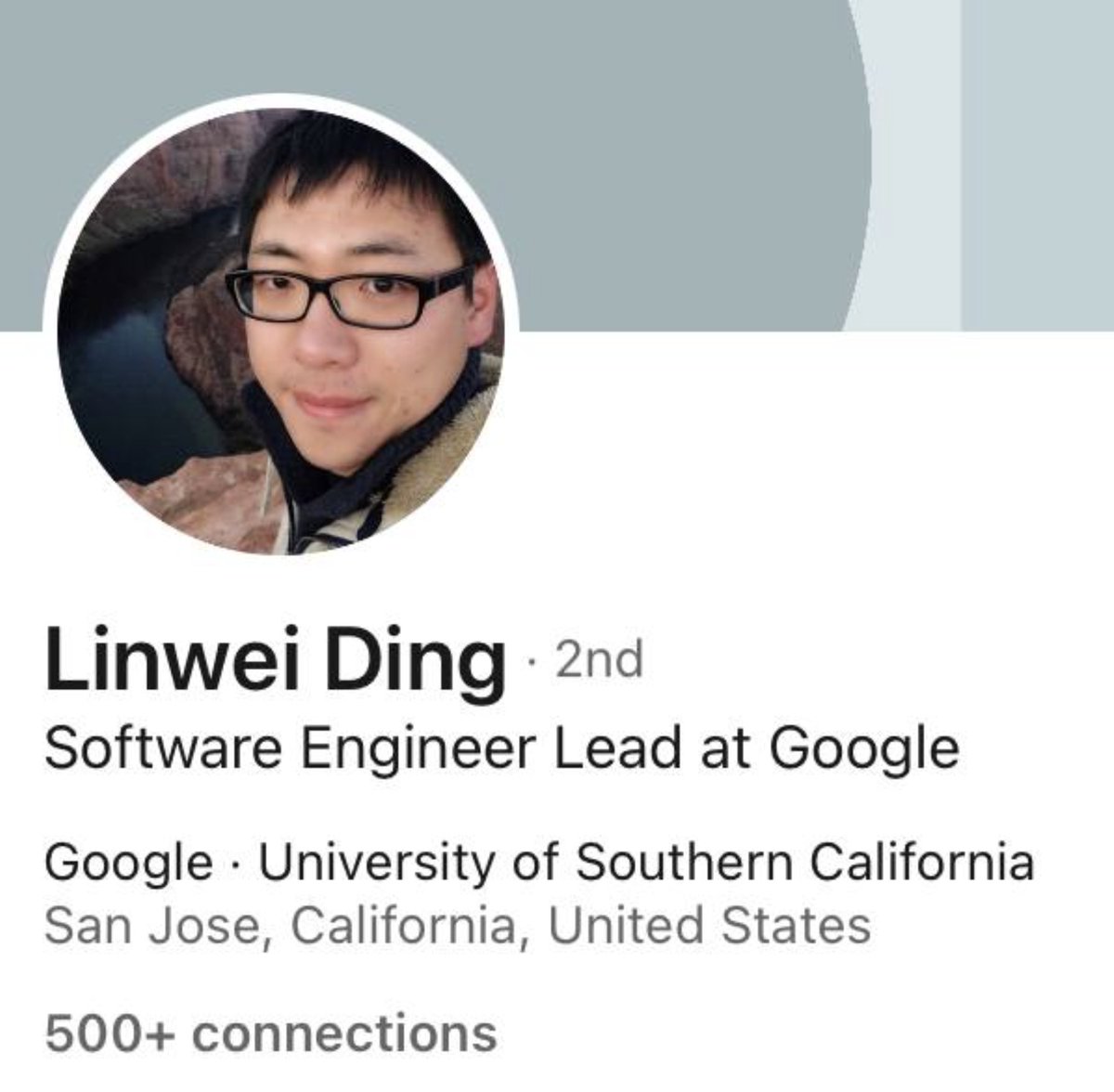
An ex-Google software engineer was just charged with stealing AI trade secrets from the company and secretly working with two China-based AI startups.
The leaker, Linwei Ding, now faces up to 10 years in prison.
This story is intense:
1. Google found out that its confidential information was getting leaked
2. On further investigation, Google found out Ding had been uploading hundreds of confidential files to his personal Google Cloud for over two years (lol)
3. Within weeks of the theft starting, prosecutors say, Ding was offered CTO at an early-stage AI startup in China
4. On top of that, Ding ALSO founded his own China-based startup focused on training large AI models powered by supercomputing chips
5. Another employee was scanning Ding's access badge at the Google building in the U.S. to make it look like he was there when he was actually in China
6. The FBI seized Ding's electronic devices and uncovered more than 500 unique files of confidential information stolen from Google...
Two main points stood out to me.
First, the lengths to which individuals and organizations will go to steal AI data are only going to get worse. Alarming to consider how much of this might already be happening behind the scenes, undetected.
Second, beyond headlines, we have limited insight into the advancements in AI R&D happening in China. From the research I've been following, their progress is becoming increasingly impressive and legitimate.
Take that for what you will, but China's AI scene is booming, and they're willing to go to great lengths to catch the US.
Let's assume, for discussion, that AI in 2024 is like atomic technology in 1943, that AI should therefore be handled like the Manhattan Project, and that the specific risk is that the Chinese Communist Party gains access to American AI. And let's use OpenAI as an example of an American AI R&D facility.
What counterintelligence capabilities does OpenAI have to prevent China from stealing our AI?
What you'd expect to see is a rigorous security vetting and clearance process for everyone from the CEO to the cook, with monthly polygraphs and constant internal surveillance. Hardened physical facilities, what are called SCIFs (Sensitive Compartmented Information Facilities), US Marines or the equivalent as 24x7 armed guards, Faraday cages and electronic countermeasures. Alarms going off if someone carries so much as an Apple AirTag into the building. And someone very much like Boris Pash overseeing it all, interrogating and terrorizing people in all directions.
Remember, even WITH tight security, the Russians still got the atomic bomb from the US via their spies in the 1940s. The first Russian atomic bomb is said to have been "wire for wire compatible" with the American Nagasaki bomb, thanks to David Greenglass and the Rosenbergs. So to protect AI, you need even TIGHTER security. Remember, this is a civilizational threat!
Is this what we see at OpenAI or any other American AI lab? No. In fact, what we see is the opposite -- the security equivalent of swiss cheese. Chinese penetration of these labs would be trivially easy using any number of industrial espionage methods, such as simply bribing the cleaning crew to stick USB dongles into laptops. My own assumption is that all such American AI labs are fully penetrated and that China is getting nightly downloads of all American AI research and code RIGHT NOW.
The conclusion is obvious: OpenAI must be immediately nationalized.