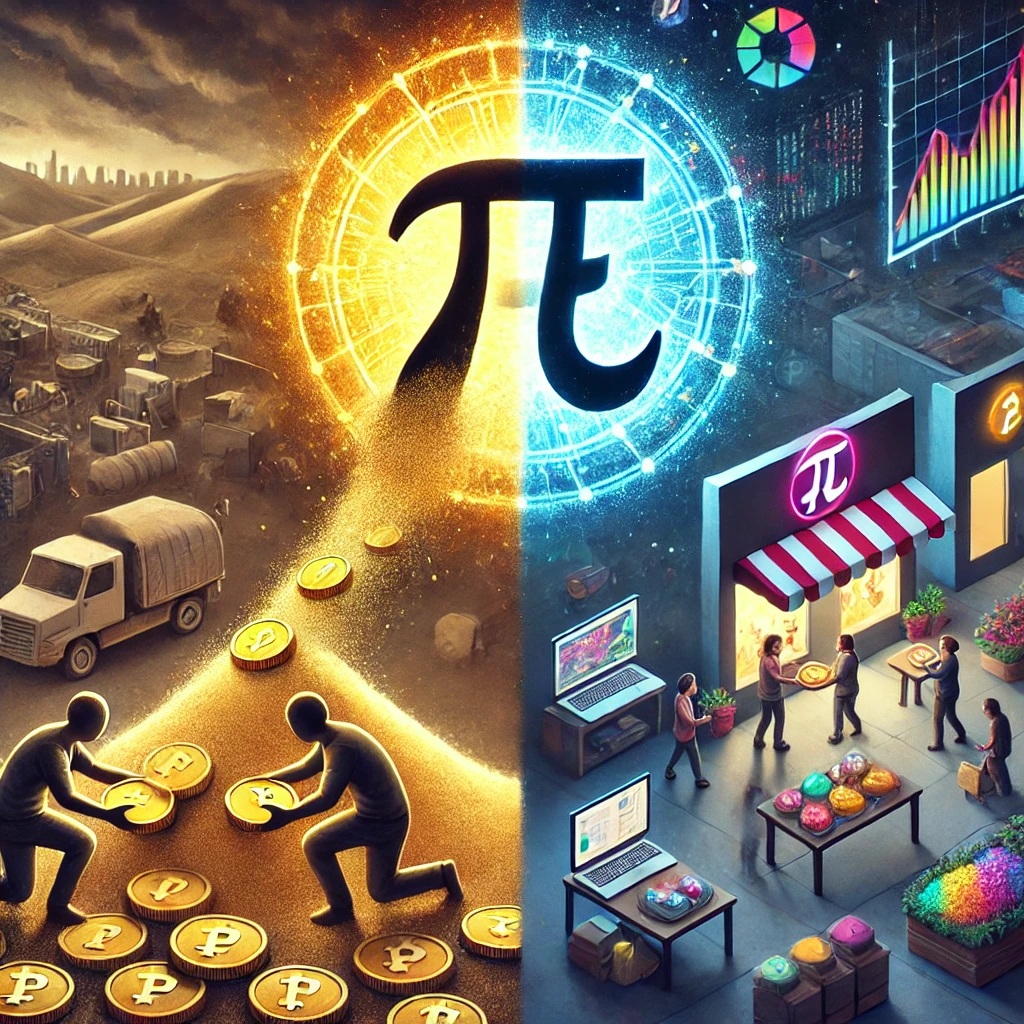
Help bring more AI-created apps to the Pi ecosystem and enter a raffle to win Pi Network merch!
Pioneers are invited to introduce Pi App Studio to vibe coders and AI-builder communities around the world.
Why?
Because as AI makes building apps easier, competition for human attention and user acquisition becomes more intense.
Pi App Studio helps creators connect AI-built apps to:
60M+ engaged Pioneers
Built-in payments
Identity infrastructure
Pi Ad Network
And more!
Find a relevant builder community, share how Pi can help creators reach real users, then submit your post through the Pi App to enter the raffle.
By helping more creators discover Pi, Pioneers can help expand the range of apps, tools, and services available in the Pi ecosystem. A stronger app ecosystem gives Pioneers more ways to use Pi, support useful products, and participate in real utility.
Go to the Pi mining app to learn more.
@2000Rocker@Sushant84464464 How will they distinguish between users who have been mining for years and not selling, and those who buy and sell on the stock exchange? Because there is a huge injustice here
Dear @elonmusk ,
You emphasize that actions, not words, matter. In the crypto world, we need real actions to support decentralization and financial freedom. Projects with strong ecosystems and large communities deserve fair treatment and real-world adoption.
We urge you to recognize and support a truly decentralized project with over 60 million community members and 25 million KYC-verified accounts. Your leadership in technological innovation can help shape a more transparent and fair financial future.
We call on everyone to retweet this and tag key figures to make our voices heard! Let’s see if real actions follow these words.
@gerald_okocha @Pi81Mall @SahMbeh You still don't know what kind of project you are in and you are confusing people with your empty mind! Pi Network is not a project created for the stock market, learn this first! It will have a stable price.
"The Value of Pi Is What Pioneers Believe It to Be" - Prediction and Analysis of GCV Adjustments and Penalties for Terms Violations Before and After Open Mainnet
[[ This analysis is highly logical but is a predictive assessment and may differ from the actual situation. ]]
[[ "Why Mass Harvesting of Pi Has Little Significance, and Why Community Contribution and Dedication Bring Greater Benefits!" ]]
[[ Pi Network's Open Mainnet: GCV Enforcement and the Consequences of Unauthorized Transactions ]]
[[ The Future of Pi: GCV-Based Adjustments and Potential Penalties for Terms Violations ]]
Dr. Nicolas Kokkalis has stated that "The value of Pi is what Pioneers believe it to be." He also emphasized that "Pi is extremely scarce and valuable."
This implies that Pi's value is not dictated by speculative market prices but is instead determined by the collective agreement within the community and cannot be arbitrarily diminished by unauthorized transactions.
🚨 It is important to note that the number of transactions conducted at the Global Consensus Value (GCV = $314,159) has reached an overwhelming
📌 6 million to 8 million recorded transactions on the Pi blockchain, making it highly likely that GCV will be confirmed as the official consensus value.
📌 Additionally, the Global Macro Constant (GMC) on global platforms has already incorporated GCV, reinforcing its potential establishment as the core economic model of Pi Network post-Open Mainnet.
However, some Pioneers are still selling Pi at approximately $1.2 on exchanges or engaging in barter trades within local communities at values ranging from $1, $10, to $100 per Pi.
Such activities are likely violations of Pi Network’s official terms of service (Token Usage Policy), and as a result, it is expected that AI-based auditing and potential adjustments to Pi holdings will occur before or shortly after Open Mainnet.
This article will analyze how Pi balances may be adjusted based on GCV ($314,159) and provide predictions on possible penalties for Pioneers who violated the terms.
1. Analysis of Different Transaction Types and Their Potential Adjustments Based on GCV
Pioneers are currently recognizing the value of Pi through three primary transaction methods.
(A) Pioneers Who Sold Pi on Exchanges at ~$1.2 per Pi
These individuals have effectively acknowledged that their Pi is worth $1.2 each.
Compared to GCV ($314,159), there is a massive valuation gap of approximately 261,799 times.
Given Pi’s scarcity and inherent value, it is likely that AI auditing will adjust their holdings accordingly.
📉 Expected Adjustment Outcome:
A Pioneer who sold 100 Pi at $1.2 may have their remaining Pi balance adjusted by a factor of 1/261,799, resulting in an approximate balance reduction to 0.00038 Pi.
Additional penalties may apply for violating the Token Usage Policy by engaging in exchange transactions.
(B) Pioneers Who Conducted Barter Transactions at $1, $10, or $100 per Pi in Local Communities
While these Pioneers agreed upon an exchange value within their communities, their transactions still significantly undervalue Pi compared to GCV ($314,159).
AI auditing may apply GCV-based adjustments to balance these discrepancies.
📉 Expected Adjustment Outcome:
📌 If Pi was traded at $1 per Pi
Since this value is 314,159 times lower than GCV, their Pi holdings may be adjusted by a factor of 1/314,159, reducing their balance accordingly.
📌 If Pi was traded at $10 per Pi
The discrepancy is 31,415 times lower than GCV, so their holdings could be reduced by a factor of 1/31,415.
📌 If Pi was traded at $100 per Pi
With a valuation gap of 3,141 times, their holdings may be adjusted proportionally.
✅ Conclusion:
Pioneers who traded Pi at significantly lower values in local communities may have their holdings adjusted based on GCV ratios.
Unlike exchange transactions, these cases might not receive additional penalties for violating Pi Network’s Token Usage Policy.
(C) Pioneers Who Held Pi at GCV ($314,159) Without Trading
These individuals retained their Pi holdings without engaging in unauthorized transactions, maintaining its full value at GCV.
As a result, they are likely to maintain their Pi holdings without adjustments after Open Mainnet.
These Pioneers will likely play a central role in the Pi economy post-Open Mainnet.
✅Conclusion:
Those who upheld GCV are expected to maintain their holdings.
They may have a significant economic advantage within the Pi ecosystem.
2. Expected AI Auditing and Adjustment Process Before and After Open Mainnet
🚨 (1) Expected Measures Before Open Mainnet
1️⃣ Pi Core Team may issue formal warnings and strengthen monitoring of Token Usage Policy violations.
2️⃣ Official statements reaffirming GCV as the core economic model may be released.
3️⃣ AI auditing system development could be finalized, with pre-Open Mainnet announcements regarding balance adjustments for non-compliant transactions.
🚨 (2) Expected Measures After Open Mainnet
1️⃣ AI auditing system may be deployed to analyze all Pioneer transaction records.
2️⃣ Balances may be automatically adjusted based on GCV discrepancies.
3️⃣ Additional penalties may be imposed on those who sold Pi on exchanges.
Potential penalties: Restricted trading privileges within the Pi ecosystem, mining rewards suspension, or Pi balance adjustments.
4️⃣ Pioneers who maintained GCV may retain their full holdings and secure a strong economic position.
3. Potential Additional Penalties for Exchange Transactions
Since selling Pi on exchanges is a direct violation of Pi Network’s Token Usage Policy, additional penalties may be enforced.
📉 Expected Penalty Scenarios
1) . Significant Reduction in Pi Balances
Exchange traders may see their holdings drastically reduced based on GCV comparisons.
2) . Temporary Trading Restrictions Within the Pi Ecosystem
Post-Open Mainnet, these Pioneers may be restricted from participating in Pi-based transactions for a certain period.
3) . Loss of Future Mining Rewards
Those who violated the Token Usage Policy may lose their ability to mine additional Pi.
----------------------------------------------
🚨 Conclusion:
----------------------------------------------
Pioneers who engaged in exchange transactions may not only face balance reductions but also suffer from additional penalties that prevent them from fully benefiting from the Pi ecosystem.
Meanwhile, those who upheld GCV will likely enjoy economic advantages within Pi’s post-Open Mainnet financial model.
🚀 Final Conclusion: The Future of Pi’s Economic Structure and Adjustments After Open Mainnet
1️⃣ Pioneers who upheld GCV ($314,159) will maintain their full holdings and be in the strongest economic position.
2️⃣ Pioneers who sold Pi at ~$1.2 on exchanges may see significant reductions in their holdings due to AI-based GCV adjustments.
3️⃣ Pioneers who engaged in barter transactions at lower valuations ($1, $10, $100 per Pi) may also have their holdings adjusted based on GCV ratios.
4️⃣ Additional penalties (restricted trading, loss of mining privileges) may apply to those who sold Pi on exchanges.
5️⃣ The fact that 6 million to 8 million transactions at GCV have been recorded on the Pi blockchain suggests that GCV is overwhelmingly likely to be confirmed as the official consensus value.
6️⃣ With GCV already integrated into the Global Macro Constant, the Open Mainnet transition is expected to reinforce GCV as the foundation of the Pi economy.
🚀 Ultimately, GCV-based economic structures will become stronger post-Open Mainnet, and Pioneers who undervalued their Pi or engaged in unauthorized exchange transactions will likely face significant economic disadvantages.