We study how animals deal with and adapt to natural and anthropogenic stressors, mainly in aquatic systems.
Research group @KU_Leuven 🇧🇪
PI: Prof. Robby Stoks
@esee_lab and postdoc @janneswaegers contributed to this review paper associated with the upcoming special issue on climate change adaptation in @EvolLetters 👇
The eventual end article for a special issue on climate change adaptation in @EvolLetters
When and how can we predict adaptive responses to climate change?
Our conclusion: difficult, but not impossible!
https://t.co/OVYjsayh8N
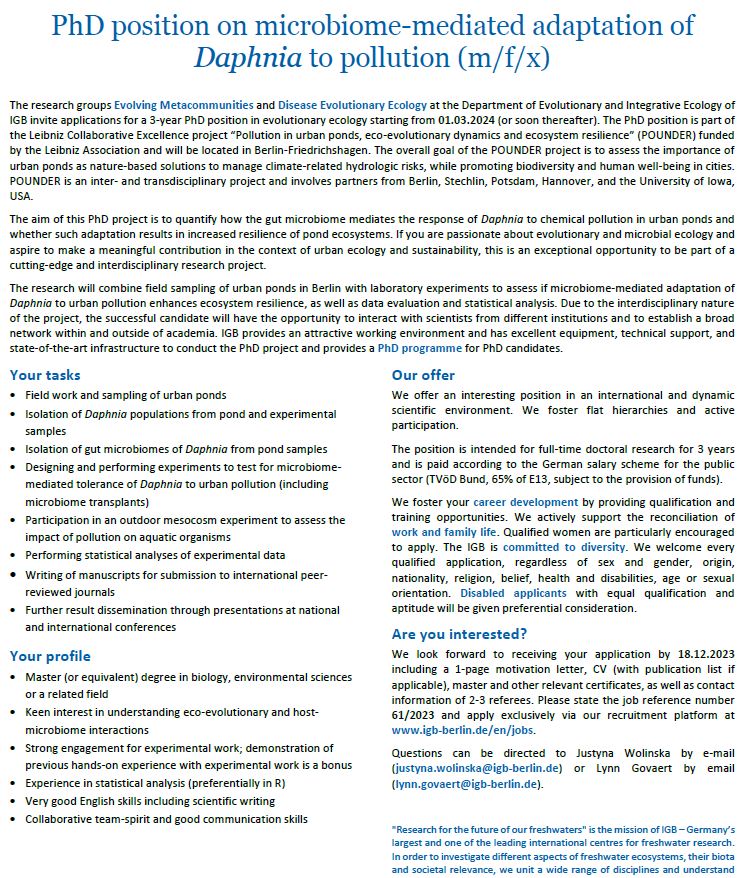
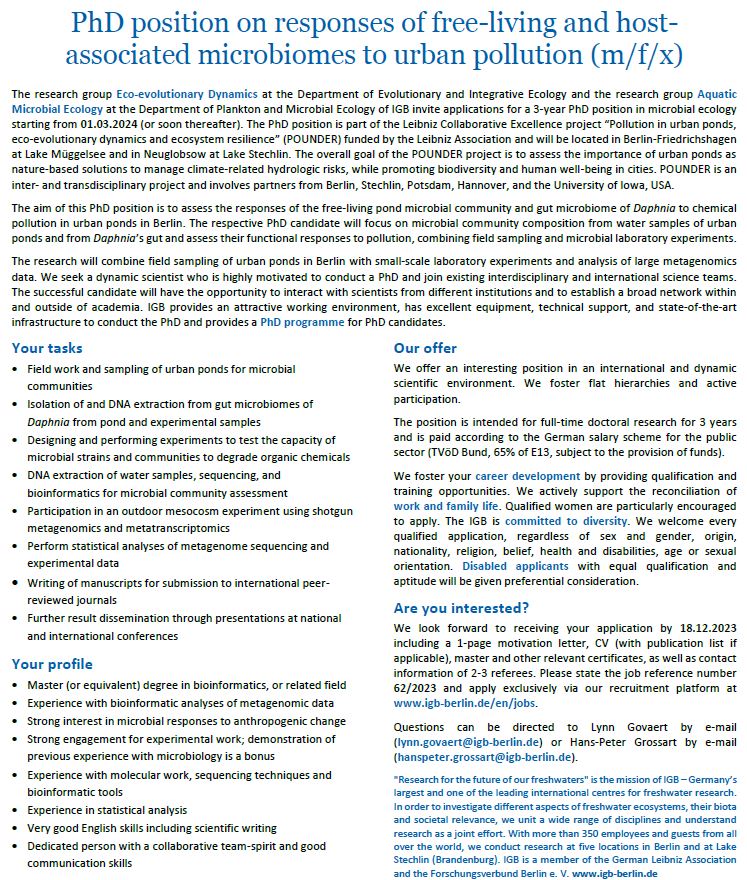
Interested in urban pollution, Daphnia and eco-evolutionary dynamics? IGB will have 3 PhD positions opening thanks to funding from the Leibniz Association. For more information, see the advertisements attached or go to the job portal on the IGB website https://t.co/gTqBXzBAOU
Hot off the press: Hierarchical eco-evo dynamics mediated by the gut microbiome - published in Trends Ecol Evol by @ellendecaesteck, @AquaEcoEvo_KUL, @esee_lab 👇
https://t.co/DaFkg6sSh2
Deze week afl2 van Onze Natuur Doorgrond: duik het water in met Steven Van Belleghem, Robby Stoks, Filip Volckaert en Pieter Lemmens! 🐟🧪🌿
@SVBelleghem, @esee_lab@LBEG_Lab@SET_KULeuven@kuleuven_fwet
https://t.co/V83xHbn8jN
📢Two PhD positions available in our lab! Intrigued about how populations evolve tolerance to global change stressors🌍? Interested in using gut microbiota transplant experiments (PhD 1 and 2), field sampling 🏞️(PhD 2) and RNA-seq (PhD 1)? Join our team! Apply before 22/09!
📢Two PhD positions available in our lab! Intrigued about how populations evolve tolerance to global change stressors🌍? Interested in using gut microbiota transplant experiments (PhD 1 and 2), field sampling 🏞️(PhD 2) and RNA-seq (PhD 1)? Join our team! Apply before 22/09!
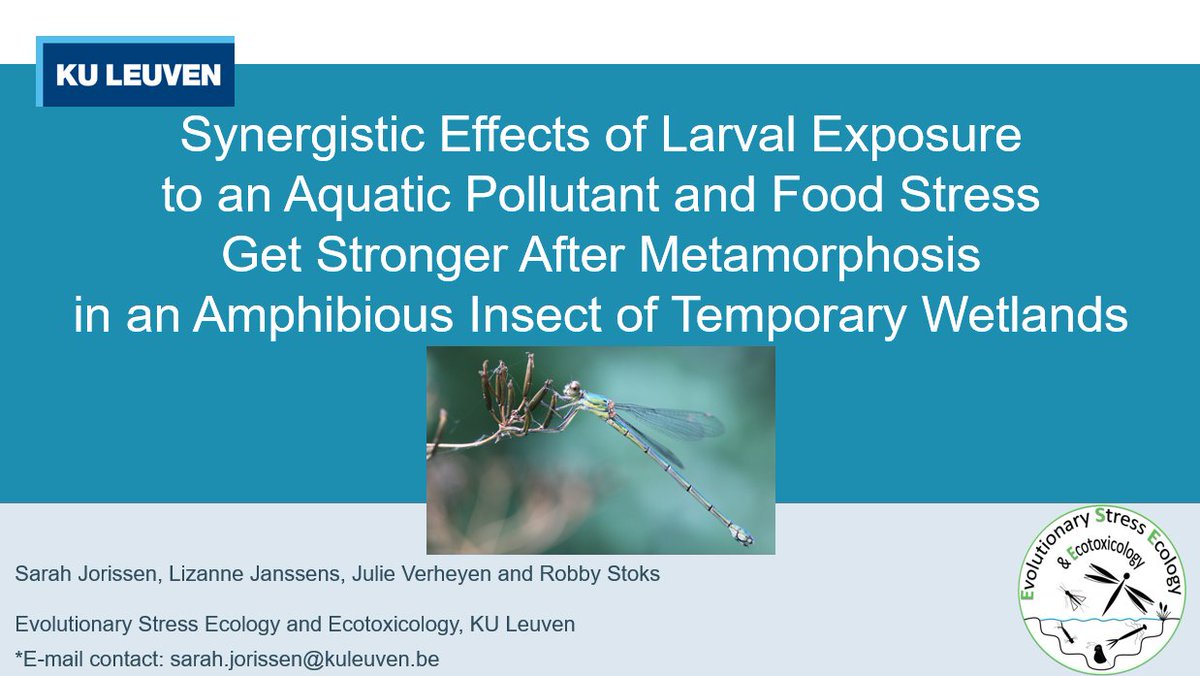
❗️To everyone at #SETACDublin, don't miss out on Sarah's talk - she will be presenting compelling new results on the magnitude of synergistic effects throughout a damselfly's complex life cycle 👏
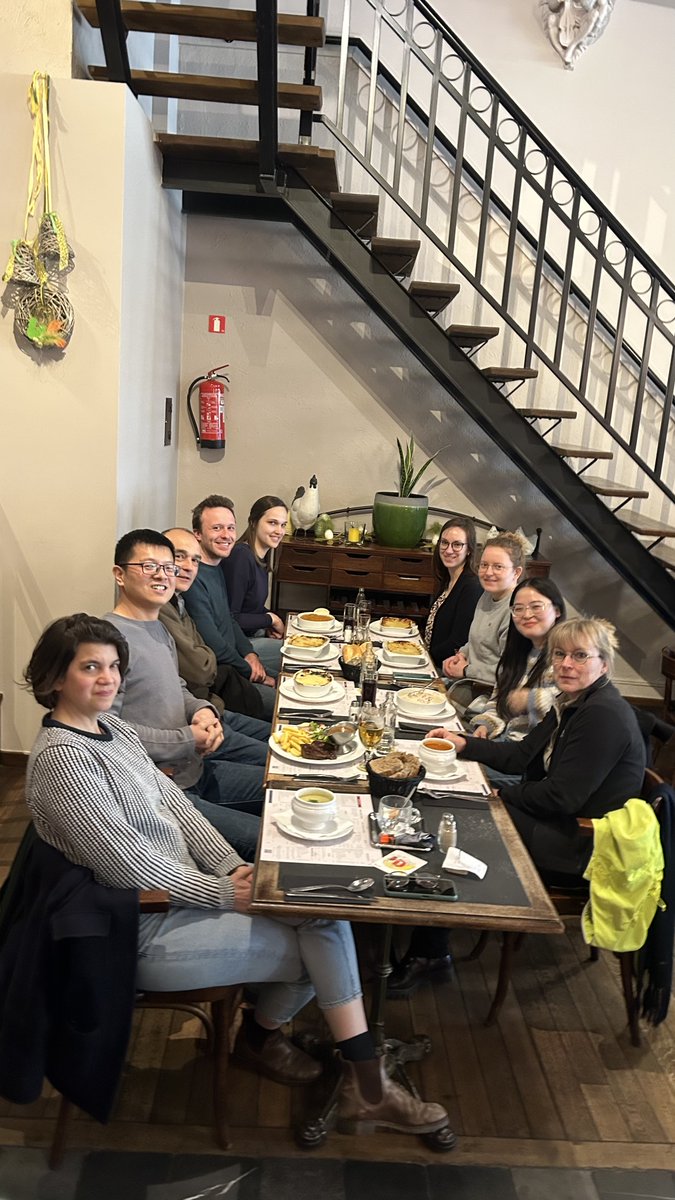
We were happy to have an @esee_lab alumnus visiting us last week 🙏. Prof. Chao Zhang (Shandong University and @LeibnizIGB) talked about his new research results and ideas💡We are looking forward to hear more about the effects of #microplastics on Daphnia!
@MFajgenblat , PhD student at our lab, gave an interesting talk at the Dutch Dragonfly Society about the odonate communities in Flanders. Seeing those images makes us look forward to the damselfly field season! 🙂🏞️
Effects of heat and pesticide stress on life history, physiology and the gut microbiome of two congeneric damselflies t... - Theys C et al. - https://t.co/7uNvaNNLBa #microbiome
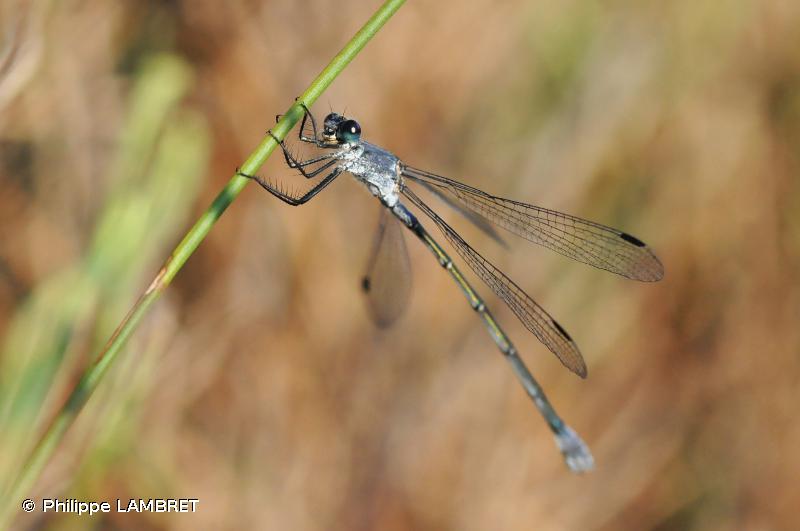
Our new paper hot off the presses stars threatened damselfly Lestes macrostigma🌟
➡️PhD stud. Philippe Lambret studied the effect of (a)biotic factors on larval abundance and adult size at emergence
➡️❗️important keys🗝️for water management and habitat restoration are discussed
Our PhD student @JorissenSarah gave a great talk on the intriguing southward expansion of damselfly Ischnura elegans to the enthusiasts of the Flemish dragonfly society - @esee_lab represent! 😎Nice to present our study system to a broader audience🙂
This nice nature documentary of the Belgica 21 expedition with 2 former alumni🧑🔬from our lab Henrik Christiansen @Notothen and Franz Maximilian Heindler has just been released!
Available on Netflix, watch it now.
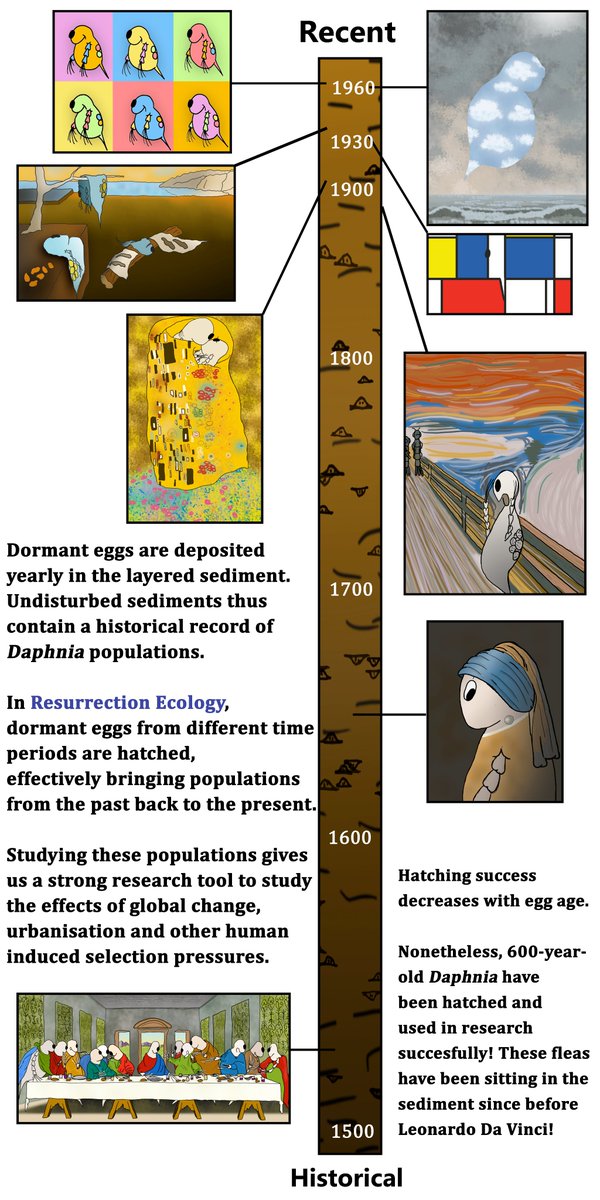
🥳 Check out the last PhD chapter of our former PhD student @lanexran ➡️➡️ showing rapid evolution of the TPC of intrinsic population growth rate in Daphnia 🌡️
Awesome job by Ying-Jie (@lanexran), publishing her final PhD chapter in #ProcB: evolution of thermal plasticity in the water flea #Daphnia is strongly trait-dependent (w/ potential conseqences for top-down impact on algal resources under climate change). https://t.co/l0OWumy2Jq