Assistant Professor @JohnsHopkinsEPI | He/him | The views and opinions expressed here are mine alone and do not represent the views of Johns Hopkins University.
From 2012 to 2023, the proportion of first-time PWID treatment admissions involving methamphetamine injection, with or without opioids, more than doubled, even as overall admissions declined.
https://t.co/xBYLqCxfEg
“Especially Being Homeless, They Just Think You’re Infected with COVID or Something”: A Qualitative Exploration of the COVID-19 Pandemic’s Impact on People Experiencing Homelessness With a History of Injection Drug Use in Baltimore, Maryland (1/2) DOI: https://t.co/hqIrfg4VMg
.@JohnsHopkinsEPI faculty member Becky Genberg co-authored an op-ed in the @BaltimoreBanner that new drugs are making it difficult to battle the overdose crisis in Baltimore. https://t.co/dteRM0jDla
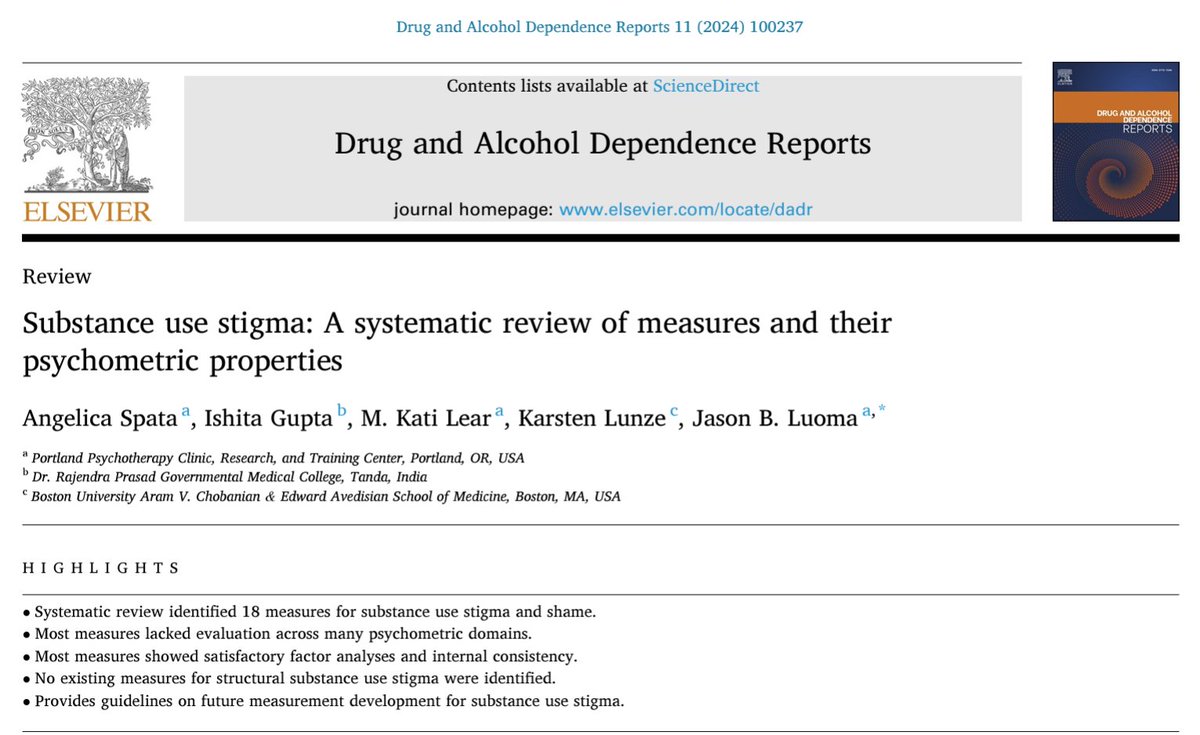
@jasonluoma Are we measuring #SubstanceUseStigma accurately? Our recent paper evaluates the tools used to measure stigma and their reliability. Essential reading for researchers and practitioners! Full details: https://t.co/obAZKzeIa7 #PsychologyResearch
“My goal is to innovate systems and build supports to free up space for creativity and to come together as a department to address the big challenges facing epidemiology and public health,” notes incoming chair @shrutihmehta. https://t.co/l60xef0Un9
Data from ALIVE cohort of PWID in Baltimore indicate increasing trends in non-fatal #overdose before the #COVID19 pandemic further accelerated during the pandemic even though many transitioned from injection to non-injection drug use. @KA_Feder @shrutihmehta@JohnsHopkinsEPI
Sunil Solomon (@sss_cubed) of @HopkinsMedicine shares that two major HIV prevention studies did not include PWUD. "We cannot put people in boxes. There are MSM and trans women that use drugs". Really important points from Sunil on intersectionality in research. #ChoiceAgenda
For those interested in a postdoctoral fellowship opportunity with @apwez and Dr. Becky Genberg, learn more about the project and ALIVE study at the link below
https://t.co/YgU3mQp09J
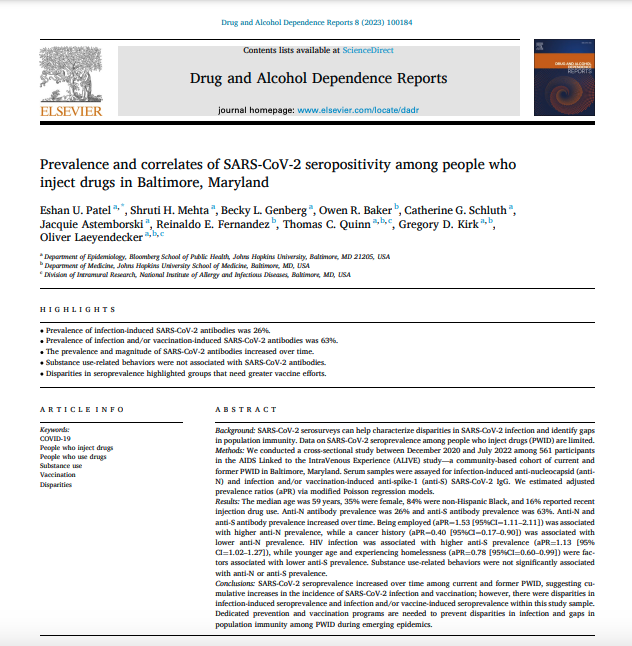
Study by @eshanupatel & @shrutihmehta finds disparities in SARS-CoV-2 seroprevalence among PWID in Baltimore. Younger and unstably housed PWID less likely to have spike antibodies - greater vaccination efforts needed during emerging epidemics.
https://t.co/JSlr14sUlF
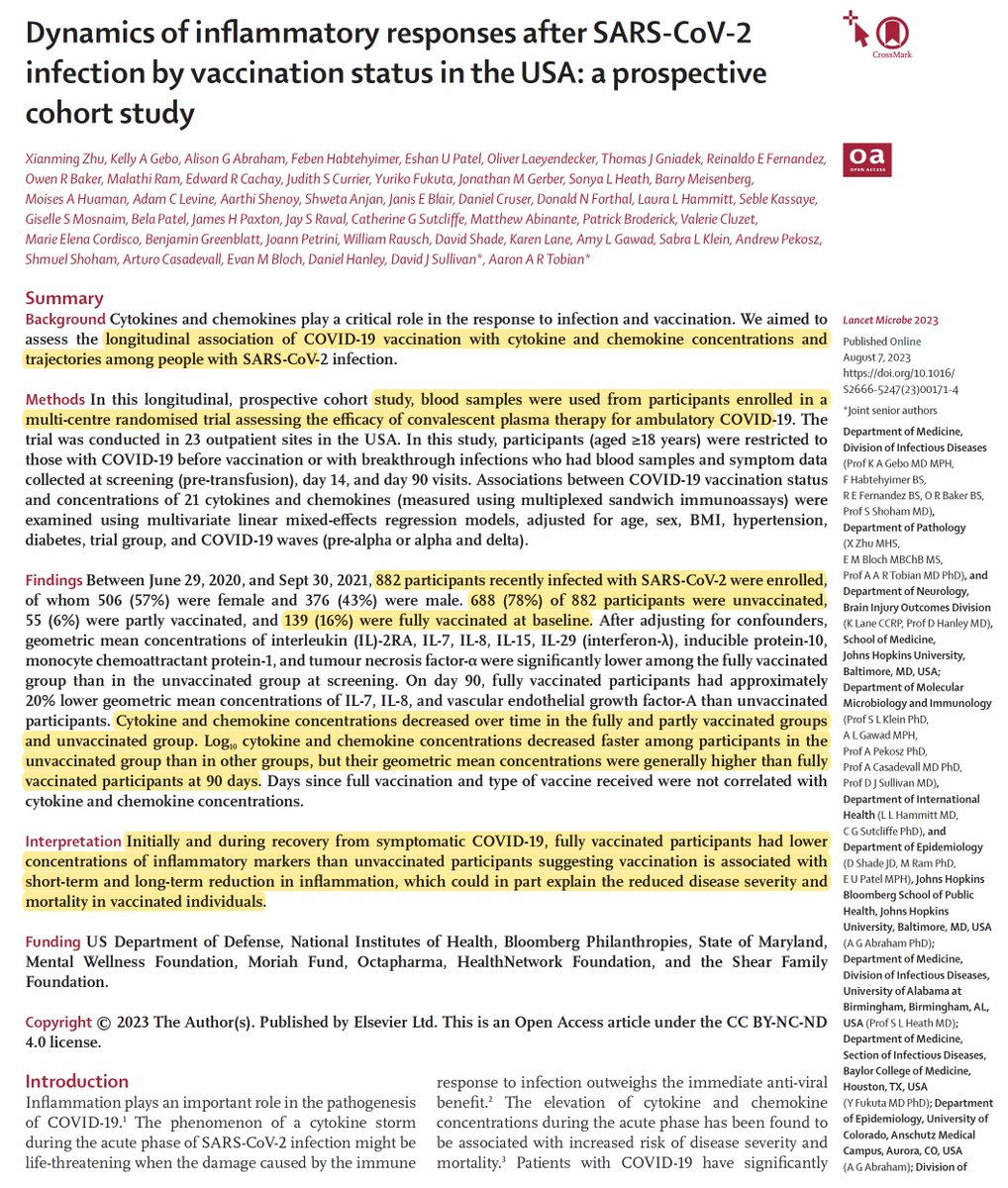
Congrats to @joshuazhuxm (@JohnsHopkinsEPI graduate) and team for leading this important study demonstrating association of COVID-19 vaccination with decreased inflammatory cytokine responses following SARS-CoV-2 infection.
🆕 @LancetMicrobe
In the largest study to measure cytokines and chemokine during Covid, with or without vaccination, a lower inflammatory profile was seen with prior vaccination, supporting its potential short and long- term protective benefit
https://t.co/bT5mYqdcJ0
JUST IN: In a new Health Policy Brief published today, Sarah Hemeida + coauthors highlight stigma as an inherently structural phenomenon w/ significant health implications. They analyze how laws are powerful mediators for structural stigma & critical levers for anti-stigma work.
New from @BurnetInstitute@LTUresearchers#SuperMIX cohort study with #PWID highlights how participation in research provides opportunities for on-going engagement that affords participants to share their experiences & contribute to knowledge https://t.co/xRKKGahtaW
Social support is an important resource for the psychological resilience and mental well-being of people who inject drugs, especially during times of social disruption (early pandemic). See our new study below. @shrutihmehta@jerudolph13 @KA_Feder @JohnsHopkinsEPI
Our latest paper on sharing injecting equipment published in @APSAD_DAR - highlighting that stigma undermines harm reduction, but community connections can help promote health. And it's open access!
@carlatreloar @elenajcama @CSRH_UNSW
https://t.co/N4v1sldsY7