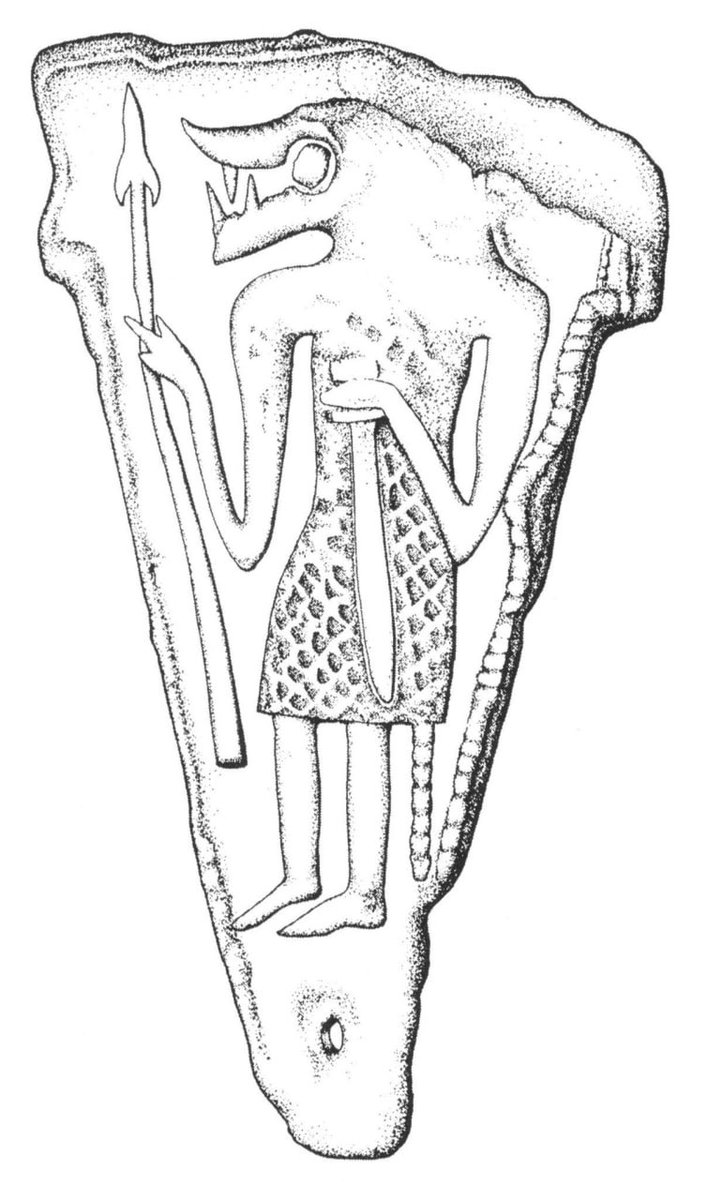
@howlinghowler_ It’s a werewolf - a sign of Woden. The costume is explicitly Wodenic with a helmet covered in Wodenic imagery which belonged to Rædwald who we know was briefly christian but then apostatised and had a pagan burial in a barrow.
@Ehrenkrieg2@MUHTableTalks@GasMaskNat All he has is cope.
His entire existence is one big cope.
Fabricius was publicly shamed in Adolf Hitlers National Socialist Third Reich.
‼️EMBARRASSING FAIL‼️
Need a laugh? our favorite terminally online loser, @MUHTableTalks/@GasMaskNat had yet another humiliating fail, he was caught FALSELY claiming Adolf Hitler "didn't know anything about" the imprisonment of Cajus Fabricius - the author of the book Positive Christianity that he loves so much.
In truth, it was Adolf Hitler himself that ordered Cajus Fabricius be sent to a concentration camp!
LMAO!
Subject: Prof. Dr. Caius Fabricius
"Dear Dr. Lammers! For your information, I would like to inform you that Fabricius was sent to a concentration camp on the PERSONAL ORDERS of the Führer because of his activities; Fabricius would probably still be sitting there today if he had not been mercifully released because of his extensive blindness."
Signed - Bormann
_________________
Cited:
R 43-II/154 Prof. Cajus Fabricius, Verhaftung, Haftentlassung, Parteiausschluß 1939, P 564
"Visitation by the Gods gives us health of body, virtue of soul, purity of mind, and, in one word, the recall of all our faculties to their original principles."
- Iamblichus
IMPORTANT ADDITION !!
The document also says that recruits into this division must also read the book "What the Christian doesn't know about Christianity", which is an intensely, scathing indictment against the Christian religion.
Imagine it, if you will.
The unit that bore the name of Adolf Hitler himself and served as his personal bodyguard unit, was instructed that Christianity was one of the worst enemies of National Socialism.
The copes about Hitler not being aware of what his men were being ideologically instructed with are finished.
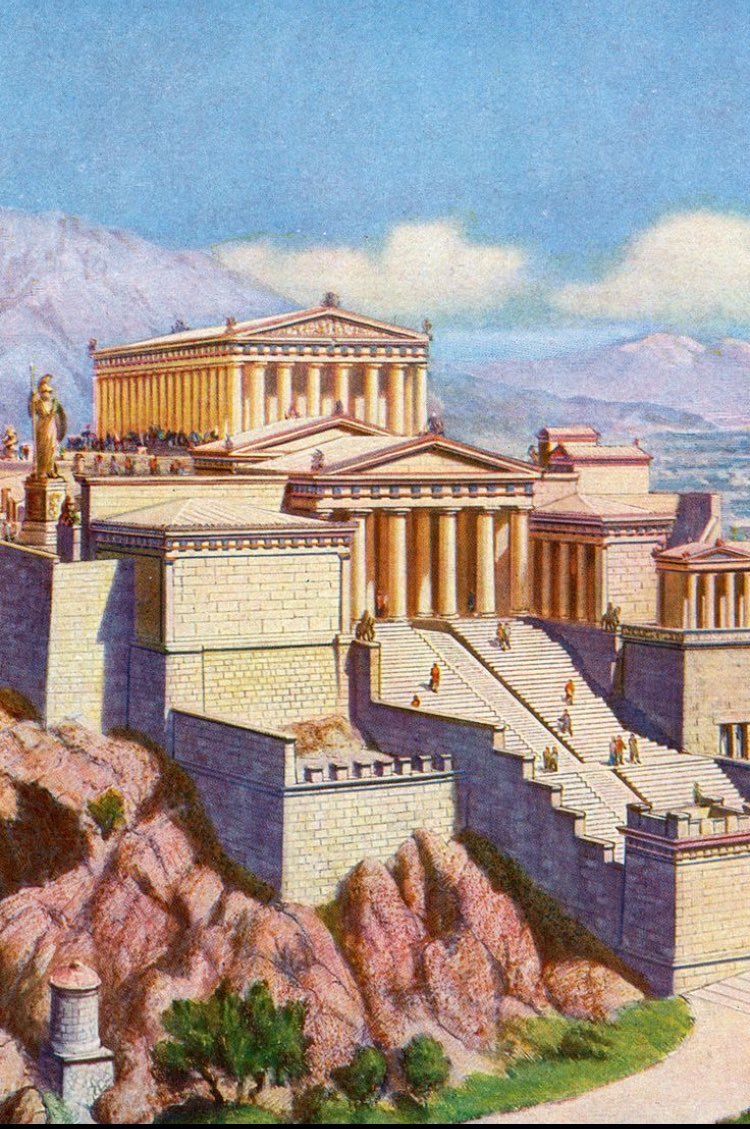
Just because it is called “Greek Orthodox” does not make it a Greek religion.
The true Greek religion is Hellenism, rooted in the sacred traditions preserved by Homer, Hesiod, the ancient Greek poets, and the Orphic Mysteries.
Yahweh didn’t fall from the sky as the one true God. He was a southern tribal war-god of the Shasu/Midianites/Kenites - local, named, and paired with a wife.
8th-century BCE pithos from Kuntillet ʿAjrud: “Yahweh of Samaria and his Asherah.” Same formula for “Yahweh of Teman and his Asherah.” Asherah was the Canaanite mother-goddess, consort of El. Popular Israelite religion treated Yahweh exactly like every other West Semitic high god: he had a female partner and sat in a pantheon.
Egyptian texts already list “the land of the Shasu of Yhw” centuries earlier. Archaic biblical poetry has him marching out of Seir, Teman, and Paran - not out of Jerusalem. No monotheism, no exclusive claim. Just another regional deity who absorbed El and Baal traits, then got cleaned up later by reformers.
Europeans got sold the post-exilic monotheist version - stripped of Asherah, stripped of the pantheon, and presented as unique—while our own Norse, Greek, and Roman gods were demonized as “false.” Same pattern: a local tribal god elevated by conquest and propaganda into the only god.
Archaeology doesn’t lie. The inscriptions are still there.
When they call us "Pagan" ( most of us are cultural pagans, European appreciators etc ) remind them that their god originally was a minor semetic pagan deity from pantheon, sold to them as monotheistic divinity.
Plato criticised certain depictions of the Gods in Homer and Hesiod because he understood that the divine cannot be subject to the moral corruption and passions of mortal men.
In the Republic, he establishes that the Gods are good and cannot be the cause of evil. Plato recognised that mythopoetic narratives could contain deeper allegorical meanings. In the Laws, Plato defended prayer, sacrifices and offerings to the Gods as sacred duties of a virtuous man. He also prescribed festivals and monthly sacrifices dedicated to the Twelve Gods. His philosophy did not seek to abolish their worship, but to establish it upon principles of divine goodness and justice.
In the 6th century BC, Theagenes of Rhegium interpreted Homer's accounts of conflict among the Gods as allegories of the natural forces of the Kosmos, long before Plato.
Proclus explained that Plato's criticism and praise of Homer were consistent, describing them as "both men teaching the same things about the same matters". He maintained that Homer expressed divine truths through inspired poetry and sacred mythology, while Plato expressed them through philosophical reasoning, with even the seemingly immoral actions attributed to the Gods carrying sacred meanings beyond their literal descriptions. Plato's concern was that the young might interpret these portrayals literally and regard the behaviour attributed to the Gods as acceptable, rather than recognise their deeper theological meanings. Plato himself drew upon Homer as a philosophical authority. In the Phaedo, Socrates calls Homer "the divine poet" and invokes his authority when discussing the nature of the soul.
Some people will invoke Plato's criticism of Homer and Hesiod as though this were a contradiction of some sort. But what exactly does this establish? His criticism did not amount to a rejection of Homer and Hesiod, nor of the Gods themselves, their worship or the ancestral religion of the Hellenes.
@Anonnnator@Blended_Mutts Fuck..brother, I'm truly sorry. I hope you understand that my initial reaction wasn't out of disrespect or disbelief towards you, but rather because I genuinely struggled to process the news.
@Anonnnator@Blended_Mutts strength to carry on through this, even if it takes time to find your footing again. Don't let this weigh you down more than it already has. Stay strong, brother, and remember that my dms are always open if you ever need someone to talk to. As I mentioned, I'll reach out to you-