PhilHealth is omnipresent in every Filipino’s payslip, taking money whether workers like it or not. Yet in moments of greatest need, it often feels absent.
That’s what happened in the viral case of Maria Lourdes Sulit. Her husband Marvin contributed for over 25 years. When he died of a brain hematoma, PhilHealth declined to cover their nearly ₱200,000 hospital bill.
The reason: a technicality. He was confined for less than 24 hours. Under PhilHealth Circular No. 2020-0007, inpatient benefits require a 24-hour stay. But Circular No. 2025-0020 allows outpatient emergency benefits in cases ending in death within 24 hours. So which is it, then?
Sulit’s case is yet another crack in a system already under strain.
PhilHealth is mandatory under the Universal Health Care Law. Every Filipino is automatically enrolled, meaning every worker is required to contribute—regardless of income, preference, or private coverage.
And that has long been a point of frustration. Ask any tito, tita, tropa, or kakilala, and a familiar story emerges: PhilHealth often covers only a fraction of the bill. Families still shoulder significant out-of-pocket expenses.
Then come the administrative failures: the delays, the waiting, the stress on top of the hospitalization stresses.
Private health maintenance organizations help fill some of the gap. But even they can only do so much, often still leaving families exposed to catastrophic expenses that the public system is supposed to cushion.
And then, there’s the issue that refuses to go away: corruption.
PhilHealth has been repeatedly drawn into controversies involving anomalous claims, questionable reimbursements, and fund management issues that have reached Congress and the courts.
The latest one involved around ₱60 billion in excess funds—transferred to the national treasury. The Supreme Court later ruled that it’s unconstitutional, questioning whether health funds were being redirected away from their intended purpose.
The money has since been restored to PhilHealth, but its image isn’t getting any better. To many, it remains an agency that collects mandatory contributions, yet Filipinos don't get what they pay for.
Calls to abolish PhilHealth continue to surface. Let Filipinos keep their money. Rely on private insurance or personal means instead.
It’s understandable—especially in cases like Sulit’s—but abolition without replacement risks dismantling the country’s only nationwide health risk pool.
For all its flaws, PhilHealth remains the only attempt at universal coverage at scale. Removing it wouldn’t erase the need for protection.
So the real issue is not just whether to abolish PhilHealth, but what must replace or radically reform it.
Our Asian neighbors have made clearer choices. Thailand funds universal healthcare through general taxation, allowing patients to access care with minimal or no out-of-pocket costs. Malaysia heavily subsidizes public hospitals, keeping treatment affordable and predictable. South Korea operates a hybrid system where mandatory contributions are matched with reliable, structured coverage at the point of care.
The Philippines remains stuck in between: compulsory contributions without guaranteed protection, universal enrollment without universal certainty.
Now, the question is no longer whether PhilHealth should exist. Can it continue in its current form when the gap between contribution and protection remains this wide?
Can Filipinos still afford to pay premiums to a system they cannot rely on in a life-and-death situation?
Otherwise, PhilHealth only gives Filipinos hell.
UPDATE: The DENR says tree cutting along Quirino Ave has been voluntarily stopped.
The announcement comes a day following a protest by environmental groups over the removal of trees to give way to an infrastructure project. | via @raphbosano
'THESE TREES ARE THE BEST FLOOD CONTROL SOLUTIONS'
Renacimiento Manila and Save Arroceros Movement wrote a letter to Manila Mayor Francisco "Isko Moreno" Domagoso asking him to suspend the cutting of trees along Quirino Avenue for the construction of the Southern Access Link Expressway while a thorough study and consultation is conducted, with other groups also signing the appeal.
"In comparison from the rest of Southeast Asian capital cities, Manila has the least tree cover and greenery. This does not make Manila great again," the groups said.
According to the DENR, 600 trees will be cut as part of the project.
So who kept all the mature narra logs cut from Quirino Avenue? How many board feet did it yield? What’s the market value of all that wood?
Baka alam kaya ni Yorme?
#SciFeature 𝗛𝗢𝗪 𝗚𝗥𝗘𝗘𝗡 𝗔𝗥𝗘 𝗧𝗛𝗘 𝗦𝗢𝗨𝗧𝗛𝗘𝗔𝗦𝗧 𝗔𝗦𝗜𝗔𝗡 𝗖𝗔𝗣𝗜𝗧𝗔𝗟𝗦?
As Southeast Asia’s capital cities continue to experience rapid urbanization and population growth, how much lush greenery still remains within these expanding urban landscapes?
Here’s a visualization showing how much of the capital cities are still covered with forests, grasslands, or with considerable vegetation as of 2025, based on the latest update from the Esri Sentinel-2 10m Land Use/Land Cover data.
Greenery coverage across the 10 ASEAN capital cities varies greatly. Naypyidaw and Vientiane remain among the greenest, while densely populated capitals such as Jakarta and #Manila are already heavily built up with buildings, roads, and other infrastructure.
Urban forests and vegetation play a crucial role in reducing heat, improving air quality, and protecting water resources, helping make cities more livable and resilient.
Long-term efforts, such as in Singapore and Kuala Lumpur, to restore and expand green spaces are already delivering benefits to residents, from cooler surroundings to healthier urban environments. #urban #environment #ASEAN
Sen. Pia Cayetano, ibinahagi sa isang Facebook live ang kaniyang karanasan nang magkaroon ng putukan sa Senado noong May 13, 2026.
Sa nasabing live, sinagot ni Sen. Pia ang sinabi ni NBI Director Melvin Matibag na wala umanong NBI agent sa Senate premises nang maganap ang putukan.
Pinuna niya rin ang umano’y naging pagsigaw at pagsagot ni Dir. Matibag sa kaniya na “wala siyang magagawa, wala kami diyan” nang ipagbigay-alam nila ni Sen. Loren Legarda ang sitwasyon sa Senado.
Courtesy: Pia Cayetano/FB
Bisitahin ang https://t.co/KqDTBMbm15 para sa iba pang updates
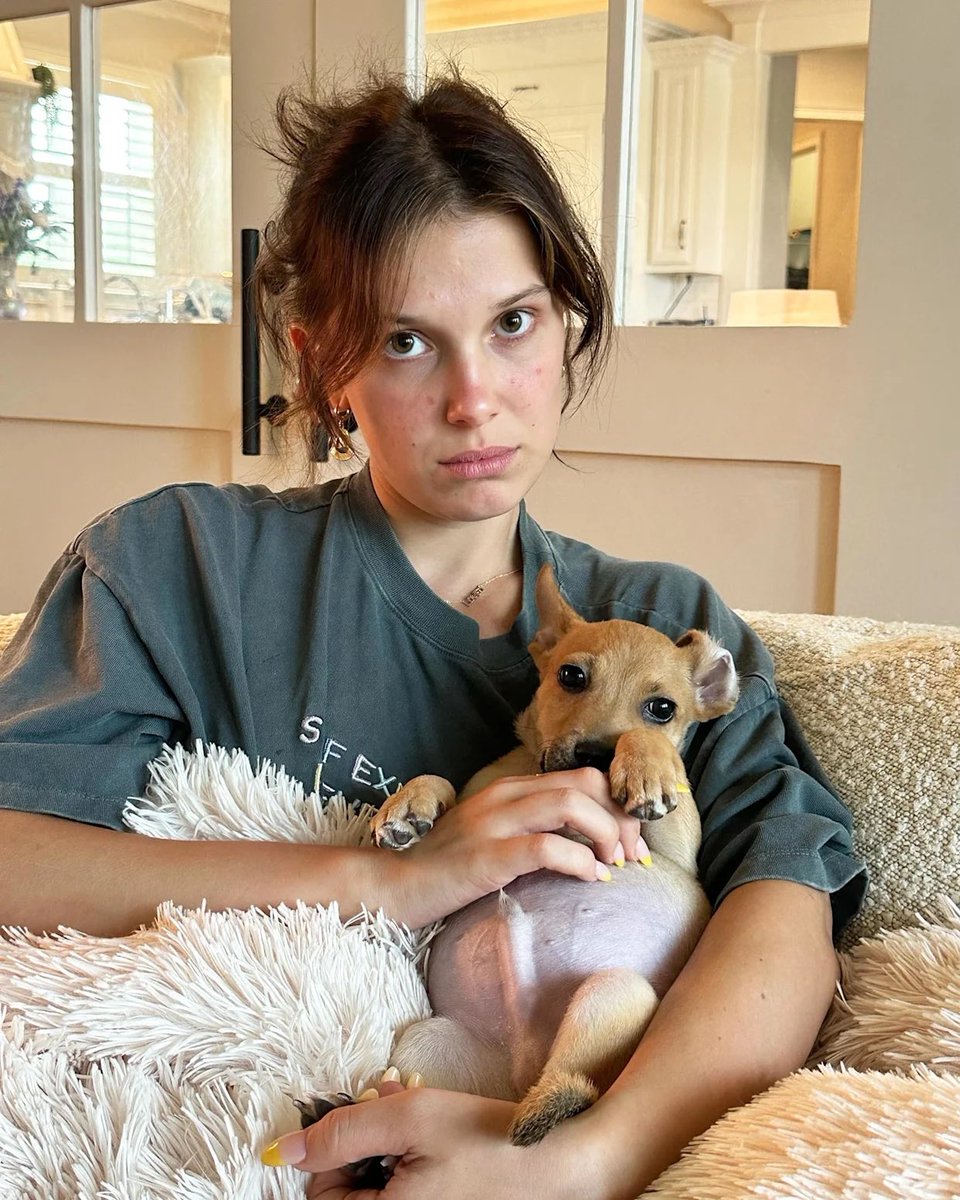
Le preguntaron a Millie Bobby Brown que cuál es la cosa más extraña que lleva en su bolso, y ella respondió:
“Yo diría que es un escáner de microchip para perros. Sirve para escanear el número del microchip que está en la zona de la espalda. Entonces, cuando encuentro perros o gatos abandonados, paso el escáner sobre ellos.
Si tienen microchip, es genial, porque en la mayoría de los casos eso significa que tienen una familia. Si no tienen, puedo llevarlos a un refugio, hacer el registro y luego encaminarlos a mi propio refugio, donde podemos ponerles microchip, vacunarlos y llevarlos a nuestras instalaciones, para entonces encontrar un nuevo hogar para ellos.
Hasta ahora, ya he salvado más de 230 perros… es increíble.”
MANILA, ARE YOU READY? 🇵🇭👹
BABYMONSTER is bringing the "Choom" world tour to the SM Mall of Asia Arena on September 5, 2026.
Stay tuned for ticket prices and seat plan announcements.
More details: https://t.co/rx0CZEFEX0