One of their fav questions in the licensure exams is: “The functions of AHPC include all the following EXCEPT…” And the answer is always that they do not lobby for jobs for their members, nor do they advocate for salary increments. 😂 😂😂😂
In all this AHPC issue, it’s the various bodies under the council that disgust me, you can’t even lobby for employment for us and then you sit down for the council to just extort us.
As for the society of radiographers, I’ll say less about them, so useless.
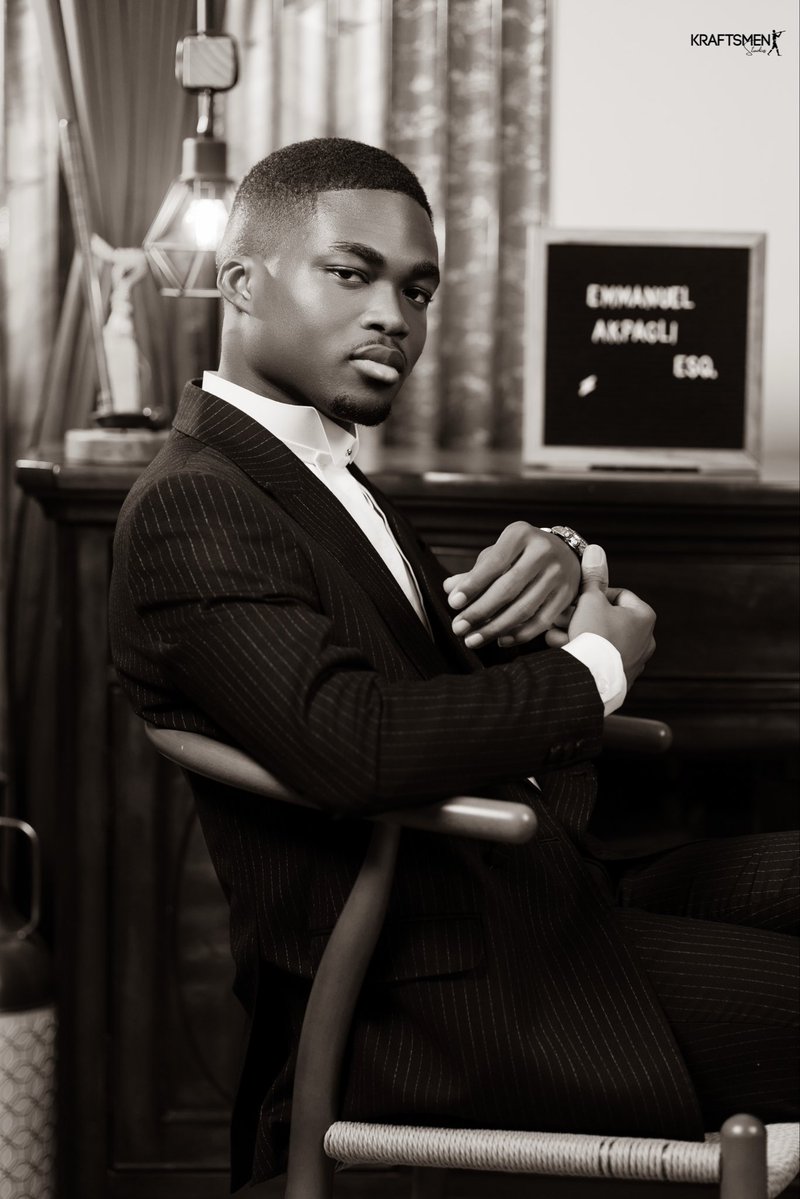
After 6 wonderful years of studies, fun, camaraderie and daring to be better than I was yesterday, my childhood aspiration has finally materialized.
Reintroducing myself….
EMMANUEL AKPAGLI, ESQ. (First of his name)
“”Why are there too many lawyers! We need more engineers to build the nation!””
Concerned citizen, go and do the engineering and leave those who want to be lawyers to be lawyers!
Congratulations to all new wigs! Welcome to the Bar!
AN OPEN LETTER TO THE PRESIDENT OF THE REPUBLIC OF GHANA, H.E. JOHN DRAMANI MAHAMA
MR PRESIDENT, @JDMahama
THE BARE MINIMUM. THE BASICS!!
I grew up learning about Ghana’s problems in Social Studies. Bad roads, unemployment, poor sanitation, corruption, inadequate schools, and economic instability. Back then, they were topics for examinations. Today, as an adult, I am living through those same problems, alongside approximately 36 million other Ghanaians. What exactly have we changed?
Mr President, we are not asking for much. We are not asking for $2 million for shegey reasons. We are asking for the basics. Good roads. A stable economy that allows businesses to thrive. Quality education. Clean communities. Reliable transport. Decent healthcare. Jobs that offer dignity. A country where hard work gives people a fighting chance.
THE BARE MINIMUM!
Mr President, let us consider your journey. You served as a Member of Parliament for Bole-Bamboi from 1997 to 2009. You became Deputy Minister for Communications in 1997, substantive Minister for Communications in 1998, and served in that role until 2001. You became Vice President in 2009, assumed the presidency in July 2012 following the death of President John Evans Atta Mills, and won a full presidential term in the December 2012 election. After leaving office in 2017, you returned to the presidency following your victory in the 2024 elections, taking office on 7 January 2025.
You have experienced government from multiple levels. You have seen how decisions are made, how institutions operate, and how public policy affects ordinary people. You have also studied abroad and experienced other systems. With this depth of experience, Mr President, what exactly should Ghanaians still be struggling to explain to you?
You promised a legacy term. Yet, as we approach the end of your second year in office, Ghanaians still have serious questions about the everyday realities of this country. Your experience makes our expectations even higher.
Look at galamsey and the destruction of our rivers. You promised to fight with us! Look at teachers fighting for their entitlements while other priorities receive attention. Look at the condition and availability of our ambulances when every second can determine whether someone lives or dies. Look at our hospitals. Korle Bu, one of our country’s most important teaching hospitals, continues to face challenges that demand sustained attention. Healthcare should never become a privilege reserved for those who can afford private alternatives.
Look at Kasoa and Dodowa roads. How many productive hours must citizens surrender to traffic, poor road conditions and inadequate drainage? How many years must people endure daily commutes that drain their time, money and energy?
And Mr President, GHANA IS BIGGER THAN ACCRA!
I recently travelled to the North for work, and what I saw was deeply troubling. Some of the conditions I encountered were an eyesore. The infrastructure gaps, the state of some communities and the contrast between the conversations we have in Accra and the realities people experience elsewhere should concern every Ghanaian.
Ghana is not only Accra, Cantonments, Airport City or the roads leading to the Presidency. Ghana is the farmer whose produce struggles to reach the market because of poor roads. Ghana is the child who crosses a river every morning to attend school under a tree. Ghana is the community without reliable healthcare, the young person without meaningful employment, and the family whose daily survival depends on systems that should already work.
What happened to the urgency behind the Big Push agenda? We want to see completed roads, safer journeys and infrastructure that changes lives. Budget allocations, project announcements and sod-cutting ceremonies are part of the process. The real measure is what Ghanaians can use, see and experience.