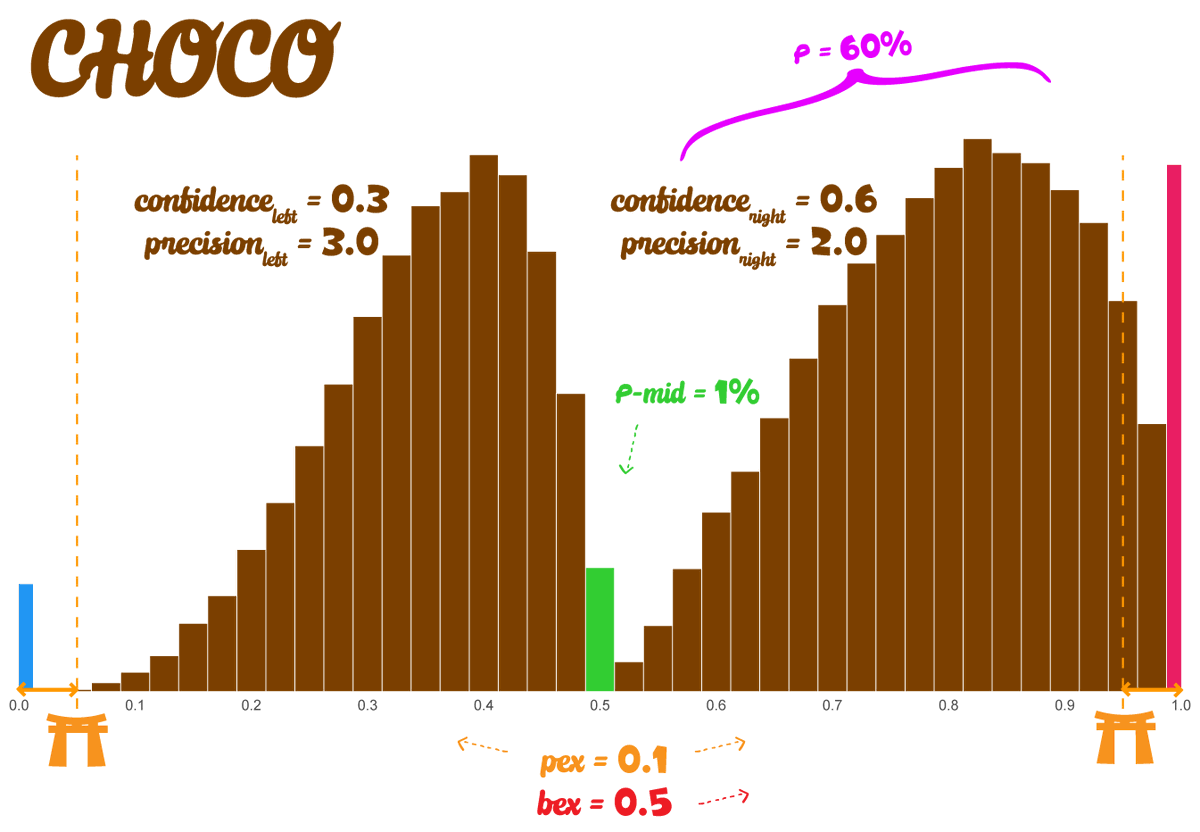
@xphilosopher@UMichConceptLab@Willemsen_Philo@VlastaSikimic What's the "normal" number of calls per day people receive from their mother?
And what's the "reasonable" number?
Daniel Martín found FASCINATING patterns in such judgments of frequency, averages, normality, and ideals.
Follow for the publication alert: https://t.co/dQFNBrUF9n
🍫 ⚠️ Do you use subjective rating scales in your research (with extremities like negative-positive, true-false, correct-incorrect, fake-real, etc.)? If so, this paper is very relevant 🔥
Preprint:
https://t.co/9uukAzJhr0
1/7
Luk, G., Hernández-Rivera, E., Tarín, K., Chen, D., Jang, M., & Titone, D. (2025). Math attitudes and verbal memory in multilingual younger adults. Canadian Journal of Experimental Psychology / Revue canadienne de psychologie expérimentale.
https://t.co/uo5nOsztr5
I'm thrilled to share that our Delphi paper is officially published today at @NatMachIntell after almost four years of hard works from all my amazing collaborators (a quite insane timeline considering the rapid AI world)! Special thanks to the unwavering support of my advisor, the marvelous @YejinChoinka! This project has defined my PhD experience and profoundly shaped how I view and approach science. The challenges along the way have made this journey all the more rewarding; it has been a truly unique and transformative training experience—one that anyone could aspire to during their PhD! https://t.co/aT7wrGnRr8
5/n Multiple other factors are, of course, relevant here + there’s likely by-context variation that’s important to consider. More work on the pipeline! 🤞🏾
Happy our paper on #bilingualism and #self-evaluations is published!
Here, we discuss some of our ideas on why some of the self-reports we often use in #multilingualism research may not be as stable as we’d like to believe!
https://t.co/ELn0UKRIDP
4/n The idea presented in this paper is that *some* of the self-evaluations we make about our language experience (i.e., how good am I at X…) seem to depend on our language-related attitudes towards the language we are being asked about!
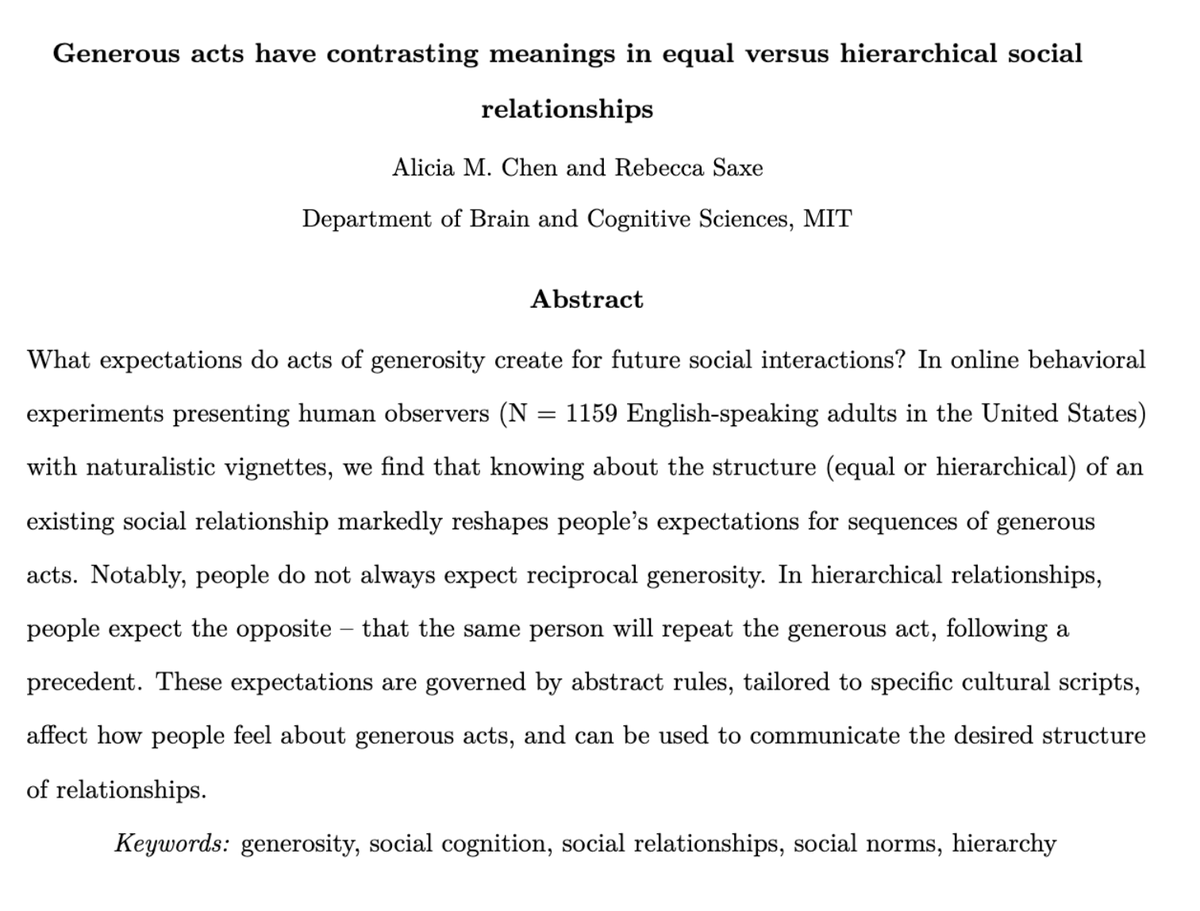
I'm excited to share this new preprint with @rebecca_saxe: We find that knowing about an existing social relationship can drastically change people’s expectations and evaluations of generosity. (1/11)
📄https://t.co/JMWnakk3Xn
Making slides for a talk tomorrow — This is a prompt to talk about the importance of showing problems in implementiing Bayesian workflows, not just successes
Likert scores are not integers and they cannot be subdued by pretense. Stop pretending and meet me in the warm 3rd circle of stats hell and learn about ordered categorical models. Lecture: https://t.co/n8QZ1e46hv
@brouwer_susanne For peeps interested in bilingualism, I also often refer to this paper! https://t.co/jpjxHetqFs For what is worth, I strongly agree with the authors view.
We know that many scales are #ordinal and not #interval. But have you ever 𝒔𝒆𝒆𝒏 this ordinality?
Here you can see a 5-point Likert scale (on trust in science and vaccination) and how the jump from 4 to 5 is much bigger than the jump between previous levels.
The authors of research papers have no obligation to share their data and code, and I have no obligation to believe anything they write.
https://t.co/tgfhNLiwPE