L’islam est un projet politique imaginé par des hommes de pouvoir dans une logique de conquête impériale.
Pourquoi?
Parce que pour dominer les peuples il faut un nouveau livre. Livre d’un nouveau pouvoir, nécessairement en rupture avec le livre de l’ancien pouvoir.
Nur ibn Mujahid ibn ‘Ali ibn ‘Abdullah al Dhuhi Suha (‘Hodanbari’ in the Somali language and literally ‘the morning star’ in English), of the Ahl Suhawyan clan of the Somali tribe of Marehan, Darod group, was a notable Emir of Harar in the 16th century. Marrying the Widow of Ahmad Ibn Ibrahim (q.v.), or Gran, he also succeeded him as leader of the Muslim forces of fighting Christian Ethiopia.
Considered the patron saint of Harar, he was called the Sahib al-Fath at-Thani, or Master of the Second Conquest. When Ahmed ibn Ibrahim, the leader of the Muslim expansion into Ethiopia which began in 1527, was killed in 1543, the Muslim forces fell back in confusion upon Harar. Nur, the dead leader’s sister’s son, married Gran’s firebrand widow, Bati del Wanbara (q.v.), and undertook to renew the fortunes of the Muslim city, which had been sacked in 1550. Named Emir in about 1550-51, he spent the next two years reorganizing his forces, and construction the wall which still surrounds the city.
In 1554-55, Nur departed on a Jihad, or Holy War, in the eastern Ethiopian lowlands of Charchar, Arusi, and Hadeya. In 1559, he invaded Fatajar, where he fought against the Ethiopian emperor Galawdewos (q.v.) [reigned 1540-59], and killed him. Nur kept fighting for 12 years untill, according to legend, at Gibe he said “Kaffa!”, or “Enough!”, and returned to Harar. The province is called Kaffa to this day.
Bibliography:
1. R.Basset (editor, Histoire de la conquete de l’Abyssinie (“History of the Conquest of Abyssinia”), Paris, 1897-1901;
2. Dr. E. Cerulli, “Documenti arabi per la storia dell’Ethiopia,” Memoria della Accademia Nazionale dei Lincei, Vol. 4, No. 2, Rome, 1931
3. Dr. E. Cerulli, La lingua e la storia di Harar (“The Language and History of Harar”), Rome, 1936
4. Dr. E. Cerulli, “Gli Emiri di Harar dal secolo XVI alla conquista agiziana” (“The Mirs of Harar From the 16th Century to the Egyptian Conquest”),
5. Dr. E. Cerulli, Rassegna di Studi Ethiopici, Vol. 2, Rome, 1942
6. Hadj Yusuf AbdulRahman (editor), Kitab Rabi’a al-Qulub fi Dhikr Manaqib wa Fada’il Sayyidina as Sheikh Nur Hussein (“The Springtime of Hearts in Memory of the Virtues and Merits of Our Lord the Sheikh Nur Hussein”), Cairo, 1927
7. J. Spencer Trimingham, Islam in Ethiopia, London, 1952
8. K. Wndt, “Amharische Geschichte eines Emirs von Harar in XVI Jahrhundert,” (“An Ahmhari History of One of the Emirs of 16th Century of Harar”), Orientalia, Vol. 6, No. ¾, Rome, 1937
@LionneWatania2@almoukhtarr@africainenoir Tu savais qu’il y avait un verset sur la prostitution forcée des femmes esclaves? Mohamed et son associé Allah pardonneraient en définitive la femme prostituée de force …
Et toi t’en penses quoi?
@leveilleur77 Quel rapport avec l’athéisme et une quelconque erudition historique?
Avec un raisonnement pareil dois-je conclure que les non athées sont des cretins congénitaux?
@Ousmane65690138@AbouQalypse Donc ça vient d’où ces rites? Tu peux me donner le nom de cette religion qui fait tourner des hommes au crâne rasé autour d’un tas de pierres habillé d’une jupe?
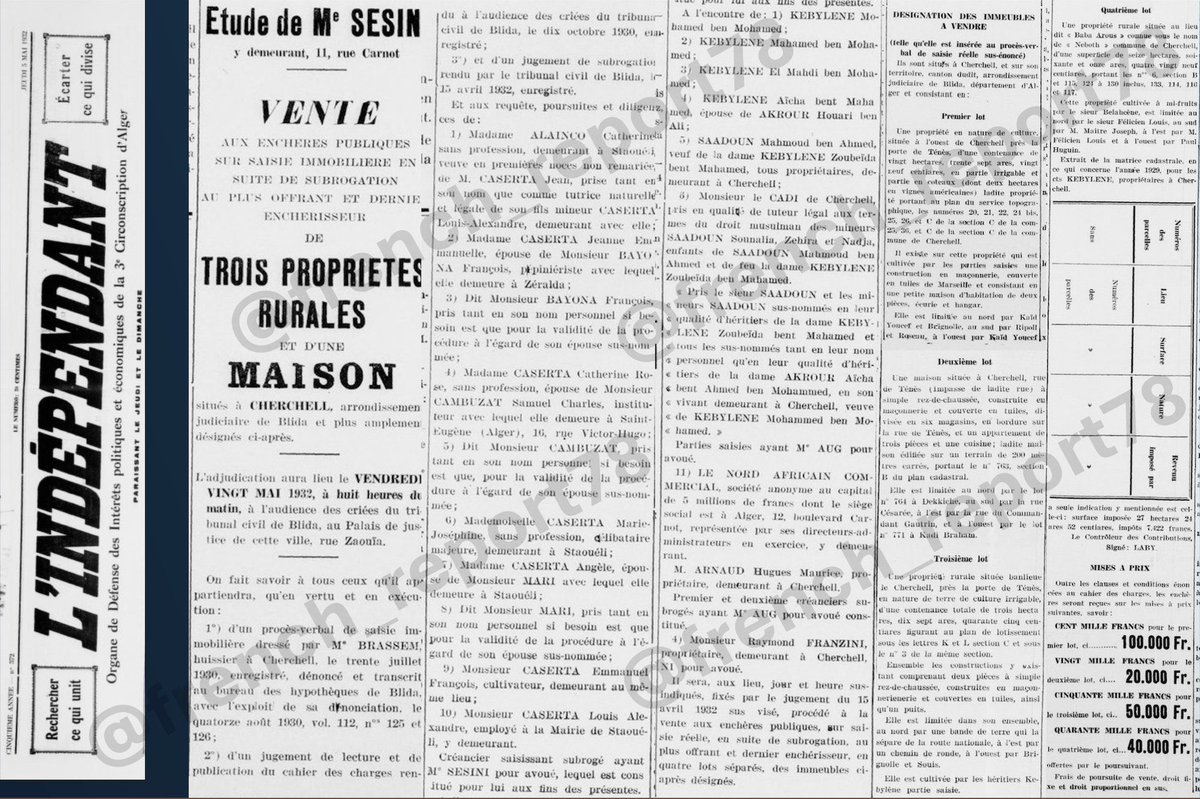
🔴 INSOLITE | Les grands-parents maternels de Jean-Luc Mélenchon ont fait saisir les terres d’une famille algérienne, les Kébylene, sur laquelle ils détenaient des créances en tant que planteurs et exportateurs de produits coloniaux.
Il est donc un enfant de colons.
(Source : Gallica/BnF)


![MUPIONEERS's tweet photo. Nur ibn Mujahid ibn ‘Ali ibn ‘Abdullah al Dhuhi Suha (‘Hodanbari’ in the Somali language and literally ‘the morning star’ in English), of the Ahl Suhawyan clan of the Somali tribe of Marehan, Darod group, was a notable Emir of Harar in the 16th century. Marrying the Widow of Ahmad Ibn Ibrahim (q.v.), or Gran, he also succeeded him as leader of the Muslim forces of fighting Christian Ethiopia.
Considered the patron saint of Harar, he was called the Sahib al-Fath at-Thani, or Master of the Second Conquest. When Ahmed ibn Ibrahim, the leader of the Muslim expansion into Ethiopia which began in 1527, was killed in 1543, the Muslim forces fell back in confusion upon Harar. Nur, the dead leader’s sister’s son, married Gran’s firebrand widow, Bati del Wanbara (q.v.), and undertook to renew the fortunes of the Muslim city, which had been sacked in 1550. Named Emir in about 1550-51, he spent the next two years reorganizing his forces, and construction the wall which still surrounds the city.
In 1554-55, Nur departed on a Jihad, or Holy War, in the eastern Ethiopian lowlands of Charchar, Arusi, and Hadeya. In 1559, he invaded Fatajar, where he fought against the Ethiopian emperor Galawdewos (q.v.) [reigned 1540-59], and killed him. Nur kept fighting for 12 years untill, according to legend, at Gibe he said “Kaffa!”, or “Enough!”, and returned to Harar. The province is called Kaffa to this day.
Bibliography:
1. R.Basset (editor, Histoire de la conquete de l’Abyssinie (“History of the Conquest of Abyssinia”), Paris, 1897-1901;
2. Dr. E. Cerulli, “Documenti arabi per la storia dell’Ethiopia,” Memoria della Accademia Nazionale dei Lincei, Vol. 4, No. 2, Rome, 1931
3. Dr. E. Cerulli, La lingua e la storia di Harar (“The Language and History of Harar”), Rome, 1936
4. Dr. E. Cerulli, “Gli Emiri di Harar dal secolo XVI alla conquista agiziana” (“The Mirs of Harar From the 16th Century to the Egyptian Conquest”),
5. Dr. E. Cerulli, Rassegna di Studi Ethiopici, Vol. 2, Rome, 1942
6. Hadj Yusuf AbdulRahman (editor), Kitab Rabi’a al-Qulub fi Dhikr Manaqib wa Fada’il Sayyidina as Sheikh Nur Hussein (“The Springtime of Hearts in Memory of the Virtues and Merits of Our Lord the Sheikh Nur Hussein”), Cairo, 1927
7. J. Spencer Trimingham, Islam in Ethiopia, London, 1952
8. K. Wndt, “Amharische Geschichte eines Emirs von Harar in XVI Jahrhundert,” (“An Ahmhari History of One of the Emirs of 16th Century of Harar”), Orientalia, Vol. 6, No. ¾, Rome, 1937](https://pbs.twimg.com/media/GY-pbrgbAAM-BCu.jpg)


![MUPIONEERS's tweet photo. Nur ibn Mujahid ibn ‘Ali ibn ‘Abdullah al Dhuhi Suha (‘Hodanbari’ in the Somali language and literally ‘the morning star’ in English), of the Ahl Suhawyan clan of the Somali tribe of Marehan, Darod group, was a notable Emir of Harar in the 16th century. Marrying the Widow of Ahmad Ibn Ibrahim (q.v.), or Gran, he also succeeded him as leader of the Muslim forces of fighting Christian Ethiopia.
Considered the patron saint of Harar, he was called the Sahib al-Fath at-Thani, or Master of the Second Conquest. When Ahmed ibn Ibrahim, the leader of the Muslim expansion into Ethiopia which began in 1527, was killed in 1543, the Muslim forces fell back in confusion upon Harar. Nur, the dead leader’s sister’s son, married Gran’s firebrand widow, Bati del Wanbara (q.v.), and undertook to renew the fortunes of the Muslim city, which had been sacked in 1550. Named Emir in about 1550-51, he spent the next two years reorganizing his forces, and construction the wall which still surrounds the city.
In 1554-55, Nur departed on a Jihad, or Holy War, in the eastern Ethiopian lowlands of Charchar, Arusi, and Hadeya. In 1559, he invaded Fatajar, where he fought against the Ethiopian emperor Galawdewos (q.v.) [reigned 1540-59], and killed him. Nur kept fighting for 12 years untill, according to legend, at Gibe he said “Kaffa!”, or “Enough!”, and returned to Harar. The province is called Kaffa to this day.
Bibliography:
1. R.Basset (editor, Histoire de la conquete de l’Abyssinie (“History of the Conquest of Abyssinia”), Paris, 1897-1901;
2. Dr. E. Cerulli, “Documenti arabi per la storia dell’Ethiopia,” Memoria della Accademia Nazionale dei Lincei, Vol. 4, No. 2, Rome, 1931
3. Dr. E. Cerulli, La lingua e la storia di Harar (“The Language and History of Harar”), Rome, 1936
4. Dr. E. Cerulli, “Gli Emiri di Harar dal secolo XVI alla conquista agiziana” (“The Mirs of Harar From the 16th Century to the Egyptian Conquest”),
5. Dr. E. Cerulli, Rassegna di Studi Ethiopici, Vol. 2, Rome, 1942
6. Hadj Yusuf AbdulRahman (editor), Kitab Rabi’a al-Qulub fi Dhikr Manaqib wa Fada’il Sayyidina as Sheikh Nur Hussein (“The Springtime of Hearts in Memory of the Virtues and Merits of Our Lord the Sheikh Nur Hussein”), Cairo, 1927
7. J. Spencer Trimingham, Islam in Ethiopia, London, 1952
8. K. Wndt, “Amharische Geschichte eines Emirs von Harar in XVI Jahrhundert,” (“An Ahmhari History of One of the Emirs of 16th Century of Harar”), Orientalia, Vol. 6, No. ¾, Rome, 1937](https://pbs.twimg.com/media/GY-pbrnaMAAghNo.jpg)