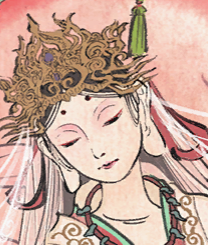
"Legend says the rising sun will purify the defiled land, and as the years go by, the land will become fertile and bloom into a verdant field of flowers."
Since we see the scroll 'Birth of a Goddess' at the end...Soh is reborn as Amaterasu? Or the Goddess is Amaterasu?
If the Mountain Goddess could also be Konohanasakuya-hime(which is also likely as her symbol is the cherry blossom and she's worshipped as the mountain god), then following the myth, it's through Yoshiro that Soh/the Goddess becomes...Amaterasu?
"Kunitsu-kami: Indigenous deities or peoples already present in Japan before the arrival of the heavenly gods (amatsukami) in mythology. Yanagita connects them to preYamato aboriginal inhabitants, including mountain people and tsuchigumo."
If the Mountain Goddess could also be Konohanasakuya-hime(which is also likely as her symbol is the cherry blossom and she's worshipped as the mountain god), then following the myth, it's through Yoshiro that Soh/the Goddess becomes...Amaterasu?
Yoshiro's ancestors cultivated the land and so they are not related to the local people. Yanagita's work says the native people of Japan were the kunitsukami and earthly sins were what they committed. Those who came to cultivate the land were the 'heavenly deities' then?
@Sjayz88@Kunitsu_Gami There's one short video in the game files. In it the woodcutters disappear from their cards after being placed. A scrapped idea but that's all I've found. I'd kill for more behind the scenes stuff.
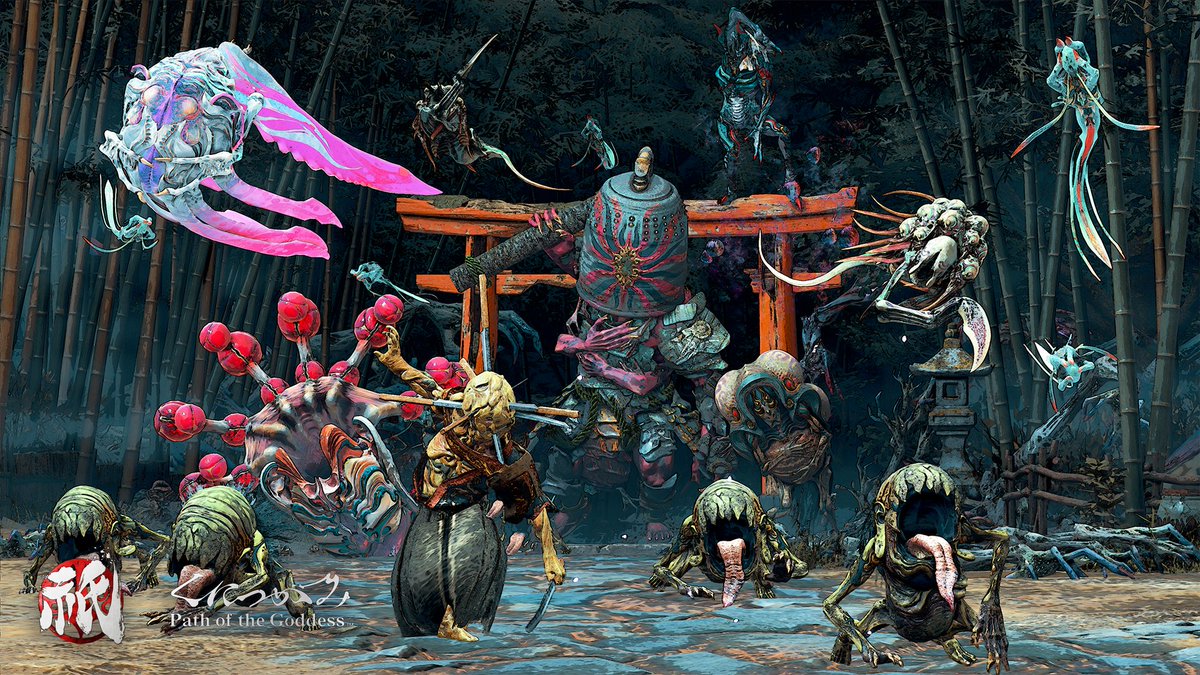
#2 - Making the Seethe Slightly Scarier Than Yokai
The initial concepts evolved from early sins to local folklore and legends of mountain communities.
Core concepts:
Spiritual withering (via sin/corruption)
Emaciated appearance (symbolizing thirst/deprivation)
Retaining traces of humanity
Beauty/ugliness (in color schemes/shapes)
Possessing ears and mouths, but no eyes
Manifestations born from human wrongdoing
Individual Seethes are a mix of original creations and expansions on traditional folklore. Their names were chosen to resemble familiar yokai names.
Director Kawata is sharing unseen design notes of Kunitsu-Gami and the Seethe!
Please enjoy this 30 part series!
#1 - The Seethe and Defilement
Inspired by heavenly sins, the defilement parasitically clings to human-made objects and hinders daily life. A shadow is cast wherever humans leave their mark and serves as a guide for the Seethe. Hands are a major design motif to convey themes of taking and stealing. At night, they extend their claws and advance, with their hand movements serving as signals to support their kin.
Instead of graphic horror, I aimed for creepiness and the uncanny. Fingers and hands are depicted precisely, while the rest remains abstract. Thanks to the animators and environment artists, the backgrounds feel alive, creating the atmosphere of a suspicious and eerie nighttime festival.
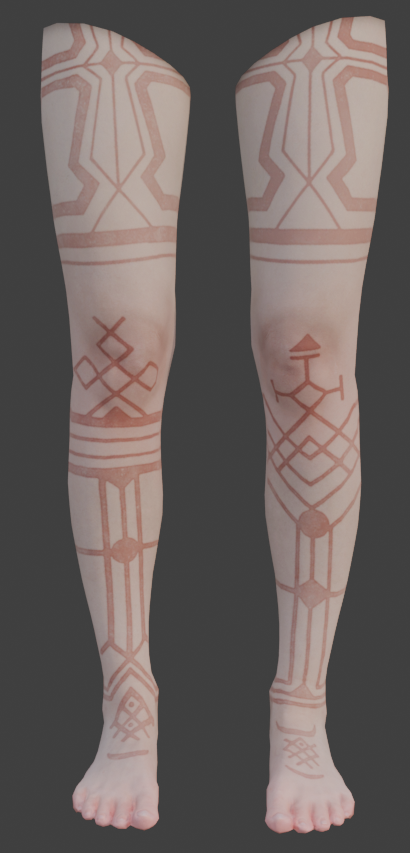
Nanamagari's lower body, the legs and hips(Q angle?), look female. I've always thought of Nanamagari as the former Maiden(that resembles the priest) but I'm unsure anymore.
But the shape of lower body is definitely feminine. Its waist is quite narrow in comparison too.
Amaterasu was worshiped as a goddess of nature too, said to control the movement of the sun. (Soh's power)
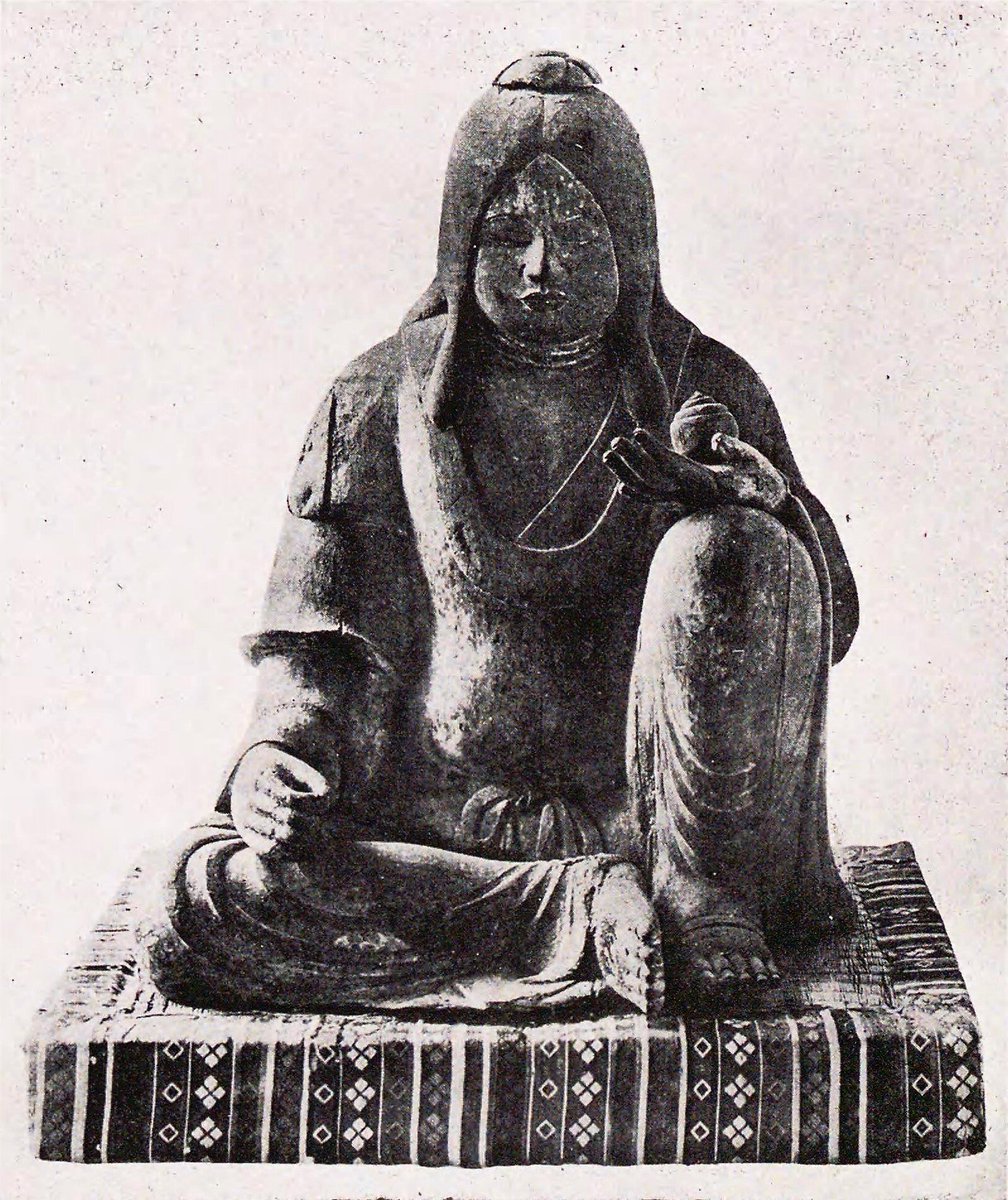
It's Shingon Buddhism so a Buddha figure is synonymous with a deity. Yoshiro is the Buddhist figure then?
Could it be that Soh/Yoshiro are Inari/Dakiniten and they're the kunitsukami manifestation of Amaterasu? Dakiniten is said to be a manifestation of Amaterasu. The Goddess rules from the heavens. Soh is a wakamitama of her.
#Kunitsu_Gami#祇#くにつがみ