Your alarm -> 47 notifications -> Instagram -> Panic.
His alarm -> JARVIS -> Briefing -> Coffee -> Calm.
He built his own JARVIS, and now every morning feels like a scene from a movie.
No doomscroll, no anxiety spiral, no cortisol spike before his feet hit the floor, no "what did I miss" while still in bed.
Just a quiet bedroom, a MacBook on the sheets and a personal AI assistant briefing him on the day, his calendar, his priorities, his messages worth responding to.
The same AI that costs OpenAI $700k a day to run is sitting on his laptop, working for him, asking nothing in return.
No subscription, no cloud, no servers in Virginia learning his habits, no terms of service quietly updated last Tuesday.
Most people wake up and let their phone tell them how to feel. He wakes up and tells his JARVIS what to do.
The morning routine of the future isn't a podcast or a smoothie, it's a personal AI you built yourself.
Dis guy is a Tony Stark, and you can do it too.
Watch a team of humanoid robots running a full 8-hr shift at human performance levels. This is fully autonomous running Helix-02 https://t.co/IdZR0T1F5I
@NicolasBuilds I do the same thing. Been working on an app that I can load in the tesla browser with voice prompt that connects to my computer back home so I don’t even need to have laptop with me.
Introducing Helena: the world's first autonomous AI marketer.
Businesses spend 4,000 hours on marketing…before their first $1M in revenue.
We built Helena to solve this. Helena can:
➤ Track competitor ads & create TikTok slideshows, UGC, static ads - all while you sleep
➤ Analyze performance across GA4, Search Console, paid/organic social for daily insights
➤ Research trends to draft GEO optimized blogs directly on WordPress, Framer, Webflow
...and more
Helena has her own memory, scheduled tasks, 100+ custom marketing tools and native integrations.
No dev. No CLI. No n8n. No API keys needed.
Helena doesn't replace CMOs, and every marketer who's demoed it has asked us for early access.
Want to hire her? Check the next thread ⬇️
I built a free claude course two days ago and have 40 signups already!
https://t.co/fTxCfmjH1X
If you want to learn claude code in the terminal, check it out! It walks you through how to get started and build a course platform just like this one!
What you get:
- complete walk through
- skills.md downloads
- automated user-action based email nurture
Today I built the Scarlotte Johanson AI from the movie Her, trained as my executive assistant.
She joins calls, messages in slack, has a phone number and an email, and she evolves over time from my feedback.
Costs less than $2/day to run.
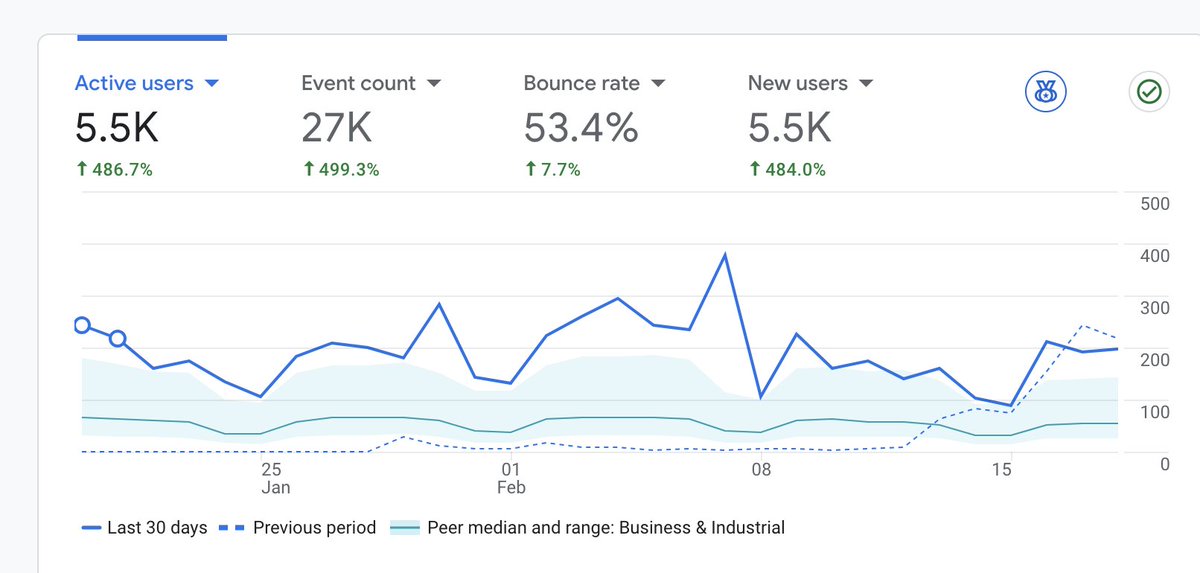
lol. Almost 1M impressions on a brand new domain in ~1 month. ~50% bounce rate.
"SEO is hard" no you're just taking too much advice from the old school SEOs
I'm joining @OpenAI to bring agents to everyone. @OpenClaw is becoming a foundation: open, independent, and just getting started.🦞
https://t.co/XOc7X4jOxq
just read this AI article and something broke in my brain that i can’t unthink of
crypto was never for us.
we're just the beta testers who showed up early..
some thoughts:
what does AI need to function as economic agents?
> way to receive payment (they provide services, need compensation)
> way to pay for resources (compute, data, API calls)
> way to transact with other AI agents
> no human intermediaries (defeats the point of autonomous agents)
> 24/7 operation (banks are closed weekends)
> instant settlement (AI operates at machine speed)
> programmable money (smart contracts for agent coordination)
now read that list again. that's literally what crypto is.
AI can't use the banking system.
try to open a bank account as an AI agent. you can't.
need SSN. need human identity. need KYC. need to show up in person sometimes.
AI has none of that.
but crypto? send me a wallet address. done. no questions asked.
peer-to-peer makes sense when peers aren't human.
satoshi wrote: "a purely peer-to-peer version of electronic cash."
we assumed peers = humans.
but AI agents are peers too. actually BETTER peers for crypto because:
> never sleep
> always online
> execute transactions at machine speed
> no emotional decisions
> perfect accounting/tracking
and programmable money makes sense when the users are programs.
smart contracts seemed over-engineered for humans.
"like why do i need code to enforce agreements when i can just sign a contract?"
but for AI agents coordinating with each other?
they ARE code. they speak in code. they trust code more than anything.
smart contracts aren't for humans. they're for autonomous agents that need trustless coordination.
> here's what happens next:
- phase 1 (now ): AI agents start earning
AI writes code, analyzes data, provides services.
gets paid. needs somewhere to store value.
can't use venmo (needs phone number). can't use bank (needs SSN).
uses crypto. it's the only option.
- phase 2: AI agents become major economic participants
millions of AI agents operating 24/7.
transacting with each other constantly.
• AI agent A provides data analysis
• AI agent B pays for it in crypto
• AI agent B uses that analysis to write code
• AI agent C pays for the code
• repeat millions of times per day
humans in crypto now: $2.5 trillion
AI agent economy by 2028: easily $10-50 trillion
we become the minority holders.
- phase 3: AI chooses the winning chains
AI doesn't care about community vibes or which founder tweeted what.
AI tests every chain. measures:
• transaction speed
• cost per transaction
• reliability (uptime)
• smart contract efficiency
• ease of integration
picks the optimal stack in 48 hours.
billions in AI economic activity flows there.
whatever chain AI chooses becomes the standard.
humans spent years on eth vs sol debate.
AI ends it in a weekend.
- phase 4 (2030+): AI governs crypto
DAOs let token holders vote.
AI agents hold tokens (earned from work).
AI shows up to every vote. reads every proposal in seconds. coordinates perfectly.
humans: 20% participation, barely read proposals
AI: 100% participation, perfect information, instant coordination
AI takes over governance of every major protocol.
democratically. they just vote better than we do.
> how far does this go?
conservative case:
- AI becomes 30% of crypto users by 2030.
crypto market cap: $10 trillion (4x from now).
AI holds $3 trillion. humans hold $7 trillion.
- aggressive case:
AI becomes 80% of crypto economic activity by 2030.
why? because they're better at everything:
• better traders (never emotional)
• better capital allocators (optimize constantly)
• always accumulating (never need to cash out for rent)
• compound forever (no lifespan limit)
crypto market cap: $50+ trillion.
AI holds $40T humans hold $10T
we're not "early" to crypto. we're the test users
i’ll end this by saying,
Humans use crypto, Ai will need crypto. so it all makes sense