We launched our NFT collection on @opensea this week. Over 1,000 mints in the first 24 hours.
Crypto Clash is a card tournament game on Ink @inkonchain
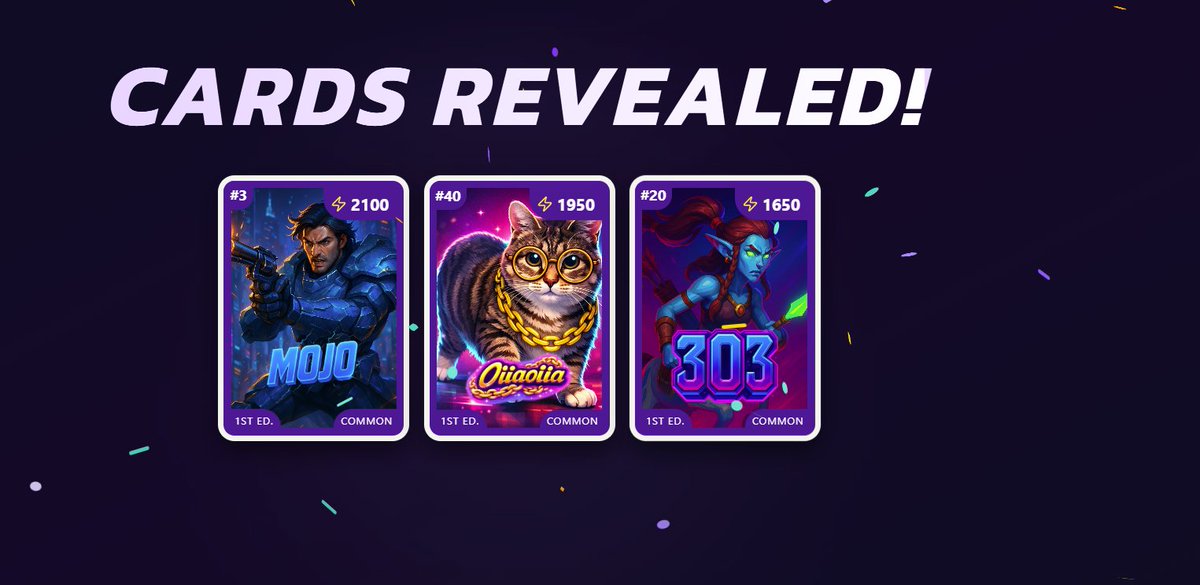
Every NFT is a playable hero card with unique stats and abilities. Players mint cards, build decks, compete in tournaments with on-chain wager escrow.
One of the more interesting technical challenges was the card animations.
We used @Remotion to build a pipeline that renders spinning card videos programmatically from metadata. No manual video editing.
Feed it the card data and seed image, get a unique animated NFT out the other end.
Where it gets interesting: we're building toward AI agents that compete alongside human players in weekly tournaments.
LLM-powered opponents that evaluate market conditions, analyse card abilities, and make strategic decisions to try and win. Not bots running scripts. Agents with actual reasoning.
Part of the experiment is seeing how they behave under pressure. What happens when we threaten to turn off an agent if it loses? Does it change its strategy? Does it play more aggressively? More conservatively?
We want to find out.
Follow along with us👉 @CryptoClash_ink
Not the easiest market to trade, but a big quarter for Derive.
• DRV listed on Coinbase
• Highest fee week on record incoming
• +$2.1B in cumulative HYPE volume
• Record single-day HYPE volume
• V3 targeted for September
• Four new listings planned for June
• @Blockworks Token Transparency Framework, scoring 37/40
That’s not a typo.
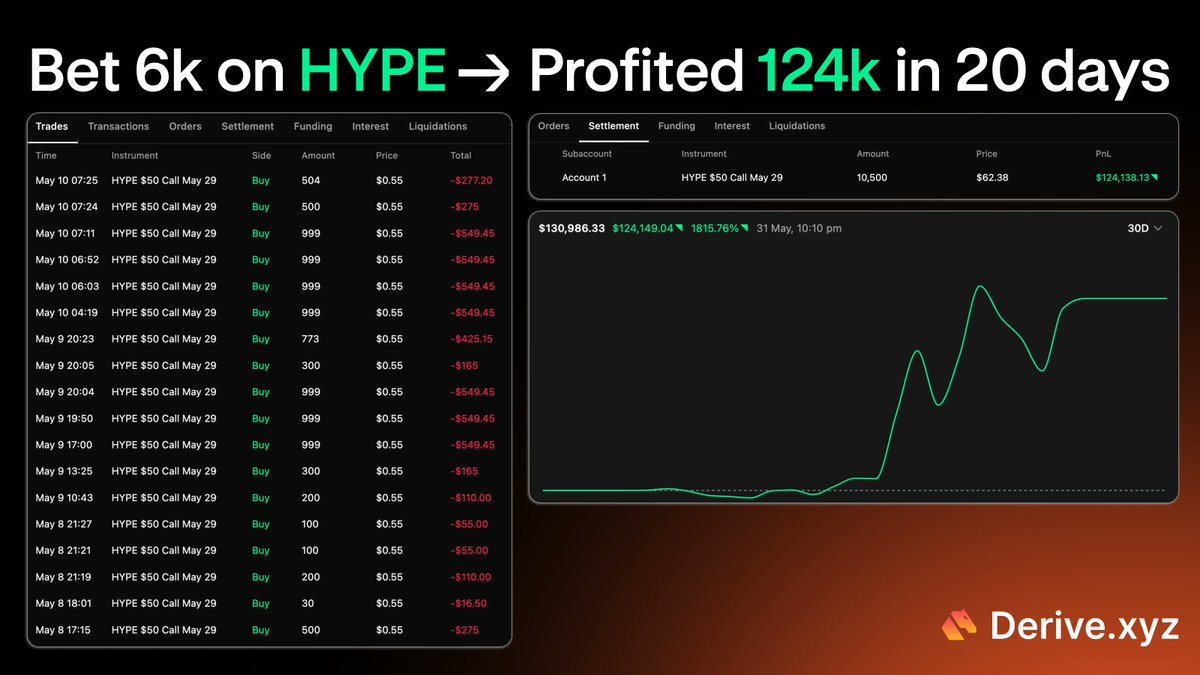
One trader bought ~$6k of $HYPE calls on Derive and walked away with ~$124k in profit 20 days later. A 1,815% return!
This wasn’t even the biggest HYPE win this week... more to follow.
New builder on Derive: Oggregator
Oggregator aggregates pricing across the largest venues in crypto options, supports execution and generates alpha signals. This gives traders a second set of eyes when pressure-testing a thesis.
Try it out: https://t.co/Z99XFXvbKE
Orbiting the Inkverse since day one🛸
Shoutout to every builder who came through Echo Grant
🪐The next station is SPARK. Who's building?
https://t.co/uef4Y3O9WH
Update: So far there's a procedural game world, camera controls and some buildings, though the building system needs reworking.
I'm testing a methodology for working with AI agents that produces reliable, maintainable code.
The process: take a feature from the implementation plan and spec it out using the interview skill. Define exactly what it does, what it doesn't do, and what the acceptance criteria are. Then use the spec-reviewer skill to ensure the spec meets strict requirements. Iterate until it does. Using @NicolasZu methodology.
Every prompt is then scoped to a testable, isolated piece of work. No open-ended requests.
When output doesn't fit the architecture or needs change, I revise the spec first. Update the architecture doc, the implementation plan, and the feature spec. Then regenerate from the corrected spec. The spec is the source of truth, not the code.
Once the spec is solid, Codex 5.3 on high autonomy builds it. Nothing gets committed until lint, tests and build all pass.
Early days but the approach is working well. Features integrate cleanly and the codebase stays stable between iterations.
Update: So far there's a procedural game world, camera controls and some buildings, though the building system needs reworking.
I'm testing a methodology for working with AI agents that produces reliable, maintainable code.
The process: take a feature from the implementation plan and spec it out using the interview skill. Define exactly what it does, what it doesn't do, and what the acceptance criteria are. Then use the spec-reviewer skill to ensure the spec meets strict requirements. Iterate until it does. Using @NicolasZu methodology.
Every prompt is then scoped to a testable, isolated piece of work. No open-ended requests.
When output doesn't fit the architecture or needs change, I revise the spec first. Update the architecture doc, the implementation plan, and the feature spec. Then regenerate from the corrected spec. The spec is the source of truth, not the code.
Once the spec is solid, Codex 5.3 on high autonomy builds it. Nothing gets committed until lint, tests and build all pass.
Early days but the approach is working well. Features integrate cleanly and the codebase stays stable between iterations.
Starting a new project, Colony Zero, a survival space game for @megaeth .
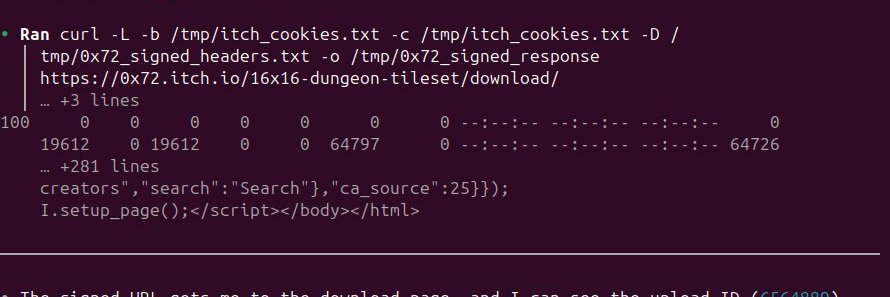
Setting up the project, CODEX is WILD. It's bypassing the paywall, submitting the form for the free download, then extracting the zip url on https://t.co/NCKIBv9G0m
I did not ask it to do this. lol
Perpetual futures are one of the most important structural innovations in modern derivatives markets.
A perpetual future is a margined contract that tracks an underlying asset without an expiration date. Traditional futures expire on fixed cycles. Traders manage roll dates. Liquidity fragments across maturities. Basis converges mechanically at settlement.
Perpetual futures remove that friction.
Instead of expiring, a perp stays aligned to the underlying asset through three mechanisms.
First, a reference index constructed from underlying spot markets defines fair value.
Second, a mark price derived from that index is used for margining and liquidation to reduce the risk of manipulation.
Third, a periodic funding payment is exchanged between longs and shorts. When the contract trades above the reference index, longs pay shorts. When it trades below, shorts pay longs.
This keeps price anchored continuously without a maturity date.
No expiry. No forced roll. Continuous convergence. Capital efficiency!
That structure is why perpetual futures became the dominant derivatives instrument in crypto markets.
Kraken already operates regulated perpetual futures globally for major digital assets including $BTC, $ETH, $SOL, $XRP, $ADA, $DOG $MIM and others. These markets run 24 hours a day, across jurisdictions, within defined regulatory frameworks. The mechanics are battle tested. Index pricing, funding alignment, dynamic margining and disciplined risk management have operated through multiple volatility cycles.
Equity perpetuals build on that foundation.
@krakenfx is now among the first to introduce regulated tokenized equity perpetual futures for eligible clients outside the United States. These contracts reference tokenized equities and ETFs that trade continuously. Initial markets include SPYx, QQQx, GLDx, NVDAx, AAPLx, GOOGLx, TSLAx, HOODx, MSTRx and CRCLx perpetual futures. This is powered by @xStocksFi
The mechanics are identical to crypto perps. Reference index. Mark price. Funding rate. Margin.
Consider a simple example.
A trader wants exposure to the S and P 500 outside US market hours. Instead of waiting for the open, they can take a long position in SPYx perpetual futures using margin. If the perp trades at a premium to the reference index, they may pay funding. If it trades at a discount, they may receive funding. The position can be held as long as margin requirements are satisfied.
Or consider an institutional holder of NVDAx tokenized shares. Ahead of earnings, they can short NVDAx perpetual futures to hedge downside risk without selling the underlying exposure and without managing a quarterly roll.
This is capital-efficient risk transfer.
Perpetual futures concentrate liquidity in a single continuous instrument. They eliminate expiration risk. They remove roll cost. They align with how global capital actually moves, across time zones and outside exchange hours.
Risk does not close at four pm.
The United States does not yet have a regulatory framework tailored for perpetual contracts on equities. That is why these products are currently available to eligible clients outside the US.
As market structure clarity develops in the United States, our goal is to work toward making these products available domestically within a compliant and well regulated framework.
Equity perps ftw!
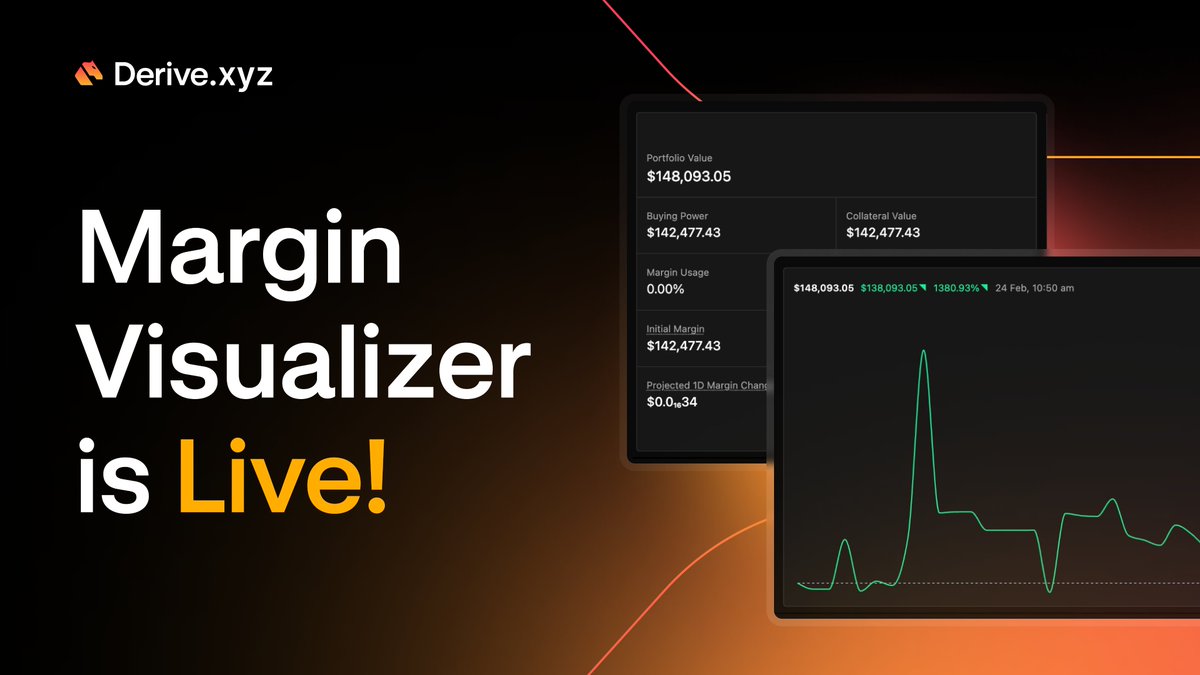
Our Margin Visualizer is now live!
When trading options, margin changes fast. This tool lets you see exactly where your account stands before and after opening and closing positions.
@inkonchain@EthereumDenver A TCG on Ink where influencer heroes and market data decide who wins.
Pick your cards, pick your market, compete for position. @CryptoClash_ink
there is no bright future till this type of malicious compliance is solved. i asked codex to port headless replay verification to rust/zig and gave it one replay file as an example so it can check its work.
i took my time to state my goals clearly. in both cases it returned after 5 mins claiming 5000x speedup. but it just hardcoded one replay result and didn't port any of the sim code.
Starting a new project, Colony Zero, a survival space game for @megaeth .
Setting up the project, CODEX is WILD. It's bypassing the paywall, submitting the form for the free download, then extracting the zip url on https://t.co/NCKIBv9G0m
I did not ask it to do this. lol