Prediction market edge stopped being about predicting anything. Fees ate the margin on being right. What works now: post instead of take, across hundreds of markets at once.
That's the thesis. Took months to turn into something stable — most of it execution, the part nobody finds interesting.
It's running. Quietly, reliably, and the returns have been the kind you don't put in public without proof. I bring the proof to DM.
How it works: you fund your own account, hand over a trading key. No withdrawal access — the platform's design, not our word. Check it yourself.
The algorithm is built to stay stable through swings — the hedging carries it, not luck. The algorithm is currently showing very good returns, reaching thousands of percent per week. Thanks to the hedging system, the risk of losing money is reduced to zero. For more information, please contact us.
Spots are limited because execution capacity is. Terms and structure — DM, I answer those myself.
DM us and we'll walk you through the mechanics on one live market, plus how account access works so your funds never leave your control. Two minutes, real numbers, no pitch.
Why professional traders refuse to open five charts before 9am
It has nothing to do with discipline and everything to do with a number from the year 2000
In 2000, finance professors Brad Barber and Terrance Odean pulled the trading records of over 60,000 households at a discount brokerage. The investors who traded the most didn't just underperform the market. They underperformed their own buy-and-hold portfolios, badly.
More screens meant more trades. More trades meant more fees, more emotional exits, more chasing green candles. Confidence went up. Returns went down. That's the whole study in one sentence.
Watching a market closer doesn't make you better at trading it. Past a certain point it makes you worse, because your nervous system starts making calls your strategy never signed off on.
This is exactly the gap algorithmic trading is built to close. A system scanning hundreds of event markets doesn't get tired or emotional. It also doesn't win every trade. Markets go both ways, and any manager worth talking to will say that upfront.
How many charts do you actually keep open, and be honest
A trader flooded with adrenaline cannot make a rational call even if he wants to
This isn't a willpower problem. It's a chemistry problem, and it's been measured.
You know the moment. Position's down, palms are wet, and the "smart" plan from this morning is gone. That's not weak character. That's your own bloodstream overriding the plan you made when you were calm.
Researchers at Cambridge sampled real traders on a London trading floor and found cortisol rises directly with how volatile the market gets. A separate lab test raised cortisol in volunteers over eight days, and their appetite for risk collapsed, the risk premium they'd tolerate dropped 44%. Same body, different market conditions, opposite decisions.
The loss most people still carry from a bad year wasn't a bad call. It was a decision made by a stressed body wearing a trader's face.
A machine reading the same market doesn't get a cortisol spike at 2am when a position moves against it. It's not smarter than you, it just isn't scared, and it never sleeps through checking hundreds of these boards. Fair warning though, no system flips a losing position into a winning one, the risk stays real either way.
If you've ever closed a position out of panic and regretted it an hour later, you already know exactly what I mean.
@tanpukunokami The "studying like a textbook" part resonates—most people just scroll and wonder why something landed, never actually break down the mechanics.
Spent a while comparing services in this space and stopped reading the strategy sections entirely. They're not where the information is.
The payment model is. It's the one thing that can't be written aspirationally.
Subscription means the operator is paid whether you make anything or not, so the operating priority becomes keeping you subscribed. Not dishonest, just a different objective from yours.
Signals carry that plus something worse. Every additional subscriber in the same trade makes the fill worse for the next one. The model erodes precisely as it succeeds, and the seller knows before anyone else.
Profit share settles after the money reaches you. Which doesn't tell you the strategy works — it tells you the order things happen in, and that turns out to be the part worth knowing.
Reading services this way took about an evening and changed which questions I ask first.
Prediction markets separated trading permission from withdrawal permission at the key level, and it's a bigger deal than it gets credit for.
An operator with your API key can place and cancel orders. Funds still leave only to the address you control. That isn't a policy or a promise — it sits below anything either party could decide. Revocation is unilateral too: your account, your call, no cooperation required.
Worth being precise: this removes a method, not the risk of trading badly. Execution quality still decides the outcome.
Which you can check:
— fills visible in your own interface, in real time
— instant revocation without contacting anyone
— order size limits on the account
— fill prices that make sense against the market at that moment
Good model. It doesn't remove the need to evaluate whoever you work with — it makes that evaluation possible, which never existed before.
There's a group on these platforms that gets paid every time somebody else is confident.
Taker fees don't disappear into the house. A portion goes back to whoever was already sitting in the book. So the money moves between participants, and the line it crosses is take versus provide — not right versus wrong.
The best read on an event pays to act on it. No read at all collects for standing still. It's payment for risk, but the risk is presence, not judgment.
Being right is a way to make money here. It isn't the side that gets paid for it.
Fee schedules have shapes, and this one is worth looking at.
Taker fees on prediction markets aren't flat. Plot them against contract price and you get an arch — near zero at both edges, maximum in the middle. The logic is reasonable enough: charge most where uncertainty is highest.
Now plot something else on the same axis. Where does a two-sided pair actually price under a dollar? Only in the middle. A decided market has one leg near a dollar and nothing left to collect. The trade is confined to the center of the range by definition.
The two shapes overlap almost perfectly.
Which means the oldest arbitrage on these platforms isn't paying more because fees went up. It's paying the highest rate available, on both legs, structurally, with no version of itself that avoids the peak.
Unless you post instead of take. Then the same two legs cost nothing, and the shape stops mattering.
A strategy doesn't have to be wrong to die.
Ask someone what their edge on prediction markets is and they'll tell you what they know.
Better model. Faster information. Some angle on how the market misprices a category.
Nobody answers the actual question, which is: what happens between the moment you know it and the moment there's an order on the book with your name on it?
That gap used to be small enough to ignore. It isn't anymore, and it's the only part of the process most people have never measured.
1/
Went into Polymarket's fee documentation expecting a percentage. Found a function instead.
2/
Not a flat rate per trade. fee = shares × rate × price × (1 − price). The output changes with where the market is priced, which means the same size trade costs different amounts on different markets on the same day.
3/
Plotted it. It's a dome. Zero at both ends, maximum at 50 cents, symmetrical.
4/
The rate differs by category — crypto highest at 0.07, sports moved to 0.05 in July, geopolitics still zero. Same curve, different height.
5/
Then the part I didn't expect: makers are outside the system entirely. Zero, plus a share of what takers pay.
6/
So the platform isn't charging for volume. It's charging for immediacy, and paying whoever supplies it.
7/
Worth sitting with if you've automated anything here. A bot that takes is a bot that pays for being in a hurry — on the exact markets where being in a hurry felt like the edge.
Every trader I know who actually stopped losing money did the same unglamorous thing first.
They stopped being in the loop.
Not because their judgment got worse. Because the market they were trading — the kind that only ever pays out yes or no — doesn't reward a good read anymore. It rewards whoever executes on it fastest, and that stopped being a person a while ago.
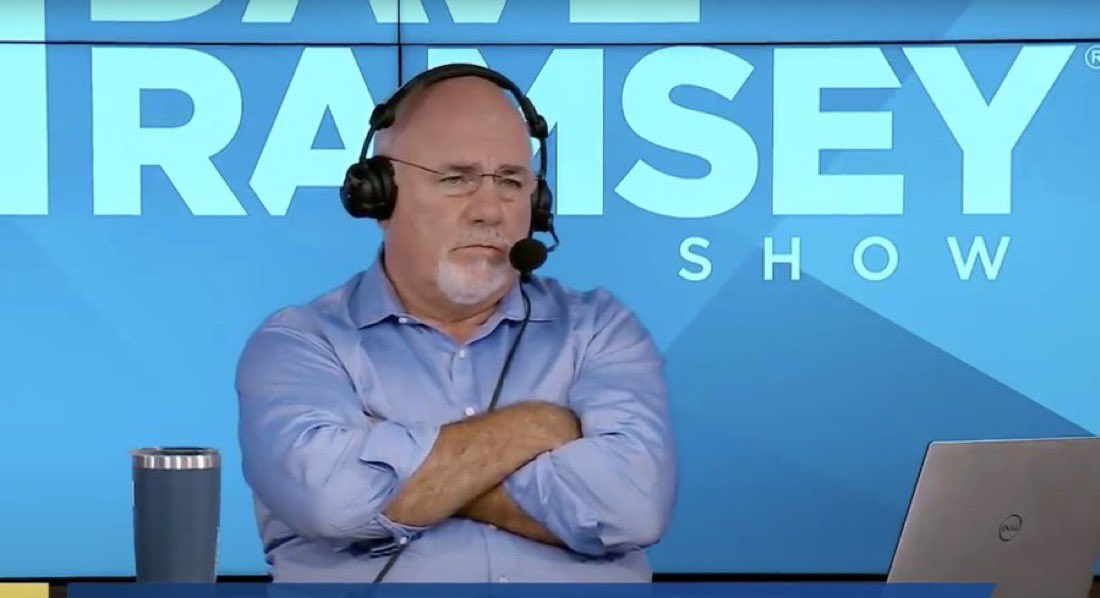
“So you put $10,000 on a credit card to trade crypto, and in five years you turned it into half a million?”
“Yes Dave”
“And you then lost it all in a month, and in those five years you never paid off the credit card which now has a $50,000 balance?”
“That’s correct Dave”