Compliance protects more than rules.
It protects mental health. 🧠
If you lead a team, you need more than good intentions.
You need systems that create real psychological safety.
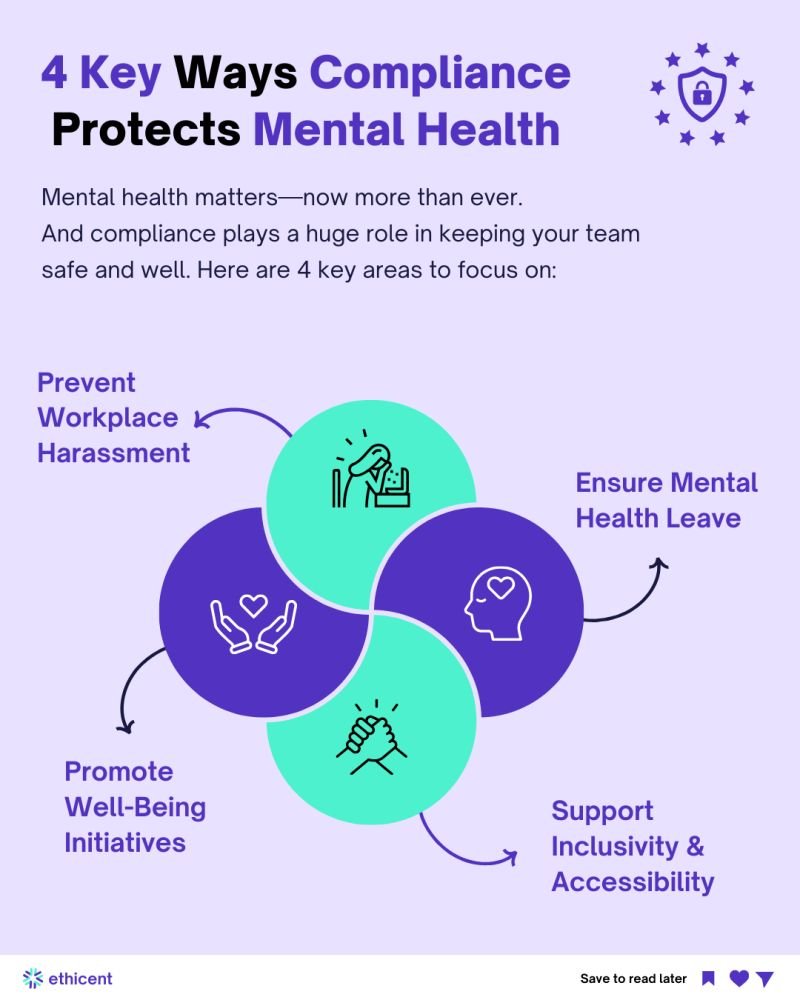
Here are 4 compliance-driven ways to support your people:
Prevent workplace harassment
↳ Clear policies set clear expectations and reduce harm.
Ensure mental health leave
↳ Time off shouldn't come with guilt or silence.
Promote well-being initiatives
↳ Think therapy access, wellness stipends, or flexible hours.
Support inclusivity and accessibility
↳ Design every policy so no one feels left out.
You can’t build a strong culture without protecting minds.
So ask yourself - what's one compliance practice you're proud of?
#Wellbeing #MentalHealth #Compliance
94% of employees would stay longer if companies did one thing. 😤
(Not a raise.)
They’d stay if they felt valued.
That means:
- Clear recognition
- Real growth opportunities
- Trust, not micromanagement
- A culture that puts people first
It’s not about free snacks or ping-pong tables.
It’s about creating a place where people are proud to work - and excited to stay.
Want retention?
Start with respect.
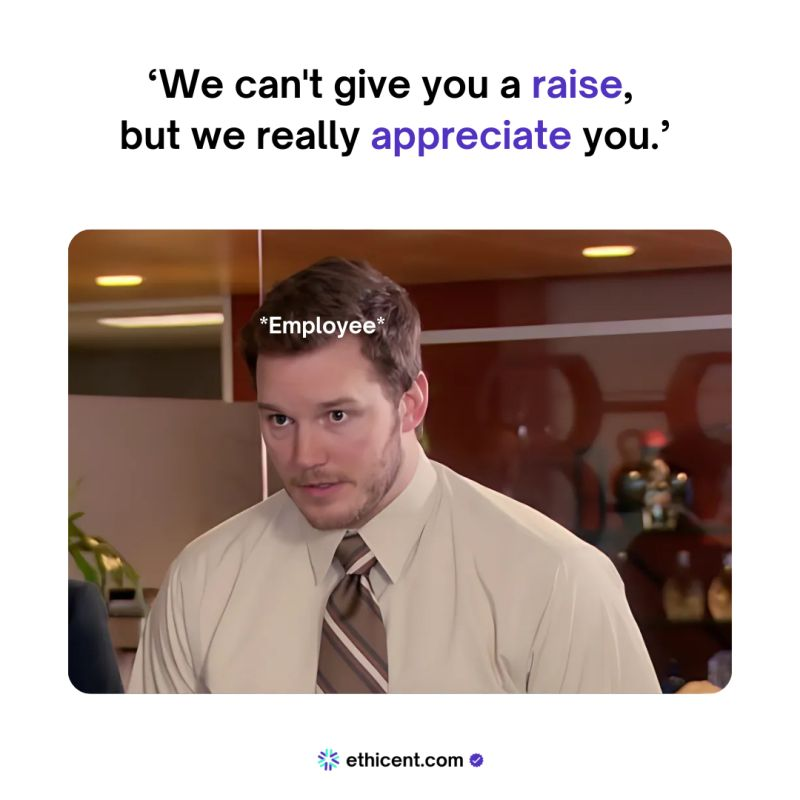
We can’t give you a raise, but we really appreciate you.” 🙃
Ever heard that one before?
Here’s the thing →
Appreciation is nice.
But it doesn’t pay the bills, fund career growth, or improve retention.
👏 Recognition without real rewards?
It’s just noise.
Emotional compensation ≠ Financial recognition.
If you want loyal, high-performing teams →
Invest in them.
→ Financially.
→ Professionally.
→ Consistently.
#WorkCulture #EmployeeRetention
Micromanagement isn’t a strategy. It’s a signal. 🥵
A signal that says:
🔻 “I don’t trust you.”
🔻 “I need control more than outcomes.”
🔻 “Your ideas don’t matter—just follow orders.”
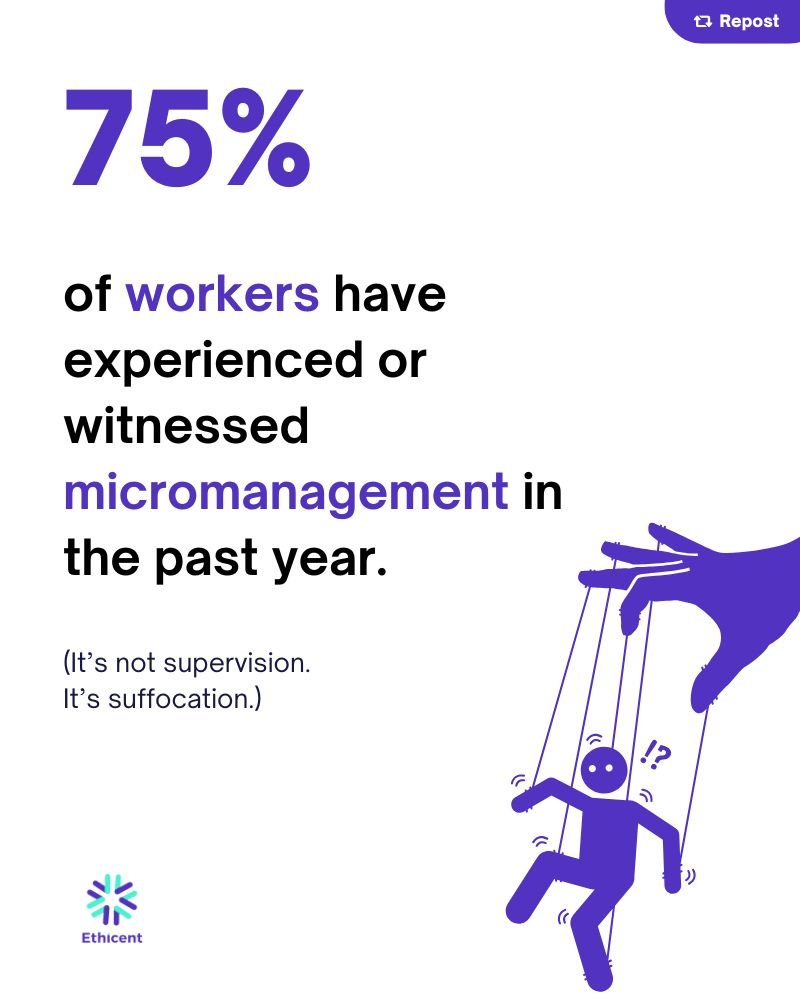
No surprise: 75% of workers say they’ve felt it or seen it in the last year.
That’s not guidance.
That’s suffocation.
Here’s what micromanagement actually does:
- Drains initiative
- Breeds silence
- Slows execution
- Drives talent away
Want performance?
✅ Set the vision
✅ Remove blockers
✅ Get out of the way
Your best people don’t need a manager on their shoulder.
They need one at their back.
Have you ever been micromanaged or caught yourself doing it?
Let’s talk about it.
Micromanagement doesn’t create high performance - it crushes it. 🥵
It sends one clear message: “I don’t trust you.”
And trust, once lost, is hard to earn back.
The fallout is real:
- Talented people check out
- Creativity stalls
- Initiative disappears
- Morale tanks
High performer
rs don’t need control.
They need clarity, autonomy, and support.
They do their best work when they feel ownership, not oversight.
Strong leaders know the difference between guiding and gripping too tightly.
Here’s what that looks like in practice:
- Set clear goals, not rigid instructions
- Define what success looks like, not every step to get there
- Offer support, not surveillance
- Create space for problem-solving, not fear of mistakes
When you lead with trust, you get more than results.
You build loyalty.
You spark innovation.
You create a team that actually wants to stay and grow.
Let go of control.
Empower your people.
And watch what happens.
What’s one way you’ve stepped back and seen your team step up?
Most companies try to fix their culture with perks. 😐
Free lunches.
Ping pong tables.
Wellness Wednesdays.
But the data tells a different story:
↳ 68% feel psychologically safe - but only 42% feel supported by their manager
↳ Just 36% say their feedback leads to action
↳ 62% report burnout risks tied to workload, unclear expectations, and lack of recognition
Perks don’t fix trust.
What actually moves the needle?
↳ Managers who show up for their people
↳ Leaders who listen and act on feedback
↳ A culture where alignment and purpose aren’t just posters on the wall
Want stronger retention, innovation, and engagement?
Start with human-led leadership. Not happy hours.
#Workplace #Leadership #Employee
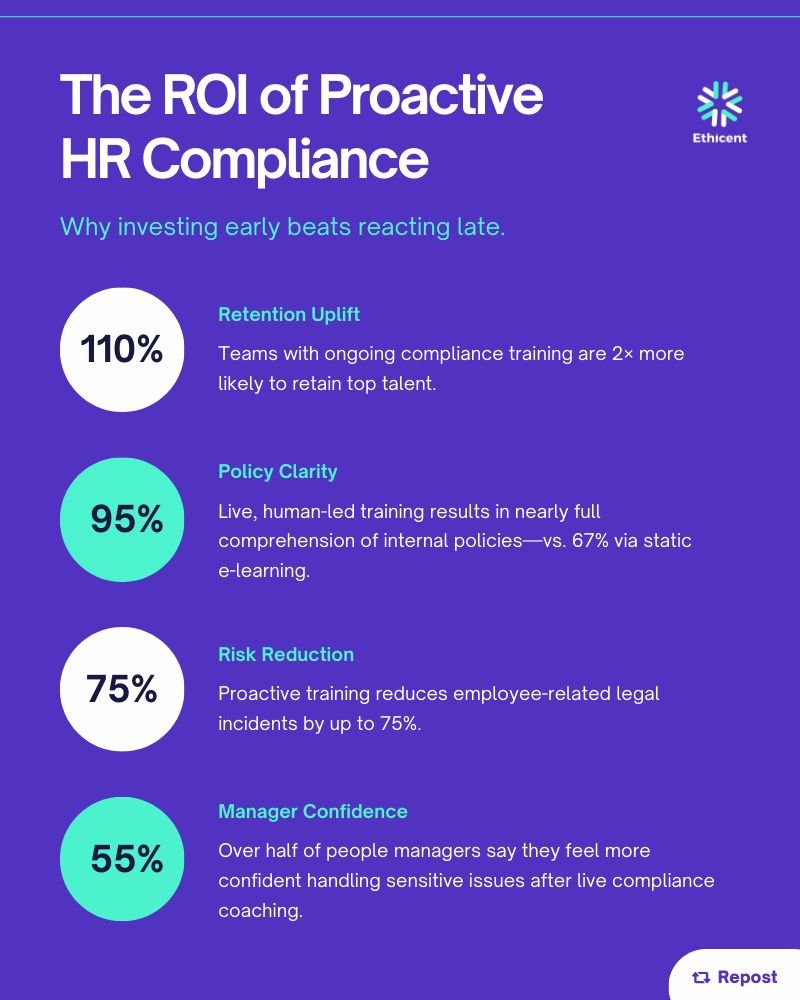
HR compliance isn’t just protection.
It’s ROI.💥
Here’s what proactive teams gain:
110% boost in retention
Ongoing compliance training makes top talent 2× more likely to stay.
95% policy clarity
Live training crushes static e-learning - 95% comprehension vs. 67%.
75% fewer legal risks
Proactive education cuts employee-related incidents fast.
55% stronger manager confidence
Live coaching helps leaders handle sensitive issues with certainty.
If you’re waiting for problems to start training, you’re already too late.
Invest early.
Win long-term.
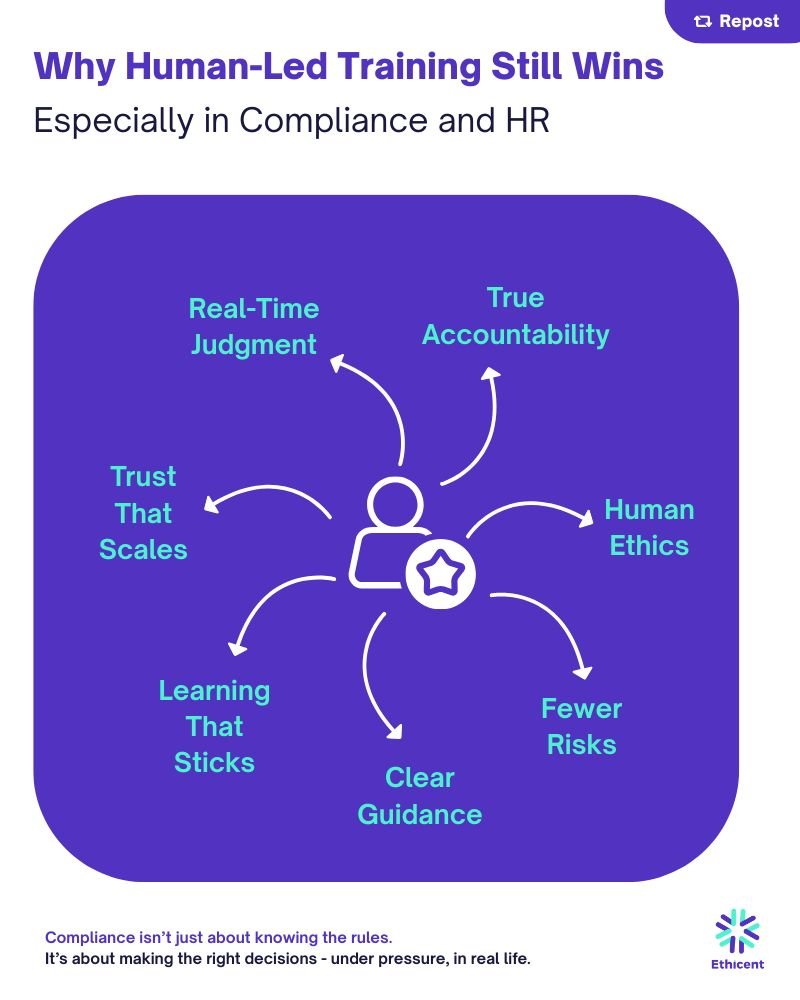
Why Human-Led Training Still Wins - Especially in Compliance and HR🤔
Technology has changed how we learn.
But when the stakes are high, like in compliance and HR—human-led training remains unmatched.
Because in the real world, success isn’t just about knowledge.
It’s about applying that knowledge when it counts.
Here’s what human-led training delivers that digital tools alone can’t:
↳ Real-time judgment
Trainers can adapt to the moment, challenge assumptions, and guide decisions through nuance, not just logic.
↳ True accountability
Live interaction fosters personal ownership. People show up, speak up, and commit.
↳ Human ethics
Machines can’t model values. Humans can. Ethical behavior starts with ethical examples.
↳ Fewer risks
Face-to-face learning uncovers blind spots faster and addresses gray areas with clarity.
↳ Clear guidance
Instructors offer direct feedback, share stories, and bring policy to life with context.
↳ Learning that sticks
People retain more when training is interactive, social, and emotionally engaging.
↳ Trust that scales
Human connections build trust, and trust drives culture, behavior, and performance.
In compliance and HR, there’s no margin for confusion or delay.
People need to act - not just correctly, but confidently.
That confidence doesn’t come from checkboxes.
It comes from conversations, coaching, and shared understanding.
If you're building a resilient, ethical culture, start by investing in the people who shape it - your trainers.
The future of training isn’t less human.
It’s more human.
Employee Mental Health Is in Freefall. 🥵
Here’s What 2025 Is Telling Us.
In 2021, 60% of employees felt supported at work.
By 2025, that number drops to just 21%.
That’s not a dip.
It’s a collapse.
The trend is clear:
2021: 60% felt supported (Mind Share Partners)
2024: Down to 43% (SelectSoftware Reviews)
2025: Only 21% will say their manager supports their well-being (Ethicent Insight)
Burnout is rising. Engagement is fading.
And most companies are still playing defense.
Here’s the problem:
Mental health initiatives haven’t kept up with workplace reality.
Here’s what needs to change now:
Train managers to spot and respond to early signs of burnout
Embed well-being into performance reviews, not just perks
Give people time, not just tools - to recharge
Mental health isn’t an HR line item.
It’s a leadership responsibility.
If we don’t act now, we won’t just lose productivity.
We’ll lose people.
#mentalhealth #wellbeing
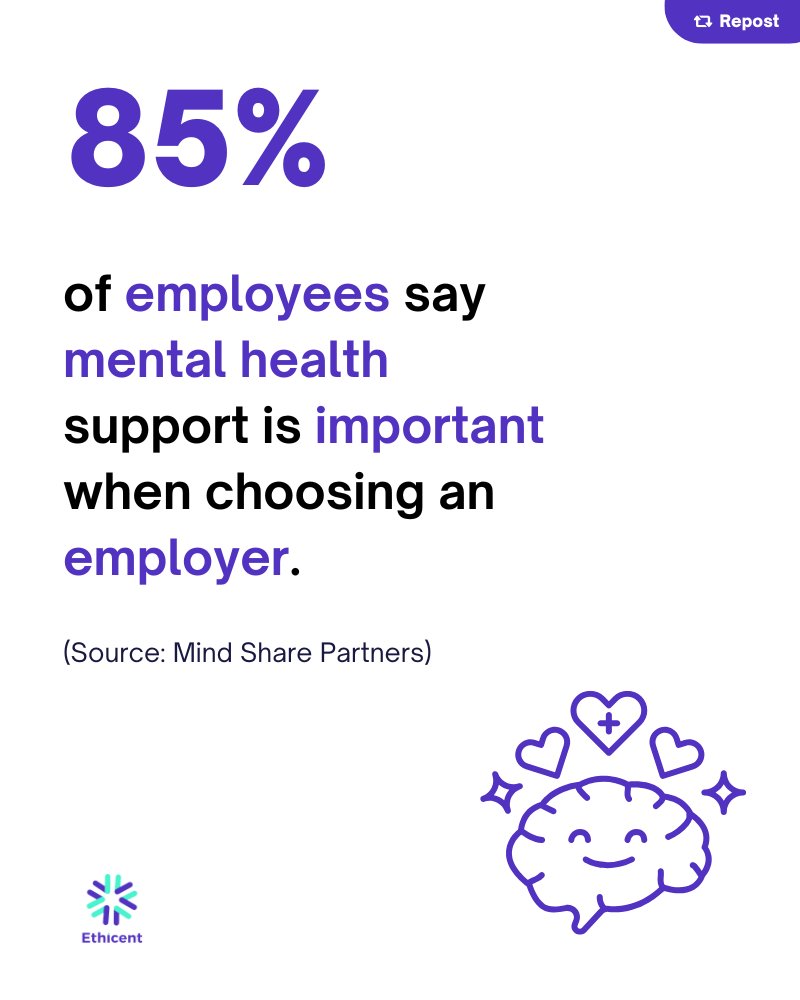
🧠 85% of employees say mental health support is a deciding factor when choosing an employer.
(Source: Mind Share Partners)
That number speaks volumes.
It says:
✅ “I want to be seen as a human, not just a hire.”
✅ “I won’t settle for burnout culture.”
✅ “Mental health isn’t a perk - it’s a priority.”
The best companies know this.
They’re not waiting for a crisis to act.
This isn’t a trend. It’s a wake-up call.
What people want is simple:
A workplace that protects their well-being as much as their performance.
The best companies are listening and responding.
They’re:
- Offering therapy, coaching, and mental health days as standard benefits
- Training leaders to recognize stress and respond with empathy
- Making room for open conversations, not just check-the-box policies
- Creating environments where asking for help is seen as a strength, not a weakness
Because when mental health is supported, everything improves:
📈 Retention
📈 Productivity
📈 Trust
📈 Culture
If your company hasn’t made this shift yet, the message to candidates is loud and clear:
You’re not in the right place.
Let’s raise the standard together.
What’s one real thing your company is doing to support mental health?
Share it below.
Someone might need that idea right now.
#MentalHealth #Leadership #WorkCulture