The food retailer Iceland has pledged it will give its customers a voice during the UK’s upcoming election. If that sounds like a good idea, then it could be that our democracy is in trouble.
https://t.co/QVq4whPr1L
Supermarket Iceland is producing a manifesto on behalf of customers – but should retailers meddle in politics?
Through their reach and connections, firms can give ordinary people a say in politics. But this raises a lot of problems. https://t.co/zB8mFIGrF1
Can the #CSDDD still be effective despite the compromises? The answer from our experts in the @RebalanceObserv is a resounding “it depends”! Take a read to see what exactly they think it depends on. https://t.co/i3f0OVDWz1
We reviewed 400 papers about dialogue and CSR over the past 30 years. The bottom line is that generating effective stakeholder dialogue in CSR requires dialogue that is ongoing, stakeholder (rather than firm) focused, and which avoids idealization. https://t.co/9IhI6zuyNh
We only worked on this paper for 6 years and went through just five revisions at IJMR including a paltry 3 high risk R&Rs in a row. Really, some papers are so perfect from the beginning they almost just publish themselves.
I’m sure this is very well-meaning and will be well-received by non-Americans. But the fact they it even needs to exist suggests something is very wrong in the strategy field.
STR Virtual Symposium: Publishing with Non-US Data in Strategy & Management Journals
Jan 23 at 8am ET, with Pursey Heugens, Elena Kulchina, & Kevin Zhou, hosted by Cecilia Gu & Fabrice Lumineau @FabriceLumineau👍
Zoom link 🔛https://t.co/FHrHO93KeD
Let's overcome outsidership!
Celebrating #LivingWageWeek by highlighting amazing research from Cardiff Business School! 💷🌟
A recent Cardiff Business School study shows the employer benefits of being Living Wage accredited.
Here's a glimpse of the key findings. ⬇️
https://t.co/GjbcuPCeBS
1/2
@madhurarrao To be honest if we go back far enough we are all doing the same thing to China who started the whole tea drinking thing which us British swiftly appropriated and started doing weird things to.
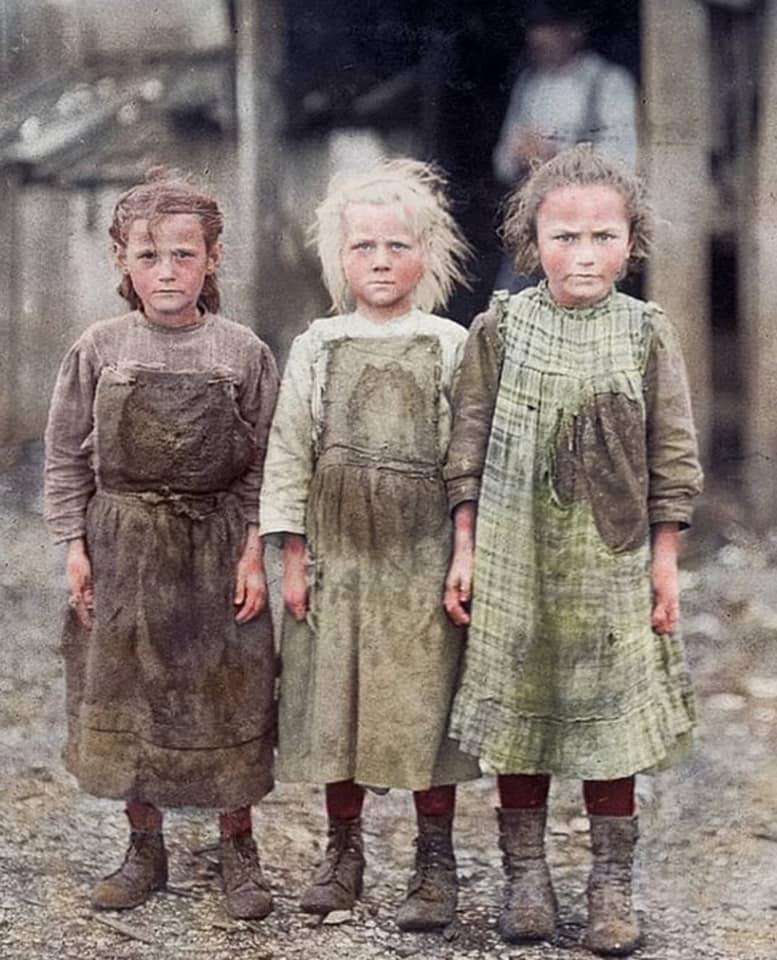
Josie (6 years old), Bertha (6 years old) and Sophie (10 years old) worked regularly at the Maggioni Canning Company.
Work began at 4 AM, and the three would make from $9 to $15 a week.
Sophie would do six pots of oyster a day, and her mother, who also worked with her, said, "She don't go to school. Works all the time."
Through such photos, Lewis Hine documented the harsh working conditions borne by thousands of children, who were sent to work soon after they could walk and were paid based on how many buckets of oysters they shucked daily.
Mr Hines wrote of one photograph: ‘All but the very smallest babies work. Begin work at 3:30am and expected to work until 5pm.’ He covered around 50,000 miles a year, photographing children from Chicago to Florida working in coal mines and factories.
These photos helped to raise an outcry against child labor and made the American public widely aware of the scope of the problem.