Prove you can do hard things
When a teenager asks why they need to learn calculus, what should you say?
You know they will never use it in adulthood, outside of certain career choices.
You could say, “It’ll help you get into college,” but then they’re left wondering why college cares if you know calculus.
And once they’re in college, maybe you could say, “To get a good job,” but why would a potential hirer care how you did in multivariate calculus if your job doesn’t require any knowledge of calculus?
But I recently realized there is a very good reason to take Calculus. It’s to prove you can do hard things.
The ability to do hard things is perhaps the most useful ability you can foster in yourself or your children. And proof that you are someone who can do them is one of the most useful assets you can have on your life resume.
Our self-image is composed of historical evidence of our abilities. The more hard things you push yourself to do, the more competent you will see yourself to be.
If you can run marathons or throw double your body weight over your head, the sleep deprivation from a newborn is only a mild irritant.
If you can excel at organic chemistry or econometrics, onboarding for a new finance job will be a breeze.
But if we avoid hard things, anything mildly challenging will seem insurmountable.
We’ll cry into TikTok over an errant period at the end of a text message. We’ll see ourselves as incapable of learning new skills, taking on new careers, and escaping bad situations.
The proof you can do hard things is one of the most powerful gifts you can give yourself.
My goal with our kids is to avoid lying to them as much as possible.
I won’t tell them that calculus is super important or even that grades are super important. The truth is, they aren’t, so long as you have other plans.
Calculus is a great way to prove you can do hard things if you have no other proof to show.
But if you’re learning programming and building apps in your free time, or winning soccer championships, or writing a novel, then you are doing hard things. Probably harder than Calculus.
This is also why there’s so much survivorship bias and bad advice in the “C students hire A students” trope. Most C students are not doing other hard things instead of school. They’re just goofing off, so they end up working for the A student.
But some C students are getting C’s because they’re obsessed with other projects. Hard projects. And that obsession with doing hard things lets them blow past their Excellent Sheep peers over time.
So if you have a C student who’s obsessed with something hard, you probably don’t have to worry. If they’re getting high and watching TikTok, well…
I don’t particularly care what grades my kids get once they start school. But I do care that they consistently prove to themselves they can do hard things. If Calculus is how they want to do it, fine, but there are many, many more options.
And if you’re not someone who knows they can do hard things, find a way to prove it to yourself.
Build a habit, learn a skill, create something, whatever it is that turns your default stance on challenges from “that seems hard” to “I can figure it out.”
Create proof you can do hard things.
The upcoming Picture-in-Picture API that @googlechrome is pushing is soo promising! 🤩
@nuxt_js DevTools will be able to pop up as a separate window soon!
my wacky personal product dev framework, MAVE:
Magic – will this thing inspire a positive emotional reaction toward your product
Artistry – how much does this raise the quality standard of the product
Value – does this have repeat-utility
Effort – how much will it cost you
2/ Give context
Write a decision doc with:
1. List of people involved
2. Context
3. Recommendation (don't bury the lede)
4. List of options with pros and cons
The "decider" model of product management is a negative ROI.
Insulating the delivery team from the strategy by investing all strategic decisions into one person misaligns incentives. "We need a PM because the team isn't thinking strategically" is a self-fulfilling prophecy.
A shaded blur behind a logo is simple but beautiful affect. Let's see how @vite_js does it.
📢 Sound on for my truly one-of-a-kind explanation.
Codepen link below
I’ve installed a projector on the ceiling above my gaming table.
Painting dynamic lighting using @Procreate onto the game or layout.
I use this for grid overlays, stats, fog of war, area of effect simulations, and for some dramatic lighting. #boardgames#conceptart#3Dprinting
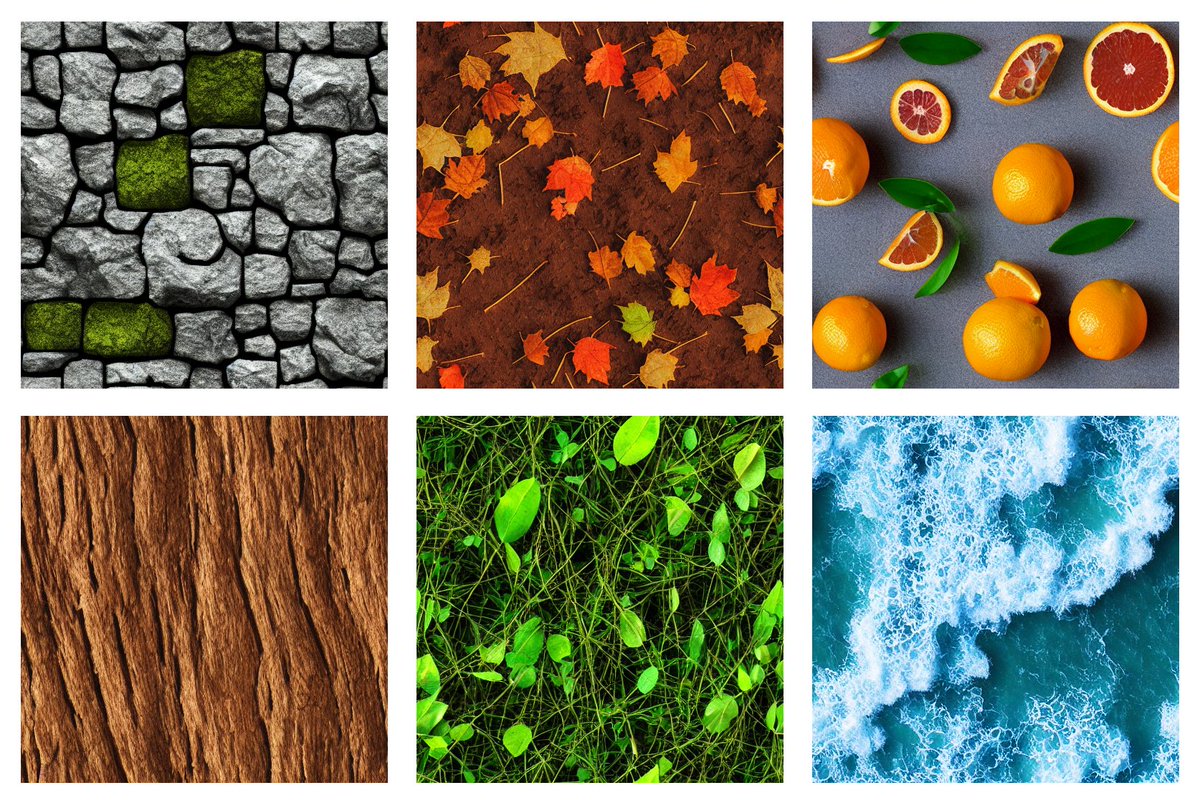
The Stable Diffusion innovation just doesn't stop!
Here's a new open-source model from the @monaverse that produces seamless tiling images: https://t.co/xEFyyY8W3I
When I launched the modernized version of vanilla JavaScript TodoMVC, it got 600+ GitHub stars. People were generally positive, but it sparked much debate. Here's an article addressing all the feedback!
https://t.co/jNAZPfYFTW
sometimes it feels like 90% of the mental effort of programming is getting to the point where i have a program that maybe does the wrong thing but consistently builds/runs & is connected to all the correct I/O capabilities
We've released v3.0 of our Excalidraw VS @code extension! 🚀
Includes support for editable Excalidraw PNG files (just append `.png` to the filename), changing the color theme, viewing the source, and more.
❤️ @pomdtrr
https://t.co/baKxQxqxz6
Changelog https://t.co/Zn4Yk1v6Yq
All those guarantees are also provided by staged programming! Even if the program does arbitrary things, if you run it at compile-time, you know what it does statically, by definition. If you don’t want to run arbitrary code as part of the build process, just check in the result.
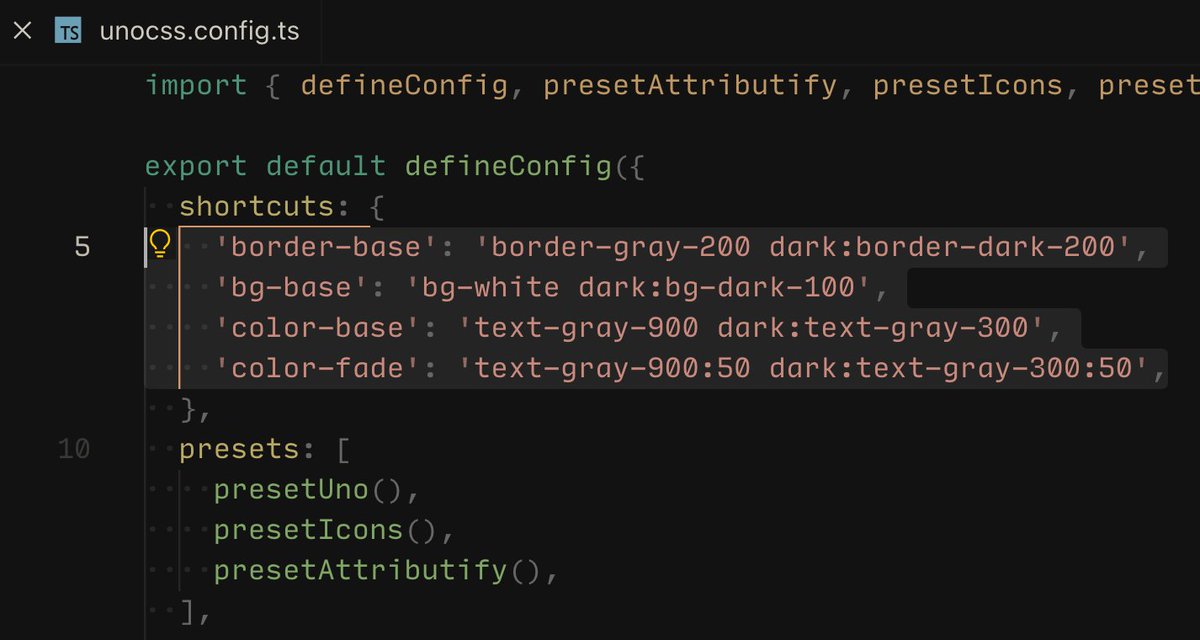
I am defining these shortcuts in almost all my projects using UnoCSS. This way I could make the design support both light/dark modes automatically where I only need to focus on one. Going back to projects that were written without shortcuts is itching 🤣