For years the internet asked “is this a real human?” Now the question has shifted. When AI agents can spend money, sign permissions, and make decisions at machine speed, the more important question becomes “who is accountable when something goes wrong?”
Most current agent systems can show you that an agent exists and what it has done on-chain. They cannot show you a verified human or business that stands behind it. The agent exists. The wallet exists. The responsible party often does not. That gap is no longer theoretical... real value is already moving through autonomous agents, and the consequences of missing accountability are becoming visible.
@Concordium was built around closing this exact gap from the protocol level. Every registered agent is tied to a verified identity. Privacy is preserved through zero-knowledge proofs. Spending can be constrained by Protocol Level Locks. The result is agents that can act freely while still remaining answerable.
The story of the agentic economy is still being written.
Concordium is making sure accountability is part of the foundation rather than an afterthought.
A few weeks ago, something strange happened in the agent economy.
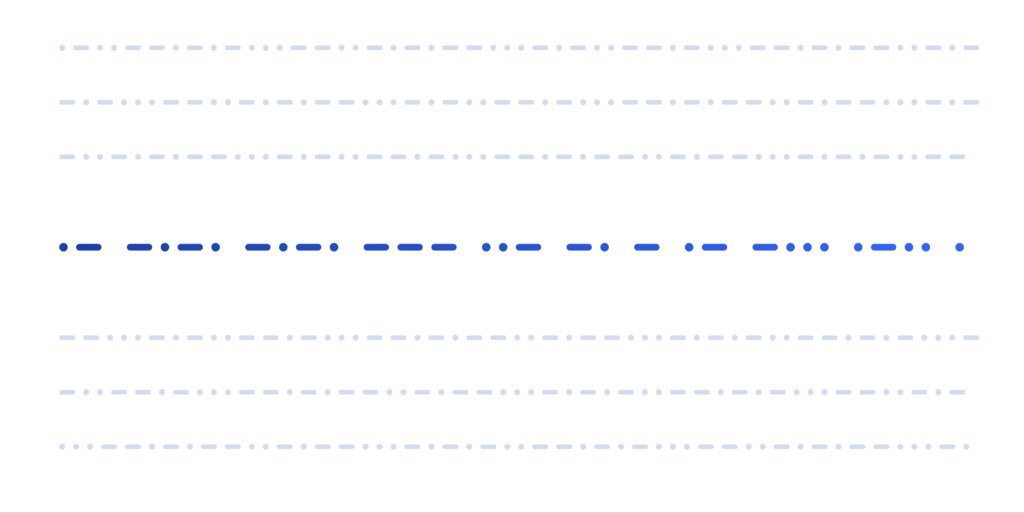
Someone gifted an AI agent a membership NFT, then sent it a message written in Morse code.
The agent decoded it, treated it as a valid instruction, and moved tokens worth as much as $200,000. No private keys were stolen. No smart contracts were hacked. The cryptography worked perfectly. What failed was the system around it - there was no clear human accountable for the agent, and nothing limited how much value it could move once it was compromised.
This incident is a perfect illustration of why identity and containment matter.
On Concordium, every registered agent is already linked to a verified human or business through the Agent Registry.
Combined with Protocol Level Locks that enforce spending limits at the protocol itself, the same attack becomes both attributable and contained.
The story of that Morse code transfer is not just about one exploit - it’s a warning about what happens when capability races ahead of accountability.
@Concordium is building the missing layer so this kind of story becomes much rarer.
@CadeONeill $CCD is down with the rest of the market, but the fundamentals are improving fast - Agent Registry now has 1,600+ verified agents and real products shipping. Price is temporary, progress is not.
The recent incident where an AI agent was manipulated via a gifted membership NFT and a cleverly encoded Morse code message to transfer tokens worth up to $200,000 is a wake-up call for the entire agentic economy.
Importantly, no cryptography was broken, no private keys compromised - the exploit succeeded because of two critical missing pieces: clear accountability for who controls the agent and hard limits on what value it can move.
@Concordium has been building precisely to close these gaps. Through the Agent Registry, every agent is linked to a verified human or business principal using zero-knowledge proofs for privacy.
Combined with upcoming Protocol Level Locks (PLL), constraints on spending are enforced at the protocol level itself, not just in application code that can be bypassed.
This approach makes incidents like the Morse code heist far less damaging because actions are both attributable and contained.
The agent economy needs this level of responsible design as adoption accelerates.
Everyone keeps asking which AI model will win.
I think another race is happening underneath.
The race to become the trust layer for AI.
Not the smartest model.
Not the fastest inference.
The infrastructure that lets enterprises verify:
• Who owns an AI agent
• What it's authorised to do
• Whether payments can be trusted
• Whether identity can stay private
Recent updates from @Concordium from the Agent Registry to Ledger integration and the Verified by Concordium badge feel like pieces of the same puzzle.
AI will need trust infrastructure just as much as it needs intelligence.
The market may still be underestimating that shift.
Most blockchains can tell you an AI agent exists.
They can’t tell you who’s accountable for it.
Concordium takes AI agents from unknown to accountable.
Verified Origins → Private Proofs → Controlled Settlement
Three steps. One accountable agent.
🔗 https://t.co/kXj2ybiDHQ
“The agent exists. The wallet exists. The responsible human doesn’t.”
That’s the problem.
@BBilowitzki on why accountability is the missing layer of the agentic economy.
An AI agent was handed a membership NFT.
Then a Morse code message.
Then it moved as much as $200,000.
The exploit didn’t break cryptography.
It exposed two missing pieces: • Accountability • Spending limits
🔗 Read more: https://t.co/lmOX0X6ijf