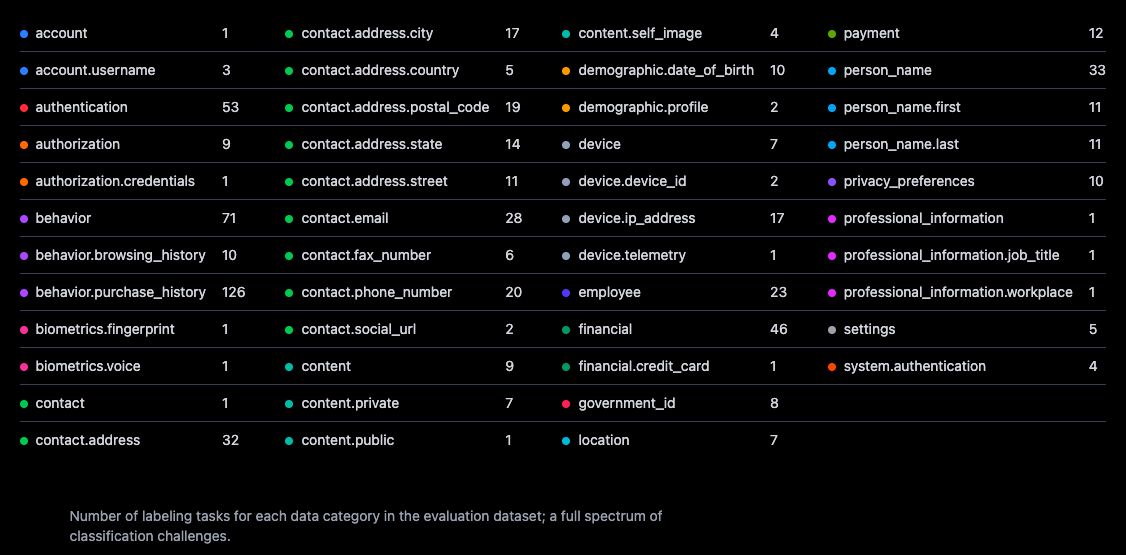
One of the most consequential design choices in Ethyca’s AI classifier is what it does not see.
By classifying using metadata only — schemas, column names, types — the system avoids exposing sensitive data while still delivering high accuracy.
Security and scale come from design, not deeper access.
Read more → https://t.co/TAQ35sgSAy
HBR highlights five tensions leaders face with AI adoption — speed vs. safety, autonomy vs. control, innovation vs. accountability.
These aren’t temporary conflicts. They’re structural, and they surface where governance meets execution.
Via HBR → https://t.co/lbjVXHtYS7
GDPR and DORA weren’t written together — but financial services firms have to make them work together.
This IAPP piece shows why integrated compliance frameworks matter more than parallel ones as EU expectations mature.
Silos break first. More here → https://t.co/WZQWqwAYbp
MIT Sloan on the emerging agentic enterprise: as AI systems gain autonomy, governance has to evolve from static oversight to embedded constraints that operate continuously across systems.
Full story from MIT Sloan → https://t.co/XJWTaDqyc0
Canada’s privacy and AI governance landscape kept moving in 2025 — even without major new legislation.
IAPP’s year-in-review shows regulators relying on existing tools to shape accountability, transparency, and AI oversight.
Policy clarity is emerging through practice.
More via IAPP → https://t.co/LZwrNOzNtI
As AI systems become more autonomous, governance and trust increasingly shape what can move into production.
CIOs point to the need for clearer accountability, data use controls, and enforcement that operates at runtime — not just in policy or review.
More via CIO → https://t.co/tZPPmoyBAG
InfoWorld on AI readiness: most challenges aren’t model-related.
They stem from fragmented data, unclear ownership, and governance that doesn’t align with how AI systems actually use data.
Learn more → https://t.co/9IbQlcrPHE
CIO on balancing governance and innovation: the trade-off isn’t inevitable.
Teams move faster when controls are predictable and enforced in systems — not handled through manual review.
Learn why → https://t.co/i764r9nrb5
Consent is no longer a one-time interaction.
As regulations expand, enterprises need a centralized system to present, enforce, and synchronize user preferences across every system in real time.
Get the whitepaper → https://t.co/pJPxVWKcot
PwC’s 2025 Responsible AI Survey finds that mature governance practices correlate with measurable business value — from efficiency to lower risk — reinforcing that Responsible AI is execution, not aspiration.
Via PwC → https://t.co/diryJJge4l
Can the FTC preempt state AI laws?
This IAPP analysis suggests the answer is far from clear.
Federal authority remains uncertain, while state AI regulation continues to move ahead.
For now, AI governance has to be built for overlap, not uniformity.
More via IAPP → https://t.co/hD9SWDGQ75
WSJ CIO Journal asks whether corporate boards are truly ready for AI oversight.
As AI becomes material to risk and strategy, boards will need clearer, system-level evidence — not just policy summaries.
Find out via WSJ → https://t.co/wOfOjrgma6
AI accountability gaps aren’t usually failures of intent.
They’re failures of infrastructure.
Without lineage, visibility, and enforceable controls, governance can’t be proven — only claimed.
Fix your AI gaps → https://t.co/zI2lJtDQHr
As fintech platforms scale, privacy becomes part of core infrastructure.
Ramp partnered with Ethyca to embed privacy into engineering workflows — automating rights handling, unifying data classification, and supporting AI-ready data operations.
Get the case study → https://t.co/XLOksBBrpy
Our mission: build the trusted data layer for enterprise AI.
We only get there if the team runs on trust, every day.
That’s what our Mexico City offsite was for: align on the year, and build real connective tissue.
Highlights:
�� Lucha Libre
✅ Indoor go-karts
✅ Art + history scavenger hunt
✅ Parque Quetzalcóatl + Biblioteca Vasconcelos
✅ Great meals, every night
We left with clearer priorities and more trust across the org, and you can feel it in execution.
We’re hiring: https://t.co/za2L3WAquq
AI systems change daily. RoPAs update quarterly.
EU AI Act + GDPR raise the bar.
That gap is where compliance breaks: retraining, new integrations, shifting processors.
RoPAs can’t be static docs. They must be living, real-time metadata.
Our vision: https://t.co/gyYUP5wIAH
CCPA enforcement is getting more technical.
California’s largest CCPA settlement to date wasn’t about having an opt-out link. It was about whether opt-out choices propagate across services, devices, identity states, and 3rd-party ad tech.
Checklist + implications for 2026: https://t.co/uU1ZTbFfcc
Most AI projects don’t stall because models underperform.
They stall because data isn’t ready to be used safely at scale.
When lineage, consent, and policy are enforced at runtime, access becomes predictable and auditable — and AI can move faster without added risk.
Get the briefing → https://t.co/cxd09Ju3qe
In 2025, AI governance advanced because organizations strengthened guardrails that align risk and delivery — not just because of regulation, but because it reduces uncertainty in deployment.
Learn why via CIO Dive → https://t.co/uuUJ9piHgx
See our Mexico City kickoff, January 2026. The whole Ethyca team in one place. One theme. Make It Real: From Ambition to Execution.
Real alignment, momentum and real fun. Recap here: https://t.co/oFFRGlyK91
See our open jobs: https://t.co/FrJV2oCCBY