“When you look at this coffee tree, what do you see?”
A few days ago in Karongi District, I had the privilege of spending time with Gakwaya, a smallholder coffee farmer.
I looked at his coffee trees and saw a crop.
He looked at them differently.
He saw years of work, family income, school fees, labour, weather risks, market prices and hope.
As we talked about coffee, I kept thinking about one question:
Is producing more always the same as earning more?
Not necessarily.
For a smallholder farmer, profitability is influenced by much more than yield.
The farmer has to deal with input costs, labour, pests and diseases, weather, access to finance, quality requirements, transportation, market prices and the share of value captured along the value chain.
That conversation reminded me of an important principle in agricultural economics:
A productive farm is not automatically a profitable farm.
The real question should be:
How do we help smallholder farmers turn production into sustainable income?
That means strengthening productivity, improving quality, connecting farmers to better markets, reducing unnecessary costs, expanding access to finance and insurance, and creating opportunities for farmers to capture more value from their products.
Our farmers don't only need to produce more.
They need better economics around what they produce.
I left that coffee farm with more than a few pictures.
I left with a stronger reminder that behind every agricultural product is a farmer making economic decisions under uncertainty.
And if we want agriculture to become a stronger business, the farmer's profitability must remain at the centre of the conversation.
☕🌱
#Agriculture #Agribusiness #yefemerwandaltd #greenharvestinitiative #Coffee #SmallholderFarmers #Rwanda
Education is the foundation of Rwanda’s transformation.🇷🇼
It equips young people with knowledge, skills, innovation& the confidence to solve problems, create jobs, embrace technology&serve their communities.
Investing in education today is building a stronger Rwanda tomorrow.
As manager give people what they need to succeed, then ask for results.
One lesson I take from Frederick Winslow Taylor’s Scientific Management is that managers should not simply demand higher performance from employees.
First, provide:
✅ The right tools and resources
✅ Proper training
✅ Clear methods and expectations
✅ A well-organized working environment
Then measure performance and ask for results.
It makes me think of a simple management principle:
«Don’t blame the worker for poor results before checking whether you gave them the means to succeed.»
For me, this is still relevant today—from managing projects to managing agricultural teams.
Good managers create the conditions for success, then hold people accountable for performance.
What do you think?
#Management #Leadership #FrederickTaylor #ScientificManagement #ProjectManagement #Productivity #Agriculture
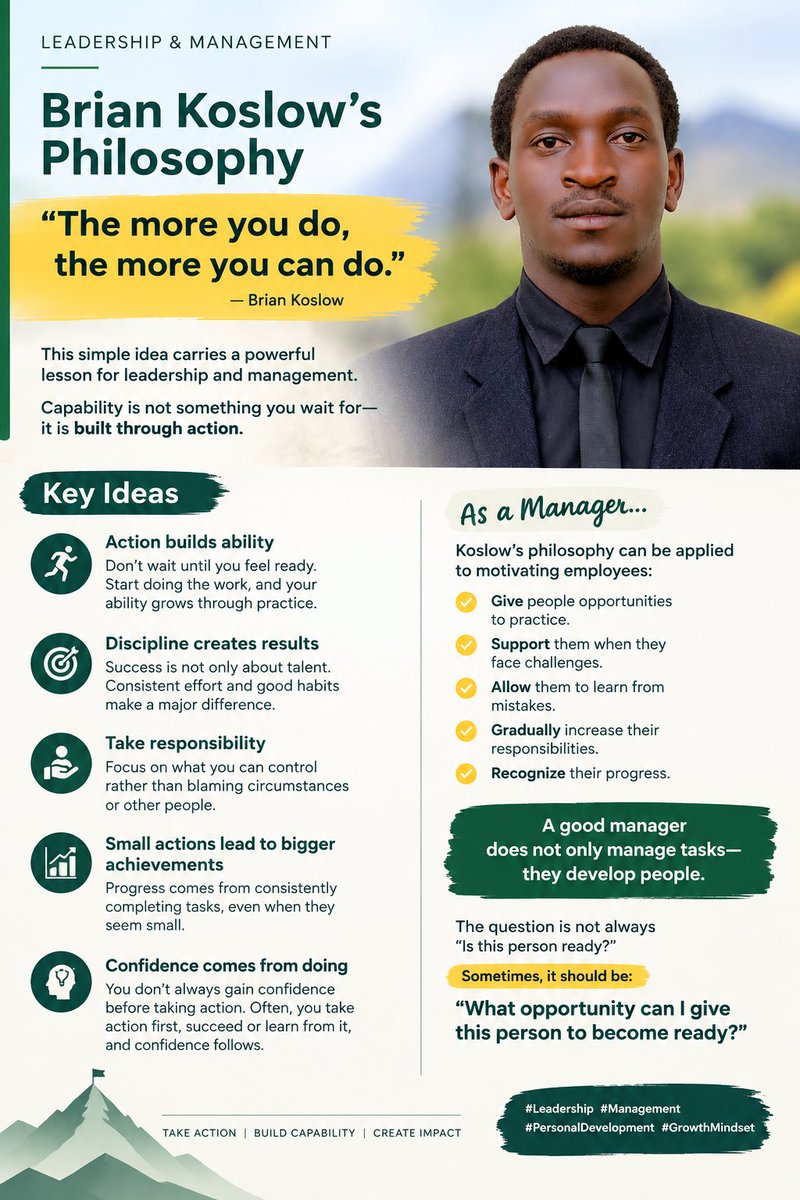
“The more you do, the more you can do.” —√ Brian Koslow
A simple philosophy, but a powerful lesson for leaders.
Don’t wait until people are “ready” to give them responsibility.
Give them opportunities.
Give them support.
Let them learn.
Let them grow.
Because capability is often built through action.
As managers, your job is not only to get results, it is to develop people who can create results.
💡 A question for leaders:
Do you give your team enough opportunities to become ready?
#Leadership #Management #GrowthMindset #EmployeeDevelopment #ProjectManagement
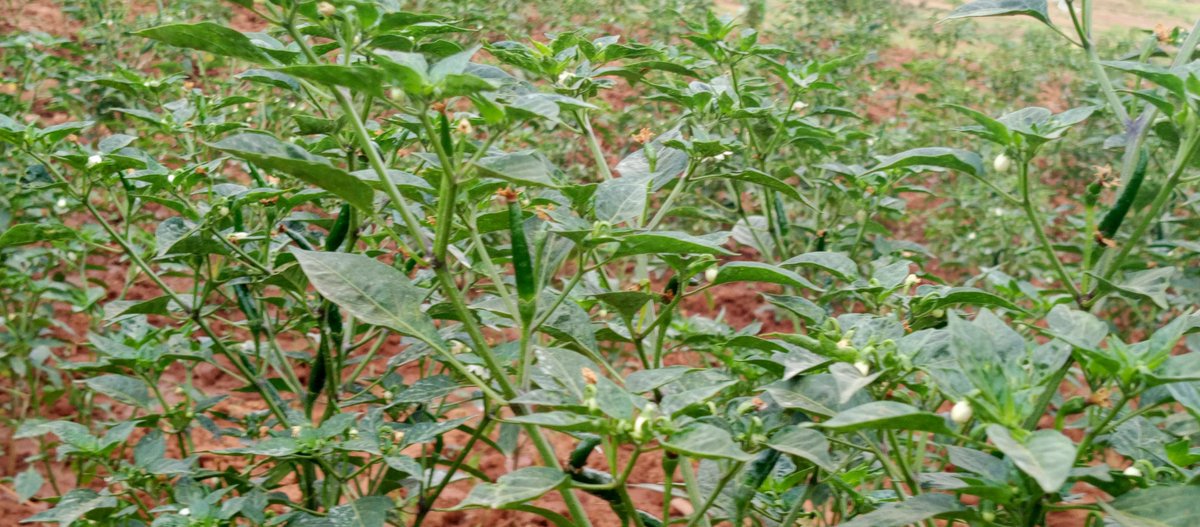
🌶️ A chilli field taught me something about irrigation.
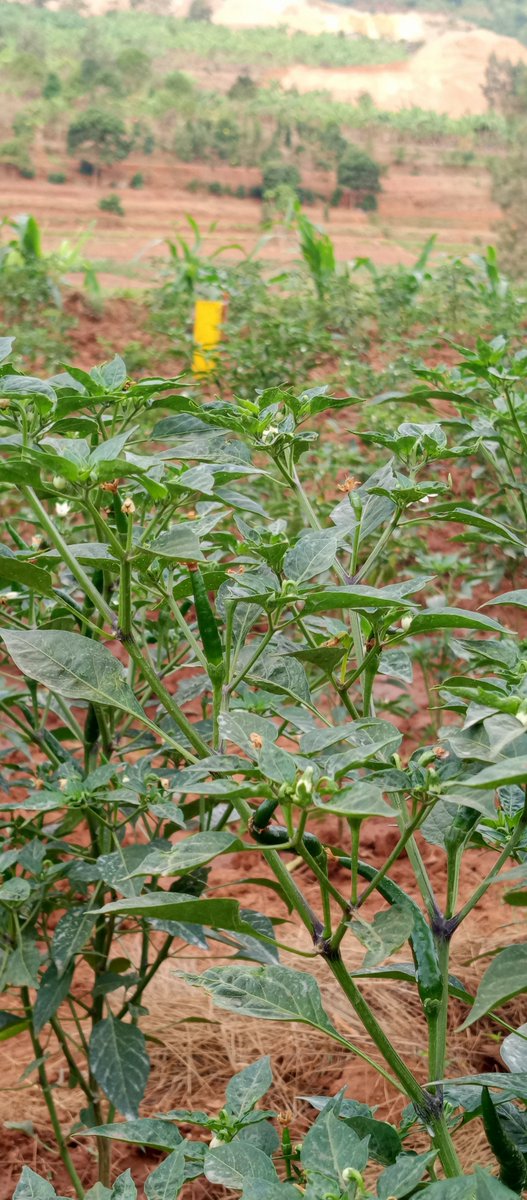
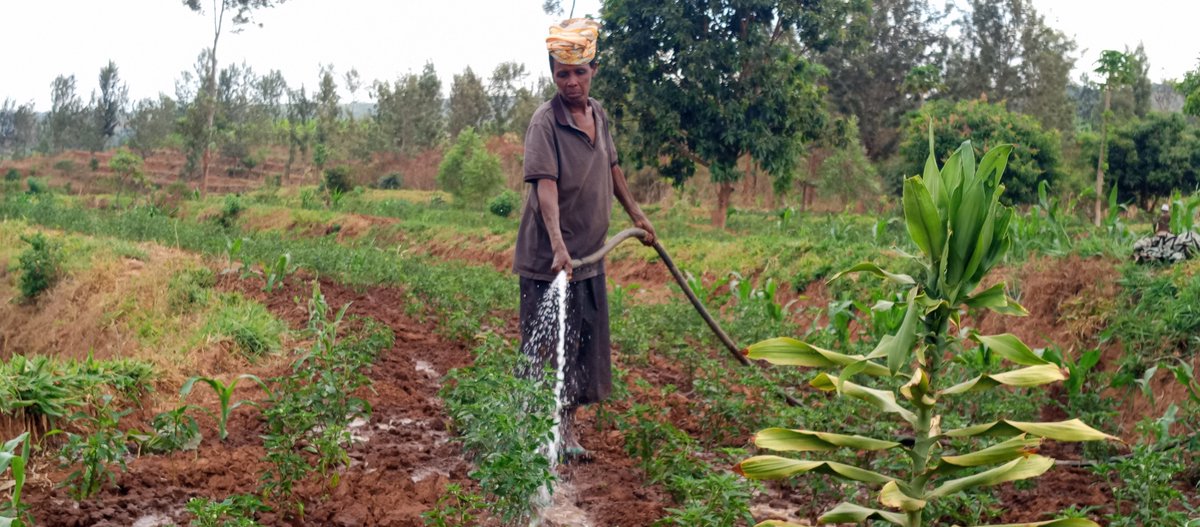
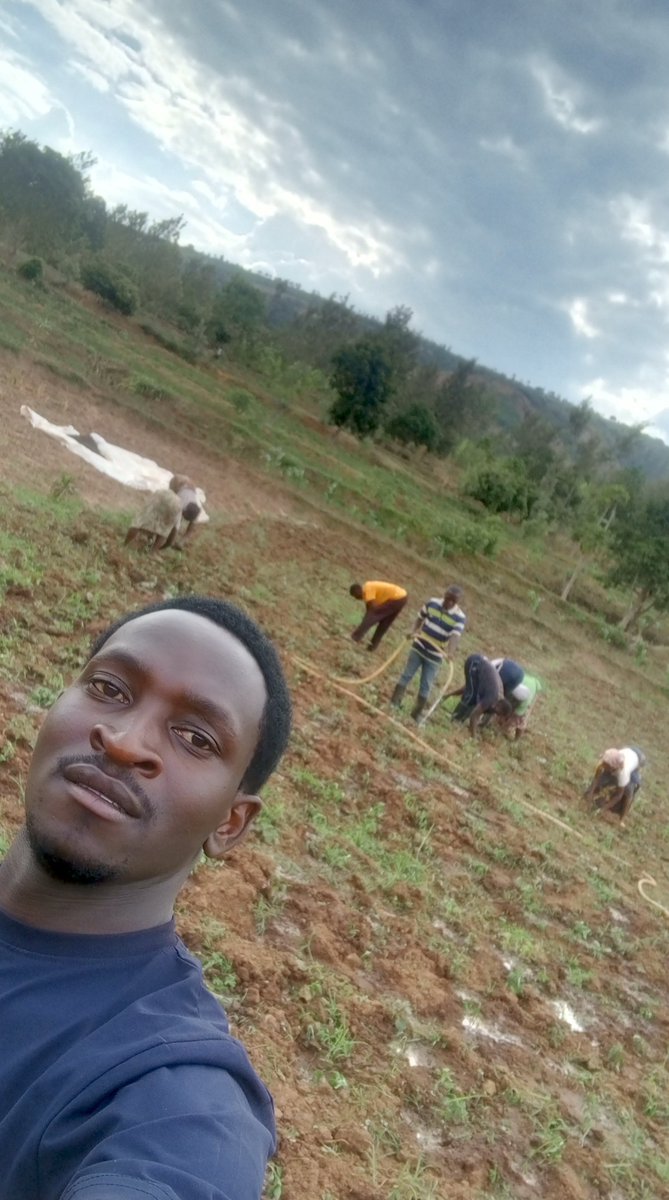
At first glance, these photos look simple: a farmer, a hose, a canal, and a field of chilli plants.
But behind that scene is a bigger story.
A chilli plant does not ask for water only when the farmer has time to irrigate. It needs water when the crop needs it.
I watched the water move from the irrigation canal to the field, and I thought about how irrigation can change the story of a farmer.
Without reliable water, even good land and good farming practices can struggle. With well-managed irrigation, farmers have a better chance to maintain crop growth, flowering, fruit development and ultimately yield.
But irrigation is not simply “give the crop more water.”
It is about asking:
💧 When should I irrigate?
🌱 How much water does the crop need?
🌶️ Is the soil holding enough moisture?
🌦️ What is the weather telling me?
🚰 Am I using water efficiently?
For me, this field was a reminder that water management is crop management.
And as climate variability continues to challenge agriculture, investing in efficient irrigation systems and good water-management practices will become increasingly important for sustainable horticulture.
Every drop has a purpose. Every irrigation decision matters. 🌱💧
#Irrigation #Chilli #Horticulture #Agriculture #yefemerwandaltd #greenharvestinitiative
Guess what this crop is?
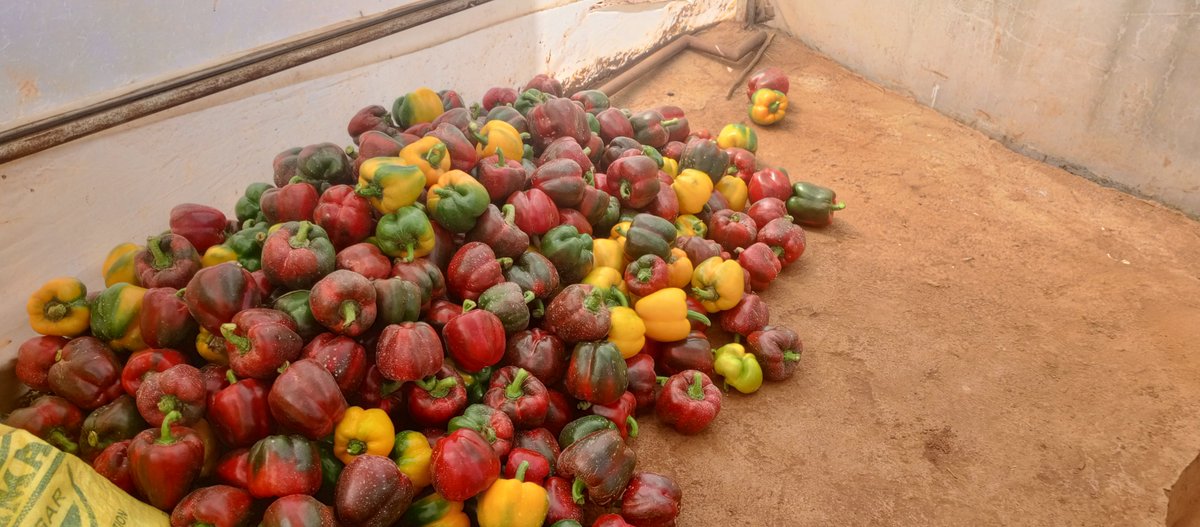
Looking at these pictures, you might simply see a greenhouse full of healthy pepper plants and a beautiful harvest.
But for me, these pictures tell a much bigger story.
I remember walking through this pepper field and thinking about everything that happens before a farmer can stand beside a pile of harvested peppers.
It starts with something so small—a seed.
Then comes the nursery, transplanting, watering, feeding, crop protection, training, scouting, and countless hours of monitoring.
And then, slowly, the plants begin to reward the farmer.
What I love most about agriculture is that the field teaches you patience.
You cannot plant today and expect to harvest tomorrow. You have to care for the crop even when there is nothing to harvest yet. You have to make decisions when the outcome is still uncertain.
And eventually, you walk into the greenhouse and see this. 👆🏾
Rows of productive plants.
Peppers at different stages of maturity.
And a harvest that represents months of work, patience, knowledge, and persistence.
The second picture reminds me of the journey.
The first picture reminds me of the reward.
But together, they tell one story:
Agriculture is a process—not an event.
For me, working around crops like these continues to strengthen my belief that agriculture can be much more than subsistence. With the right knowledge, technology, management, market access, and commitment, farming can become a profitable business and a pathway to creating jobs and transforming communities. 🇷🇼
Every harvest has a story.
This is one of them.
#Agriculture #PepperProduction #Horticulture #Agribusiness #Rwanda #yefemerwandaltd #greenharvestinitiative
🌵 Guess what this crop is?
A few months ago, this was the question I could not answer myself. 😄
It was my first time seeing this fruit growing in a field, during a visit to Rwamagana District, Eastern Province, Rwanda. I honestly had no idea what I was looking at, so I stopped and took a closer look.
I turned to the farmer behind me and asked, “What is this?”
She smiled and said, “It is dragon fruit.”
That answer immediately sparked my curiosity. I started looking more closely at the plants, the way they were supported, how they were growing, and the effort that had gone into establishing the field.
At that moment, I realized something important: being in agriculture means accepting that you will never stop learning.
Behind that field was a story.
Someone had prepared the land.
Someone had planted the cuttings.
Someone had invested time and resources.
Someone had patiently waited for the plants to establish.
And, most importantly, someone believed that this land could produce something valuable.
That is what agriculture means to me.
It is not always about immediate results. Sometimes, it is about planting today while believing in tomorrow.
As I stood there taking notes, I began thinking beyond the crop itself. I saw possibilities—a potential new source of income for farmers, an opportunity for young people in agribusiness, and another example of how Rwanda's horticulture sector can continue to diversify and innovate. 🇷🇼
The experience also reminded me that knowledge is not only found in books, classrooms, or conferences. Sometimes, the farmer standing beside you can teach you something you have never seen before.
The journey of agriculture, just like the journey of a plant, requires patience, knowledge, resilience, curiosity, and care.
And perhaps the most beautiful lesson is this:
🌱 You can encounter something you know nothing about today, ask one simple question, and leave with a completely new perspective.
That day, I wasn't just observing dragon fruit.
I was discovering a new possibility—and witnessing a future being planted. 🌵❤️
#Agriculture #DragonFruit #Horticulture #Agribusiness #Rwanda #Rwamagana #yefemerwandaltd #greenharvestiniatove
🌍 Change doesn’t start somewhere else — it starts in your district.
Ingazi Youth Ambassadors – Cohort 2 is now open.
We’re looking for young leaders ready to make a difference in their own communities.
Deadline: 15 May 2026
Link: https://t.co/8jsyZyvXvL
Merry Christmas from YEFEME RWANDA LTD! 🎄As we celebrate this joyful season, we extend our heartfelt gratitude to all our customers, partners and supporters for your continued trust in YEFEME RWANDA. May this Christmas bring you peace, happiness and abundant blessings.
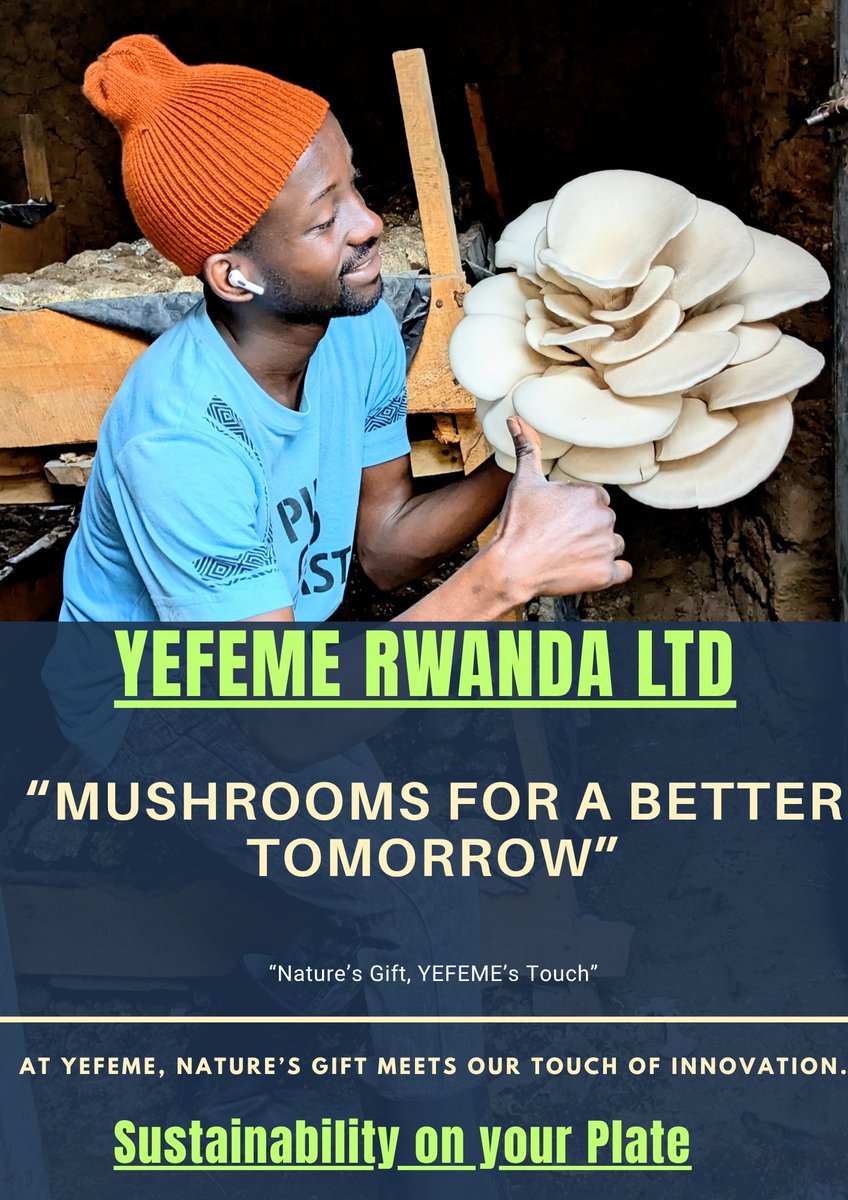
YEFEME RWANDA LTD had an amazing session at Musanze Hanga Hub,via Tech Upskill Program sharing practical insights on sustainable mushroom production. Empowering communities with skills that create opportunities and impact!
Grateful to have met with Mama Career at UR CAFF earlier at Musanze Hanga Hub.We reflected on growth, innovation and the importance of equipping youth with modern tech skills. Every conversation with her reminds me why we must keep building spaces where young people can learn.
Investing in Community driven initiatives: key towards fighting against Non-communicable .
✅ In our community, we are taking action to fight Non-Communicable Diseases (#NCDs) , the silent killers behind about 48% of deaths in Rwanda’s health facilities and millions of people globally.
✅ Through local initiatives and social media campaigns, we spread education and awareness, helping families understand risks like hypertension (affecting nearly 17% of adults) ,diabetes and other #NCDs as well as preventive measures. Influencers like @harerimana_tito are leading the change.
✅ Rwanda through local and national campaigns is committed to promote healthy eating ,proper sanitation, and hygiene.
✅ Also through community sports, and body check-ups initiatives ,Rwanda prioritize the encouragement on early detection and investing in preventive measures for #NCDs.
✅ Leaders, Influencers, researchers and policy advocates are pushing for policy advocacy and strengthening implementations towards tackling NCDs in Rwanda.
Call to Action, With great progress in Rwanda, there still the need for:
1️⃣ Increase Investment in screening, prevention, and treatment programs.
2️⃣ Advance Policy Advocacy to ensure NCDs remain a top priority in health planning.
3️⃣ Support Research for evidence-based solutions tailored to Rwanda’s context.
4️⃣ Strengthen Community Engagement & Education through awareness, sports, and healthy lifestyle campaigns.
👉 Together, let’s #LeadOnNCDs and #ActOnNCDs for a healthier, stronger communities.
@RwandaNCDA
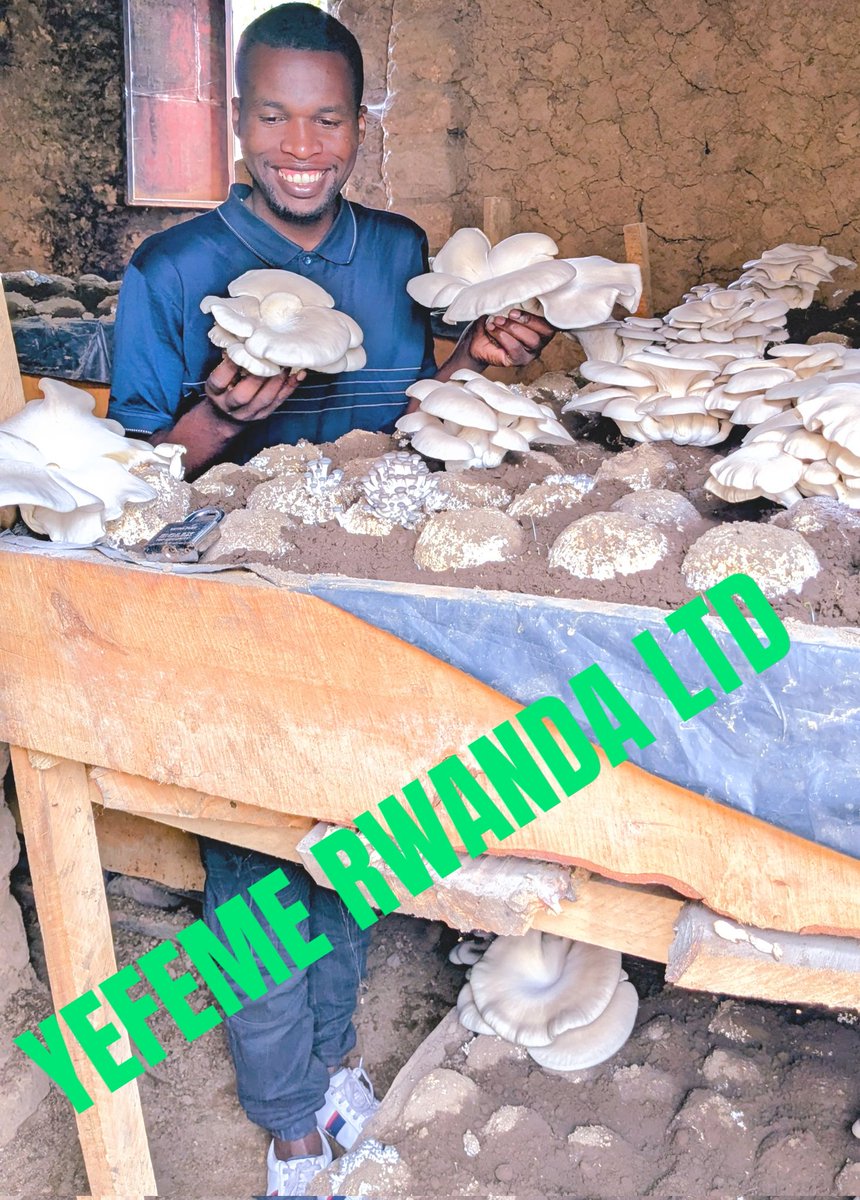
We had the honor of hosting Mr. Joseph at YEFEME RWANDA LTD 🍄.During his visit to our field, he confirmed what we live and work for every day , that YEFEME is truly excelling in mushroom production,
#YEFEMERWANDA#MushroomProduction#AgribusinessInnovation
🚀 Fresh from YEFEME RWANDA LTD! 🌱🍄,We’re excited to announce that our high-quality mushroom tubes (Imigina) are ready for purchase, we are committed to delivering premium, well-prepared mushroom tubes that guarantee strong yields.👉 Order today and grow with us!
#YEFEMERwanda