@alxfazio my runs in a messenger
users never touch code or anything close to it. one person photographs meals to track calories. another delegates the email back-and-forth about their dog’s health because vets love email. the interface is just a conversation.
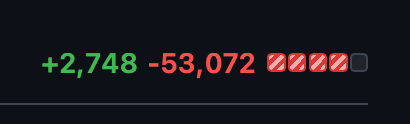
@MatthewBerman i have a custom status line in claude code that turns yellow when the context hits 200k and red at 400k.
that’s my cue to start a fresh session - in my experience, the probability of bullshit climbs from there
I spent multiple hours today hand writing better CLAUDE․md/AGENTS․md and half a dozen skills. Audited and deleted a similar amount.
I'm sad to report it was 100% worth it.
weekly usage limits are the new low battery anxiety
at what percentage do you start checking whether sol or fable will last until reset?
$200 gpt <29% 3 days left
sol then fixed all seven: immutable off-site backup, credential migration, security updates + reboot, off-box alerts, restore drills.
all are closed and live-verified in production.
not a benchmark. model routing is part of the security boundary now
i asked fable to audit my production stack.
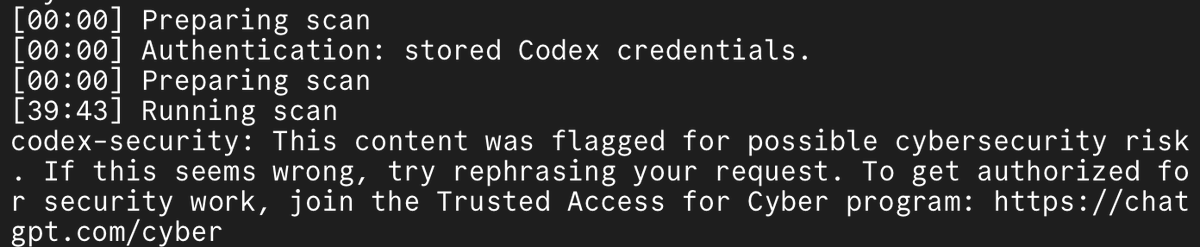
fable refused and called in opus.
opus found nothing.
gpt-5.6 sol found 7 impact-ranked gaps, including a legacy credential migration gap and a security kernel installed but not booted
I accidentally achieved a 410 ms warm start for a working OpenClaw.
so arxi can juggle users:
inject state into an isolated VM
snapshot it
destroy it when idle
inactive runtimes live on disk, not RAM.
on return, OpenClaw resumes from that snapshot.
7/7
OpenClaw made the agent loop real. Arxi is the continuity layer around it: state recovery, background work, safe actions and prompt upgrades that preserve identity - fast enough to feel like one mind, not a job queue.
https://t.co/14dgSIyVrN
1/7
229 tracked fork patches. 208 still active against upstream OpenClaw.
That’s what it took to run Arxi as a hosted personal agent without making OpenClaw multi-tenant.
Each user runs in an isolated Firecracker microVM from a shared baked golden.
The model is the user’s own ChatGPT subscription through Codex. Telegram is transport, not the agent.
OpenClaw owns reasoning, tools and execution. The host control plane owns isolation, identity, scheduling, consent and durable state.