European University Association (EUA), is the representative organisation of Europe's universities with over 900 members and affiliates. #HigherEducation
The Irish Presidency of the Council of the EU 2026 presented on 10 October a revised proposal outlining member states’ position on the EU's next long-term budget (2028-2034).
What does this proposal change for Horizon Europe and Erasmus+?
🔗 https://t.co/3LZjL829oX
🎥 In this video, #MSCA4Ukraine project fellow Olga Utevska highlights the main findings of her project on “Genetic, social and cultural diversity in Iron Age settlements of Ukraine forest-steppe”
@EUScienceInnov@HorizonEU
https://t.co/UJw1jd85Ec
Academic staff can play a crucial role in encouraging students from underrepresented backgrounds to participate in international academic experiences like Erasmus+ exchanges, write Valérie Van Hees and Orhan Ağırdağ @KU_Leuven. https://t.co/zKGycYMHSm
#EUAExpertVoices
On 11-12 November, the European University Association attended the annual meeting of the Global University Associations Forum in Accra, Ghana, hosted by @AAU_67.
🌍 Learn more about the 2027 GUAF meeting: https://t.co/gNntbl5hAI
Universities should support and encourage inclusion and equity in staff participation and engagement in professional development as part of their broader commitment to ensuring quality learning & teaching.
📙 #STAFFDEV_EU project recommendations https://t.co/LP5usVBfLA
📢 @EUACDE is inviting applications from member universities to host events in 2028:
1⃣ EUACDE Thematic Workshop
2⃣ EUACDE Annual Meeting
Take a look at the guidelines and apply before 31 December 2026: https://t.co/RVo9AOTH6v
The current European-level policy emphasis on automatic recognition of qualification is an opportunity for the university sector to consider its recognition processes and practices, and try to enhance them.
EUA briefing 📗 https://t.co/GlE9cAnN3V
📢 We are looking for the host of the 2028 European Quality Assurance Forum (#EQAF). Could it be your university?
Send your bid by 31 January 2027 at https://t.co/NqpkwXpVSu
Leadership and governance are critical enablers of the financial sustainability of European Universities alliances, requiring new skills and experience that go beyond traditional roles and making targeted and sustained capacity-building essential.
🔗 https://t.co/PzBLRikb0B
“The ERA Act is a once-in-a-generation opportunity to turn the ambition of the European Research Area into reality,” Vinciane Gaillard, Director of Research and Innovation at the European University Association, told @ResearchEurope.
🗞️ https://t.co/MGZiMaYIWX
🎥 #MSCA4Ukraine fellow Viktoriia Gorbunova presents her project “Universal mental health training for frontline professionals: further development and adjustment for war-related needs and future post-war recovery in Ukraine”
@EUScienceInnov@HorizonEU
https://t.co/ArugbPPHFt
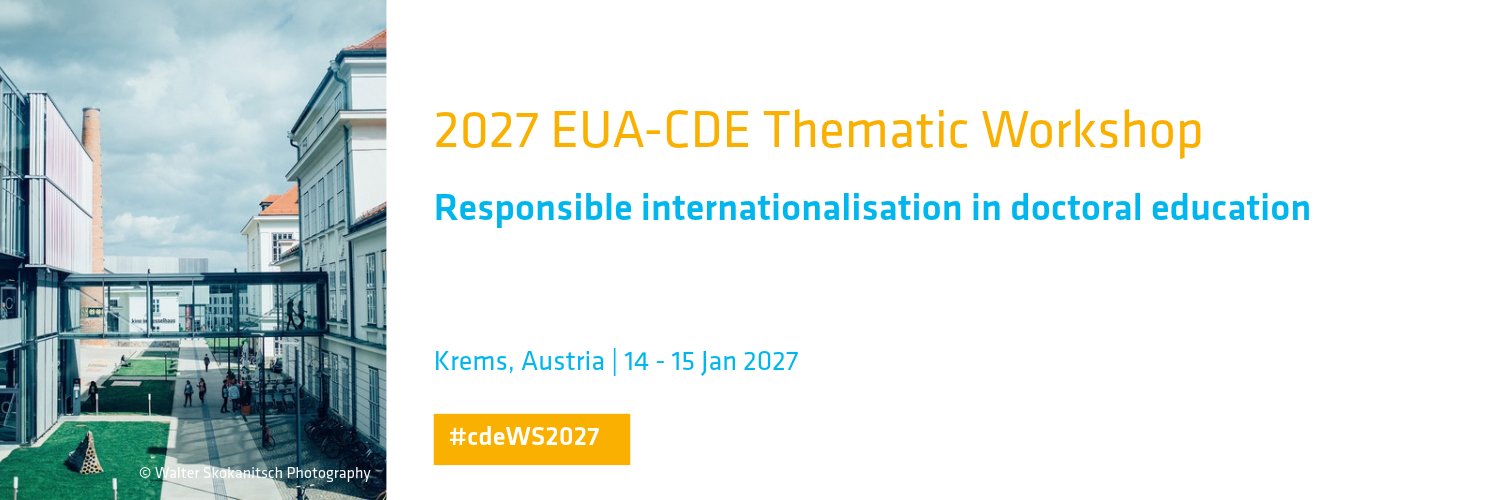
🚨 Registrations for #cdeWS2027 are open!
This event will offer an opportunity to reflect on universities’ objectives in cross-border doctoral cooperation & opportunities and challenges in this area.
🔗 Register at https://t.co/bDDVVkO6rB
Learn how to identify actionable areas for improvement of recognition practice at your higher education institution. 🎓
📜 Discover the updated self-assessment tool, produced as part of the Erasmus+ funded AR2030 project https://t.co/vdAxvLL5qq
🎙️ In this Sustainability Spaces EUA podcast episode, Lena Helińska and Piotr Szwedo from @JagiellonskiUni explain how they co-build BASUS, Una Europa alliance’s Joint Bachelor’s in Sustainability across 11 European universities.
🎧 Listen at https://t.co/42iYJHV0Ku
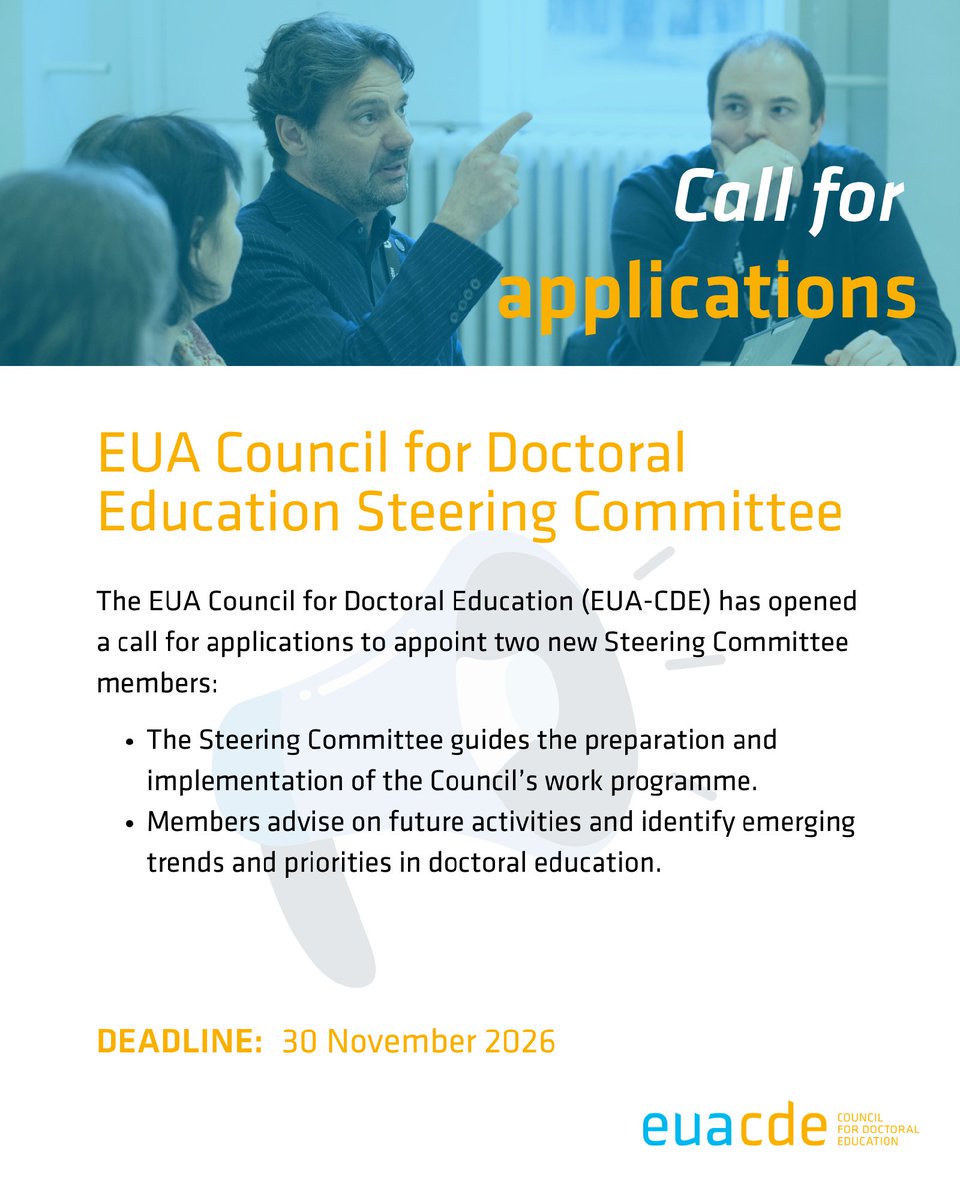
📢 @EUACDE has opened a call for applications for its Steering Committee. The Steering Committee guides the preparation and implementation of the EUA-CDE work programme.
More information at https://t.co/UyWjvqLuJQ
⏳ Deadline to apply: 30 November
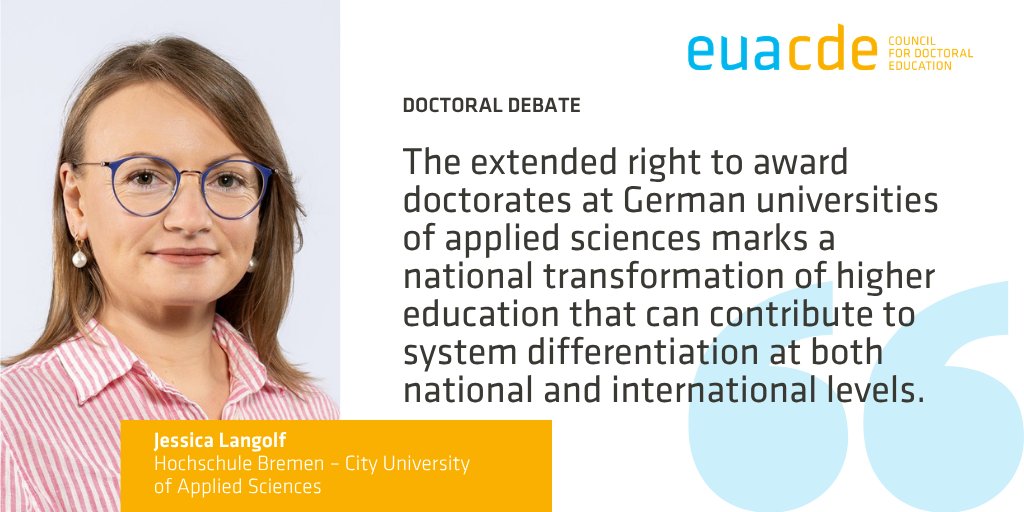
The growing authority of universities of applied sciences to award doctorates is transforming the German higher education system. Will this lead to greater convergence with traditional universities or to greater diversification? https://t.co/UVyACcbjcl
#EUACDE
As we celebrate our 25th anniversary, this publication highlights some of EUA’s most notable achievements, as well as key developments in higher education and research, during this time.
📗 Read it at https://t.co/Af0joMAq5u
What does it mean for a university to have roots in its city? 🌱
In episode 4 of our 'Sustainability Spaces' podcast, we visit Vrije Universiteit Brussel (VUB) to explore how the university interacts with the capital of Belgium and Europe.
🎧 Listen: https://t.co/42iYJHV0Ku
By keeping the user at the centre of technological innovation and integration, universities support a wider movement to retain human agency in developing and using AI.
📘 Read the final report of the EUA Task-and-Finish Group on Artificial Intelligence https://t.co/4MrOvT8VL9
Strengthening transnational staff development is an investment in people that pays off in terms of institutional innovation and global connectivity, but also in learning and teaching. https://t.co/p3TbVz8Evj
#STAFFDEV_EU#EUALearnTeach
Would you like to deepen your involvement with EUA?
Then join our upcoming webinar 'How to get involved in EUA: benefits for member universities'.
📅 Date: 10 December, 13.00-14.00 CET
🔗 Register at https://t.co/XzwQvpjzOF